

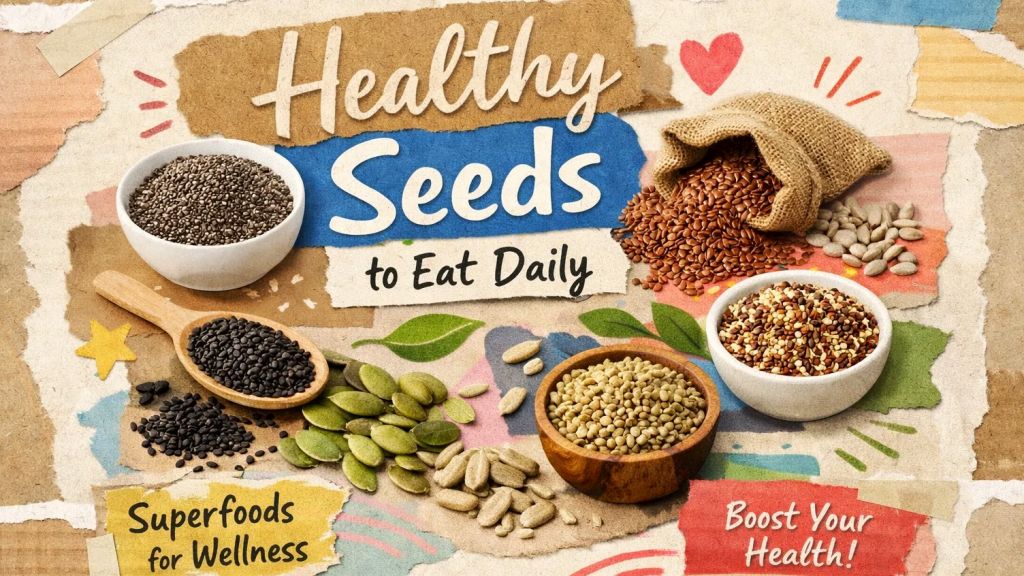
The most nutrient-dense foods on the planet are often the smallest ones. Seeds prove this point better than almost anything else in your kitchen. A single 28g serving of chia seeds delivers 10g of fiber, 5g of ALA omega-3s, and more calcium than a glass of milk. That's a serious nutritional return from two tablespoons of something that fits in your palm.
If you grew up in a Tamil or South Indian household, seeds are nothing new. Sesame goes into chutneys and ellu urundai. Sabja blooms in rose milk and falooda every summer. The seeds in this article build on that familiar foundation and add a few that deserve a permanent spot in your daily routine. At Sandhai.ae, UAE families already order their Tamil grocery staples weekly, and chia seeds alongside flaxseed and sabja have become a natural addition to that same cart.
By the end of this article, you'll know exactly what each seed does, how much to eat, and how to work them into South Indian recipes you already make. No complicated protocols, no unfamiliar ingredients.
Why seeds belong in your daily diet
Seeds are calorie-efficient carriers of healthy fats, plant protein, fiber, and micronutrients in quantities that most whole foods can't match per gram. Unlike supplements, they deliver nutrients in food matrix form, which means better absorption and no risk of megadosing a single compound, the whole package works together.
Most seeds are also inexpensive, shelf-stable, and need zero cooking. Adding two tablespoons to something you already eat or drink is one of the lowest-effort nutritional upgrades available. No meal prep, no new skills required.
The seven seeds worth knowing are: chia, flaxseed, hemp, sesame, sabja (basil seeds), pumpkin, and sunflower. South Indian cooks already use sesame and sabja regularly. The others are straightforward additions. Chia seeds get the most attention in this article because the clinical evidence behind them is the most specific and actionable of the group.
Chia seed nutrition: what the numbers actually mean
One standard serving of chia seeds (28g, roughly 2 tablespoons) contains 138 calories, 4.7g protein, 8.7g total fat with 5g of that as ALA omega-3, 10g fiber (35% of your daily value), 179mg calcium, 95mg magnesium, and 2mg iron. Those are remarkable numbers for something this small. The 10g fiber alone exceeds what most people get from a full bowl of oats, and the 5g ALA omega-3 from a plant source is notable for anyone not eating fish regularly. Botanically classified as Salvia hispanica, chia has been cultivated for its nutritional density for centuries, and the modern data backs that reputation.
One practical advantage chia seeds have over flaxseeds: you don't need to grind them. Their outer shell is thin enough that nutrients absorb whether you eat them whole, soaked, or blended. Flaxseeds require grinding for the same effect, which adds a step most people eventually skip.
Chia vs flaxseed vs hemp: which wins what
Each seed leads in a different category, so understanding the differences helps you choose the right one for your goal. Here's how they compare on the three metrics that matter most:
- Fiber: Chia leads clearly at 10g per serving. Flax provides around 3g and hemp under 1g.
- Omega-3 ALA: Chia and flax are roughly equal at approximately 5g per serving. Hemp is significantly lower and also has a less favorable omega-3 to omega-6 ratio.
- Protein: Hemp offers 10g of complete protein per 3-tablespoon serving (all nine essential amino acids). Chia and flax offer around 4, 5g each, with incomplete amino acid profiles.
The practical takeaway: reach for chia when fiber and calcium are the priority, flax when lignans and hormone support are the goal, and hemp when you need complete plant protein. Rotating all three throughout the week covers more ground than sticking to just one.
What the science actually says about chia seed benefits
The strongest evidence for chia seeds is in blood pressure reduction. Multiple meta-analyses of randomized controlled trials show that chia seed supplementation significantly lowers both systolic and diastolic blood pressure. One analysis of 14 RCTs covering 729 participants found meaningful reductions in both measures, with stronger effects at doses of 25g or more per day over periods longer than ten weeks. Another analysis of 8 RCTs reported systolic blood pressure dropping by 5, 7 mmHg and diastolic by 6, 7 mmHg.
The effect is most pronounced in people who already have elevated blood pressure. If your blood pressure sits in the normal range, don't expect dramatic changes from chia seeds alone. The mechanism appears to be the combined action of ALA omega-3s and soluble fiber on vascular health, not any single compound working in isolation.
What chia seeds won't do
Weight loss claims around chia seeds don't hold up under clinical scrutiny. Multiple meta-analyses show no significant effect on body weight or BMI from supplementation. Blood sugar control tells a similar story: trials find no meaningful impact on fasting blood glucose or HbA1c. One analysis did show a modest reduction in waist circumference (about 1.5 cm), but this is a small effect, not a transformation (see WebMD's overview for a balanced summary).
This isn't a reason to dismiss chia seeds. Their real strengths are fiber, omega-3 ALA nutrition, and blood pressure support, and that combination is genuinely valuable. The problem isn't that they underperform; it's that the marketing around them overpromises. Know what you're getting and you'll appreciate it more.
South Indian ways to use chia seeds every day
Chia lemonade: the nimbu pani upgrade
Soak one tablespoon of chia seeds in 250ml of water for 20 minutes. The seeds absorb the water and form a thick, translucent gel, each seed encased in a soft coating. Once the gel forms, squeeze in fresh lime juice, add a pinch of black salt, and sweeten lightly with jaggery syrup or nannari sarbath for a South Indian twist. The result is a cooling, filling drink that works perfectly as a post-workout hydration option or a mid-afternoon pick-me-up.
Soaking the seeds first (1 part seeds to 4 parts liquid) is always safer than eating them dry, especially for first-timers. Dry chia seeds can expand rapidly in the throat, which creates a choking risk for anyone with swallowing difficulties. The soaked, gelled version is gentler on digestion and easier for the body to process.
Coconut milk chia pudding
Mix 3 tablespoons of chia seeds into one cup of coconut milk with a teaspoon of honey and a pinch of cardamom. Stir well, cover, and refrigerate overnight. By morning, the seeds have absorbed the coconut milk completely and created a tapioca-like pudding with a smooth, satisfying texture. This preparation requires no cooking, no equipment beyond a bowl, and about three minutes of active preparation.
Top with fresh mango pieces, sliced banana, or a handful of roasted coconut flakes for a breakfast that feels genuinely indulgent. The cardamom and coconut milk base make this feel like a dessert you'd find at a Tamil Nadu feast, not a health food compromise.
Getting the serving size right
The practical sweet spot for daily chia seed intake is 1, 2 tablespoons (14, 28g). Start with one tablespoon soaked in liquid and build up gradually over two weeks. Jumping straight to two tablespoons on day one can cause bloating and digestive discomfort, particularly if your diet isn't already high in fiber.
Drink adequate water throughout the day, at minimum 8 glasses, to support the fiber load. This is especially important in the UAE climate, where dehydration compounds digestive discomfort faster than it does in cooler environments.
The other 6 seeds worth rotating into your meals
Flax, hemp, and sesame: clear roles in the kitchen
Flaxseeds must be ground before eating for omega-3s and lignans to absorb properly. A coffee grinder works fine. Ground flax blends invisibly into roti dough, idli batter, or smoothies without changing the flavor. The lignans in flax are linked to hormone balance and reduced estrogen-related risks, making it particularly useful for women navigating hormonal changes.
Hemp seeds bring 10g of complete protein per serving with a mild, nutty flavor that works on rice, stirred into curd, or scattered over a salad. They don't absorb water the way chia does, so they keep their texture in any preparation. For anyone trying to increase plant protein without relying on processed protein powders, hemp seeds are one of the more straightforward options available.
Sesame seeds are already embedded in South Indian cooking: til chutney, ellu urundai, sesame rice, and the sesame garnish on countless snacks. Both white and black varieties deliver calcium, zinc, and iron. If you eat sesame regularly, you're already ahead on this one.
Sabja, pumpkin, and sunflower: the underrated three
Sabja seeds (basil seeds) are the South Indian cousin of chia. They've been blooming in falooda and rose milk long before superfoods became a category. They swell faster than chia, 10, 15 minutes versus longer for soaked chia, and work beautifully in summer drinks. Their omega-3 content is lower, and they're lower in calories overall, making them a good gateway for anyone hesitant to start with chia directly.
Pumpkin seeds are high in magnesium and zinc, with natural tryptophan content that supports sleep quality. A small handful as an afternoon snack is a practical, no-prep option. Sunflower seeds bring vitamin E and selenium to the table, two antioxidants that support skin health and immune function, and fit easily into trail mixes, salads, or as a topping on rice dishes.
Buying and storing seeds in the UAE
Storage that protects your investment
Dry chia seeds store well in a cool, dark pantry for months, but a sealed glass jar works significantly better than the original paper packaging. UAE humidity accelerates rancidity in seeds high in unsaturated fats, particularly flaxseed and hemp seed. For those two, storing in the freezer extends shelf life considerably. Chia seeds are more stable but benefit from cool, dark storage too.
Soaked chia gel prepared in advance keeps in the fridge for up to five days in a sealed container. Make a batch on Sunday using the 1:4 seed-to-water ratio and you have it ready for lemonade, pudding, or smoothies all week. Before using any seeds, give them a quick smell check. Rancid seeds won't cause harm, but they've lost their omega-3 ALA value entirely and will taste noticeably off.
Where to find quality seeds without the search
Indian grocery shopping across Dubai and Sharjah stocks sesame and basic flaxseed without much trouble. Chia seeds, hemp seeds, and sabja in reliable, food-grade packaging are harder to source consistently across the UAE. Quality varies significantly between suppliers, and finding all three in one trip is rarely straightforward.
Sandhai.ae carries chia seeds and a growing range of superfoods alongside the Tamil grocery staples UAE families already order weekly. Picking up your chia seeds, flaxseed, and sabja in the same cart as your rice, dal, and spices means one fewer errand and consistent quality you can rely on. Look for whole, raw seeds without added oil or salt for maximum nutritional benefit, and check that packaging is airtight before purchasing.
Start with one seed, one habit
Seeds are one of the most efficient foods you can add to your daily routine, and chia seeds lead the group on fiber, omega-3 ALA nutrition, and clinically supported blood pressure benefits. The South Indian kitchen is already seed-friendly. Sesame and sabja are familiar. Chia fits right in through lemonade, pudding, and smoothies without requiring any adjustment to how you already cook and eat.
No single food rewrites your health. But adding 1, 2 tablespoons of soaked chia seeds daily to something you already drink is a genuinely low-effort, high-return habit. The fiber alone justifies the addition for most people.
Start with the chia lemonade recipe this week. Soak a tablespoon of chia seeds in water for 20 minutes, squeeze in lime, add a pinch of black salt and a drizzle of jaggery syrup. Five minutes of effort, and many people notice a difference in fullness and digestion within the first week.

Share this via
Or copy link