

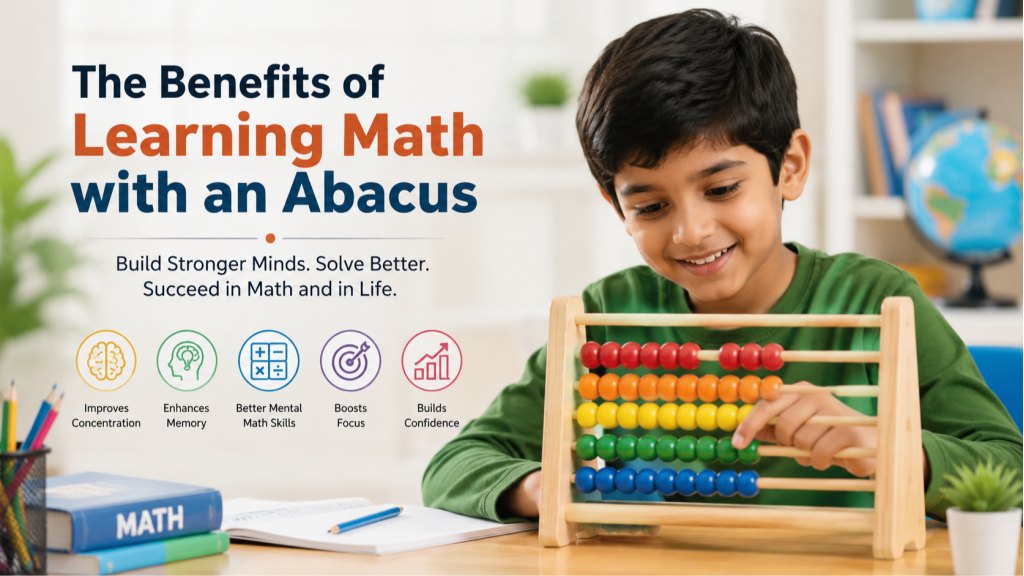
The Benefits of Learning Math with an Abacus
Learning math with an abacus offers numerous benefits that go beyond mere calculation. Firstly, it provides a hands-on, tactile experience that is often missing from traditional math lessons. This kinesthetic learning method can be especially beneficial for young children who may find abstract concepts difficult to grasp. By physically moving the beads on the abacus, students can see and feel the numbers they are working with, which can help solidify their understanding of mathematical concepts.
In addition to improving arithmetic skills, using an abacus can also boost a student’s confidence in their mathematical abilities. As students become more proficient with the abacus, they gain a sense of accomplishment and self-assurance. This newfound confidence can have a positive impact on their overall attitude towards math and learning in general. Moreover, the abacus encourages a more systematic approach to problem-solving, which can be applied to other areas of study and everyday situations.
Another significant benefit of learning math with an abacus is its ability to promote mental math skills. As students become more familiar with the abacus, they begin to visualize the beads and perform calculations mentally without the physical tool. This mental imagery strengthens their number sense and enhances their ability to perform calculations quickly and accurately. In this way, the abacus serves as both a learning tool and a bridge to more advanced mental arithmetic skills.
How the Abacus Enhances Cognitive Skills
The abacus is not just a tool for learning math; it also plays a crucial role in enhancing cognitive skills. One of the primary cognitive benefits of using an abacus is the improvement of memory. The process of using an abacus requires students to remember the positions of the beads and the steps involved in various calculations. This constant mental engagement helps to strengthen both short-term and long-term memory.
Another cognitive skill that is enhanced through abacus learning is concentration. The abacus demands a high level of focus and attention to detail, as even a small mistake can lead to incorrect results. This requirement for precision helps students develop their concentration and attention span, which are essential skills for success in both academic and personal pursuits. Furthermore, the regular practice of using an abacus can help to reduce distractions and improve overall mental discipline.
Problem-solving skills are also significantly enhanced through the use of an abacus. The tool encourages a systematic approach to solving mathematical problems, which can be applied to other types of problems as well. By breaking down complex calculations into smaller, more manageable steps, students learn to approach challenges methodically and logically. This problem-solving ability is a valuable skill that can benefit students in various aspects of their lives, from academic challenges to everyday decision-making.
The Science Behind Abacus Learning
The science behind abacus learning is rooted in cognitive psychology and neuroplasticity, the brain’s ability to reorganize itself by forming new neural connections. When students use an abacus, they engage multiple senses: visual, tactile, and auditory. This multi-sensory approach to learning helps to create stronger and more diverse neural pathways, which can enhance overall cognitive function. The physical manipulation of the beads, combined with the mental visualization of numbers, creates a rich learning experience that can lead to greater retention and understanding of mathematical concepts.
Research has shown that the use of an abacus can lead to increased activity in the brain’s right hemisphere, which is associated with spatial and visual processing. This increased brain activity can result in improved spatial awareness, which is a crucial skill for many areas of study, including geometry, engineering, and the sciences. Additionally, the mental imagery required for abacus calculations can enhance creativity and imagination, further contributing to cognitive development.
Studies have also demonstrated that abacus training can lead to improvements in working memory, which is the ability to hold and manipulate information in the mind over short periods. Working memory is essential for a wide range of cognitive tasks, including problem-solving, reasoning, and comprehension. By strengthening working memory, abacus learning can have a positive impact on overall cognitive performance and academic achievement.
Want to learn more about using an abacus for children's mathematics? Read our complete guide to learning maths with an abacus for practical information about abacus learning, mental maths, concentration, and problem-solving.
Step-by-Step Guide to Using an Abacus
Learning to use an abacus can seem daunting at first, but with a step-by-step approach, it becomes a manageable and rewarding process. The first step in using an abacus is to become familiar with its structure. An abacus typically consists of a rectangular frame with several rods, each containing a set of beads. The most common type of abacus, the Japanese soroban, has one bead above the horizontal bar (the "heavenly bead") and four beads below the bar (the "earthly beads") on each rod.
Once you understand the basic structure of the abacus, the next step is to learn how to represent numbers. Each bead on the lower part of the abacus represents one unit, while the bead on the upper part represents five units. To represent the number 1, you would move one bead from the lower part of the first rod towards the bar. To represent the number 5, you would move the single bead from the upper part of the first rod towards the bar. With this basic understanding, you can begin to represent larger numbers by combining the beads on different rods.
After mastering number representation, the next step is to learn basic arithmetic operations, starting with addition and subtraction. To perform addition, you simply move the beads on the rods to reflect the numbers being added. For example, to add 3 and 4, you would move three beads on the first rod towards the bar, followed by an additional four beads. Subtraction follows a similar process but in reverse. As you become more comfortable with these operations, you can move on to more complex calculations, such as multiplication and division.
Abacus Techniques for Different Math Concepts
The abacus is a versatile tool that can be used to teach a wide range of mathematical concepts. One of the most fundamental techniques is addition and subtraction, which can be performed by simply moving the beads to represent the numbers being added or subtracted. This hands-on approach helps students to visualize the concepts and develop a deeper understanding of the arithmetic processes involved.
Multiplication and division can also be effectively taught using an abacus. For multiplication, the abacus can be used to represent the process of repeated addition. For example, to multiply 3 by 4, a student would add the number 3 four times, moving the beads accordingly. Division, on the other hand, can be taught using the process of repeated subtraction. To divide 12 by 3, a student would subtract the number 3 from 12 repeatedly, moving the beads to reflect each step.
In addition to basic arithmetic, the abacus can also be used to teach more advanced mathematical concepts, such as fractions and decimals. By using the beads to represent parts of a whole, students can gain a clearer understanding of these complex concepts. For example, to represent the fraction 3/4, a student could move three out of four beads on a rod towards the bar. This visual and tactile representation can make abstract concepts more concrete and accessible for students.
Comparing Abacus Learning to Traditional Math Methods
When comparing abacus learning to traditional math methods, several key differences become apparent. Traditional math instruction often relies heavily on rote memorization and the use of written symbols and algorithms. While these methods can be effective, they may not engage all types of learners, particularly those who benefit from a more hands-on, visual approach. The abacus, on the other hand, provides a multi-sensory learning experience that can be more engaging and effective for many students.
Another significant difference is the emphasis on mental math skills. Traditional math instruction often focuses on the use of calculators and written methods for performing calculations, which can limit the development of mental arithmetic skills. In contrast, the abacus encourages students to visualize the beads and perform calculations mentally, which can lead to stronger number sense and faster, more accurate mental math abilities.
The abacus also promotes a deeper understanding of mathematical concepts. Traditional methods may sometimes emphasize the correct answer over the process of finding that answer. With an abacus, the focus is on the steps involved in the calculation, which can help students develop a more thorough understanding of the underlying concepts. This process-oriented approach can lead to greater retention and a more robust foundation in mathematics.
Success Stories: Real-Life Impact of Abacus Education
Many success stories highlight the real-life impact of abacus education on students’ math skills and overall cognitive development. One such story is that of a young student who struggled with math in school and lacked confidence in their abilities. After being introduced to the abacus, the student’s attitude towards math began to change. The hands-on, visual approach of the abacus helped the student to understand and enjoy math, leading to significant improvements in their academic performance.
Another success story involves a group of students who participated in an abacus training program. Over the course of several months, these students showed remarkable progress in their math skills, as well as improvements in their concentration and problem-solving abilities. The abacus training not only helped them excel in math but also had a positive impact on their performance in other subjects. Teachers and parents alike noticed a marked increase in the students’ confidence and enthusiasm for learning.
There are also numerous anecdotal accounts of adults who have benefited from abacus training. Some individuals have reported that learning to use an abacus as children gave them a lifelong advantage in math and problem-solving skills. Others have found that picking up the abacus later in life has helped to keep their minds sharp and improve their mental agility. These success stories demonstrate the enduring value of abacus education for learners of all ages. Parents and teachers can also explore NRICH's guide to adding with an abacus for additional maths-learning activities.
Resources for Learning and Teaching with an Abacus
For those interested in learning or teaching with an abacus, there are numerous resources available to help you get started. One of the best places to begin is with instructional books and guides that provide step-by-step instructions for using an abacus. These resources often include detailed explanations of various techniques, as well as practice exercises to help reinforce the concepts being taught. Some popular titles include "The Complete Abacus Handbook” and "Abacus Mind Math Instruction Book.”
Online tutorials and courses are another excellent resource for learning and teaching with an abacus. Many websites and platforms offer video tutorials, interactive lessons, and practice problems to help learners master the abacus. Some of these resources are free, while others may require a subscription or one-time payment. Websites such as Udemy, Khan Academy, and YouTube have a wealth of abacus-related content that can be accessed at any time.
For educators, there are also specialized training programs and workshops available that focus on teaching math with an abacus. These programs often provide in-depth training on abacus techniques, as well as strategies for integrating the abacus into the classroom. Participating in these programs can help teachers feel more confident and prepared to use the abacus as a teaching tool. Additionally, many abacus training centers offer certification programs for instructors, which can be a valuable credential for those looking to enhance their teaching skills.
Conclusion: Embracing the Abacus for Math Mastery
The abacus is a powerful tool for enhancing math skills and cognitive development. By providing a hands-on, multi-sensory learning experience, the abacus helps students to better understand and enjoy math. The benefits of abacus learning extend beyond arithmetic, promoting improved memory, concentration, and problem-solving skills. The science behind abacus learning supports its effectiveness in creating strong neural connections and enhancing overall cognitive function.
With a step-by-step approach, learners of all ages can master the use of an abacus and apply its techniques to a wide range of mathematical concepts. Comparing abacus learning to traditional methods reveals the unique advantages of this ancient tool, particularly in developing mental math skills and a deeper understanding of mathematical concepts. Success stories from students and adults alike demonstrate the real-life impact of abacus education.
For those interested in exploring the world of abacus learning, a wealth of resources is available, including instructional books, online tutorials, and specialized training programs. By embracing the abacus, learners and educators can unlock the potential for math mastery and cognitive growth. Whether for personal enrichment or academic success, the power of the abacus is a valuable asset in the journey of lifelong learning.
Looking for the best other abacus for kids in UAE? Explore Sandhai.ae’s collection of 15-Rod Wooden Abacus for Kids or Brown 17-Digit Abacus for Kids, wooden and Soroban abacus designed to improve mental math skills, concentration, and brain development through fun and effective learning.

Comments