

Buying canvases online can save time, widen your choices, and help you plan an art project without visiting multiple shops. The challenge is that you cannot feel the texture, test the tension, or compare the frame depth in person. That means the details in the product listing matter.
Whether you are preparing a school project, a weekend acrylic painting, a traditional Indian or Tamil-inspired artwork, or a piece of wall decor for your UAE home, the right canvas affects how your paint sits, how long the artwork lasts, and how professional the final result looks.
This guide will help you choose canvases for art projects online with confidence, from material and priming to size, format, storage, and delivery.
Start with the project, not the canvas
The most common mistake is buying a canvas just because the size looks right. A canvas for a child’s school activity, a practice painting, and a framed living room artwork should not be chosen the same way.
Before comparing products online, ask yourself three questions: What medium will I use? Will the artwork be displayed or only practiced on? Does it need to be portable, framed, or ready to hang?
| Project type | Best canvas choice | Why it works |
|---|---|---|
| School project or quick craft | Canvas panel or canvas board | Rigid, affordable, and easy to carry |
| Acrylic painting for home display | Pre-primed stretched canvas | Smooth enough for acrylics and ready to hang |
| Oil painting | Properly primed stretched canvas or linen canvas | Helps protect the fabric from oil absorption |
| Practice studies | Canvas pad or canvas sheets | Useful for testing colours, brushwork, and composition |
| Mixed-media project | Canvas panel or sturdy stretched canvas | Handles layering better than thin sheets |
| Gift artwork | Gallery-style stretched canvas | Looks more polished without needing a frame |
If you are buying other materials at the same time, browsing stationery and project supplies can help you plan the full project in one order.
Know the main types of canvases
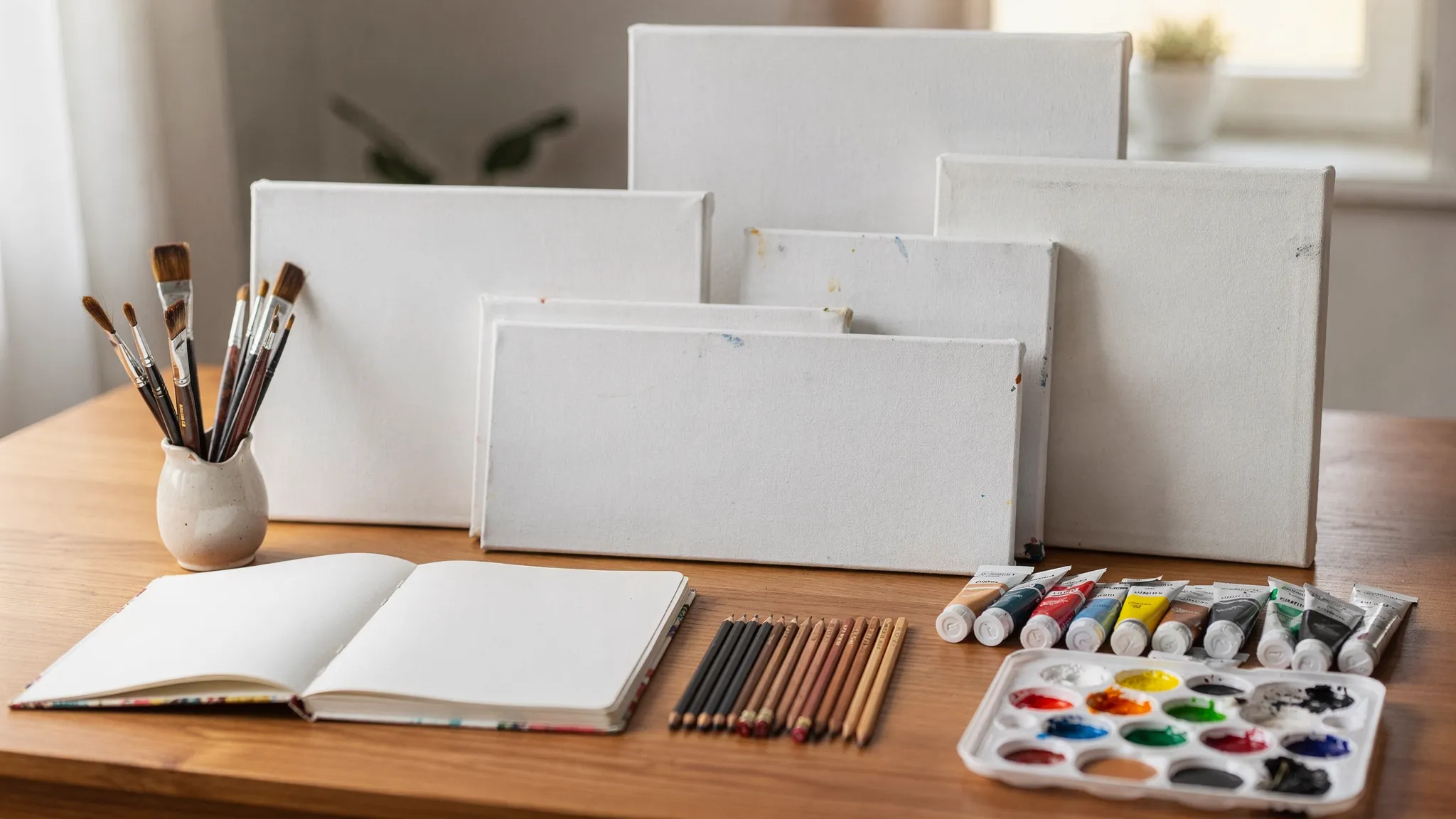
Online listings often use terms such as stretched canvas, canvas board, canvas pad, and rolled canvas. These are not interchangeable, so understanding the difference helps you avoid ordering the wrong product.
Stretched canvases
A stretched canvas is fabric pulled over a wooden frame. It is one of the best choices for display pieces because it can often be hung directly on the wall. The canvas should look flat and tight, with clean corners and a stable frame.
Stretched canvases are ideal for acrylic and oil painting, especially when the listing mentions that the surface is pre-primed. For home decor pieces, choose a thicker frame depth if you want a more premium, gallery-style look.
Canvas panels and boards
Canvas panels are canvas fabric mounted onto a rigid board. They are practical for beginners, children, workshops, and school projects because they are easy to store and less delicate than stretched canvases.
They are also useful when you need several pieces for a class, craft day, or festival activity. The tradeoff is that canvas boards usually need framing or a stand if you want to display them formally.
Canvas pads and sheets
Canvas pads are a good choice for practice. They usually include multiple sheets, which makes them useful for testing colour combinations, brush pressure, and sketch ideas before moving to a final canvas.
If you are learning acrylic painting, this format can reduce waste and help you build confidence. It is not the best option for long-term display unless you later mount or frame the sheet.
Rolled canvas
Rolled canvas is fabric sold without a frame. It is useful for large custom projects, murals, or artists who prefer to stretch their own canvases. However, it requires extra tools, a stretcher frame, and some experience.
For most students, hobby artists, and family craft projects, pre-stretched canvases or canvas panels are easier to buy online and use immediately.
Match the canvas to your paint medium
The best canvas is the one that suits your paint. A surface that works beautifully for acrylic may not be suitable for watercolor, and an unprimed surface can cause problems with oil paint.
For acrylic painting, pre-primed cotton canvases are usually the easiest choice. Acrylic paint dries quickly, adheres well to primed surfaces, and works for both beginner and intermediate art projects. If you want crisp details, look for a smoother surface. If you want expressive brush marks, choose a more textured canvas.
For oil painting, priming is especially important. Oil should not soak directly into raw fabric because it can weaken the canvas over time. Look for product details that mention oil compatibility or acrylic gesso primer. If you are serious about oil painting, linen canvases may offer a refined surface, but they are usually more expensive than cotton.
For watercolor, standard canvas is usually not the best choice unless it is specifically made for watercolor. Watercolor needs absorbency and controlled water movement, so watercolor paper is usually the safer option. If a product listing says watercolor canvas, check that it is designed for that medium.
For mixed media, choose a sturdy surface. If you plan to use glue, paper layers, markers, acrylic, or decorative materials, a canvas board may stay flatter than a thin sheet.
For background context, Tate explains canvas as a common painting support traditionally made from fabric such as linen or cotton. That support is only one part of the artwork, but it strongly influences the final painting experience.
Understand texture, weight, and priming
When choosing canvases online, the product images are helpful, but the specifications are more important. Three details deserve extra attention: texture, fabric weight, and priming.
Texture affects how the brush moves. Fine-grain canvases are better for portraits, lettering, decorative motifs, and detailed work. Medium-grain canvases are versatile and work well for most acrylic and oil projects. Rough textures are better for bold, expressive painting, where visible brushwork is part of the style.
Fabric weight gives you a clue about durability. Heavier canvas fabric generally feels more substantial and can handle more layers. If the listing includes weight in ounces or GSM, higher numbers usually suggest a stronger fabric, although frame quality and priming also matter.
Priming prepares the surface for paint. A pre-primed canvas is convenient because you can start painting sooner. If a canvas is unprimed, you may need to apply gesso before using acrylic or oil paint. For beginners and school projects, pre-primed canvases are the simplest choice.
Choose the right canvas size for online shopping
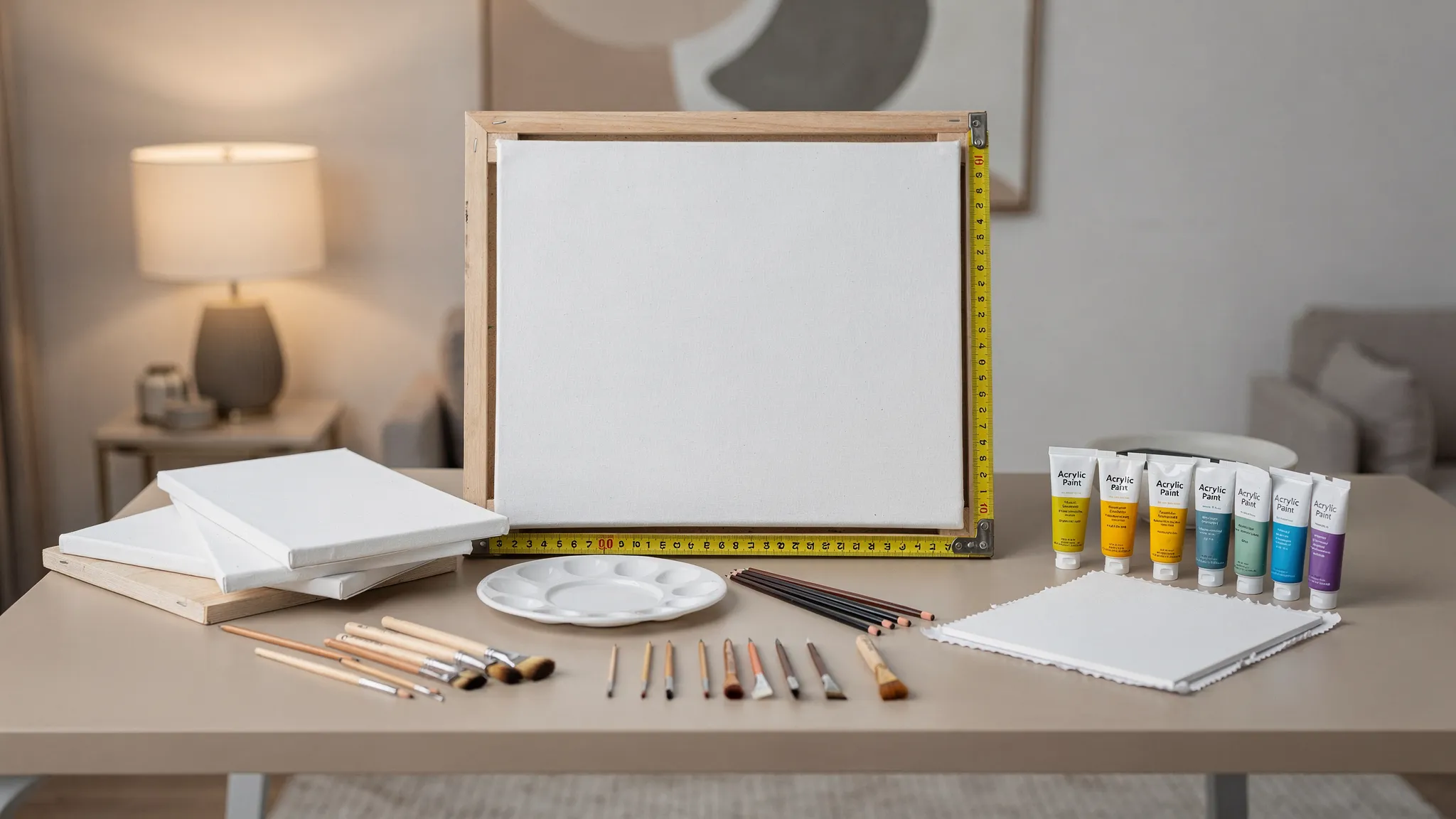
Canvas size can look very different on a screen compared with real life. A 20 x 20 cm canvas may be perfect for a desk display, but it can look small on a living room wall. A 60 x 90 cm canvas may look impressive, but it needs more paint, more working space, and better storage.
For small projects, sizes around 20 x 25 cm or 30 x 30 cm are easy to manage. For school assignments and beginner painting, 30 x 40 cm is often practical because it gives enough room without feeling overwhelming. For wall art, larger sizes such as 50 x 70 cm can create a stronger visual impact.
If you are creating art to match a room, measure the wall before ordering. You can also browse home decor items for colour inspiration, especially if the painting will be displayed near cushions, furniture, lamps, or festive decorations.
| Size factor | What to check online | Practical tip |
|---|---|---|
| Wall space | Product dimensions in cm or inches | Mark the size on the wall with removable tape before buying |
| Working area | Table or easel size | Make sure the canvas fits your painting setup |
| Paint quantity | Canvas surface area | Larger canvases need more paint and primer |
| Framing plan | Edge depth and thickness | Thin panels may need frames, deep canvases may not |
| Delivery handling | Packaging and size | Large canvases need stronger packaging to avoid dents |
What to check before adding canvases to your cart
A good online listing should help you understand what you are buying before checkout. If the information is unclear, it is safer to choose a product with better specifications.
- Material: Check whether the canvas is cotton, linen, or a synthetic blend.
- Format: Confirm whether it is stretched canvas, canvas board, canvas pad, or rolled canvas.
- Priming: Look for pre-primed, triple-primed, gesso primed, or medium-specific wording.
- Medium compatibility: Make sure it suits acrylic, oil, mixed media, or your chosen paint.
- Size: Read exact dimensions rather than judging from photos.
- Frame depth: For stretched canvases, check if it is slim or gallery depth.
- Pack quantity: Some listings are single pieces, while others are multipacks.
- Surface texture: Look for fine, medium, or coarse grain details.
- Delivery packaging: Choose sellers that package flat and fragile items carefully.
If your project needs more than canvas, you can also search for paints and craft tools so you do not forget brushes, palettes, pencils, glue, or other essentials.
Balance price with purpose
Not every project needs premium canvases. For children’s activities, classroom use, first attempts, or rough practice, budget-friendly canvas panels or multipacks often make sense. For a gift, home display, or artwork you plan to keep, it is worth choosing a better surface and stronger frame.
A useful approach is to buy one higher-quality canvas for the final piece and a few affordable sheets or panels for practice. This lets you test colours and composition before starting the artwork that matters most.
When shopping through Sandhai.ae, you can compare everyday essentials, stationery, and lifestyle products in one place. That is especially helpful if you are ordering for a school project, family activity, or home decoration plan and want convenient UAE delivery.
You can also look for special offers and discounts when planning larger art sessions, workshops, or creative gifting.
Think about UAE delivery, heat, and storage
In the UAE, heat, humidity, and air-conditioned indoor spaces can affect art materials. Canvases should be stored flat or upright in a clean, dry place, away from direct sunlight and moisture. Avoid leaving them in a car or balcony area, especially during hot months.
Once your order arrives, inspect the corners, fabric tension, and surface. A stretched canvas should not have deep dents, loose fabric, warped bars, or damaged edges. Small surface marks may be covered by primer or paint, but structural damage can affect the final result.
For long-term care, stable conditions are important. The American Institute for Conservation recommends protecting paintings from extremes of temperature, humidity, light, and handling. Even before you paint, treating your blank canvases carefully helps preserve the final artwork.
Choose canvases that support your creative style
Your style matters too. If you enjoy traditional motifs, temple-inspired colours, kolam patterns, floral designs, calligraphy, or abstract art, choose a surface that supports the level of detail you want.
A smoother canvas is better for clean lines and decorative work. A medium texture is more flexible and suits most beginners. A rough texture adds energy to landscapes, abstract pieces, and thick acrylic strokes.
If you are creating art as a gift, consider pairing it with other creative items. Sandhai offers gift card options, which can be useful for students, hobby artists, and families who enjoy choosing their own supplies.
Quick online canvas buying checklist
Before checkout, make sure the canvas matches your medium, size, surface preference, budget, and display plan. Read the product title, not just the image. Check whether the canvas is ready to paint or needs gesso. Confirm whether it is a single canvas or a pack. Think about where it will be stored after delivery.
A little planning makes a big difference. The right canvas helps paint behave better, reduces frustration, and makes the finished artwork look more intentional.
Frequently Asked Questions
Are cotton canvases good for beginners? Yes, cotton canvases are usually a good choice for beginners because they are affordable, widely available, and suitable for acrylic painting when pre-primed.
What size canvas should I buy for a first art project? A medium size such as 30 x 40 cm is practical for many beginners. It gives enough space to paint comfortably without requiring too much paint or storage space.
Can I use acrylic paint on any canvas? Acrylic paint works best on primed canvas. Most pre-primed cotton canvases are suitable, but always check the product details before buying online.
Do I need a stretched canvas or a canvas board? Choose stretched canvas for display pieces and canvas boards for practice, school projects, workshops, or budget-friendly craft activities.
How do I store blank canvases in the UAE? Keep them indoors, away from direct sunlight, moisture, and high heat. Store them flat or upright with light protection from dust and pressure.
Make your next art project easier to start
Choosing canvases online becomes simple when you know your project, paint medium, size, and display goal. Start with the surface, then add the tools that help you finish the artwork well.
Explore Sandhai.ae for convenient online shopping in the UAE, and search for stationery and project supplies, paints and craft tools, and home decor inspiration to plan your next creative project from start to finish.

Comments