

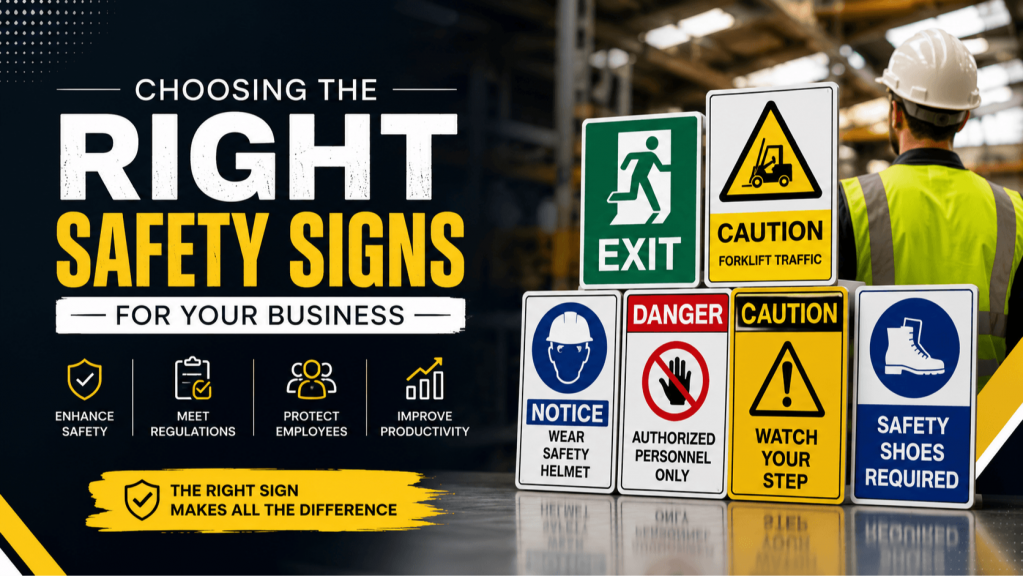
Safety signs are easy to overlook until something goes wrong. A wet floor without a warning sign, an unmarked fire exit, a missing electrical hazard label, or unclear PPE instructions can create confusion at the exact moment people need clarity.
For businesses in the UAE, safety signs are not just a practical detail. They help protect employees, customers, contractors, and visitors while supporting a more organized and compliant workplace. Whether you manage an office, warehouse, retail shop, restaurant, clinic, construction site, or residential building, the right signs can reduce risk and make everyday operations smoother.
The key is choosing signs that match your actual hazards, your environment, and the people who use your space. A generic sign may be better than no sign, but a well-chosen safety sign communicates the right message quickly, even when someone is stressed, distracted, or unfamiliar with the building.
Start with the risks in your workplace
Before buying safety signs, walk through your business and identify where people need warnings, instructions, or directions. Safety signage should be based on real risks, not guesswork.
In an office, the main concerns may include emergency exits, fire extinguishers, first aid points, wet floors, electrical rooms, pantry areas, and restricted access spaces. In a warehouse, you may need signs for forklift routes, loading zones, high shelves, PPE requirements, chemical storage, and emergency assembly points. In a restaurant or retail store, signs may be needed for hygiene, slip hazards, staff-only areas, hot surfaces, fire safety equipment, and customer guidance.
Think about the people who will read the signs. Employees may know the layout, but visitors, delivery drivers, maintenance teams, and new staff may not. Good signage helps everyone understand what to do without needing to ask.
A useful starting point is to group your workplace into zones:
- Public areas where customers or visitors move around.
- Staff areas where work tasks, storage, cleaning, or food preparation happen.
- Hazard areas such as electrical rooms, machinery zones, chemical storage, or construction spaces.
- Emergency areas such as exits, fire equipment, first aid stations, and assembly points.
Once you know the zones, it becomes easier to decide which signs are essential and where they should be placed.
Understand the main types of safety signs
Most businesses need a mix of safety signs, not just one category. Each type has a different job, and using the wrong one can confuse people.
| Sign type | Main purpose | Common examples |
|---|---|---|
| Warning signs | Alert people to a hazard | Wet floor, electrical hazard, forklift operating, slippery surface |
| Prohibition signs | Tell people what is not allowed | No smoking, no entry, no parking, no open flames |
| Mandatory signs | Tell people what action is required | Wear safety helmet, wear gloves, eye protection required |
| Emergency signs | Help people find safety equipment or escape routes | Fire exit, first aid, emergency shower, assembly point |
| Fire safety signs | Identify fire equipment and fire response points | Fire extinguisher, fire hose reel, fire alarm call point |
| Information signs | Provide general directions or workplace instructions | Reception, staff only, visitor registration, delivery entrance |
International standards such as ISO 7010 help define widely recognized safety symbols. While your business should always consider local requirements, using familiar colors, symbols, and formats makes signs easier to understand across languages and nationalities.
Match sign colors and symbols to the message
Color is one of the fastest ways people interpret a safety sign. If your signs use inconsistent colors, the message may not be understood quickly enough.
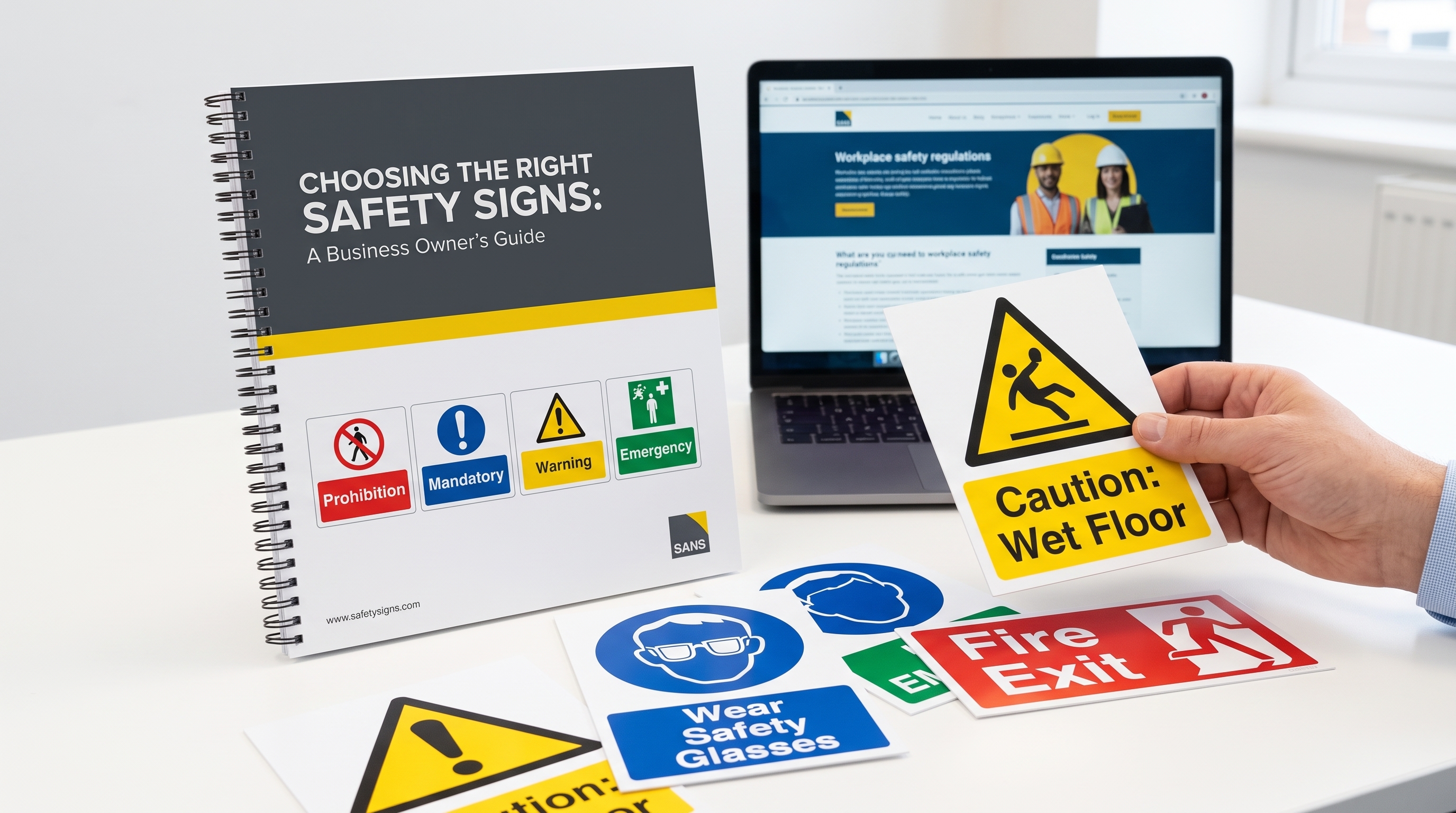
In general, safety signage follows recognizable color patterns. Red is commonly used for prohibition and fire safety. Yellow or amber is used for warnings. Blue is used for mandatory instructions. Green is used for emergency exits and first aid. These conventions help people react faster because the color gives an immediate clue before they even read the words.
Symbols are just as important as words, especially in workplaces with multilingual teams. A clear fire extinguisher symbol, eye protection symbol, or emergency exit icon can communicate faster than text alone. However, symbols should still be supported by simple wording where appropriate, especially if the sign explains a specific action.
For example, "Eye Protection Must Be Worn” is clearer than a symbol alone in areas where staff must follow a rule before entering. "No Entry, Authorized Personnel Only” is stronger than a plain "No Entry” sign if visitors regularly pass near a restricted area.
Choose wording that is clear, short, and specific
Safety signs should not read like long policy documents. People often see them while walking, carrying items, driving equipment, or responding to an urgent situation. The best sign wording is direct and easy to understand at a glance.
Instead of vague wording such as "Be careful,” use a message that explains the hazard or action. "Caution: Wet Floor” is better because it tells people exactly what the risk is. "Danger: High Voltage” is stronger than "Electrical Area” because it communicates seriousness.
Use plain language and avoid unnecessary technical terms. If your workplace has employees or visitors who speak different languages, consider bilingual signs where needed. In the UAE, English and Arabic signage may be important in many commercial, public, and workplace environments, depending on the setting and relevant authority requirements.
The goal is not to place more words on every sign. The goal is to make the meaning unmistakable.
Place safety signs where people need the information
Even the best safety signs fail if they are placed in the wrong location. Signs should be visible before someone reaches the hazard, not after they are already exposed to it.
For example, a "Forklift Operating Area” sign should be placed at entry points to the traffic zone. A "Wear Safety Helmet” sign should appear before workers enter the site area where helmets are required. Fire exit signs should guide people along the escape route, not only appear above the final door.
Placement should also consider height, lighting, viewing distance, and obstacles. A sign hidden behind a door, shelf, display rack, plant, parked vehicle, or stack of boxes is not doing its job. In warehouses and industrial spaces, larger signs may be needed because people view them from farther away or from moving equipment.
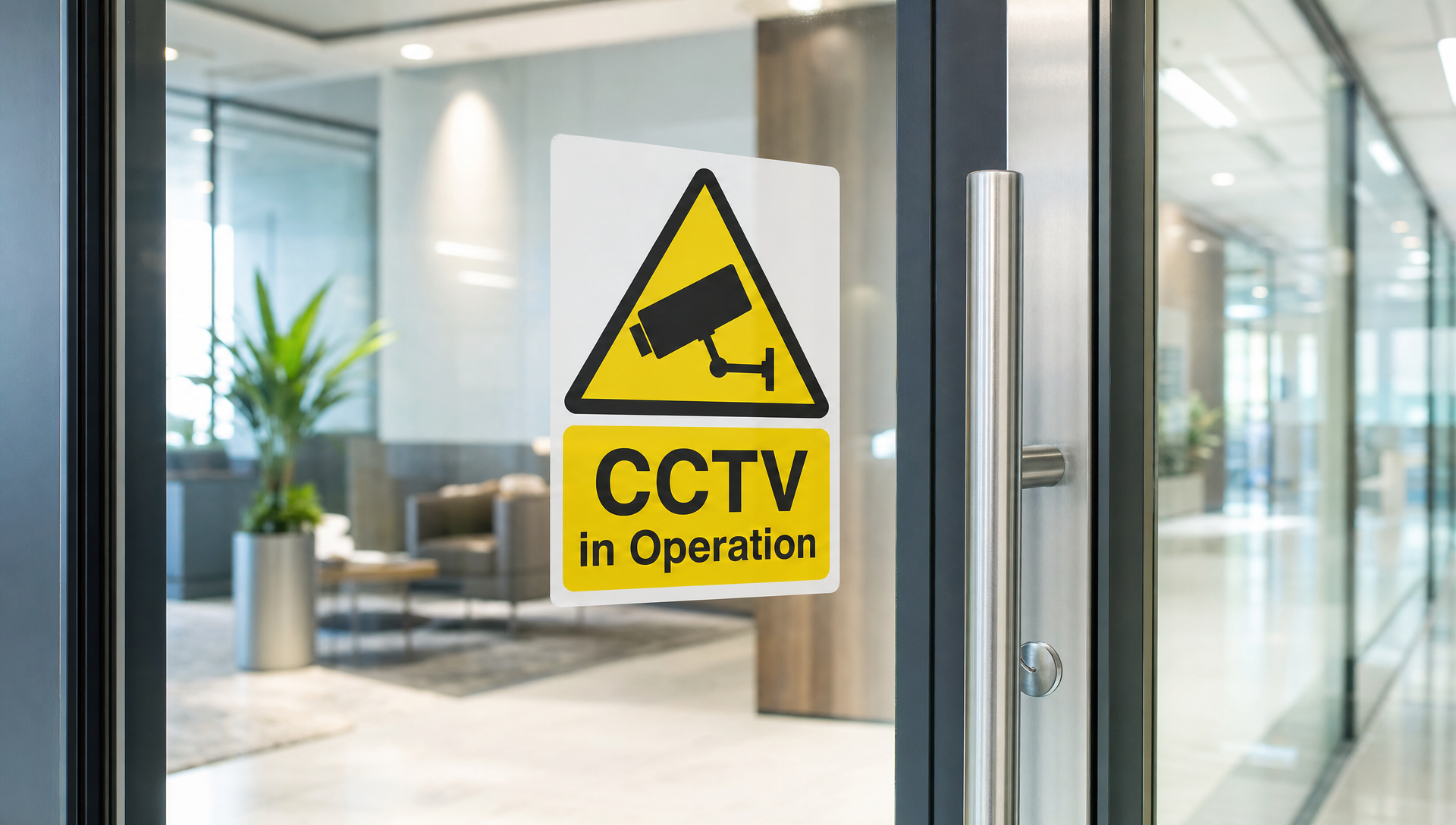
For glass doors, corridors, stairwells, and reception areas, make sure signs are positioned naturally in the line of sight. In emergency situations, people should not need to search for instructions.
Select materials that suit the environment
A safety sign in an air-conditioned office does not face the same conditions as a sign in a parking area, workshop, kitchen, loading bay, or outdoor construction site. Material choice affects durability, visibility, and long-term value.
Indoor signs may work well in lightweight plastic, vinyl, acrylic, or laminated materials. Outdoor signs usually need more durable materials that can handle heat, dust, humidity, sunlight, and occasional impact. In industrial or parking areas, aluminium, rigid plastic, or weather-resistant materials may be more suitable.
Also consider how the sign will be mounted. Some signs need adhesive backing, while others require screws, brackets, stands, cones, or wall fixing. Temporary hazards, such as cleaning or maintenance, may need portable signs rather than permanent wall signs.
| Environment | Recommended considerations | Examples |
|---|---|---|
| Office interiors | Clean finish, easy readability, wall or door mounting | Fire exit, first aid, no smoking, staff only |
| Warehouses | Larger size, impact resistance, visibility from distance | Forklift route, loading bay, PPE required |
| Kitchens and food areas | Moisture resistance, easy cleaning | Hot surface, hand wash, wet floor |
| Outdoor areas | UV resistance, weather resistance, strong fixing | Parking signs, site safety, no entry |
| Temporary work zones | Portable, easy to move, highly visible | Cleaning in progress, maintenance work, caution barriers |
Spending slightly more on the right material can prevent fading, peeling, cracking, or repeated replacement.
Check legal, building, and industry requirements
Different businesses may be subject to different safety signage requirements. A small office, a restaurant, a clinic, a construction site, and a warehouse will not have the same obligations.
In the UAE, requirements may involve building management rules, Civil Defence expectations, municipality requirements, free zone regulations, insurance conditions, or industry-specific health and safety standards. If your premises are in a mall, tower, industrial area, or managed community, there may also be approved formats or placement rules for certain signs.
For fire safety, always follow the requirements given by the relevant authority, building management, or qualified fire safety contractor. Fire exit routes, extinguisher locations, alarm points, and assembly areas need to be marked clearly and kept unobstructed.
If you are unsure, do not rely only on what another business has done. Ask your building manager, safety consultant, fit-out contractor, or local authority contact what applies to your premises.
Do not forget temporary and movable signs
Not every safety sign is fixed to a wall. Some of the most important signs are temporary because they warn people about changing conditions.
Wet floor signs are a simple example. A freshly mopped supermarket aisle, office lobby, restaurant floor, or washroom entrance can become a slip hazard within seconds. A portable caution sign gives immediate warning and can be removed once the area is safe.
Temporary signs are also useful for maintenance work, pest control, delivery zones, renovation areas, broken equipment, blocked walkways, and event setups. If your workplace changes frequently, you may need a small set of movable signs that staff can deploy quickly.
The mistake many businesses make is buying permanent signs only. Real workplace safety also depends on responding to temporary risks as they appear.
Maintain and review your safety signs regularly
Safety signs are not a one-time purchase. They need to remain visible, accurate, clean, and relevant.
A faded outdoor sign, a cracked fire exit sign, a missing arrow, or a warning label covered by dust can create false confidence. People may assume an area is properly marked when the message is no longer readable. During routine inspections, include signage in your checklist.
Look for signs that are damaged, outdated, blocked, missing, too small, poorly lit, or no longer matched to the hazard. If your workspace layout changes, update your signs immediately. A fire exit sign pointing toward a route that has been rearranged is more dangerous than no sign at all because it can mislead people in an emergency.
Staff training also matters. Employees should know what the signs mean, where key safety equipment is located, and when temporary signs should be used. A sign works best when it supports a wider safety culture.
Common mistakes to avoid when buying safety signs
Many businesses buy safety signs quickly, often during fit-out, inspection preparation, or after an incident. Rushing can lead to avoidable problems.
One common mistake is choosing signs based only on price. A cheap sign that fades, falls off, or cannot be read from a normal distance may cost more in the long run. Another mistake is using signs with unclear symbols or decorative fonts that look attractive but are difficult to understand.
Businesses also sometimes use too many signs in one area. When every wall is crowded with warnings, people may stop paying attention. Prioritize the signs that communicate real hazards and essential instructions.
Finally, avoid copying another company’s signage plan without checking your own layout. Your risks, routes, staff tasks, and customer movement may be different.
A simple buying checklist for business safety signs
Before placing an order, review the practical details. This can help you buy the right signs the first time and avoid missing important areas.
- Identify the exact hazard, instruction, or direction each sign must communicate.
- Choose the correct sign type, color, symbol, and wording.
- Confirm whether Arabic, English, or bilingual text is needed.
- Select material based on indoor, outdoor, wet, hot, dusty, or high-traffic conditions.
- Measure viewing distance and choose a readable size.
- Decide whether the sign should be fixed, adhesive, freestanding, or portable.
- Check local, building, Civil Defence, or industry requirements before installation.
- Review signs regularly and replace damaged or outdated ones.
If you are ordering online, compare product images, dimensions, materials, mounting options, and delivery details carefully. A safety sign is only useful if it arrives in the right size, suits the environment, and can be installed where it is needed.
Frequently Asked Questions
What are the most important safety signs for a business? The most important signs depend on your workplace, but many businesses need fire exit signs, fire extinguisher signs, first aid signs, no smoking signs, wet floor signs, restricted access signs, and hazard warnings for electrical, chemical, machinery, or vehicle risks.
How do I know which safety signs my business needs? Start with a risk assessment of your premises. Walk through public areas, staff zones, storage areas, emergency routes, and hazard points. Then check any requirements from your building management, local authority, safety consultant, insurer, or industry regulator.
Should safety signs be bilingual in the UAE? Bilingual signs may be appropriate or required in many UAE workplaces, especially where both Arabic and English readers use the space. The right choice depends on your business type, location, staff, visitors, and applicable rules.
Where should safety signs be placed? Place signs where people need the information before they reach the hazard or decision point. They should be visible, well lit, unobstructed, and positioned at a height and distance that make them easy to read.
How often should safety signs be replaced? Replace safety signs whenever they become faded, damaged, inaccurate, blocked, or difficult to read. You should also review signage whenever your layout, equipment, work process, or emergency route changes.
Make safety signs part of a safer workplace
Choosing the right safety signs for your business is about more than filling wall space. It is about helping people recognize hazards, follow instructions, find emergency routes, and move through your premises with confidence.
Start with your real risks, choose clear wording and recognized symbols, place signs where they can be seen, and select materials that suit the environment. Review them regularly, especially after layout changes or new equipment installations.
When safety signs are planned well, they become a quiet but essential part of your business operations. They protect people, support compliance, and show that your workplace takes safety seriously.

Comments