

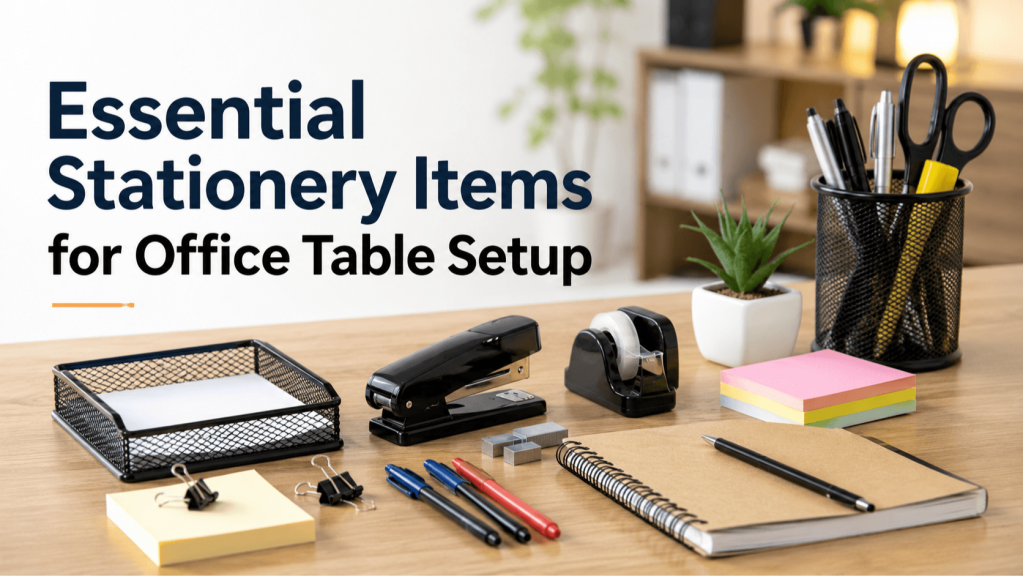
A well-planned office table can make everyday work feel lighter. When your pens, notes, files, and planning tools are easy to reach, you waste less time searching and more time finishing tasks. The best setup is not about filling every corner of your desk. It is about choosing the right stationery items for office table use, then arranging them in a way that supports your routine.
Whether you work from a corporate office in Dubai, manage a small business from home in Sharjah, or study after work in Abu Dhabi, your office table should help you stay focused, organised, and ready for the day. Here is a practical guide to the essentials worth keeping on your desk, along with tips for buying and arranging them smartly.
Start with the purpose of your office table
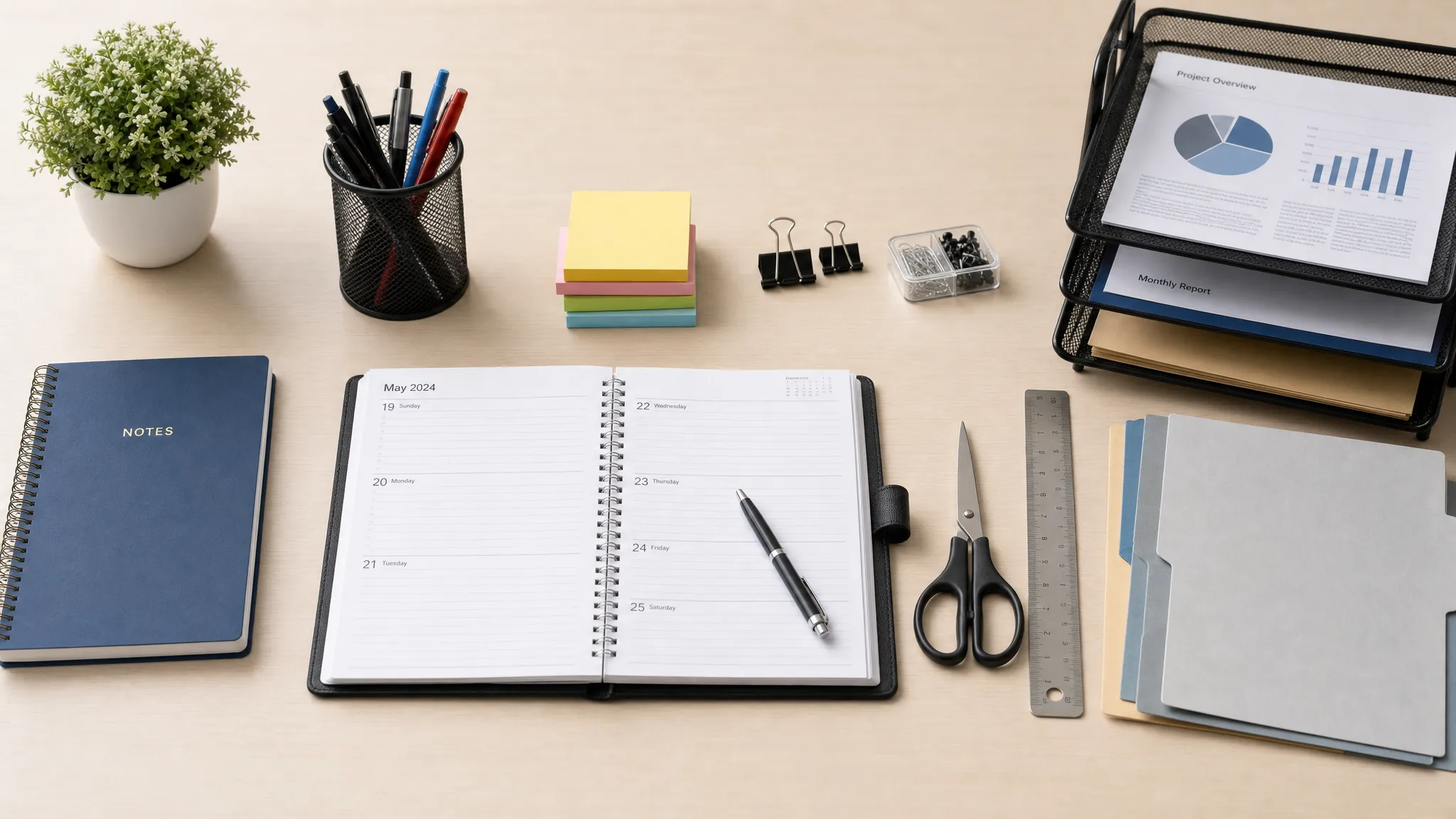
Before buying stationery, think about how you actually use your workspace. A finance professional may need calculators, files, sticky notes, and document trays. A designer may need sketchbooks, pencils, markers, and a larger writing pad. A remote worker may prefer a clean setup with a notebook, planner, pen holder, and cable clips.
The goal is to keep your most-used items within arm’s reach and store the rest nearby. This prevents clutter and makes your office table feel more intentional. If you are starting fresh, you can browse stationery essentials on Sandhai and build your setup gradually instead of buying everything at once.
Core stationery checklist for a practical office table
A strong office table setup begins with everyday basics. These are the items you will reach for repeatedly during meetings, planning sessions, calls, and admin tasks.
| Stationery item | Why it belongs on your office table | Buying tip |
|---|---|---|
| Ball pens and gel pens | Quick writing, signatures, notes, and forms | Keep blue, black, and one accent colour |
| Pencil and eraser | Drafting, sketching, temporary notes, and calculations | Choose a comfortable grip if you write often |
| Notebook | Daily notes, meeting minutes, ideas, and reminders | Pick ruled, dotted, or plain pages based on your work |
| Sticky notes | Fast reminders, task markers, and page flags | Use different colours for different priorities |
| Desk planner | Scheduling, deadlines, and weekly planning | Keep it open on the table for visibility |
| Highlighters | Marking key points in documents and study material | Use 2 to 4 colours, not too many |
| Paper clips and binder clips | Grouping papers without punching holes | Keep mixed sizes in a small container |
| Stapler and staples | Securing documents, invoices, and handouts | Compact staplers suit smaller tables |
| Scissors and cutter | Opening packages, trimming labels, and craft tasks | Store blades safely and away from children |
| Ruler | Measuring, drawing straight lines, and layout work | A 15 cm or 30 cm ruler is usually enough |
| File folders | Sorting documents, bills, and project papers | Label each folder clearly |
| Desk organiser | Holding pens, clips, notes, and small tools | Choose vertical storage to save space |
This list covers most day-to-day office needs. You can add specialised items later, such as index cards, stamp pads, correction tape, or drawing markers, depending on your profession.
Writing tools that deserve a permanent place
Pens are the most basic office stationery item, but they are also the easiest to overlook. A good pen should write smoothly, feel comfortable, and suit your work style. For signatures and official documents, keep reliable black or blue pens. For brainstorming, colour coding, or highlighting corrections, add one or two coloured pens.
Gel pens are ideal for smooth writing, while ball pens are practical for longer use because they usually dry quickly and work well on standard office paper. If your office handles forms, receipts, or delivery documents, keep extra pens in a drawer or pen stand so you are never searching during a busy moment.
Pencils are equally useful for temporary markings, quick calculations, diagrams, and draft layouts. If you sketch or plan visually, a mechanical pencil may be cleaner than a traditional one because it does not need sharpening as often.
For a balanced table setup, keep only the pens you use daily on the surface. Store refills, backup pens, and markers in a drawer or storage box.
 Notebooks, planners, and paper pads
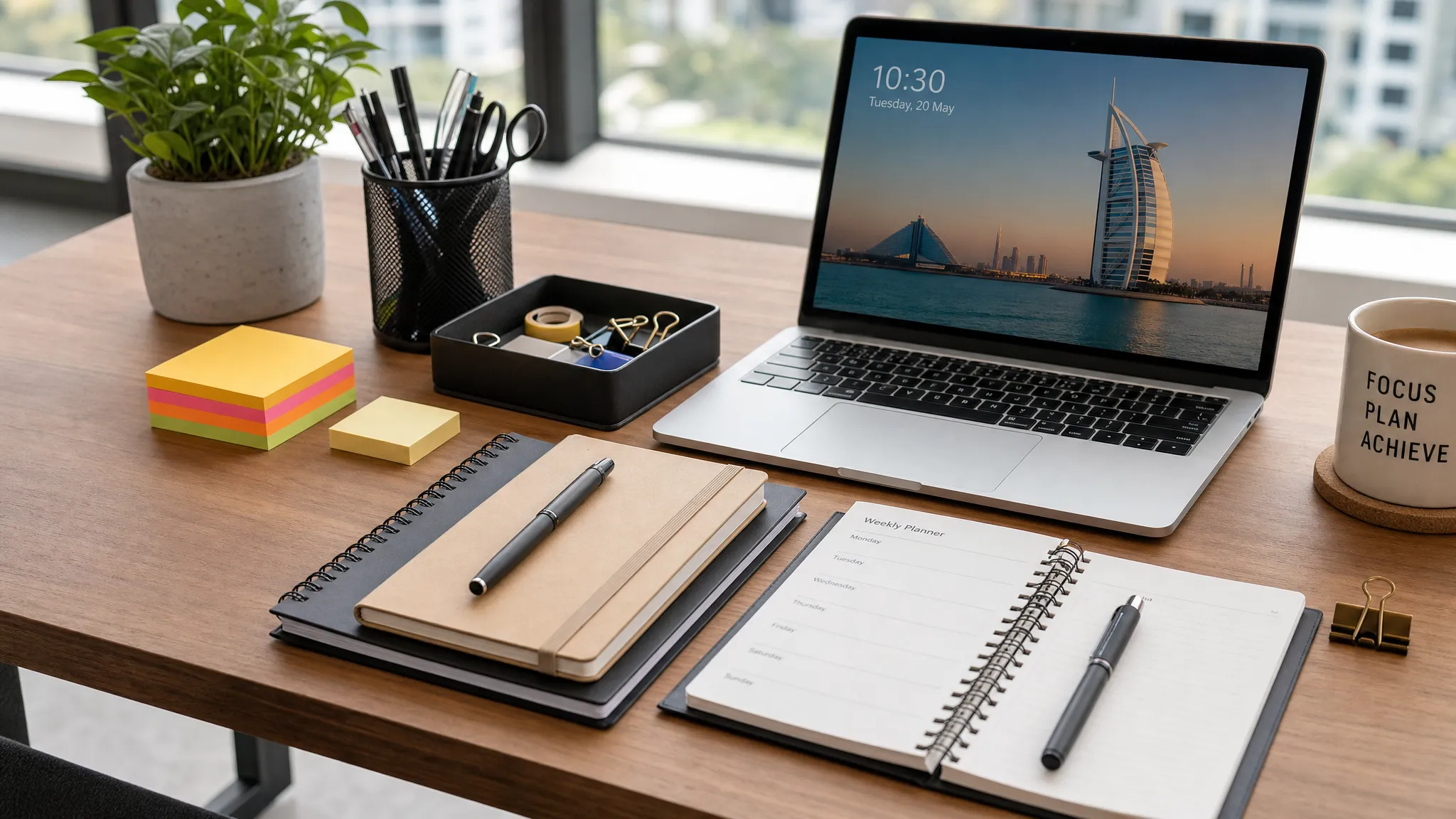
Digital tools are convenient, but paper still has a strong place in office work. A notebook helps you capture ideas quickly without opening an app, switching tabs, or getting distracted. It is especially useful during calls, team discussions, client meetings, and planning sessions.
Choose your notebook format based on how you think. Ruled pages are great for structured notes. Plain pages suit sketches and mind mapping. Dotted pages are flexible for bullet journaling, layouts, and lists. If you prefer separating topics, keep one notebook for meetings and another for personal planning.
A weekly desk planner is also worth adding if your work involves deadlines, content planning, orders, invoices, staff schedules, or study timetables. Since it stays visible, it acts as a constant reminder without needing a screen notification.
If you are restocking for a home office, school desk, or company workspace, you can search for notebooks and writing supplies in one place and choose items that match your routine.
Desk organisers and storage accessories
Organisation is what turns stationery into a productive system. Without storage, pens scatter, papers pile up, and small items disappear. A desk organiser gives each item a place, making your table easier to reset at the end of the day.
Look for organisers with sections for pens, sticky notes, clips, scissors, and small accessories. Vertical organisers are useful for compact tables because they use height rather than surface space. If you handle many papers, add a document tray or file sorter so active documents do not mix with completed ones.
A simple setup may include:
- A pen holder for daily writing tools
- A tray for incoming documents
- A folder for important papers
- A small box for clips, pins, and rubber bands
- A drawer divider for backup stationery
Try not to keep every stationery item on the table. Your office table should hold active tools, not your entire supply cabinet. Keep extras in labelled storage so the surface remains clean.
For a tidier workspace, explore desk organisers and office storage ideas that help separate daily tools from backup supplies.
Sticky notes, flags, and labels for faster workflow
Sticky notes are small, but they can make a big difference in task management. Use them for short reminders, phone numbers, follow-up tasks, page markers, and temporary labels. They are especially helpful when you need to organise thoughts quickly during a call or meeting.
The key is to use them with intention. If every note is urgent, none of them feel urgent. Assign simple meanings to colours, such as yellow for general reminders, pink for urgent follow-ups, and green for completed checks or approvals.
Page flags are useful for documents, textbooks, contracts, and catalogues. They let you mark important sections without writing directly on the page. Labels are equally helpful for folders, drawers, storage boxes, and document trays.
Filing essentials for documents and receipts
Even in a digital workplace, paper documents still appear. Receipts, invoices, certificates, delivery notes, contracts, warranties, and printed reports need proper storage. If they sit loose on the table, they create clutter and increase the chance of losing important information.
Keep a few file folders or document wallets for common categories. For example, you might separate bills, client papers, HR documents, supplier invoices, or study notes. If you work with many printed papers, consider using a file tray for active documents and a larger folder for archived ones.
A good filing habit is simple: decide, label, store. Do not create a pile called "later” unless you review it daily. The fewer loose papers on your office table, the easier it is to focus.
Small tools that solve everyday problems
Some stationery items are not used every hour, but when you need them, they save time. A stapler, paper clips, binder clips, tape, scissors, cutter, ruler, and correction tape should be nearby, especially if your work involves printing, packing, sorting, or preparing documents.
Binder clips are particularly useful because they handle thicker stacks of paper and can also help manage cables temporarily. A ruler helps with measuring, underlining, and aligning labels. Scissors and cutters are useful for opening parcels, trimming printed material, and preparing presentation boards.
If you shop online often for office, study, or business supplies, grouping these small items into one order can reduce repeated purchases. Sandhai offers multiple categories for everyday needs, so you can combine stationery with other office essentials when planning your shopping.
Comfort, lighting, and the overall desk environment
Stationery is important, but your office table also needs a comfortable environment. Good lighting reduces eye strain and makes reading, writing, and reviewing documents easier. If your table is near a window, natural light is helpful during the day, but you still need a lamp for evening work or cloudy days.
A desk lamp with focused light is useful for writing and reading. For a more complete workspace upgrade, especially in a home office or study corner, you may also want to explore a curated designer lighting collection that can complement your room while improving the work atmosphere.
Comfort also includes table height, chair support, and enough clear space for your arms. Keep your main notebook and writing tools on the dominant-hand side. Place documents on the opposite side or in a tray. This makes your movements smoother and prevents unnecessary reaching.
If your current table or storage does not support your workflow, you can also look through home and furniture options to improve the larger workspace around your stationery setup.
A simple office table layout that works
A good layout divides your table into zones. The centre should stay clear for active work, such as writing, typing, reviewing papers, or packing documents. One side can hold your planner, notebook, and pen holder. The other side can hold a document tray or file folder.
Place items by frequency of use. Daily items should be close. Weekly items can sit in a drawer. Rarely used supplies should be stored away from the table. This keeps your workspace efficient without making it feel empty.
Here is a practical arrangement:
| Desk zone | What to place there | Why it works |
|---|---|---|
| Centre | Laptop, writing pad, or active documents | Keeps the main work area open |
| Right or left side | Pen holder, planner, sticky notes | Keeps frequent tools easy to reach |
| Back corner | File tray, small plant, lamp | Uses space without interrupting work |
| Drawer | Extra pens, staples, tape, clips | Reduces visual clutter |
| Shelf or cabinet | Archived files and bulk stationery | Keeps long-term storage off the table |
This setup works for most office tables, whether compact or spacious. Adjust it based on your dominant hand, work type, and available storage.
How to choose stationery based on your work style
Not every workspace needs the same supplies. Buying based on your role helps you avoid clutter and spend more wisely.
| Work style | Best stationery priorities | Optional additions |
|---|---|---|
| Remote worker | Notebook, planner, sticky notes, pen holder | Cable clips, file tray |
| Student | Notebooks, highlighters, sticky flags, ruler | Index cards, subject folders |
| Small business owner | Receipt folder, stapler, labels, calculator | Stamp pad, packing tape |
| Admin professional | File trays, binder clips, pens, correction tape | Document wallets, hole punch |
| Creative worker | Sketchbook, pencils, markers, plain paper | Cutting mat, craft knife |
This approach keeps your table practical. The right stationery supports the way you work rather than copying someone else’s desk setup.
Keep your office table clean with a weekly reset
Even the best setup needs maintenance. A weekly reset keeps your table from slowly turning into storage space. Choose one day, perhaps Thursday evening or Sunday morning, and spend 10 minutes reviewing your desk.
Throw away dried pens, outdated sticky notes, unnecessary printouts, and packaging. Refill your stapler, replace missing clips, sharpen pencils, and update your planner. Move completed documents into the right folder and prepare your notebook for the coming week.
A clean table sends a simple signal to your brain: you are ready to begin. It also makes video calls, client visits, and focused work feel more professional.
To make your workspace even more comfortable, you can add related items such as cleaning wipes, hand cream, or wellness products from personal care and wellness essentials, especially if you spend long hours at your table.
Smart shopping tips for office stationery in the UAE
Online shopping makes it easier to compare products, build a complete list, and avoid last-minute store visits. When buying stationery for an office table, think in sets. Pens, notebooks, sticky notes, files, and clips are often needed together, so ordering them at the same time helps you create a consistent setup.
Check product size before buying organisers, trays, or folders. UAE homes and offices vary in table size, so measure your available space first. A large organiser may look useful, but it can dominate a compact table. For small desks, choose slim trays, vertical holders, and multi-purpose storage.
Also consider who will use the table. A family study desk may need extra pencils, erasers, rulers, and notebooks. A business desk may need document folders, staplers, labels, and receipt storage. A personal work-from-home table may need fewer items, but better quality basics.
Sandhai brings together a wide range of shopping categories, including stationery, groceries, home products, personal care, and more. If you prefer convenient online shopping in the UAE, you can start from Sandhai.ae and plan your office table setup alongside other household essentials.
Frequently Asked Questions
What are the most essential stationery items for an office table? The essentials include pens, pencils, notebook, sticky notes, planner, highlighters, paper clips, stapler, scissors, ruler, file folders, and a desk organiser. These cover writing, planning, sorting, and daily admin tasks.
How do I organise stationery on a small office table? Keep only daily-use items on the table, such as a notebook, pen holder, planner, and small sticky note pad. Store extra pens, clips, staples, and files in a drawer, shelf, or labelled box.
Should I use a notebook or a planner for work? Use both if your work involves meetings and deadlines. A notebook is best for detailed notes and ideas, while a planner helps you see tasks, appointments, and priorities at a glance.
How often should I restock office stationery? For personal use, check your supplies once a month. For a shared office or business, review stationery weekly or biweekly so pens, paper, staples, and folders do not run out during busy periods.
What is the best way to reduce office table clutter? Use zones, keep the centre of the table clear, store backup supplies away from the surface, and do a weekly reset. Avoid keeping unused pens, old papers, and excess sticky notes on the desk.
Build a workspace that feels ready every day
The best office table setup is simple, useful, and easy to maintain. Start with writing tools, a notebook, a planner, sticky notes, filing supplies, and a desk organiser. Then add items that match your work, study, or business routine.
When your stationery has a clear place and purpose, your workspace becomes calmer and more productive. For convenient online shopping in the UAE, explore Sandhai and create an office table setup that supports your everyday goals.

Share this via
Or copy link