

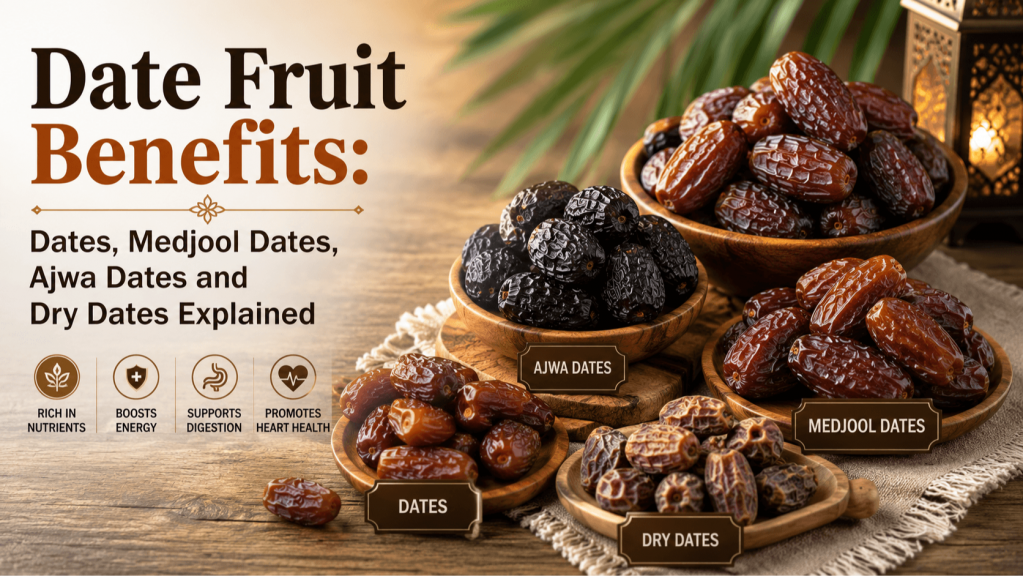
Dates are one of the most loved traditional foods in the UAE, the wider Middle East, and many South Asian households. Whether you call them dates, date fruit, khajur, or khajoor, they are valued for their natural sweetness, long shelf life, cultural importance, and everyday versatility.
From soft Medjool dates to prized Ajwa dates and pantry-friendly dry dates, this fruit fits easily into breakfast, snacks, desserts, Ramadan meals, gifting, and family cooking. But dates are not only about taste. They also provide dietary fiber, minerals, and natural carbohydrates that can support a balanced diet when enjoyed in the right portions.
For busy UAE shoppers, dates are especially practical. They are easy to store, simple to serve, suitable for guests, and useful in both traditional and modern recipes. Understanding the benefits and differences between varieties helps you choose the right type for your home.
Why date fruit is so popular in UAE households
Date fruit has a special place in daily life because it combines nutrition, tradition, and convenience. In many homes, dates are offered to guests with Arabic coffee, packed into lunchboxes, used to break a fast, or kept as a natural sweet option after meals.
The UAE’s food culture also makes dates easy to appreciate. Families may prefer soft and rich varieties for serving, firmer dry dates for storage, or specific traditional types such as Ajwa dates for religious and cultural reasons. South Asian shoppers may also recognize dates as khajur or khajoor, especially when buying them for sweets, fasting foods, or festive recipes.
Another reason dates remain popular is that they are naturally ready to eat. Unlike many snacks, they require no cooking, no refrigeration for short-term use, and no complicated preparation. This makes them ideal for professionals, parents, students, and anyone who wants a quick energy source without reaching for highly processed sweets.
Nutritional benefits of dates
Dates are naturally high in carbohydrates, mainly from fruit sugars, which is why they taste sweet and provide quick energy. They also contain fiber and small amounts of important minerals. According to USDA FoodData Central, dates can contribute nutrients such as potassium, magnesium, and iron depending on the variety and serving size.
The most important point is balance. Dates are nutritious, but they are also calorie-dense compared with many fresh fruits. A small portion can be satisfying, while a large portion can add a lot of sugar and calories quickly.
| Benefit | Why it matters | Practical tip |
|---|---|---|
| Natural energy | Dates provide quick carbohydrates, useful before activity or after fasting | Pair 2 to 3 dates with nuts or milk for a more filling snack |
| Dietary fiber | Fiber supports digestion and helps make snacks more satisfying | Choose whole dates instead of date syrup when you want more fiber |
| Minerals | Dates can contribute potassium and magnesium to the diet | Use dates as part of a varied diet with fruits, vegetables, grains, and protein |
| Natural sweetness | Dates can replace refined sugar in some recipes | Blend into smoothies, energy balls, chutneys, or desserts |
| Long shelf life | Dry dates and semi-dry dates are easy to store | Keep them sealed in a cool, dry place or refrigerate for longer freshness |
A Cleveland Clinic overview of dates also highlights that dates contain antioxidants and fiber, making them a better sweet choice than many ultra-processed desserts when eaten in moderation.
Medjool dates: soft, rich, and naturally caramel-like
Medjool dates are one of the best-known premium date varieties. They are usually large, soft, moist, and rich in flavor, with a natural caramel-like taste. This makes them a favorite for gifting, serving to guests, stuffing with nuts, or using in healthier dessert recipes.
Because Medjool dates are soft and sweet, they are excellent for people who want a dessert-like snack without buying packaged sweets. They work well with almonds, walnuts, pistachios, tahini, dark chocolate, yogurt, or oats.
Medjool dates are also useful in blended recipes. You can soak them briefly and blend them into smoothies, date paste, homemade snack bars, or sauces. Their soft texture makes them easier to process than some firmer dry dates.
The main thing to remember is portion size. Medjool dates are often larger than other dates, so two Medjool dates may provide more sweetness and calories than several smaller varieties. If you are monitoring sugar intake, enjoy them mindfully.
Ajwa dates: a culturally treasured variety
Ajwa dates are small, dark, soft to semi-soft dates often associated with Madinah and Islamic tradition. Many shoppers look for Ajwa dates during Ramadan, Eid, religious occasions, gifting seasons, or for daily consumption at home.
Their flavor is usually less intensely caramel-like than Medjool dates, with a pleasant mild sweetness and a distinct texture. Because of their cultural value, Ajwa dates are often served simply rather than heavily processed into recipes.
When buying Ajwa dates, quality matters. Look for dates that appear clean, naturally dark, and not overly dry unless you specifically prefer a firmer texture. Packaging, origin details, and storage conditions are also worth checking, especially when buying for gifting or family use.
Ajwa dates can be enjoyed with Arabic coffee, milk, warm water, nuts, or as part of a simple breakfast. For many households, the benefit of Ajwa is not only nutritional. It is also emotional, cultural, and spiritual.
Dry dates: practical, long-lasting, and versatile
Dry dates are dates with lower moisture content. They may be firmer, chewier, or harder than soft varieties, depending on how they are processed and stored. In many Indian and South Asian kitchens, dry dates are often called khajur or khajoor and used in sweets, snacks, milk drinks, and festive recipes.
The biggest advantage of dry dates is shelf life. They are easier to store for longer periods and can be useful for households that like to buy pantry staples in advance. They are also convenient for cooking because their firmer texture holds up well in some recipes.
Dry dates can be chopped into porridge, soaked in milk, ground into powders for traditional sweets, or used in homemade trail mixes. If they are too hard to chew, soaking them in warm water or milk can soften them before use.
Because dry dates are concentrated, they can taste very sweet. A small quantity is often enough to flavor recipes naturally.
Dates vs refined sugar: a smarter sweetener in many recipes
Dates are often used as a natural alternative to refined sugar. This does not mean dates are sugar-free. They are naturally sweet because they contain fruit sugars. The difference is that whole dates also bring fiber, texture, minerals, and plant compounds, while refined white sugar provides sweetness without those additional nutrients.
For home cooking, dates can help reduce reliance on processed sweets. You can use date paste in laddoos, smoothies, oatmeal, cakes, chutneys, sauces, and energy bites. Medjool dates are especially good for date paste because they blend easily, while dry dates may need soaking first.
A simple date paste can be made by soaking pitted dates in warm water and blending them into a thick, smooth mixture. Use it in small amounts to sweeten recipes naturally. The taste is richer than plain sugar, so it works especially well with nuts, cinnamon, cardamom, cocoa, coconut, and sesame.
Best ways to eat dates every day
Dates are easy to include in daily meals, but they work best when paired with foods that add protein, healthy fats, or extra fiber. This helps make the snack more satisfying.
Here are simple ways to enjoy dates without overcomplicating your routine:
- Eat 2 to 3 dates with almonds, walnuts, or pistachios as an afternoon snack.
- Add chopped dates to oats, cereal, yogurt, or chia pudding.
- Stuff Medjool dates with nut butter or tahini for a dessert-style treat.
- Serve Ajwa dates with Arabic coffee for guests or family gatherings.
- Soak dry dates in milk and blend into a naturally sweet drink.
- Use date paste in homemade sweets instead of adding refined sugar.
Dates also pair beautifully with savory foods. They can be added to rice dishes, salads, roasted vegetables, cheese boards, and meat marinades for a sweet contrast.
How many dates should you eat per day?
There is no single perfect number for everyone. Portion size depends on your age, activity level, health goals, and overall diet. For many adults, a small serving of 2 to 4 dates can fit comfortably into a balanced day, especially when paired with nuts, milk, yogurt, or a meal.
People managing diabetes, insulin resistance, weight loss, or specific medical conditions should be more careful with portions and may want to ask a doctor or dietitian for personal guidance. Dates are natural, but they still contain sugar and calories.
The best approach is to treat dates as a nutrient-rich sweet food, not an unlimited snack. Enjoy them slowly, choose quality over quantity, and balance them with other whole foods.
How to choose good quality dates
Good dates should look appealing, smell fresh, and match the texture you expect from the variety. Soft dates should feel moist but not wet or sticky from leakage. Dry dates should feel firm but not dusty, stale, or unpleasantly hard.
When comparing date fruit options, check the packaging and product details carefully. This is especially important when buying premium Medjool dates, Ajwa dates, or gift packs.
| What to check | Why it matters |
|---|---|
| Variety name | Helps you know whether you are buying Medjool, Ajwa, dry dates, or another type |
| Texture | Soft dates are better for snacking, while dry dates are useful for storage and cooking |
| Packaging date or expiry date | Helps you choose fresher stock |
| Storage instructions | Some dates stay best refrigerated after opening |
| Added ingredients | Plain dates should usually contain only dates, unless flavored or stuffed |
| Appearance | Avoid dates with unusual odor, mold, or damaged packaging |
If you are buying for guests, gifting, Ramadan, or Eid, presentation may matter as much as variety. For everyday family use, freshness, taste, and value may be more important.
How to store dates at home
Dates are relatively easy to store, which is one reason they are such a practical pantry food. For short-term use, wide varieties can be kept in an airtight container in a cool, dry cupboard. For longer storage, refrigeration helps preserve texture and flavor.
Soft dates such as Medjool dates may benefit from refrigeration, especially in warm climates. Dry dates usually keep longer at room temperature if sealed properly, but they should still be protected from heat, humidity, and insects.
If dates become slightly dry, they can often be softened by soaking them in warm water for a few minutes. If they smell fermented, show mold, or taste unusual, it is safer not to eat them.
Why dates are ideal for Ramadan and fasting
Dates are closely associated with breaking the fast during Ramadan. They are easy to digest for many people, naturally sweet, and quick to serve. After hours without food, dates provide fast energy in a small portion.
A common approach is to break the fast with water and a few dates, then continue with soup, protein, grains, and vegetables. This helps avoid overeating sweets immediately after fasting.
Ajwa dates are especially meaningful for many families during Ramadan because of their religious and traditional significance. Medjool dates are also popular for iftar tables because they are soft, indulgent, and easy to serve with nuts or coffee.
Are dates good for children?
Dates can be a good snack for children when served safely and in suitable portions. They are naturally sweet and can be used to make homemade snacks instead of relying on packaged candies or biscuits.
For younger children, always remove the pit and cut dates into small pieces to reduce choking risk. Sticky foods can also cling to teeth, so good dental hygiene matters. Pairing dates with milk, yogurt, or nuts, if age-appropriate and allergy-safe, can make the snack more balanced.
Parents can use chopped dates in porridge, pancakes, lunchbox snacks, or homemade energy balls. Dry dates may be too hard for some children unless soaked or cooked first.
Buying dates as part of a smarter grocery routine
For UAE shoppers, dates are more than a seasonal item. They are a pantry staple, a hospitality essential, and a useful ingredient for both traditional and modern cooking. Keeping dates at home can make it easier to serve guests, prepare quick snacks, and reduce dependence on processed sweets.
If you already plan your grocery basket online, dates fit naturally beside other pantry staples, nuts, beverages, sweets, personal care products, and household essentials. A platform such as Sandhai.ae can help UAE shoppers browse multiple everyday categories in one place, including groceries, traditional Indian products, home essentials, stationery, personal care, and seasonal items.
For families who use both Arabic and South Asian ingredients, this kind of shopping routine can be useful. You may know dates as khajur or khajoor in one recipe, serve Ajwa dates for tradition, and choose Medjool dates for guests or desserts. The goal is not just to buy more food. It is to choose better pantry items that suit your lifestyle.
FAQ
What is the main benefit of dates? Dates provide natural energy, dietary fiber, and minerals such as potassium and magnesium. They are also a practical alternative to many processed sweets when eaten in moderation.
Are Medjool dates healthier than other dates? Medjool dates are nutritious, soft, and rich in flavor, but they are not automatically healthier than every other variety. Their larger size means portion control is important.
What are Ajwa dates known for? Ajwa dates are known for their cultural and religious importance, especially in Islamic tradition. They are small, dark dates often enjoyed during Ramadan, Eid, and daily family routines.
Are dry dates good for health? Dry dates can be a good pantry food because they provide natural sweetness, fiber, and minerals. Since they are concentrated and often firm, enjoy them in small portions and soak them if needed.
Are khajur and khajoor the same as dates? Yes. Khajur and khajoor are commonly used names for dates in many regional grocery and household contexts, especially among South Asian shoppers.
Can people with diabetes eat dates? Some people with diabetes may be able to eat small portions of dates, but individual responses vary. It is best to follow medical advice and monitor portion size carefully.
Make dates part of a balanced pantry
Date fruit is sweet, traditional, versatile, and useful for everyday life in the UAE. Medjool dates are ideal for rich snacking and desserts, Ajwa dates carry deep cultural value, and dry dates are practical for storage and cooking.
Whether you call them dates, khajur, or khajoor, the smartest approach is to enjoy them in moderation and choose the variety that fits your needs. For convenient everyday shopping, visit Sandhai.ae to browse groceries, traditional Indian products, home essentials, personal care items, gifts, and more in one online destination.

Share this via
Or copy link