

Bakhoor is more than a pleasant home fragrance. In many UAE homes, it is part of hospitality, Friday gatherings, Ramadan evenings, Eid visits, weddings, and quiet moments after a busy day. The warm smoke, often built around oud, amber, musk, rose, sandalwood, and spice notes, can make a room feel welcoming within minutes.
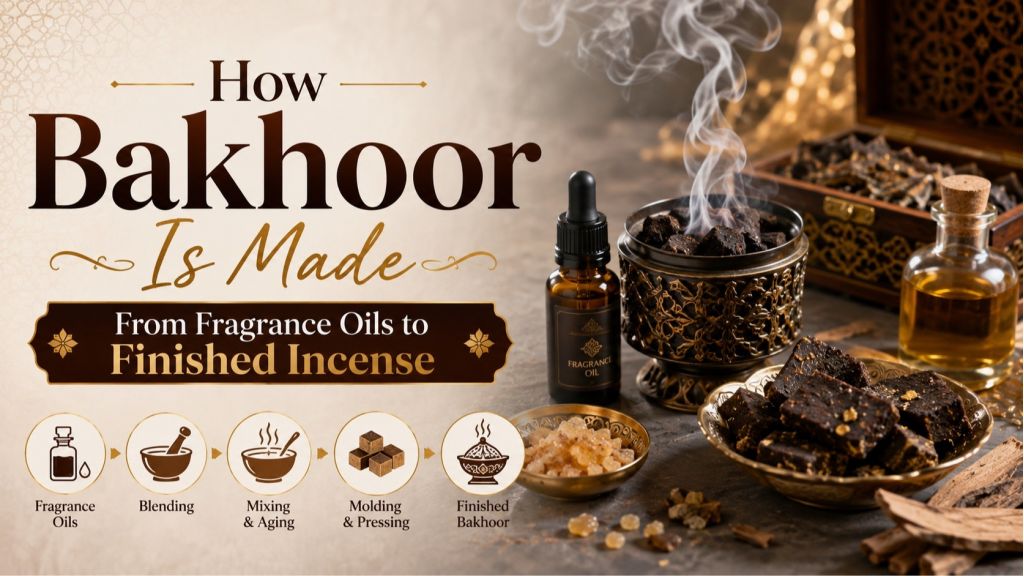
But when you shop for incense online, the label rarely tells the full story. Understanding the bakhoor making process helps you know why some blends smell richer, burn smoother, and last longer than others. From the choice of wood chips to the way fragrance oils are blended, cured, and packed, every stage affects the final experience.
What is bakhoor?
Bakhoor, also spelled bukhoor, is a type of Arabian incense made by combining fragrant materials with oils, resins, powders, and a base such as wood chips or compressed incense material. It is usually heated on charcoal or in an electric burner, releasing scented smoke rather than an open flame.
It is different from pure oud chips. Oud chips are pieces of agarwood that release their own natural aroma when heated. Bakhoor, on the other hand, is a composed fragrance. Makers may use oud chips, sandalwood powder, sugar, resin, essential oils, perfume oils, musk accords, floral notes, and other ingredients to create a signature scent.
That is why two bakhoor products can smell completely different even if both mention oud. One may be deep, smoky, and leathery, while another may be sweet, floral, and powdery.
 The main ingredients used in bakhoor
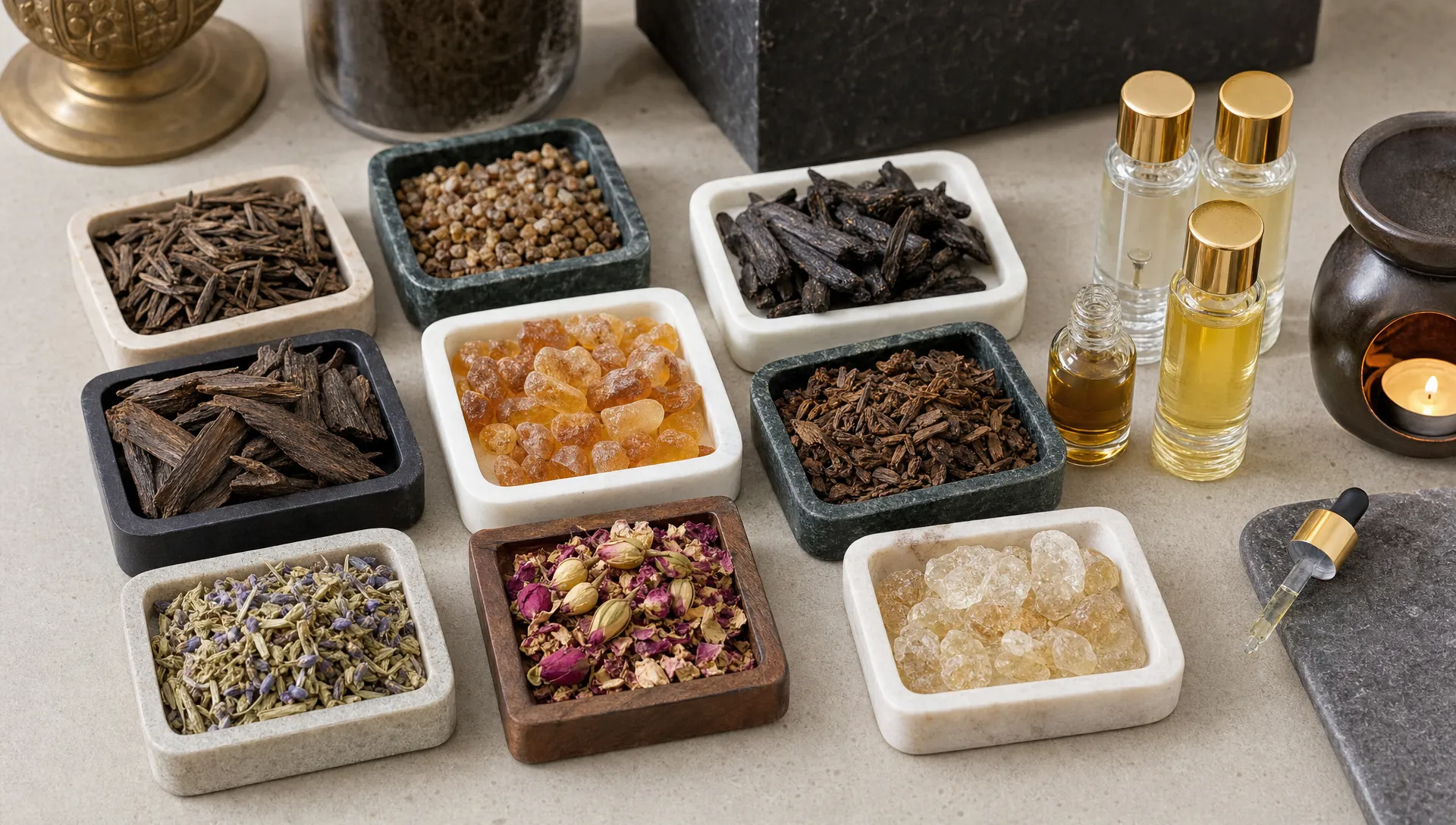
The quality of bakhoor starts with its raw materials. Traditional makers may guard their exact recipes closely, but most blends are built from a few core categories.
| Ingredient type | Role in bakhoor | What shoppers may notice |
|---|---|---|
| Wood chips or powder | Creates the base and helps carry the scent | Texture, burn style, and smoky depth |
| Fragrance oils | Provide the main aroma profile | Floral, oud, musky, sweet, spicy, or fresh notes |
| Resins | Add warmth, richness, and longer scent release | Amber-like, balsamic, or slightly sweet character |
| Natural powders | Help bind and balance the mixture | Smoother texture and more even burning |
| Fixatives | Help the scent last longer | Better room fragrance after the smoke fades |
In premium blends, ingredient selection is not only about strong fragrance. It is about balance. A bakhoor that smells powerful in the container may become harsh when heated if the formula is not well balanced.
Step 1: Choosing the base material
The base is the body of the bakhoor. It can include wood chips, crushed aromatic woods, powder, or a formed incense mixture. In traditional styles, small chips give bakhoor a rustic look and allow the oils to settle into the wood. In modern commercial styles, the mixture may be shaped into tablets, blocks, granules, or small pieces for consistent burning.
A good base needs to absorb oils without becoming wet or greasy. If it is too dry, the fragrance may sit on the surface and evaporate quickly. If it is too dense, it may not release the scent evenly when heated.
The base also influences smoke. Some bases create a soft, slow smoke, while others burn faster and sharper. This is one reason handmade and small batch bakhoor often varies slightly from batch to batch.
Step 2: Creating the fragrance oil blend
The fragrance oil blend is the soul of bakhoor. Makers usually combine several aromatic notes to create a layered scent. A classic Arabian profile may include oud, rose, musk, amber, saffron, sandalwood, vanilla, or incense resin. A fresher blend may include citrus, powdery florals, or clean musk.
Perfume blending is a technical craft. The maker must think about how the oil smells in the bottle and how it behaves under heat. Some notes smell beautiful when cold but become too sharp when warmed. Others bloom only after heat releases them.
Fragrance oils are also made for specific uses. A scent used in stationery, such as Scented Star Markers, is not the same as an oil designed to be heated in bakhoor. Incense fragrance must be chosen with heat performance, smoke behavior, and safety in mind.
Responsible fragrance houses often refer to industry guidance such as the International Fragrance Association standards, which focus on safe use of fragrance ingredients in different product categories. For shoppers, this is a reminder that quality incense is not just about a strong scent. It is also about careful formulation.
Step 3: Mixing oils with the base
Once the fragrance blend is ready, it is gradually added to the base. This is not usually a simple pour and stir. Makers need to distribute the oils evenly so every piece gives a consistent aroma.
In artisan production, the mixture may be turned by hand in small batches. In larger production, controlled mixers help coat the base more evenly. The maker may add resins, powders, or binding agents during this stage to create the desired texture.
The best mixtures are moist enough to hold fragrance but not sticky or dripping. If bakhoor feels overly oily, it may smoke too heavily, stain packaging, or burn unevenly. If it feels too dry, it may have lost fragrance or may not have been cured properly.
Step 4: Resting and curing the mixture
Curing is one of the most important parts of the bakhoor making process. After mixing, the blend is usually left to rest so the oils can absorb into the base and the fragrance notes can settle together.
This resting period can vary depending on the recipe and production style. Some blends are cured for days, while more refined batches may be rested longer. During this time, the sharper top notes soften and the deeper base notes become more rounded.
Think of it like marinating food. The ingredients may already be combined, but time helps them become one finished profile. A well cured bakhoor often smells smoother when heated and leaves a more pleasant after-scent in the room.
Step 5: Shaping, drying, and finishing
Depending on the style, bakhoor may be left as scented chips, broken into rustic pieces, pressed into tablets, or shaped into small blocks. The form affects how easy it is to use and how the incense performs on heat.
Chipped bakhoor tends to feel traditional and may release scent quickly because of its uneven surface. Pressed or shaped bakhoor can be easier to portion and store. Powder-based bakhoor may be smooth and intense, but it needs the right burner setup to avoid overheating.
After shaping, the product may be dried or allowed to stabilize. This does not mean removing all moisture. Instead, the goal is to reach the right balance so the bakhoor remains fragrant, stable, and easy to handle.
Step 6: Quality checking the finished incense
Before packaging, good bakhoor should be checked in both cold and heated form. Cold smell is what you notice when opening the container. Hot throw is the fragrance released when the bakhoor is placed on charcoal or in a burner.
A quality check may consider:
- Whether the scent is consistent from piece to piece.
- Whether the smoke feels smooth rather than harsh.
- Whether the fragrance lasts after burning.
- Whether the pieces are too oily, too dry, or crumbly.
- Whether the packaging protects the scent from air and heat.
For online shoppers, this is where reviews, seller details, product photos, and descriptions become useful. If you want a ready-made premium Arabic option for home or majlis use, you can compare the product presentation of Bukhoor Dhukhoon Kayan and look at the notes, packaging, and seller information before buying.
Traditional bakhoor vs modern bakhoor
Traditional bakhoor is often associated with handmade blending, family recipes, oud-rich profiles, and smaller batches. The scent may feel deeper and more personal, but natural variations can occur.
Modern bakhoor is usually designed for consistency. Brands may use standardized fragrance oils, controlled mixing, and uniform pieces so that each container smells similar. This can be useful for shoppers who want a predictable scent for daily use.
Neither style is automatically better. A traditional blend may feel luxurious and complex, while a modern blend may be cleaner, more affordable, and easier to use. The best choice depends on your preference, burner type, room size, and occasion.
How to judge bakhoor quality when shopping online
Since you cannot smell the product through a screen, pay attention to the details that indicate care in production. The product description should give a sense of the scent family. Words like oud, floral, musky, woody, sweet, amber, powdery, or spicy help you imagine the profile.
Photos can also reveal texture. Very wet or unevenly stained pieces may suggest excess oil, although lighting can sometimes be misleading. Customer reviews can help you understand strength, longevity, and whether the fragrance suits home use, clothing, or special occasions.
Here is a simple shopping guide:
| What to check | Why it matters | Good sign |
|---|---|---|
| Scent description | Helps match your taste | Clear aroma family and usage notes |
| Product form | Affects burning and portion control | Chips, pieces, or tablets shown clearly |
| Seller information | Builds trust | Transparent listing and support details |
| Packaging | Protects aroma | Sealed container or protective pack |
| Reviews | Shows real use experience | Comments on smoothness and longevity |
If you are new to bakhoor, start with a balanced scent rather than the strongest option. Heavy oud and musk can feel luxurious, but they may be too intense for small apartments unless used lightly.
How finished bakhoor is used at home
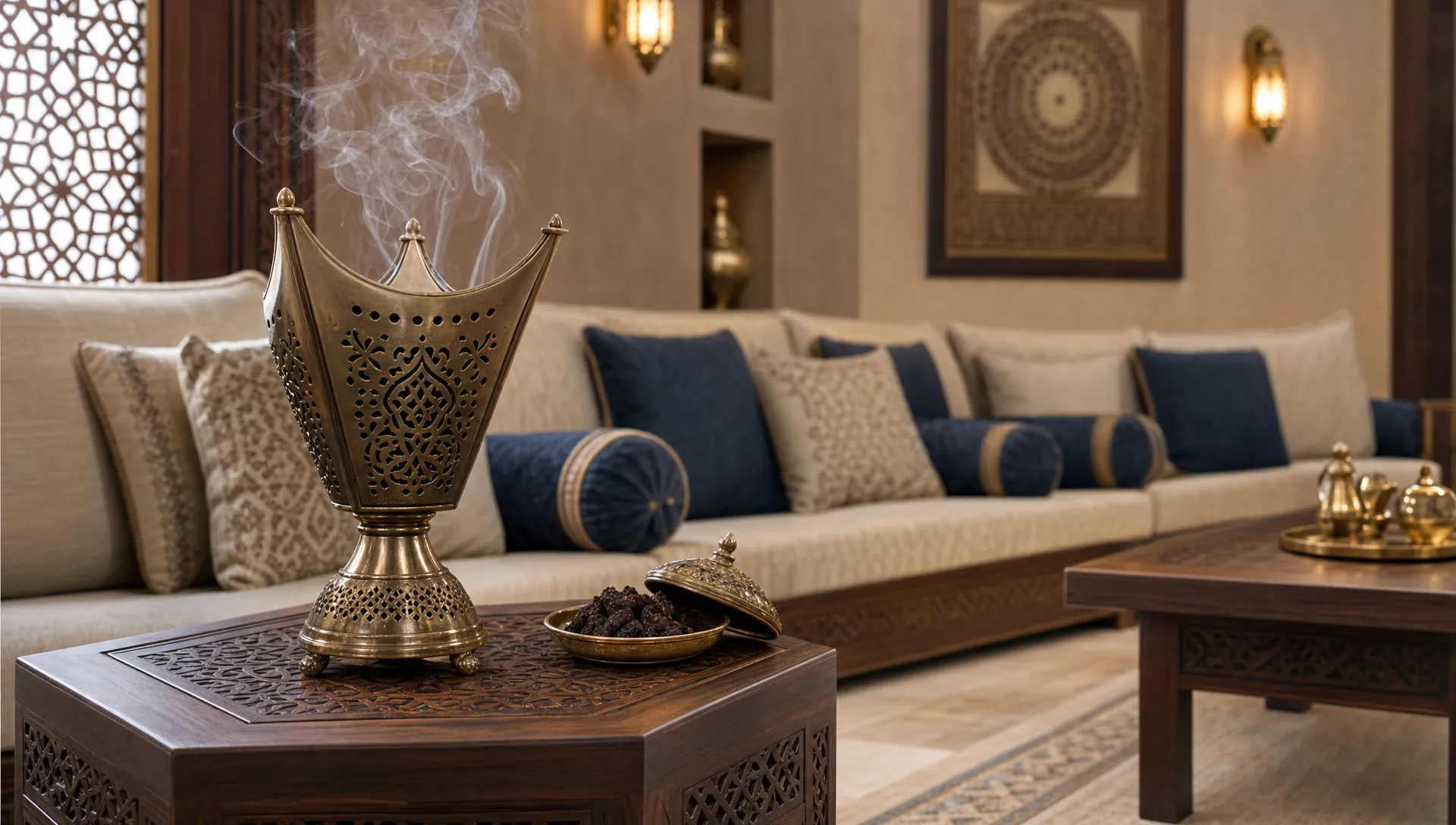
Finished bakhoor is usually heated, not directly lit like a stick of incense. Many people place a small piece on hot charcoal in a mabkhara, while others use electric burners for easier control.
Use a small amount first. Quality bakhoor can be powerful, and adding too much may overwhelm the room. Let the smoke move through the space, then ventilate if needed. You can use it before guests arrive, after cooking, before prayer, or when refreshing living areas and wardrobes.
A National Library of Medicine review on incense smoke notes that burning incense can release particulate matter and gases. This does not mean you cannot enjoy bakhoor, but it does mean moderation and ventilation are sensible, especially around children, elderly family members, pets, or people with asthma or breathing sensitivity.
For celebrations, place the burner on a stable heat-safe surface and keep it away from fabrics, paper decorations, and other flame-based items. If you are setting up a birthday table, for example, keep bakhoor separate from candles or novelty items such as a Musical Birthday Candle.
How to store bakhoor so it stays fragrant
Storage matters because bakhoor is rich in fragrance oils. Keep it in an airtight container, away from direct sunlight, heat, and humidity. UAE homes can become warm quickly, especially near windows or kitchens, so a cool cupboard is usually better.
Avoid storing bakhoor near strong-smelling products. Spices, perfumes, cleaning products, and open food packs can affect the aroma over time. If your pantry contains bold spice blends such as Sakthi Biryani Masala, keep bakhoor in a separate cabinet so both scents remain true to themselves.
Do not leave the container open after use. Exposure to air can weaken the top notes and make the blend smell flat. If the bakhoor comes in a decorative jar, make sure the lid closes properly after every use.
Why the making process matters to shoppers
When you understand how bakhoor is made, you can shop with more confidence. A cheap, overpowering incense may smell strong at first but fade quickly or feel harsh when heated. A well made bakhoor may use a more balanced oil blend, better curing, careful finishing, and protective packaging.
The process also explains price differences. Oud-rich blends, longer curing, better resins, and small batch preparation can all increase cost. On the other hand, a simpler modern blend may still be enjoyable for daily use if it is made cleanly and burns well.
The goal is not always to buy the most expensive bakhoor. The goal is to choose the right scent for your home, your guests, and your routine.
Frequently Asked Questions
What is the main step in the bakhoor making process? The key step is blending fragrance oils with a suitable base, then curing the mixture so the scent becomes smooth, balanced, and long lasting when heated.
Is bakhoor made only from oud? No. Some bakhoor includes oud chips or oud oil, but many blends also use musk, amber, rose, sandalwood, resins, spices, florals, and perfume oils.
Why does some bakhoor smell different when burned? Heat changes how fragrance notes evaporate. A blend that smells sweet or soft in the container may become smokier, warmer, or stronger when placed on charcoal or in a burner.
How much bakhoor should I use at one time? Start with a small piece, especially in smaller rooms. You can always add more, but using too much at once may make the fragrance too intense.
How long does bakhoor last after opening? It depends on the formula and storage. If kept sealed in a cool, dry place away from sunlight and strong odors, bakhoor can retain its fragrance much longer than if left open.
Bring authentic fragrance into your home
Bakhoor begins with raw materials, fragrance oils, careful mixing, curing, and finishing. By knowing what happens before it reaches the container, you can choose incense that suits your space, mood, and occasion.
Explore home fragrance, groceries, traditional products, gifts, and everyday essentials through Sandhai.ae, with convenient online shopping and delivery across the UAE.

Comments