

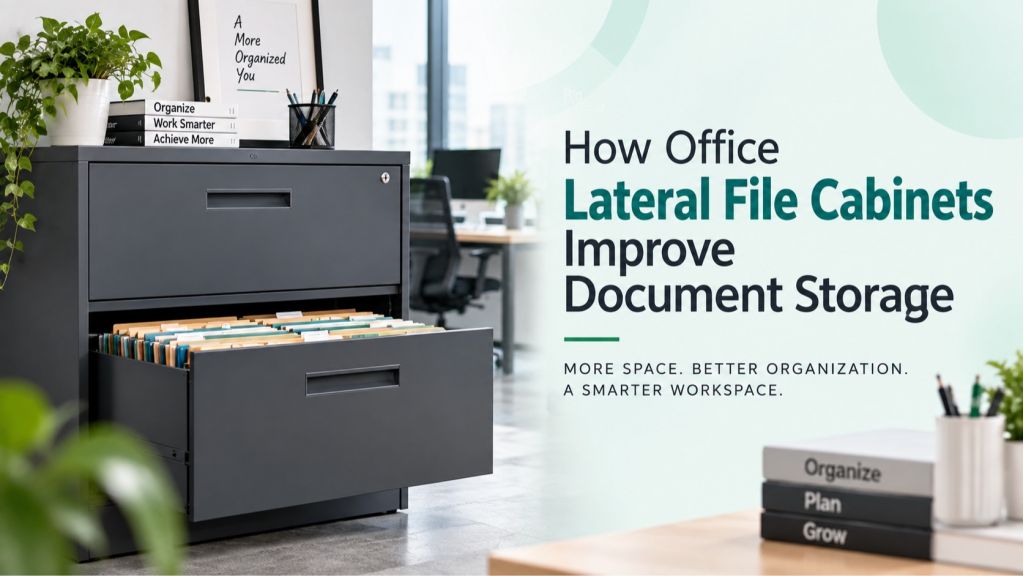
Paperwork has a way of spreading. One invoice sits on a desk, a signed contract waits in a tray, receipts move into a drawer, and soon nobody is fully sure where the latest version is. For homes, small businesses, and growing offices in the UAE, office lateral file cabinets can turn that daily clutter into a practical, searchable storage system.
Unlike a standard vertical filing cabinet, a lateral file cabinet is wider than it is deep. Files usually sit across the drawer from left to right, which makes labels easier to scan in one view. That simple difference can improve how quickly you retrieve documents, how safely you store them, and how professionally your office looks.
What makes a lateral file cabinet different?
A lateral file cabinet is designed for broad drawer access. Instead of stacking files in a narrow front-to-back row, it gives you a wider filing area so you can see more folders at once. This format is especially useful when you handle different document categories every day, such as client files, employee papers, invoices, warranties, property documents, or supplier records.
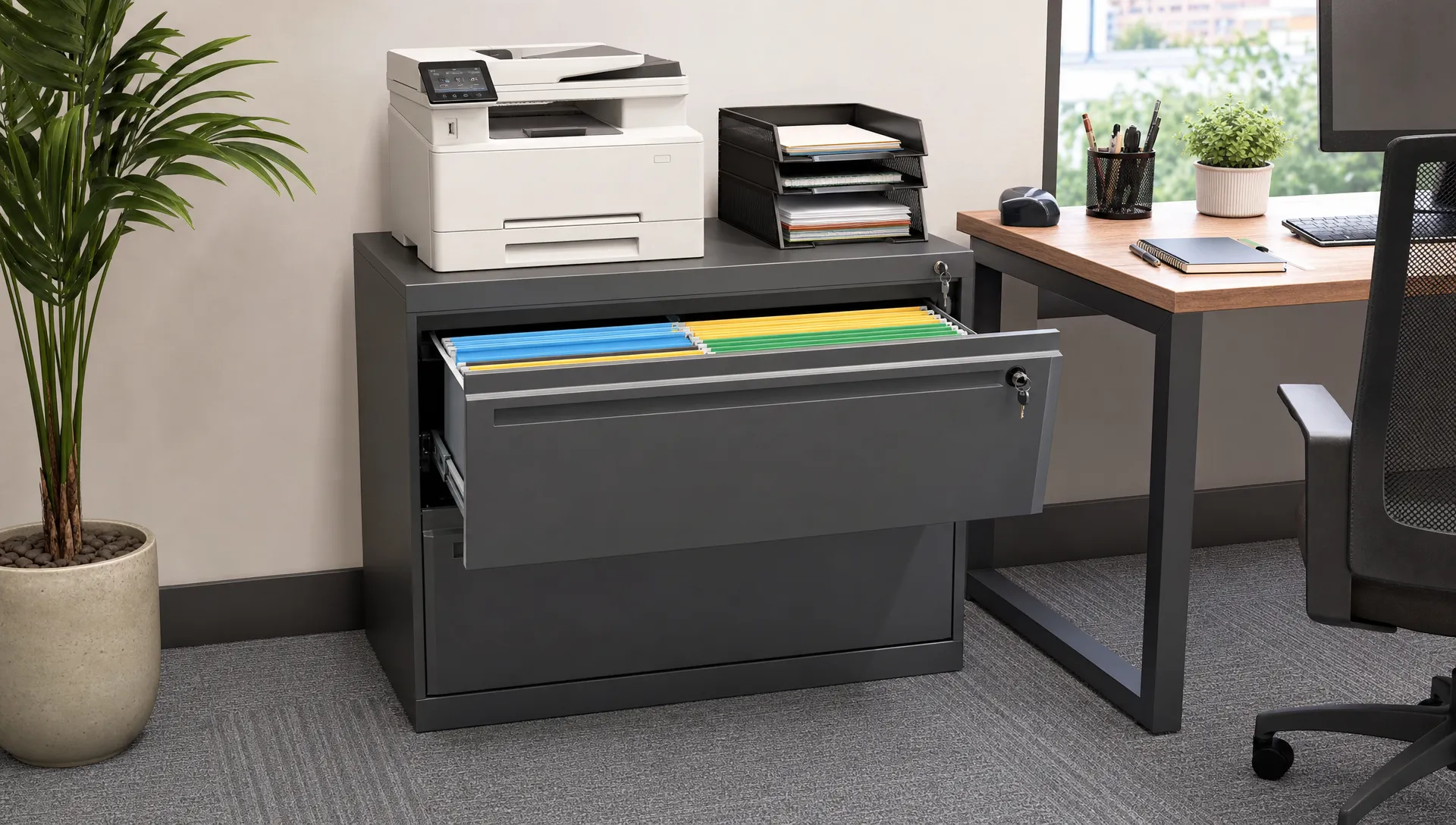
The top surface can also be useful. In many offices, a low lateral cabinet can sit beside a desk and act as a secondary work surface for a printer, file tray, or document scanner. If you are planning a more complete workstation, pairing storage with a suitable wooden office desk helps create a cleaner area for both digital and paper tasks.
Vertical cabinets can still be useful when floor space is narrow, but lateral cabinets often feel easier to work with because the drawer opening gives you a wider view. For anyone who frequently pulls files during the day, that convenience matters.
 How office lateral file cabinets improve document storage
They make files easier to find
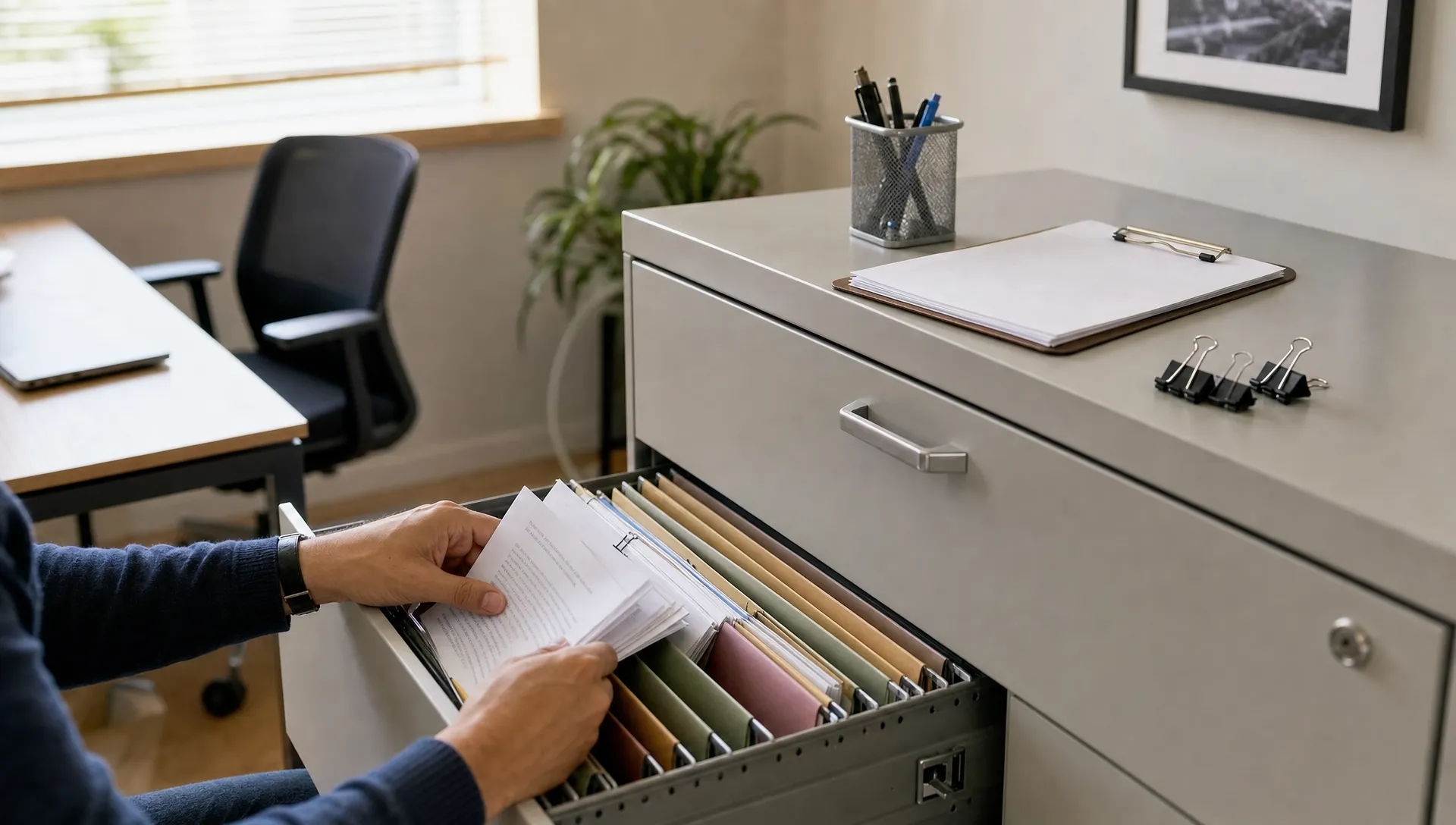
The biggest benefit is visibility. When folders are arranged side by side in a wide drawer, you can scan labels quickly without pulling out half the cabinet. This is helpful in busy offices where several people may need access to the same types of documents.
A lateral cabinet works well with simple labelling systems. You can organise files alphabetically, by client name, by month or by document type. For example, a small trading business might dedicate one drawer to supplier invoices, one to customer documents and one to HR records. A family home office might use drawers for property papers, school documents, bank statements and product warranties.
They reduce desk clutter
A clean desk is not only about appearance. When the documents you need have a proper place, you spend less time moving piles around before starting work. Lateral cabinets support a simple routine: active files stay in the cabinet, documents in progress go in a tray, and finished records move to archive storage.
For printed forms, catalogues or customer-facing material, a dedicated display stand can stop frequently used papers from mixing with confidential files. For example, an A4 brochure holder stand can keep forms, leaflets or office notices visible while your filing cabinet handles private records.
They protect documents from damage
Loose papers are more likely to bend, tear, fade or disappear. A cabinet gives folders a more stable environment and reduces unnecessary handling. This is especially important for documents that are costly or difficult to replace, such as tenancy contracts, trade licences, insurance papers, medical records or signed agreements.
For long-term preservation, paper records should be kept away from excess heat, moisture, and direct sunlight. The U.S. National Archives recommends clean, stable storage conditions for records and careful handling to reduce deterioration. In a UAE office, that usually means placing cabinets away from windows, avoiding damp utility areas and keeping drinks or cleaning liquids off the cabinet surface.
They support better compliance habits
Many businesses must keep records for accounting, tax, HR, or operational reasons. A lateral filing system makes it easier to separate active documents from old records and apply retention rules consistently. This does not replace professional accounting or legal advice, but it does help your team avoid the common problem of mixing current paperwork with outdated files.
A practical system might separate records into three groups:
- Active documents for files used weekly or monthly.
- Reference documents for records you check occasionally.
- Archive documents for files you must retain but do not use often.
A lateral cabinet is usually best for the first two groups. For older binders, boxed files or larger household storage, a spacious double door wooden almirah may be more suitable than keeping everything in office drawers.
Lateral file cabinets vs other storage options
No single cabinet solves every storage need. The best choice depends on your document volume, office size and how often you need access.
| Storage type | Best for | Main advantage | Consider before buying |
|---|---|---|---|
| Lateral file cabinet | Frequently used documents and labelled folders | Wide drawer access makes files easy to scan | Needs enough wall space for the cabinet width |
| Vertical file cabinet | High-volume filing in a narrow area | Uses less wall width | Labels can be harder to view quickly |
| Almirah or wardrobe cabinet | Box files, binders and mixed storage | Good for larger items and archived records | May not be as quick for daily file retrieval |
| Chest of drawers | Stationery, envelopes, accessories and light office supplies | Flexible storage for non-file items | Not always ideal for hanging folders |
| Open shelf | Books, manuals and decorative storage boxes | Easy access and display | Not suitable for confidential documents |
This comparison matters because many offices need more than one type of storage. A lateral cabinet can handle daily paperwork, while a wooden chest of drawers can store stationery, printer supplies and small accessories that would otherwise occupy file space.
How to organise a lateral file cabinet properly
A good cabinet only works if the filing system is easy to maintain. The goal is to create a structure that anyone in your home or office can understand without needing a long explanation.
Start with broad categories, then refine them. If you create too many categories at the beginning, people may stop using the system. For a small business, broad sections like finance, customers, suppliers, staff, and operations are usually easier than dozens of micro-categories. For a home office, property, banking, education, health, vehicles and warranties can work well.
Use consistent labels. If one folder says "Supplier Bills,” another says "Vendor Invoices,” and another says "Purchases,” you may end up filing the same type of document in three different places. Choose one wording style and keep it consistent across all folders.
Keep the most-used drawer at the easiest height. If you access customer forms daily, they should not sit in the bottom drawer. If old records are rarely opened, they can go lower or move to archive storage.
Schedule a monthly review. Filing systems fail when old documents build up and new papers are squeezed into random spaces. A short monthly clean-up helps you remove duplicates, move completed records to archive and check whether labels still match how your work is organised.
Choosing the right office lateral file cabinet
Before buying, measure the space carefully. A lateral cabinet needs room for its width and enough clearance for drawers to open fully. If it will sit beside a desk, check chair movement, walking space and access to power sockets.
Also consider what you will store. Standard paper files are different from box files, binders, catalogues or product manuals. If your office stores mixed items, you may need a combination of closed filing, drawers and shelving. A wooden corner shelf can be useful for books, manuals or decorative storage boxes, while confidential documents stay inside closed storage.
Material and build quality matter too. A cabinet used daily should have smooth drawer movement, stable construction, and enough strength for loaded folders. If the cabinet is tall or heavy, follow basic furniture safety practices such as opening one drawer at a time and placing heavy items lower. In homes with children, consider whether the unit needs to be secured or positioned away from play areas.
Style is another factor, especially for reception areas, executive rooms, and home offices where furniture is visible. Some workspaces prefer a fully office-focused filing cabinet, while others combine file storage with more decorative furniture. If your space needs both display and closed storage, a piece such as a wooden step design cabinet may complement your filing area without making the room feel too corporate.
Where lateral cabinets fit best in UAE homes and offices
In compact Dubai apartments, a lateral cabinet can work well under a window ledge or along a short wall in a study corner, provided it is not exposed to harsh sunlight. In a small business office in Sharjah or Abu Dhabi, it can sit behind an admin desk so invoices, delivery notes and forms are always close by. In a villa or family home, it can become the central point for school documents, warranties, insurance papers and household records.
The main rule is to place the cabinet where documents are actually used. If your cabinet is too far from the desk, papers will return to the tabletop. If it blocks movement, people will avoid opening it. The best location makes filing easier than leaving papers out.
Common mistakes to avoid
One common mistake is buying storage before deciding what needs to be stored. Count your current files, estimate growth, and separate active documents from archive records first. This helps you avoid choosing a cabinet that is either too small or unnecessarily large.
Another mistake is using drawers as general dumping space. Once cables, snacks, stationery, and old catalogues start sharing space with important documents, the system becomes harder to trust. Keep lateral cabinets focused on records and use other furniture for general storage.
A third mistake is ignoring file security. Not every document needs the same level of protection, but personal IDs, staff records, financial documents, and signed contracts should not be mixed with public-facing paperwork. If several people use the same office, assign access rules and keep sensitive files in the most secure storage available.
Frequently Asked Questions
What are office lateral file cabinets best used for? Office lateral file cabinets are best for frequently accessed files, labelled folders, and documents that need to be scanned quickly by category, name or date.
Are lateral file cabinets better than vertical file cabinets? They are better for visibility and quick access, while vertical cabinets can be better when wall width is limited. The right choice depends on your space and filing volume.
Can I use a lateral file cabinet in a home office? Yes. A lateral cabinet is useful for home offices that manage tenancy papers, school documents, banking records, warranties, medical files, and other household paperwork.
How do I keep documents organised in a lateral cabinet? Use broad categories, consistent labels and a regular review routine. Keep active files in the easiest drawer and move older documents to archive storage when they are no longer needed daily.
What should I pair with a lateral file cabinet? Many workspaces pair a lateral cabinet with a desk, supply drawers, shelves, or an almirah. This separates active files from stationery, books, binders and archived records.
Create a cleaner office storage setup with Sandhai
Office lateral file cabinets can make document storage faster, safer, and easier to maintain, but the best workspace usually combines several practical furniture pieces. From desks and shelves to cabinets and drawer storage, Sandhai helps UAE shoppers find home and office essentials in one place.
Explore Sandhai.ae to compare furniture, office accessories, and everyday essentials with convenient online shopping across the UAE.

Comments