

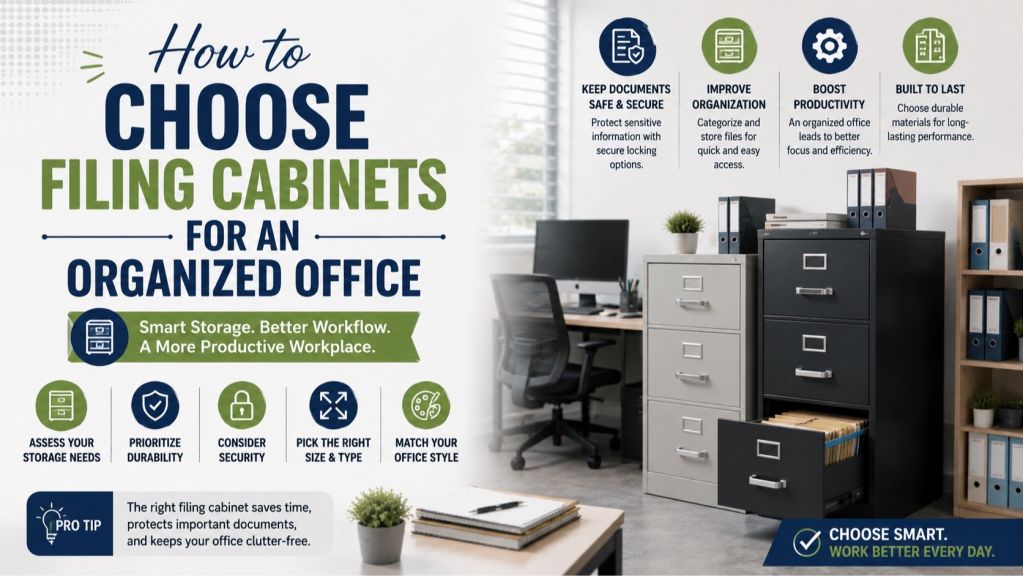
A tidy office is not only about looking professional. It saves time, protects important documents and makes everyday work feel lighter. Whether you work from a corporate office, a small retail counter, a clinic, a school administration room or a home office in the UAE, the right filing cabinets can make the difference between controlled storage and paper clutter that grows every week.
The challenge is that file cabinets are not one-size-fits-all. A cabinet that works well for HR records may be awkward for invoices. A tall cabinet that suits a back office may look too heavy in a reception area. A compact storage cabinet may be perfect beside your desk but too small for long-term document archiving.
This guide walks you through how to choose office filing cabinets based on your space, file category, security needs, material, budget and daily workflow.
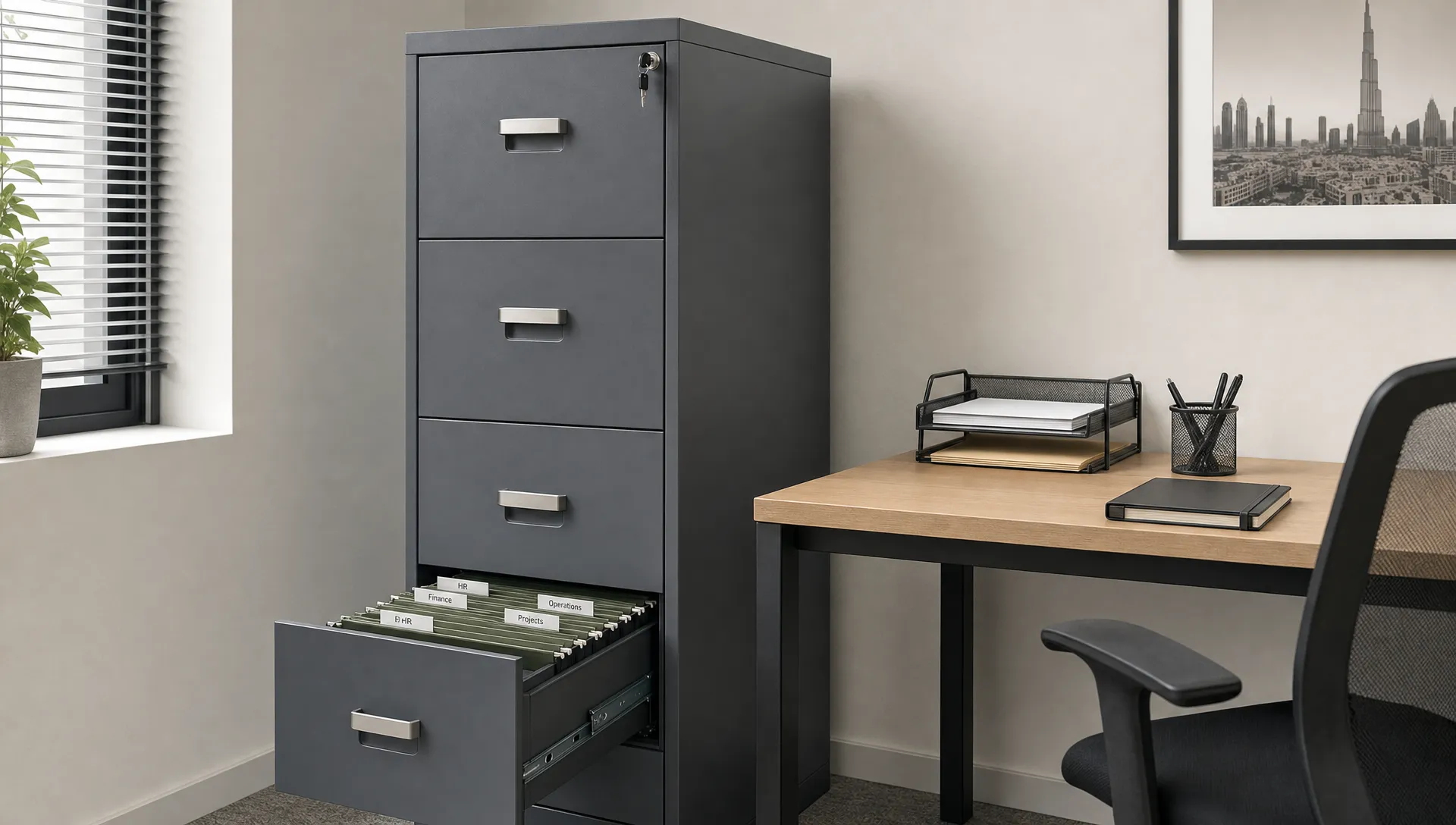 Start with what you need to store
Before choosing a cabinet style, look at your paperwork honestly. Many buyers choose filing cabinets based only on appearance or price, then discover that the drawers are too shallow, the cabinet is hard to access or the structure does not match the type of files they use.
Create a quick list of the documents your office handles. Common file category groups include:
- Finance documents such as invoices, receipts, tax records and purchase orders
- HR records such as employee contracts, leave forms and onboarding papers
- Customer files, service records and signed agreements
- Supplier documents, quotations, warranties and delivery notes
- Office stationery, manuals, brochures and printed forms
Once you know your main file category groups, you can decide whether you need deep drawers for hanging files, shallow drawers for stationery, open shelves for fast access or a combination storage cabinet for mixed items.
If your office is part of a wider setup refresh, it can also help to browse a UAE marketplace such as Sandhai.ae so your filing cabinets, desks and other office essentials feel coordinated rather than bought separately over time.
Choose the right type of filing cabinet
Different file cabinets solve different problems. The best option depends on how often you access documents, how much floor space you have and whether the cabinet will sit in a public-facing area.
| Cabinet type | Best for | Main advantage | Consider before buying |
|---|---|---|---|
| Vertical filing cabinet | Small offices with limited floor space | Uses height instead of width | Deep drawers may need clearance when open |
| Lateral filing cabinet | High-volume offices and shared teams | Wide drawers make files easier to view | Needs more wall space |
| Mobile pedestal cabinet | Desk-side daily files | Easy access and flexible placement | Limited capacity |
| Cupboard-style storage cabinet | Mixed files, stationery and office supplies | Versatile storage | May need internal organizers |
| Drawer chest | Home offices or executive rooms | Blends with furniture | Not always designed for hanging files |
Vertical filing cabinets are popular where floor space is tight. They usually have narrow, deep drawers and are useful for alphabetical or chronological filing. Lateral file cabinets are wider and easier to browse at a glance, making them suitable for accounts teams, admin areas or shared document storage.
A mobile cabinet works well if you need active files next to your desk. For example, sales orders, current project papers or frequently used forms should not be stored far away from the person who handles them every day. A cupboard-style storage cabinet is better when you need to combine files with stationery, printer paper, packaging materials or office supplies.
Match the cabinet size to your office layout
A filing cabinet should improve movement in the office, not block it. Measure the area before buying, including the drawer opening space. This is especially important in compact Dubai apartments, small retail shops, shared workspaces and reception corners.
Think about three measurements:
- Cabinet width and depth
- Drawer extension space
- Walking clearance around the cabinet
A tall cabinet may offer excellent capacity but can feel bulky in a small room. A low lateral unit may double as a surface for a printer or document tray, but it needs a longer wall. Mobile file cabinets are easy to tuck under or beside a desk, but they will not handle large archive volumes.
Also consider how the filing cabinet fits with your desk. If you are upgrading the main workspace, pairing storage with a wooden office desk can create a more organized work zone where daily files, laptop work and writing tasks each have a clear place.
Decide between metal, wood and engineered materials
Material affects durability, appearance, weight and maintenance. Office filing cabinets are commonly made from metal, solid wood, engineered wood or mixed materials.
Metal file cabinets are strong, practical and usually preferred for heavy document storage. They suit back offices, accounts rooms, clinics and administrative environments where durability matters more than decoration. They are also easier to wipe clean, which is useful in busy work areas.
Wooden filing cabinets and drawer units feel warmer and more decorative. They work well in executive offices, home offices, study rooms and customer-facing spaces where furniture style matters. A wooden storage cabinet may also blend better with desks, shelving and decor.
Engineered wood options can be a balanced choice for shoppers who want a furniture-like look at a more accessible price point. Check the drawer slides, handle quality and edge finishing before buying. A cabinet that looks good online should still feel sturdy enough for your expected file load.
In the UAE, also think about indoor humidity and air conditioning. Paper can curl or age faster in poorly ventilated spaces, so avoid placing file cabinets directly beside damp walls, pantry sinks or areas exposed to outdoor dust.
Check drawer function, weight capacity and file format
A filing cabinet is only useful if the drawers open smoothly when full. This is one of the easiest details to miss when shopping online, but it has a major effect on daily use.
Look for clear product details about drawer size, construction and intended use. If you use hanging files, make sure the cabinet supports them. If you store box files, lever arch files or ring binders, check internal height and depth. If you mostly store stationery and loose documents, a drawer chest or general storage cabinet may be enough.
Heavy paper adds up quickly. A drawer full of documents can become surprisingly weighty, so weak drawer runners may bend, jam or become noisy over time. For busy offices, smooth runners and firm handles are worth prioritizing over decorative details.
Think about security and privacy
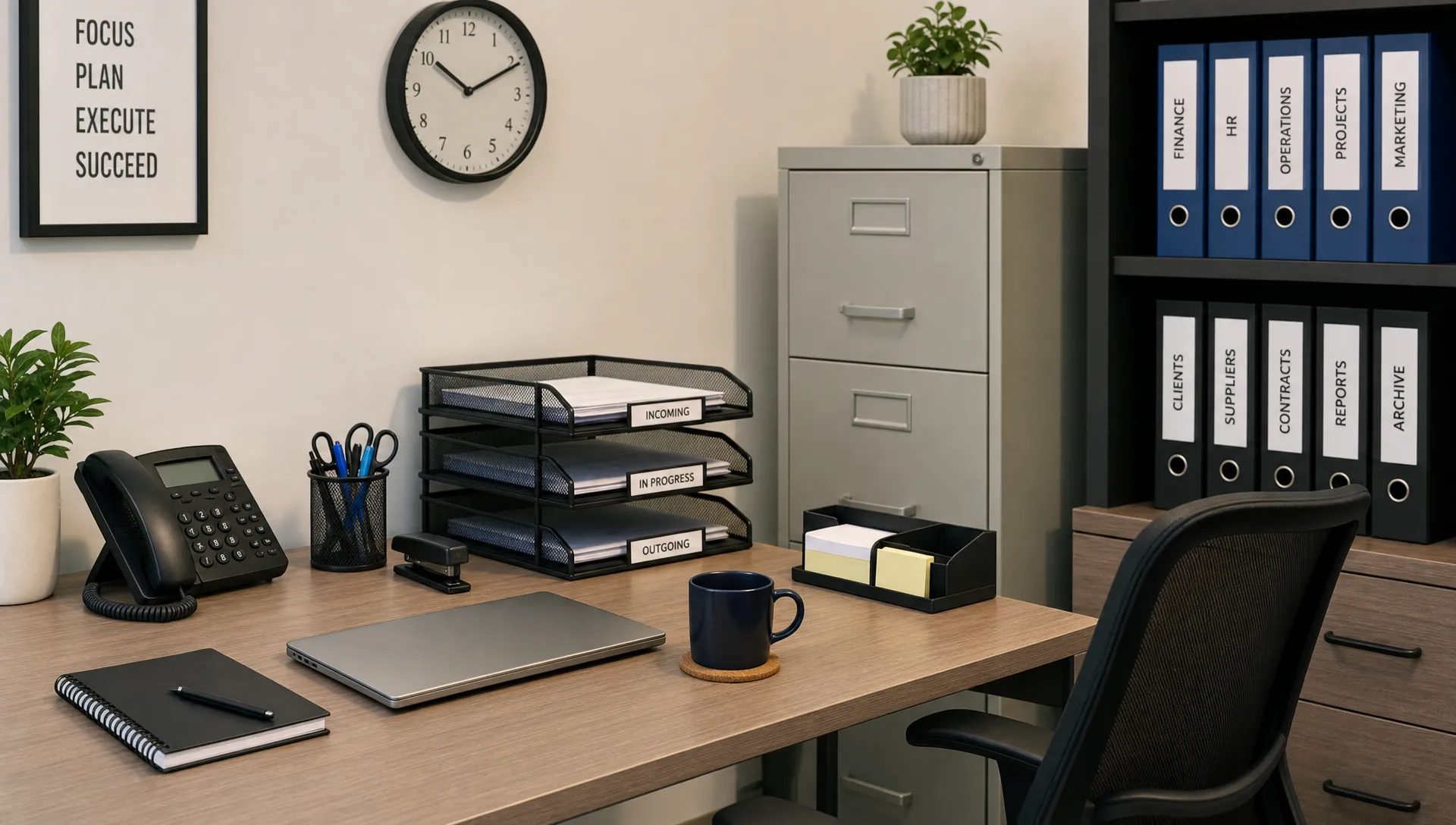
Not every cabinet needs a lock, but some documents should never sit in open drawers. Contracts, staff files, payroll documents, cheques, medical forms and customer information should be stored with privacy in mind.
For sensitive paperwork, choose lockable file cabinets and control who holds the keys. In a shared office, a single locked cabinet for confidential documents can prevent accidental access and reduce messy paper movement between desks.
For less sensitive items such as brochures, catalogues and forms, open access may be better. A reception area, showroom or school office may need printed material displayed neatly rather than locked away. In those cases, an item such as the Zig-Zag Brochure Holder A4 can complement filing cabinets by keeping public-facing documents visible and easy to pick up.
Security is not only about locks. Place cabinets where they are easy for staff to monitor. Avoid storing critical records in corridors, near public waiting areas or in rooms that remain unlocked after office hours.
Plan your filing system before the cabinet arrives
A beautiful cabinet will not fix a confusing filing habit. The best results come when your storage furniture and your filing system work together.
Start with broad file category labels, then divide them into simple subgroups. For example, finance can be divided into invoices, receipts, supplier payments and bank documents. Customer files can be arranged alphabetically, by account number or by project date.
Use consistent labels. If one drawer says "Suppliers” and another says "Vendor Bills,” staff may waste time deciding where documents belong. Keep names short, direct and visible.
A practical filing system usually includes:
- Active files for documents used daily or weekly
- Reference files for documents needed occasionally
- Archive files for older records that must be kept but rarely opened
- Action files for pending approvals, signatures or payments
Active files should be closest to the desk. Reference files can sit in a shared cabinet. Archive files should be stored safely but do not need prime office space. This simple separation prevents your main file cabinets from becoming overloaded with papers nobody uses.
Consider aesthetics for customer-facing spaces
If your filing cabinet sits in a reception, consultation room, home office background or client meeting area, appearance matters. The cabinet should look intentional, not like emergency storage.
Neutral finishes are usually the safest choice. White, black, grey and wood tones match most office interiors. Metal cabinets give a practical business look, while wooden units create a warmer impression. If the rest of your office uses natural finishes, a product such as a Wooden Chest of Drawers may work as a stylish storage option for office supplies, stationery or non-confidential documents.
For customer-facing areas, avoid overfilling the top of the cabinet with loose papers. Use trays, folders or a small organizer. A clean surface makes the whole office look more controlled, even if the cabinet is doing heavy storage work inside.
Compare price with long-term value
It is tempting to buy the cheapest file cabinets available, especially when setting up a new office. But filing cabinets are used daily, often for years. A low-quality cabinet that jams, dents or becomes unstable can cost more in frustration and replacement.
Instead of judging only by price, compare value across these points:
| Buying factor | Why it matters |
|---|---|
| Material strength | Helps the cabinet handle daily use and heavy files |
| Drawer smoothness | Reduces frustration when accessing documents |
| Storage capacity | Prevents the need for another cabinet too soon |
| Locking option | Protects confidential paperwork |
| Style and finish | Helps the cabinet suit the room |
| Delivery and returns | Important for bulky office furniture purchases |
Online shoppers should read product descriptions carefully and check delivery details before ordering. Filing cabinets and storage cabinets can be bulky, so confirm that the size suits your doorway, lift access and room layout.
Choose for today, but leave room for growth
Your office paperwork will grow. Even businesses that use digital tools still collect physical documents such as contracts, invoices, certificates, manuals and signed forms. Buying a cabinet with a little extra capacity is usually smarter than buying one that is full on day one.
A good rule is to leave at least one drawer or one shelf partly empty. This gives your team space for new customers, new suppliers or upcoming financial records. If your business is seasonal, such as retail, education support, festival sales or event services, allow extra storage for peak months.
For a home office, growth may mean something different. You may need space for children’s school documents, household bills, warranty papers, insurance documents and personal records alongside work files. In that case, a mixed storage cabinet can be more useful than a strict office filing cabinet.
Common mistakes to avoid when buying filing cabinets
Many filing cabinet problems come from small buying mistakes. Avoid these and your office storage will work better from the start.
Do not buy without measuring drawer clearance. The cabinet may fit against the wall, but the drawers still need space to open fully. Do not choose style over structure if you plan to store heavy files. Decorative drawers are useful, but they must still hold the weight you expect.
Avoid mixing too many file category systems in one cabinet. If finance, HR, stationery and customer files are all thrown into the same drawer, retrieval becomes slow. Also avoid storing everything at desk level. Important archives can sit away from the main work area so active files stay easy to reach.
Most importantly, do not wait until the office is already cluttered. Filing cabinets work best when they are part of the setup plan, not a last-minute fix after paperwork spreads across every surface.
Frequently Asked Questions
What type of filing cabinet is best for a small office? A vertical filing cabinet or mobile pedestal cabinet is usually best for a small office because it saves floor space. If you need to store wider files or shared records, a low lateral cabinet may also work if you have enough wall space.
Are metal or wooden file cabinets better? Metal file cabinets are often better for heavy daily office use, while wooden cabinets are better when appearance and interior style matter. The right choice depends on whether the cabinet will sit in a back office, reception area or home office.
How do I organize documents by file category? Start with broad file category labels such as finance, HR, customers, suppliers and archives. Then use simple subcategories inside each group. Keep active files close to your desk and move older records into archive storage.
Do all office filing cabinets need locks? No, but cabinets used for confidential documents should have locks. Staff records, contracts, customer data, cheques and financial paperwork should be stored securely, especially in shared offices.
Can a storage cabinet replace a filing cabinet? A storage cabinet can replace a filing cabinet if you mostly store box files, stationery, manuals or supplies. If you use hanging files or need quick document browsing, a purpose-built filing cabinet is usually more efficient.
Build an office that stays organized
The best filing cabinets are not just storage boxes. They support how your office actually works, from daily document access to long-term archiving. Choose the right size, material, layout and security level, then organize every drawer around a clear file category system.
For UAE online shoppers setting up or improving an office, Sandhai brings together office furniture, storage solutions and everyday essentials in one convenient marketplace. Choose pieces that make your workspace cleaner, easier to manage and ready for the paperwork that comes next.

Comments