

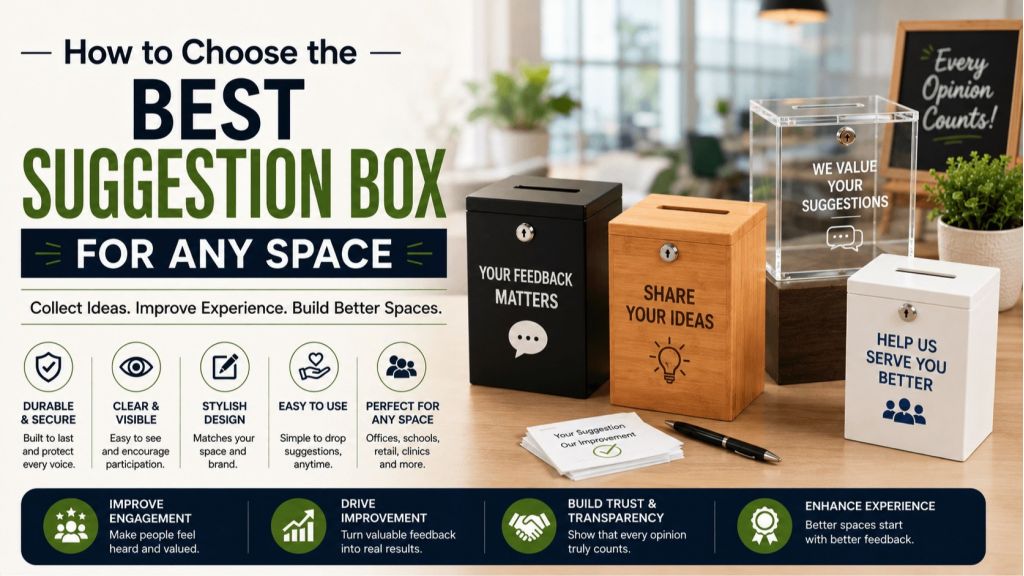
A suggestion box looks simple until you need one that actually gets used. The right box should feel visible without being intrusive, private without looking intimidating, and durable enough for the space where it will live. Whether you are setting up feedback collection in an office, school, retail shop, community center, apartment lobby, clinic, or even at home, the best choice depends on more than just size and price.
For online shoppers in the UAE, it helps to think of a suggestion box as a small communication station. It needs the right material, lock, slot design, signage, forms, pens, and placement. When you are comparing options through a trusted marketplace like Sandhai.ae, use the guide below to choose a suggestion box that fits your space, your audience, and your feedback goals.
Start with the purpose of the suggestion box
Before looking at styles, decide what kind of feedback you want to collect. A box used for customer complaints in a shop has different requirements from one used for student ideas in a classroom or family reminders at home.
Ask yourself a few practical questions first:
- Will feedback be anonymous, named, or both?
- Will people submit paper forms, small cards, envelopes, or folded notes?
- How often will the box be checked?
- Does the box need to handle high foot traffic?
- Is privacy important because the feedback may be sensitive?
- Should the box look formal, friendly, premium, or discreet?
If the main goal is honest feedback, choose a box that feels secure and private. If the goal is idea generation, choose a more welcoming design with clear prompts such as "Share your idea” or "How can we improve?” If the goal is event entries, raffle tickets, or forms, the slot and internal capacity matter more than strict confidentiality.
Match the suggestion box to the space
The best suggestion box for any space is the one that fits the environment naturally. A sleek metal box may work well in an office lobby, while a colorful acrylic or lightweight box may suit a classroom or exhibition booth better.
| Space | Best suggestion box style | Main priority | Placement tip |
|---|---|---|---|
| Office reception | Lockable wall-mounted or countertop box | Professional look and confidentiality | Place near reception, but away from direct staff monitoring |
| School or classroom | Durable plastic, acrylic, or decorated wooden box | Friendly appearance and easy access | Keep at student height with simple instructions |
| Retail shop | Compact countertop box with cards | Customer convenience | Place near billing, exit, or customer service desk |
| Apartment lobby | Lockable wall-mounted box | Security and durability | Mount near notice boards or mail areas |
| Clinic or waiting room | Clean, neutral, lockable box | Privacy and hygiene | Keep forms and pens organized nearby |
| Home or family space | Decorative wooden or tabletop box | Gentle communication and routine use | Place in a shared area such as a hallway or study corner |
| Events and exhibitions | Portable acrylic or cardboard box | Easy setup and high visibility | Use bold signage and check frequently |
If the box is part of a wider office, home, or retail setup, consider the surrounding furniture too. For example, a reception corner can look more organized when the box, forms, and pens sit on a compact display surface or storage unit, and a piece like this Wooden Corner Shelf shows how vertical corner furniture can help keep small essentials visible without taking over the room.
Choose the right material
Material affects durability, appearance, security, and where the box can be used. There is no single best material for every situation, so compare based on the environment.
| Material | Best for | Advantages | Watch out for |
|---|---|---|---|
| Metal | Offices, apartments, public areas | Strong, secure, professional | Can feel too formal for casual spaces |
| Acrylic or clear plastic | Shops, events, schools | Lightweight, visible contents, modern look | Less private unless notes are folded or envelopes are used |
| Wood | Homes, reception areas, community spaces | Warm, decorative, durable | Needs a finish suitable for frequent handling |
| Cardboard or paperboard | Temporary events, school projects | Affordable, easy to customize | Not ideal for long-term or high-security use |
| Wall-mounted hard plastic | Clinics, lobbies, shared buildings | Practical and space-saving | Installation surface must be suitable |
For UAE homes and workplaces, also consider dust, air-conditioning, and humidity. A box that is easy to wipe clean is useful in busy shops, clinics, and schools. If it will be placed near an entrance, choose a material that does not show fingerprints or scratches too easily.
Decide how much security you need
Security is one of the biggest differences between a decorative box and a true suggestion box. If people are sharing complaints, workplace concerns, customer service issues, or personal feedback, a lockable suggestion box is usually the better choice.
Look for these security features where appropriate:
- A lock and key or combination lock
- A narrow slot that prevents hands from reaching inside
- Strong hinges or a secure lid
- Wall-mounting holes to prevent removal
- Opaque sides if feedback should stay private
- Enough internal space so papers do not get stuck near the slot
For lower-risk spaces, such as a family message box or a classroom "idea of the week” box, security can be lighter. In those cases, the priority is making people comfortable enough to contribute. Still, even a simple latch can make the process feel more respectful and organized.
Think about size, capacity, and paper format
A suggestion box that is too small will fill quickly, jam forms, or make users fold papers awkwardly. A box that is too large may look empty, bulky, or out of place. Start with the number of expected submissions and the paper size you plan to use.
For a small office, a compact countertop box may be enough if it is checked weekly. For a school, apartment lobby, or retail store with regular traffic, choose a medium box with a larger slot. For event registrations, raffle entries, or survey cards, choose a box with generous capacity and a slot wide enough for cards to drop easily.
The paper format matters too. Standard slips encourage short feedback. Larger forms work better for structured questions, ratings, and contact details. If you want anonymous feedback, small cards or folded slips are often less intimidating than full-page forms.
Pick between wall-mounted and countertop designs
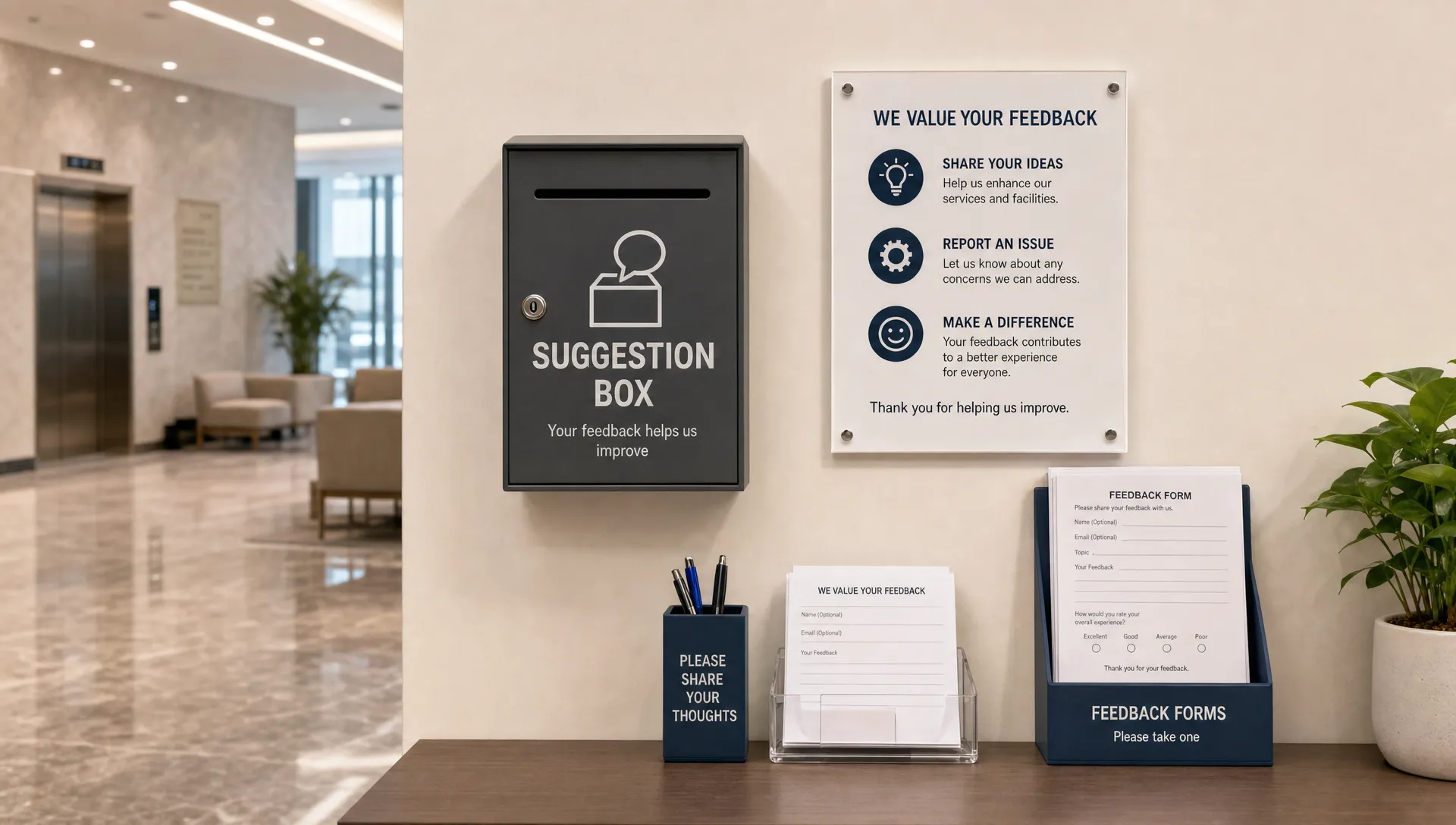
Wall-mounted suggestion boxes save space and reduce the chance of the box being moved. They are ideal for apartment lobbies, corridors, clinics, offices, and community spaces. They also make feedback collection feel more permanent.
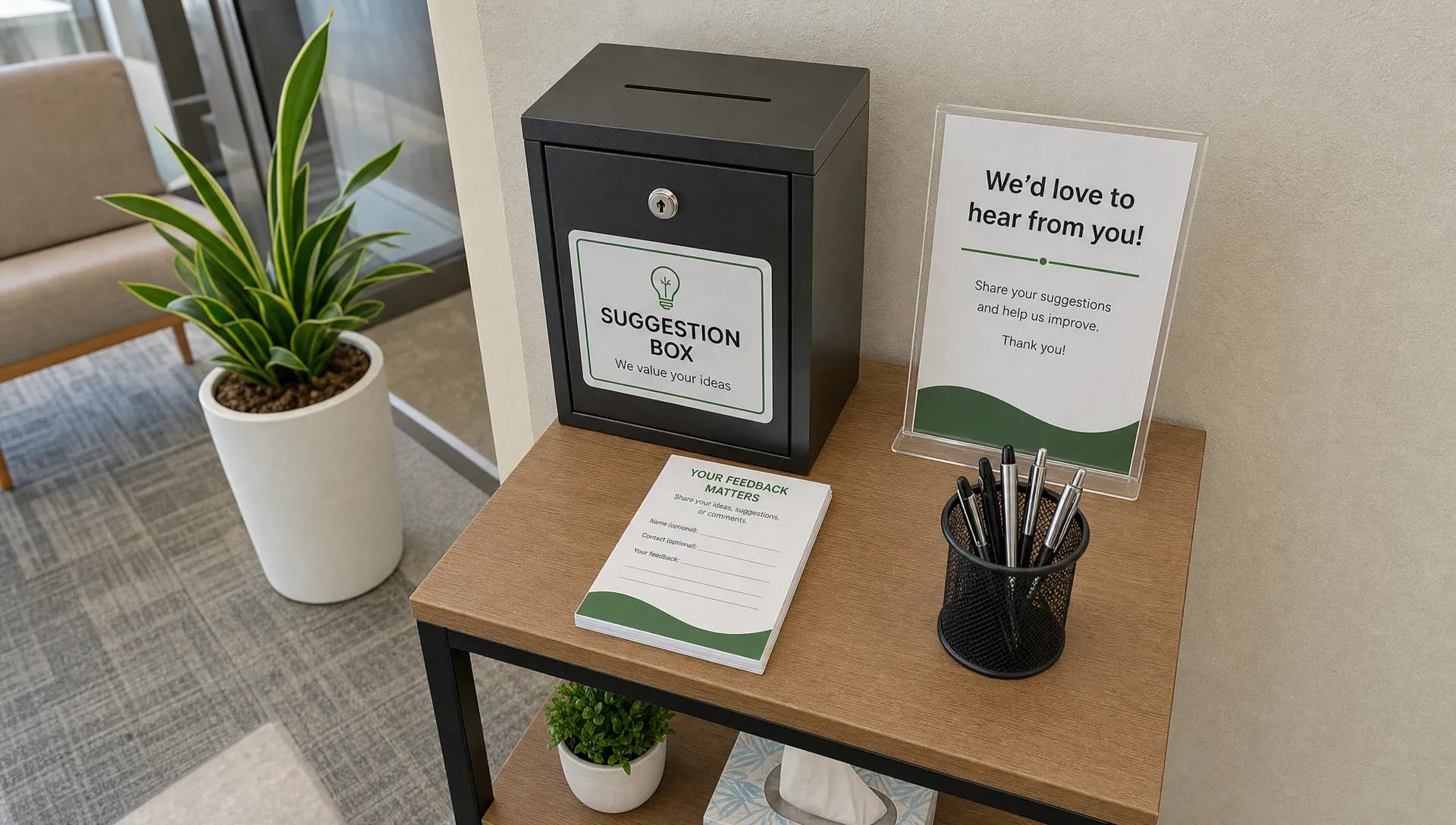
Countertop boxes are easier to set up and relocate. They work well in shops, events, classrooms, reception desks, and temporary campaigns. If you choose a countertop option, make sure it has a stable base and does not tip over when people insert cards.
A simple rule helps: choose wall-mounted for long-term, public, or sensitive feedback, and choose countertop for flexible, high-visibility, or short-term feedback collection.
Make the design easy to understand
A suggestion box should not make people guess what to do. Clear signage is as important as the box itself. The wording should be short, positive, and action-focused.
Good labels include:
- "Your feedback helps us improve”
- "Share your suggestion”
- "Tell us what we can do better”
- "Student ideas welcome”
- "Community feedback box”
In the UAE, multilingual settings are common. If your audience includes English, Arabic, Tamil, Hindi, Malayalam, or Urdu speakers, consider using simple bilingual or multilingual signage. Sandhai’s audience is diverse, and when you shop across wide product categories on Sandhai.ae, it is worth thinking beyond the product itself and planning the labels, cards, and stationery that make the setup useful.
Also consider color. Neutral colors look professional in offices and clinics. Brighter colors can make a classroom or community box feel friendly. Transparent boxes are good for competitions or lucky draws because people can see entries inside, but opaque boxes are better for confidential suggestions.
Choose a box that suits your brand or décor
The box should not feel like an afterthought. In a retail shop, café, salon, or office, it becomes part of the customer experience. A messy paper box with unclear instructions can suggest that feedback is not taken seriously. A tidy, well-placed box communicates that opinions matter.
For premium spaces, a metal or wooden finish may blend better with the décor. For modern shops or exhibitions, acrylic looks clean and lightweight. For schools, a decorated box can encourage participation, especially if students help design it. For home use, a warm wooden or decorative box can be used for family notes, prayer requests, chores, gratitude messages, or weekly ideas.
If the box will be visible to visitors, match it with nearby accessories such as a pen holder, card tray, small shelf, or notice board. This turns it into a complete feedback point rather than a random container.
Do not forget forms, pens, and prompts
Many suggestion boxes fail because the box is present, but the writing materials are missing. People may be willing to share feedback, but they will rarely search for paper and a pen. Keep the process as frictionless as possible.
A complete setup should include feedback cards, a working pen, a short instruction sign, and a regular collection routine. If you want structured responses, use simple prompts such as "What worked well?” and "What can be improved?” If you only need quick ideas, blank cards may be enough.
For customer-facing spaces, avoid long forms unless necessary. A short card with one or two questions usually gets more responses than a detailed survey. If you need contact details, make that section optional unless you have a clear reason to collect it.
Consider a hybrid physical and digital approach
A physical suggestion box is visible, simple, and familiar. A digital option can complement it, especially in offices, buildings, and shops where people may prefer using their phone. You can place a QR code beside the box that leads to an online form, while still allowing paper submissions for anyone who prefers them.
This hybrid approach is useful when you want to track feedback more easily, collect photos, or categorize responses. It also helps in multilingual environments because digital forms can provide more space for instructions. Still, the physical box has one important advantage: it acts as a constant reminder that feedback is welcome.
Check quality before buying online
When shopping online, do not judge a suggestion box only by its photo. Read the product details carefully and compare the practical features. A box may look good in images but still be too small, too light, or unsuitable for confidential use.
Before buying, check:
- Dimensions and paper slot size
- Material and finish
- Whether a lock and keys are included
- Wall-mounting or countertop setup
- Transparency or privacy level
- Ease of opening and emptying
- Return and delivery information
- Whether the design matches the intended space
Online shoppers should also consider delivery speed, payment security, and after-sales support. If you are buying other office, stationery, furniture, or home items at the same time, a secure UAE online shopping experience can make it easier to compare products and organize your purchase in one place.
Common mistakes to avoid
The wrong suggestion box can make feedback collection feel ignored, confusing, or unsafe. Avoid these common buying and setup mistakes:
- Choosing a transparent box for sensitive complaints
- Placing the box where staff can see people writing feedback
- Forgetting to provide cards and pens
- Buying a box that is too small for the expected number of submissions
- Using vague signage such as "Box” without instructions
- Checking it too rarely, which makes people feel unheard
- Placing it too high, too low, or behind obstacles
- Choosing a design that clashes with the setting
The most important mistake is not following up. A suggestion box only builds trust when people see that feedback leads to action. Even a small notice saying "You suggested, we improved” can encourage more participation.
How often should you empty and review it?
The right schedule depends on the space. A home or classroom box may be checked once a week. A busy retail shop or office reception may need review every few days. A public lobby or event box may need daily checking.
Create a clear responsibility system. One person should be assigned to collect feedback, sort it, and pass it to the right decision-maker. If feedback is sensitive, limit access to trusted staff only. For workplaces, it can help to summarize themes rather than expose individual comments.
You should also refresh the cards and pens during each check. A dusty box with old forms sends the message that no one is listening. A clean, maintained station tells people their input is welcome.
A quick buying framework
If you are still unsure which suggestion box to choose, use this simple framework:
| If your priority is... | Choose this type |
|---|---|
| Confidential feedback | Opaque lockable metal or plastic box |
| Customer comments in a shop | Compact countertop box with cards |
| School participation | Durable, friendly-looking box at student height |
| Apartment or building feedback | Wall-mounted lockable box |
| Events or lucky draws | Portable acrylic or cardboard entry box |
| Home communication | Decorative wooden or tabletop box |
| Premium reception area | Wooden, metal, or minimalist lockable design |
This framework keeps the decision practical. First decide the purpose, then match security, size, material, and placement to that purpose.
Frequently Asked Questions
What is the best material for a suggestion box? Metal is best for security and durability, acrylic is good for visibility and events, plastic is practical for everyday use, and wood works well in decorative or premium spaces. The best material depends on whether privacy, style, portability, or strength matters most.
Should a suggestion box be locked? A lockable suggestion box is recommended for offices, clinics, apartment lobbies, customer complaints, and any situation involving sensitive feedback. For casual home or classroom use, a non-locking box may be enough if privacy is not a major concern.
Where should I place a suggestion box? Place it somewhere visible, easy to reach, and slightly private. Good locations include reception areas, exits, waiting rooms, notice boards, school corridors, and shared family spaces. Avoid placing it where people feel watched while writing.
How big should a suggestion box be? Choose a size based on expected submissions and how often you will empty it. A small box works for low-traffic areas, while schools, shops, events, and lobbies usually need a medium or larger box with a wide slot.
Can I use a suggestion box at home? Yes. A home suggestion box can be used for family ideas, weekly planning, chores, gratitude notes, meal suggestions, or gentle communication between parents and children. A decorative tabletop box is usually enough for this purpose.
Make feedback easier with the right shopping choices
A good suggestion box is not just a container. It is a small sign that says opinions are welcome and will be treated with respect. Choose one that fits the space, protects privacy when needed, and makes it easy for people to participate.
When you are ready to compare office, stationery, furniture, décor, and everyday essentials, browse Sandhai for home and workplace shopping in the UAE. With convenient online shopping, home delivery, secure payment options, special offers, gift cards, and a wide range of products, Sandhai’s UAE marketplace helps you build practical spaces where feedback, organization, and everyday convenience come together.

Comments