

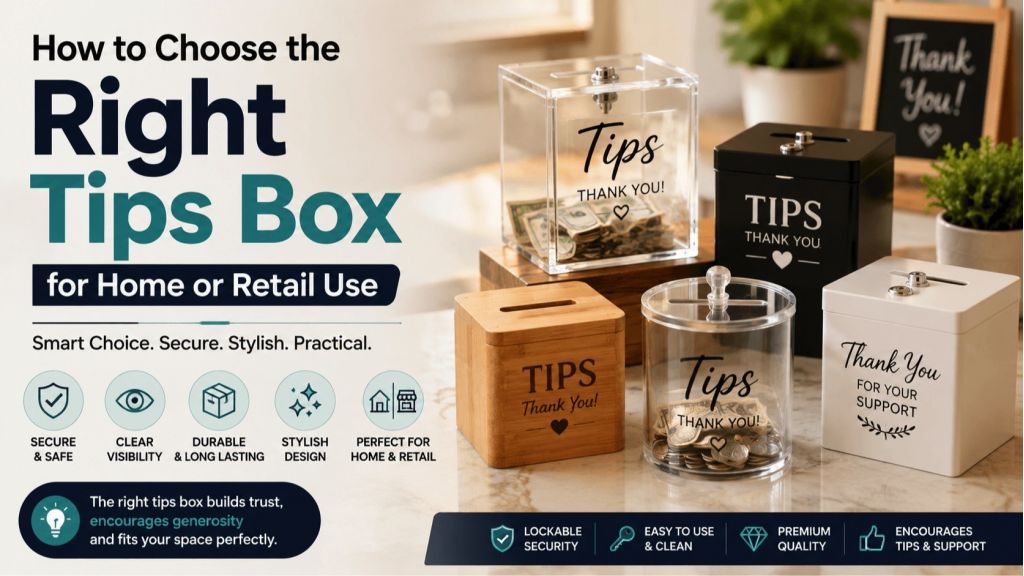
A tips box may look like a small counter accessory, but the right choice can make a noticeable difference. At home, it can collect thank-you notes, family savings, event contributions, or appreciation money for household help. In a retail setting, it can support service staff, create a tidy checkout area, and give customers a simple way to show gratitude.
The best tips box is not just the nicest-looking one. It should fit the space, feel secure, match the setting, and make the purpose clear without pressuring people. Whether you are setting up a home party table, a salon counter, a café checkout, or a small reception desk in the UAE, use this guide to choose a tips box that is practical, presentable, and easy to maintain.
 Start by defining the purpose of your tips box
Before comparing materials or designs, decide what the tips box is meant to collect. A tips box for a family event has different needs from one used daily in a busy shop.
For home use, a tips box may be used for birthday party contributions, small cash gifts, housekeeper appreciation, family savings, or festive giving during occasions such as Eid, Diwali, Christmas, birthdays, and weddings. In these cases, appearance and theme matter more than heavy security, though the box should still be stable and safe around children.
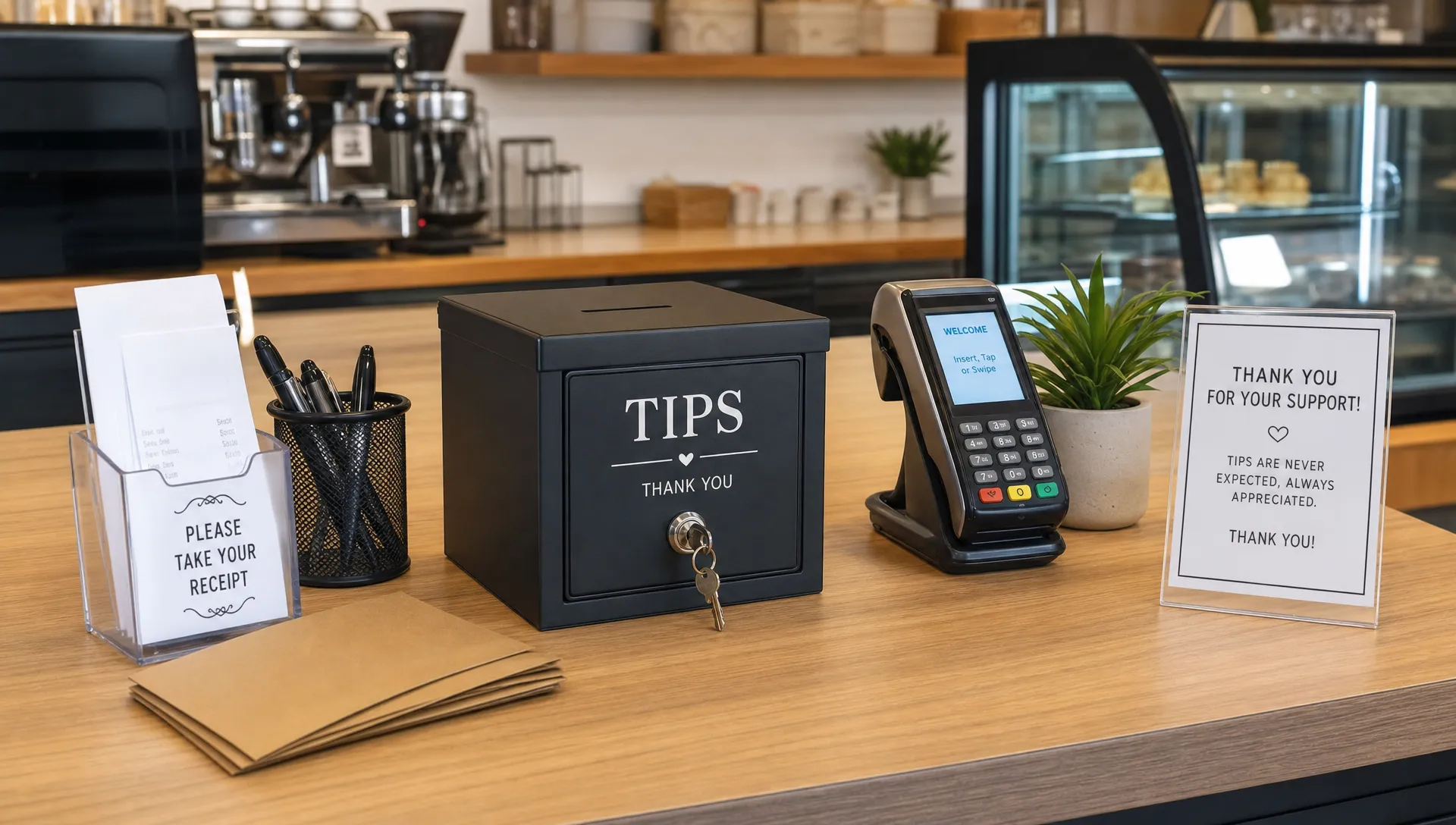
For retail use, the box usually sits near a cashier, reception desk, food counter, salon station, or delivery pickup area. It needs to be visible, durable, easy to empty, and secure enough for a public space. Customers should understand instantly whether the box is for staff tips, donations, raffle entries, feedback slips, or event contributions.
A good rule is simple: if the box will be used by many people every day, choose function and security first. If it is for a special event or home setting, choose design and theme first, while still keeping usability in mind.
Choose the right material for the setting
Material affects the look, durability, security, and cleaning routine of your tips box. Transparent acrylic is popular for retail because customers can clearly see that the box is active and in use. Metal looks more secure, wood feels premium, and decorative cardboard works well for short events.
| Material | Best for | Main advantage | Watch out for |
|---|---|---|---|
| Acrylic or clear plastic | Retail counters, salons, cafés, reception desks | Visible, lightweight, easy to clean | Can scratch if handled roughly |
| Metal | Busy retail spaces, public counters, charity collections | Strong and secure | Less decorative unless branded well |
| Wood | Home décor, boutique counters, premium stores | Warm, stylish, and sturdy | Needs care if exposed to moisture |
| Glass | Home display, elegant events | Attractive and decorative | Fragile and not ideal for high-traffic areas |
| Cardboard or paperboard | Parties, school fairs, temporary events | Affordable and easy to theme | Not suitable for long-term or secure use |
In UAE homes and shops, heat, dust, and frequent handling are worth considering. If the box will sit near a sunny window or outdoor stall, avoid materials that may warp, fade, or become brittle. If it will be near food, drinks, or beauty products, choose a surface that can be wiped clean quickly.
Pick a size that matches traffic and cash volume
A tips box should be big enough to be useful but not so large that it dominates the counter. For home use, a compact box is usually enough, especially if it will only collect notes, small envelopes, or coins during one event.
For retail, think about daily customer volume. A small salon or boutique may only need a modest counter box, while a café, cafeteria, or busy service desk may benefit from a larger box that does not need to be emptied constantly. The slot should be wide enough for folded UAE dirham notes and small envelopes if customers may use them.
Also consider counter space. A tall, narrow tips box saves width but may tip over if the base is too light. A wide box is more stable but takes up more room. If your checkout area already has a card terminal, receipt printer, display stand, and promotional items, measure the available space before buying.
Prioritise security for retail use
Security matters most when a tips box is placed in a public area. Look for a lockable lid, a narrow deposit slot, a stable base, and a design that does not make it easy to reach inside. In busy retail environments, the box should be positioned where staff can see it without making customers feel watched.
For shops, restaurants, salons, and service counters, it is smart to create a simple internal routine. Decide who empties the box, how often it is checked, and how tips are distributed. If tips are shared among staff, keep the policy clear and consistent. This helps avoid confusion and builds trust within the team.
At home, security is usually less formal, but you should still think about children, pets, and guests. If the tips box contains cash gifts or envelopes, place it somewhere visible to the host but not in the middle of a crowded walkway.
Make the message clear with signage
A tips box works best when people immediately understand its purpose. The message should be polite, short, and friendly. Avoid wording that sounds demanding. Phrases such as "Thank you for supporting our team”, "Tips appreciated”, or "Your kindness means a lot” are clear without being pushy.
In the UAE, where customers and guests may come from many language backgrounds, simple wording is especially useful. For retail counters, English is often enough, but adding Arabic, Tamil, Hindi, or another language may make sense depending on your audience. A small sign next to the box can look more professional than taping paper directly onto it. For example, a clear table-top acrylic sign holder can help you display a tip message, QR payment note, or staff appreciation policy neatly beside the box.
Good signage is not just about asking for tips. It also reassures customers that the money goes to the intended people or purpose. If the box is for donations rather than staff tips, state that clearly to avoid misunderstandings.
Think about placement and counter layout
Placement affects how often people notice and use the tips box. In retail, the ideal spot is near the end of the customer journey, usually beside the cash register, payment terminal, reception desk, or pickup counter. It should be visible but not blocking the customer’s hand movement when paying or collecting items.
For home use, place the box where people naturally gather, such as near the entry table, dessert table, gift table, or majlis side table. If it is for an event, do not hide it behind decorations. It should be easy to find without becoming the centre of attention.
A tidy setup also makes the box feel more intentional. If your shop counter is crowded, using vertical storage or display furniture can help separate the tips box from everyday clutter. A compact display piece such as a wooden corner shelf can be useful for organising small retail items, flyers, décor, or counter accessories around a service area.
Match the design to the occasion or brand
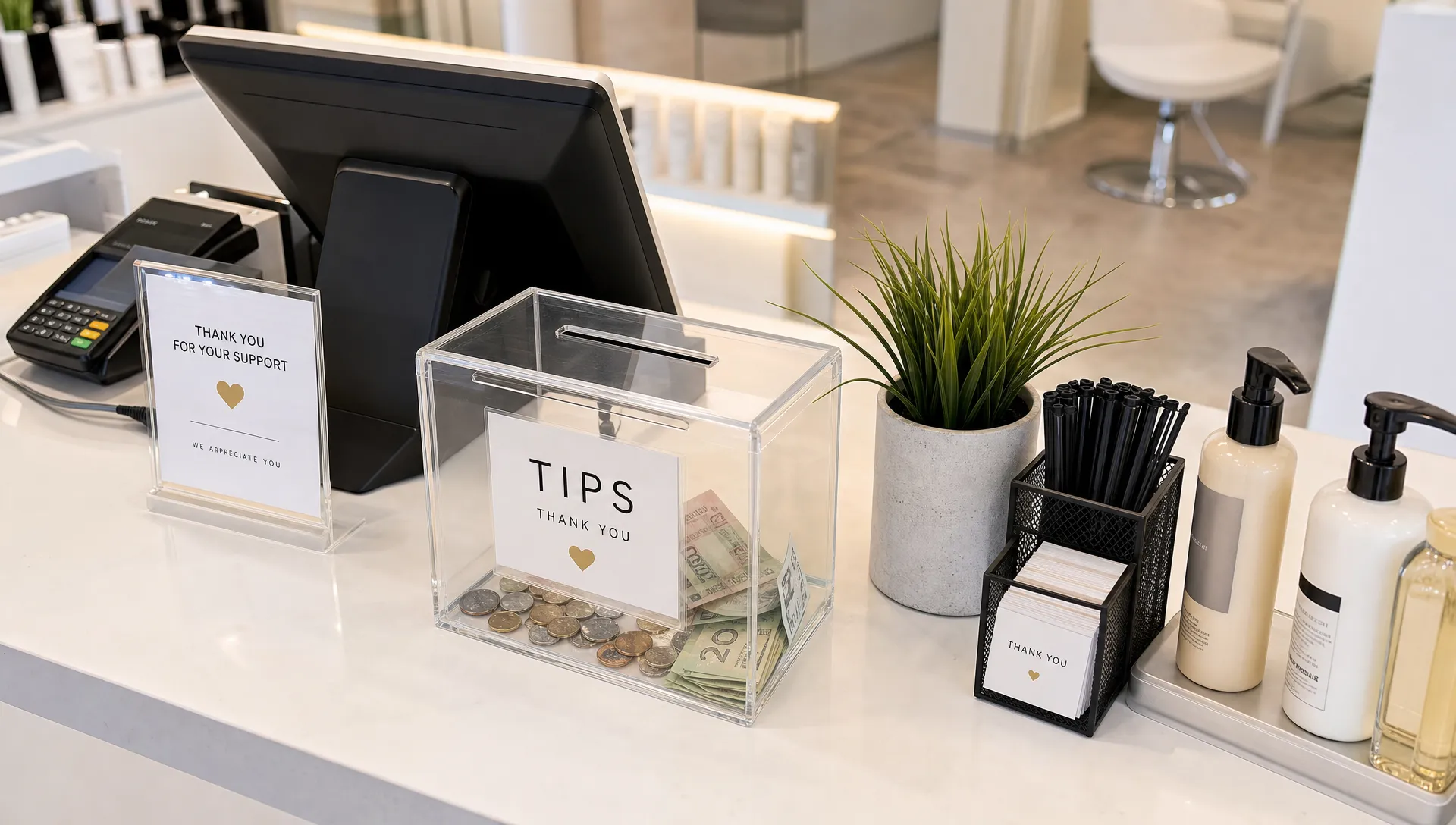
The tips box should feel like it belongs in the space. A clear acrylic box may suit a modern café, salon, clinic reception, or boutique counter. A wooden box may look better in a home, craft shop, wellness studio, or premium gift store. A colourful decorated box can work well for children’s parties, school events, or casual community gatherings.
For home celebrations, the surrounding table setup can make the tips box feel thoughtful rather than random. If you are arranging a sweets, snacks, or thank-you table, items like a 12-piece treat box set can complement the theme for party favours or small gifts. For movie nights, school fairs, or casual snack counters, a pack of popcorn boxes can help create a coordinated event station where the tips box sits naturally nearby.
For retail, design should support your brand. A luxury salon may prefer a minimal clear or wooden box, while a family snack shop may choose something brighter. If the box looks cheap, damaged, or out of place, customers may be less confident using it.
Compare home and retail requirements
The easiest way to choose the right tips box is to compare the environment where it will be used. Home setups are usually temporary, personal, and design-led. Retail setups are more public, repetitive, and security-focused.
| Feature | Home use | Retail use |
|---|---|---|
| Main priority | Appearance and occasion fit | Durability, visibility, and security |
| Ideal size | Small to medium | Medium to large, depending on traffic |
| Security level | Basic lid or closure | Lockable and tamper-resistant |
| Signage | Optional, decorative, or themed | Clear, polite, and easy to read |
| Placement | Entry table, party table, gift table | Checkout, reception, pickup, or service counter |
| Maintenance | Empty after event or as needed | Check and empty on a regular schedule |
This comparison also helps if you need more than one box. A small decorative box may be perfect for home gatherings, while a lockable acrylic or metal box is a better choice for daily customer-facing use.
Consider cash, QR codes, and digital tipping
Many customers in the UAE use cards, mobile wallets, and online payments, so a cash-only tips box may not suit every retail environment. If your business accepts digital tips, you can place a QR code beside the box. Make sure the QR code leads to the correct account and that your staff tipping policy is clear.
If the box is for staff tips, avoid mixing it with donation campaigns, raffle entries, or feedback forms unless the sections are clearly separated. Confusion can make customers hesitant. If you need to collect multiple things, use separate boxes or labels.
For home use, digital contributions can also be useful for group gifts or event pooling, but keep the setup simple. Too many instructions can make guests uncomfortable. A small sign with a polite message is usually enough.
Check cleaning and maintenance needs
A tips box sits in a high-touch area, so it should be easy to clean. Acrylic, plastic, and metal can usually be wiped down quickly. Wood may need gentler care, and decorative paper boxes are best for short-term use.
For retail counters, schedule regular cleaning along with other checkout surfaces. Avoid using harsh cleaners that may cloud clear acrylic or damage printed labels. If the box has a lock, check that the key is stored safely and that staff know who is responsible for it.
Also inspect the slot and hinges. A tips box that jams, cracks, or becomes difficult to open can create unnecessary hassle. If it looks worn out, replacing it may be better than trying to keep using it in a customer-facing space.
Common mistakes to avoid
Even a simple tips box can create problems if it is poorly chosen or badly placed. The most common mistakes are easy to prevent.
- Choosing a box that is too small for daily retail traffic.
- Using a fragile glass box in a busy public area.
- Placing the box where customers cannot see it until after they leave.
- Using unclear wording, such as mixing "tips”, "donations”, and "fees”.
- Forgetting to empty the box regularly in a shop environment.
- Selecting a design that clashes with the store, event, or home décor.
The goal is to make the tips box feel natural, trustworthy, and easy to use. If people need to ask what it is for, where the money goes, or how to use it, the setup can be improved.
Quick buying checklist
Before you buy, review the practical details. A tips box should suit the environment, fit the available space, and support the way people actually pay or contribute.
- Decide whether it is for home, events, retail staff tips, donations, or feedback.
- Choose a material based on durability, appearance, and cleaning needs.
- Select a size that fits your traffic and counter space.
- Use a lockable option for public retail areas.
- Add clear signage with polite wording.
- Place it where people naturally complete a transaction or gather.
- Set a routine for emptying, cleaning, and checking the box.
When you shop online, compare product photos carefully and check dimensions, material, and delivery details. For UAE shoppers looking for home, party, and retail essentials in one place, the Sandhai online shopping marketplace makes it easy to browse practical products for everyday setups, events, and small business needs.
Frequently Asked Questions
What is the best material for a tips box? Acrylic or clear plastic is a strong choice for most retail counters because it is visible, lightweight, and easy to clean. Metal is better when security is the main priority, while wood works well for stylish home or boutique settings.
Should a retail tips box be lockable? Yes, a lockable tips box is recommended for public retail use. It helps prevent tampering, keeps cash secure, and gives both staff and customers more confidence in the setup.
Where should I place a tips box at home? Place it where guests naturally gather, such as an entry table, gift table, dessert table, or event station. Keep it visible, stable, and away from crowded walkways, food spills, or children’s play areas.
How big should a tips box be for a shop? The right size depends on customer traffic. A small boutique or salon may only need a compact counter box, while a busy café, cafeteria, or service desk may need a larger box that can hold more notes and coins between emptying times.
Can I use a QR code with a tips box? Yes, many retail businesses use a QR code beside the physical box for customers who prefer digital payments. Make sure the payment destination is correct and that the tipping policy is clear for staff and customers.
Build a better home or retail setup with Sandhai
A well-chosen tips box can make your counter, event table, or home gathering feel more organised and thoughtful. Focus on the right size, secure design, clear message, and suitable placement, then support it with simple accessories that keep the area neat.
Whether you are preparing for a family celebration, refreshing a retail counter, or setting up a small customer service area, Sandhai offers a convenient way to shop online in the UAE for home, party, stationery, décor, and everyday essentials.

Comments