

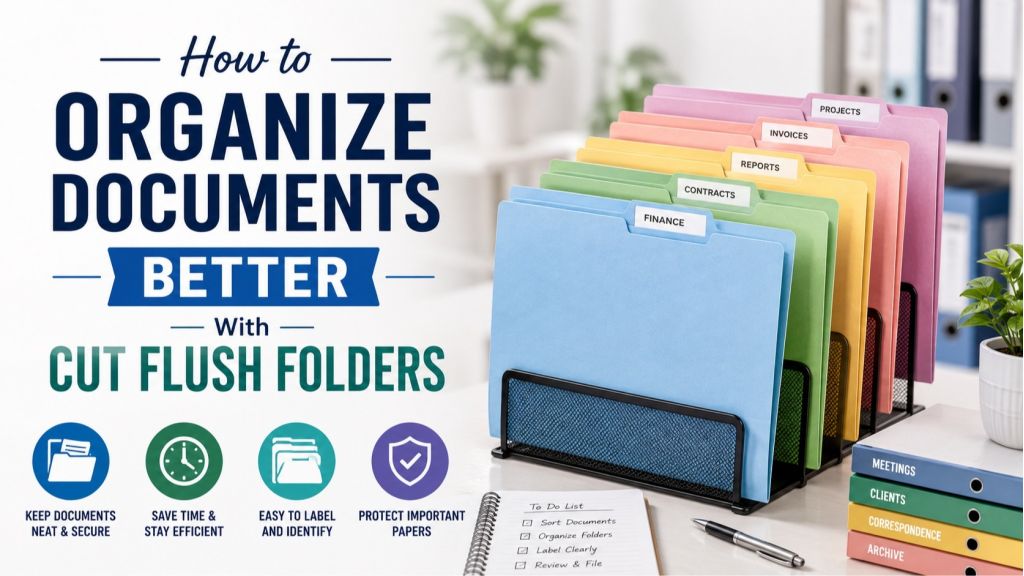
Paper clutter builds up faster than most people expect. A few receipts on the dining table, school circulars near the door, warranty cards inside a drawer, office printouts on a desk, and suddenly finding one document takes ten minutes. Cut flush folders solve this problem in a simple way: they give every loose sheet a visible, slim, easy-to-access home.
Unlike bulky ring binders or deep box files, cut flush folders are lightweight sleeves, usually sized for A4 papers, with an open edge that lets you slide documents in and out quickly. They are ideal for everyday papers you need to carry, review, submit, scan, file, or sort before long-term storage.
If you shop for stationery and home essentials online in the UAE, the key is not just buying more folders. The real benefit comes from building a system around them. Here is how to use cut flush folders to organize documents better at home, in a small business, or in a busy family workspace.
What Are Cut Flush Folders?
Cut flush folders are slim document folders designed to hold loose papers without clips, rings, buttons, or binding mechanisms. The folder is typically made from plastic or polypropylene and has an open side or cut edge, making it easy to insert and remove papers.
They are especially useful for:
- Bills, invoices, and receipts
- School worksheets and circulars
- Office documents and meeting notes
- Travel papers and visa copies
- Warranty cards and product manuals
- Forms that need signatures or scanning
- Project papers that change often
The biggest advantage is speed. You do not need to punch holes, open a lever arch file, or remove elastic closures. You simply slide papers in, label the folder, and place it where it belongs.
 Why Cut Flush Folders Work So Well for Everyday Organization
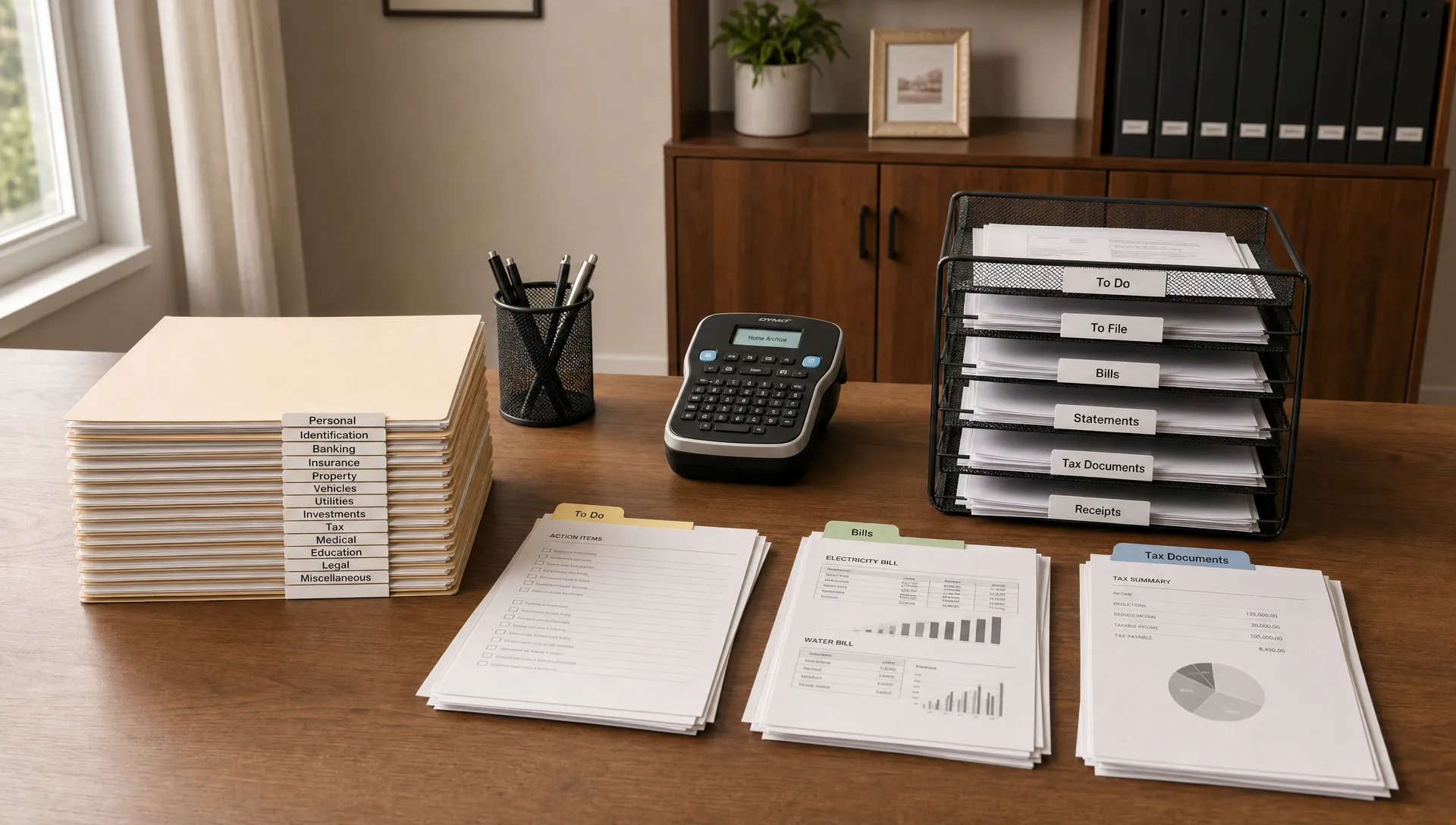
Many people buy storage boxes first, then wonder why their paperwork still feels messy. The issue is that boxes hide documents before they are sorted. Cut flush folders act as the middle step between loose papers and permanent filing.
For example, if you receive a delivery receipt, a school notice, and a bank statement on the same day, putting them all in one drawer creates future stress. With folders, each paper can go into a specific category immediately. That small habit prevents piles from forming.
Cut flush folders are also thin enough to keep inside a desk drawer, backpack, office bag, sideboard, or shelf organizer. If you are building a more practical home workspace, pairing folders with a proper work surface, such as a wooden office desk for your study area, can make daily paperwork feel much easier to manage.
Start With Categories Before You Start Filing
Before you label anything, decide what categories you actually need. A common mistake is creating too many folders. If every small topic has its own file, the system becomes difficult to maintain. If the categories are too broad, you end up searching through mixed papers.
For most homes and small offices, these categories are a good starting point:
- Home and utilities
- Banking and finance
- School and children
- Medical and insurance
- Vehicle and transport
- Work and business
- Travel and immigration
- Warranties and manuals
- To scan or upload
- To pay or action
The final two categories are important. Not every paper is ready to be archived. Some documents need action first, such as payment, signature, scanning, or submission. A dedicated action folder keeps urgent papers visible without mixing them with completed records.
Create a Simple Colour System
Colour coding is one of the easiest ways to make cut flush folders more useful. You do not need a complicated office filing method. Just assign one colour or label style to each major area of life.
| Folder colour or label | Best use | Example documents |
|---|---|---|
| Blue | Finance | Bank papers, invoices, receipts |
| Green | Home | Utility bills, tenancy papers, maintenance notes |
| Red | Urgent action | Forms to submit, unpaid bills, documents to sign |
| Yellow | School | Worksheets, circulars, activity forms |
| Clear | Temporary sorting | Papers to scan, review, or discard |
| Black or grey | Work | Contracts, meeting notes, reports |
If you enjoy making labels more visible, you can use stamps, ink, or craft supplies to mark folder tabs and archive boxes. For example, a stationery item like the Dye Ink Pad Lily Pad can help create consistent colour marks on paper labels, especially if your family or team responds better to visual cues.
Label Folders Clearly, Not Cleverly
Good labels are boring, direct, and easy to understand. Avoid vague labels like important, personal, or documents. Those labels feel useful at first, but they become confusing when every file contains something important.
Use labels that answer three questions: what is inside, who it belongs to, and what time period it covers. For example, School Forms, Ayaan, Term 1 is more useful than Kids Papers. DEWA Bills, 2026 is clearer than Utilities.
A strong label format might look like this:
| Label format | Example | Why it works |
|---|---|---|
| Category plus year | Medical Claims 2026 | Easy for annual review |
| Person plus topic | Sara School Forms | Useful for families |
| Project plus status | Office Renovation, Quotes | Good for temporary projects |
| Action plus deadline | To Submit, August | Helps prevent missed tasks |
For home offices, handwritten labels are fine if they are neat and consistent. Printed labels look cleaner, but consistency matters more than design. If you use decorative labels for school folders, craft storage, or creative paperwork, a small embellishment product such as Liquid Pearls Bisque can make folder sets easier to identify without overcomplicating the system.
Use Cut Flush Folders as Workflow Tools
The best document systems follow the natural movement of paper. A paper usually enters your home or office, waits for action, gets processed, and then either gets stored or discarded. Cut flush folders are perfect for managing that flow.
Think of your folders in three stages:
- Inbox folders: These hold new papers that have not been reviewed yet, such as receipts, delivery notes, letters, and school notices.
- Action folders: These hold papers that need a task, such as payment, signature, scanning, or submission.
- Archive folders: These hold completed documents that must be kept for future reference.
This approach keeps your desk clear without hiding urgent tasks. It also reduces the habit of placing papers in random spots around the house.
Match the Folder to the Document Type
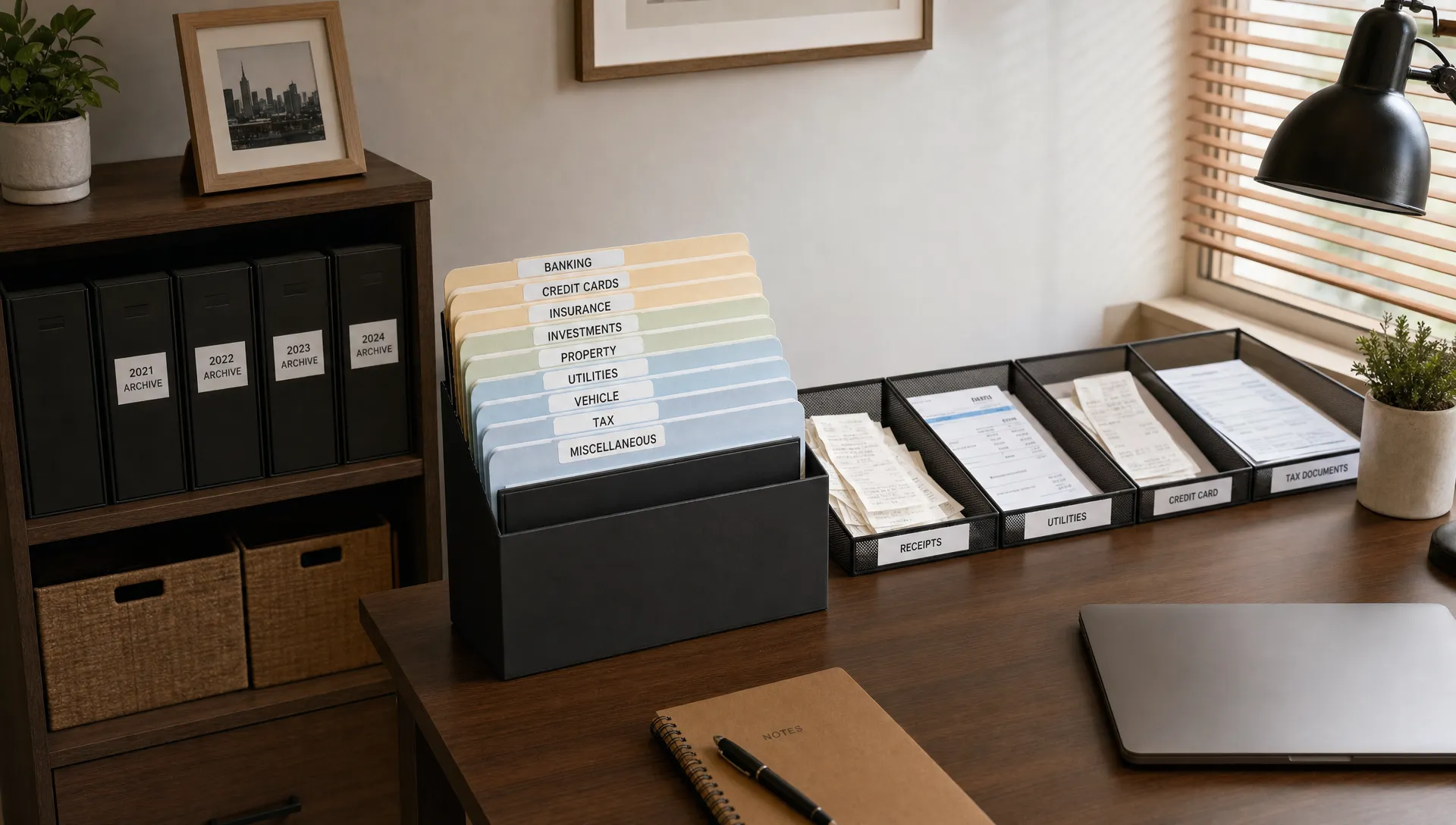
Not every document belongs in a cut flush folder forever. These folders are excellent for active, short-term, and frequently handled papers. For long-term storage, especially for legal originals or sensitive records, you may want to place the cut flush folder inside a larger file box, cabinet, or sideboard.
A practical home setup might include cut flush folders on the desk for current papers and a closed storage unit for completed yearly files. If you prefer your paperwork to stay out of sight, a furniture piece such as the Sunburst Side Board for home storage can help keep archive boxes, manuals, and family records together in one place.
Here is a simple guide:
| Document type | Best folder use | Extra tip |
|---|---|---|
| Receipts | Monthly cut flush folder | Review and discard unneeded receipts every month |
| Warranty cards | Product category folder | Keep with manuals and purchase proof |
| School papers | Child-specific folder | Empty at the end of each term |
| Medical claims | Yearly folder | Keep copies of bills and approvals together |
| Travel papers | Trip-specific folder | Store passport copies separately from originals |
| Business invoices | Month or client folder | Follow your accounting and tax record rules |
For important legal, tax, immigration, insurance, or property documents, use folders for sorting and access, but do not rely on them as the only protection. Keep originals in a secure place and consider digital backups where appropriate.
Build a Weekly Paper Reset Routine
Document organization fails when folders become dumping zones. A quick weekly reset keeps the system clean. Choose one regular time, such as Friday evening or Sunday morning, and spend 10 to 15 minutes reviewing your folders.
During the reset, move completed papers from action folders to archive folders. Remove duplicates. Scan documents that need digital copies. Shred or safely dispose of papers that contain personal information. Put the current week’s receipts into the correct category.
This routine is especially helpful in UAE households where family paperwork can include school forms, tenancy documents, delivery receipts, medical insurance papers, bank communication, and travel documents. Small weekly effort prevents stressful searches later.
Make Folders Easy to Reach
A folder system only works if it is convenient. If your folders are stored too far away, everyone will return to old habits and leave papers on the nearest surface.
Place your most-used folders where documents naturally arrive. If bills and receipts enter near the front door, keep an inbox folder nearby. If school papers come out of backpacks in the kitchen, keep a school folder in a drawer close to that area. If work papers collect around your laptop, keep active folders in a vertical tray on your desk.
For online shoppers, it is also useful to keep a folder for delivery receipts, return slips, warranty cards, and product manuals. Since Sandhai offers a wide range of everyday categories, from home essentials to stationery and more, browsing through Sandhai online shopping in the UAE can help you refresh both your supplies and your workspace setup in one place.
Avoid These Common Folder Mistakes
Cut flush folders are simple, but a few mistakes can reduce their usefulness.
Do not overfill them. If a folder becomes thick and difficult to close neatly, split it by month, year, person, or topic. Do not keep outdated papers just because they are already filed. Review and remove what you no longer need. Do not use one folder for unrelated papers, because it turns into a portable junk drawer.
Another mistake is storing folders flat in deep piles. When folders are stacked, the one you need always seems to be at the bottom. Store them vertically when possible, with labels visible. A magazine holder, desktop tray, drawer divider, or shelf organizer makes retrieval much faster.
Best Places to Use Cut Flush Folders
Cut flush folders are not only for offices. They work well in almost every part of a home or business where papers need temporary order.
In a home office, use them for contracts, invoices, estimates, and client notes. In a family command centre, use them for school forms, activity schedules, medical papers, and household bills. In a small shop or service business, use them for supplier invoices, delivery notes, purchase orders, and daily cash records. For students, they are useful for worksheets, assignments, revision notes, and project printouts.
They are also helpful during seasonal moments, such as travel planning, moving homes, school admissions, visa renewals, Ramadan and Eid shopping, or year-end tax and accounting preparation. Any time paperwork increases, temporary folders reduce stress.
How Many Cut Flush Folders Do You Need?
The right number depends on your household or work routine. For a single person, 10 to 15 folders may be enough for basic categories. For a family, 20 to 30 folders gives more flexibility for school, medical, home, and finance papers. A small business may need more, especially if folders are used by month, client, or project.
Start small. Buy enough folders for your main categories, then add more only when the system proves useful. Too many empty folders can be as confusing as too few.
Frequently Asked Questions
What are cut flush folders used for? Cut flush folders are used to hold loose documents such as bills, receipts, school papers, forms, invoices, and notes. They are best for papers you need to access quickly or sort before archiving.
Are cut flush folders better than ring binders? They are better for quick access and temporary sorting, while ring binders are better for large document sets that need long-term structure. Many people use both: cut flush folders for active papers and binders or boxes for archives.
Can I use cut flush folders for important documents? Yes, but mainly for organization and easy access. For originals such as passports, legal papers, property documents, or certificates, keep them in a secure storage location and use folders only as part of a broader system.
How should I label cut flush folders? Use clear labels based on category, person, year, or action. Examples include Utility Bills 2026, School Forms, To Pay, Medical Claims, and Travel Copies.
How often should I review my document folders? Review active folders weekly and archive folders monthly or quarterly. This prevents folders from becoming cluttered and helps you find important papers faster.
Build a Cleaner, Smarter Paperwork System
Cut flush folders are simple, affordable, and effective because they match how people actually handle paper. They give loose documents a clear place to go, make urgent tasks visible, and help you move finished papers into proper storage.
Start with a few categories, label them clearly, keep active folders within reach, and review them weekly. With the right setup, your bills, receipts, school forms, work papers, and warranties become easier to manage, and your desk becomes much calmer.

Comments