

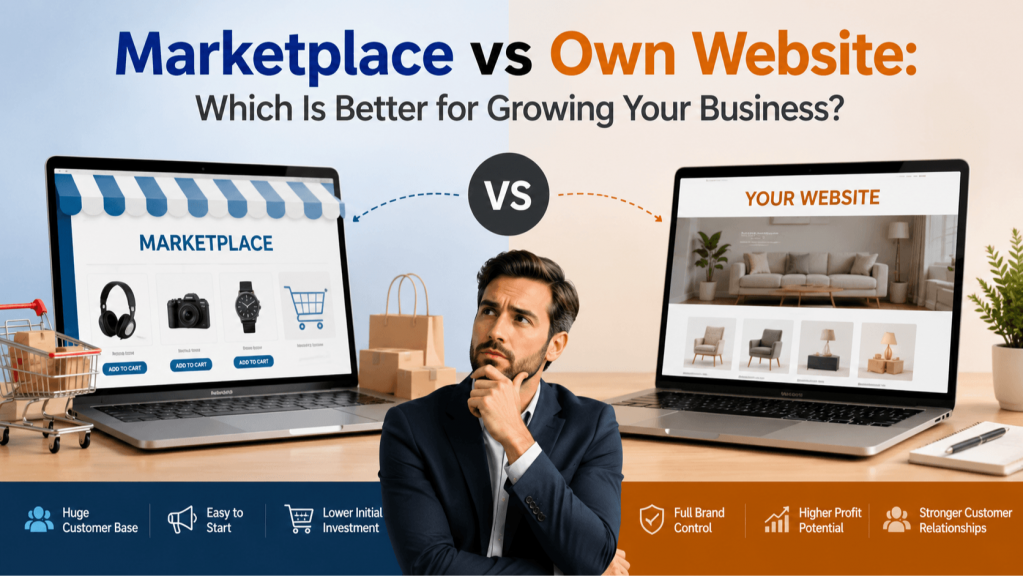
For a growing retail business, the choice between selling on a marketplace and building your own website is not just a technology decision. It affects your customer acquisition cost, brand perception, margins, delivery experience, product discovery, and long-term customer loyalty.
The short answer is simple: a marketplace is usually better for faster reach and trust, while your own website is better for brand control and customer ownership. The smartest growth strategy for many businesses, especially in a competitive ecommerce market like the UAE, is often a hybrid model.
A UAE online shopping marketplace, such as Sandhai.ae, shows why marketplaces can be powerful. Customers can discover groceries, home essentials, furniture, toys, stationery, personal care, and traditional products in one place. For a seller, that kind of environment can reduce the friction of being discovered. But an owned website can still play a crucial role when you want to build a brand that customers remember, search for, and return to directly.
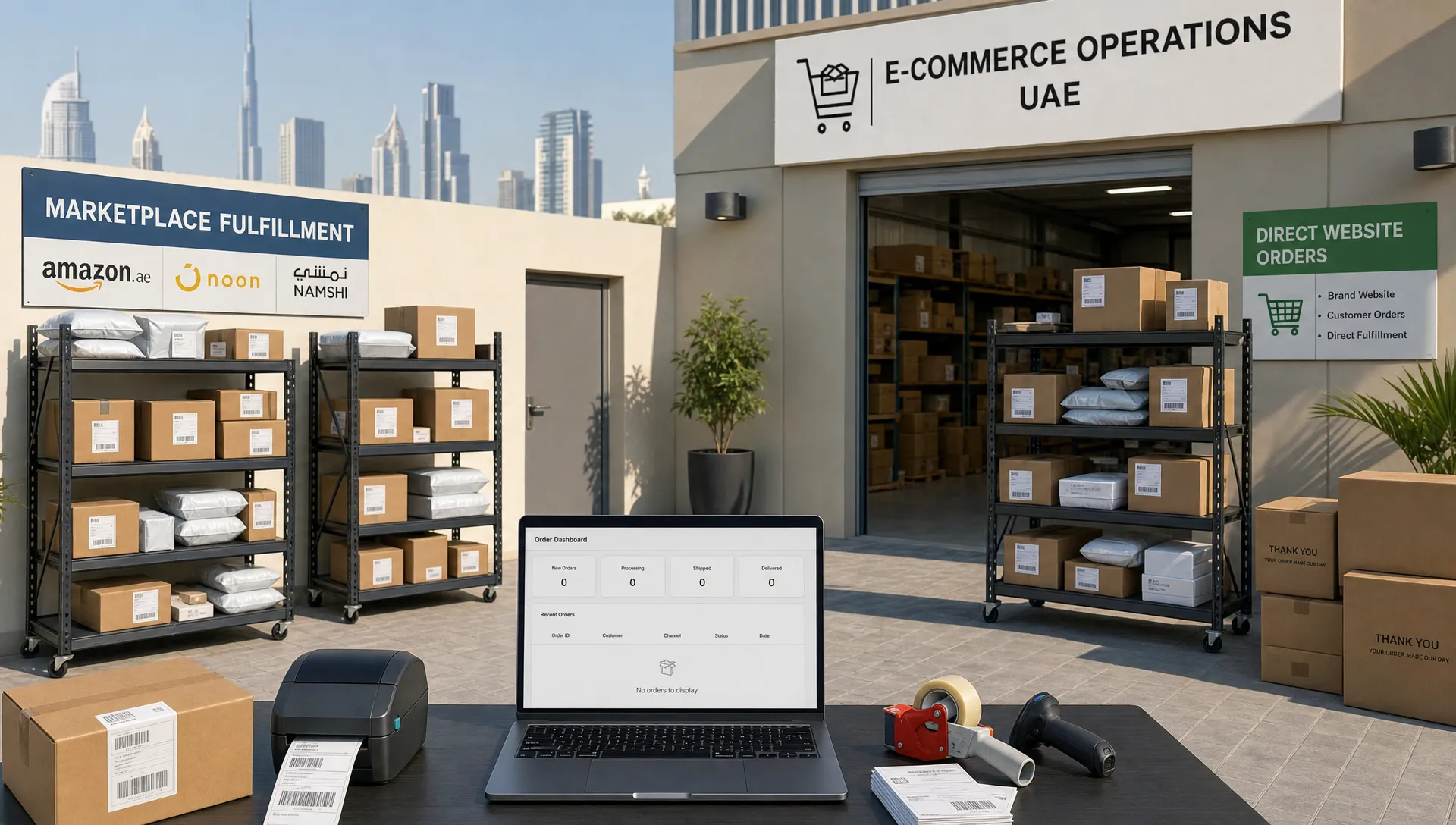
What Is the Real Difference Between a Marketplace and Your Own Website?
A marketplace is a shared ecommerce platform where multiple sellers or product categories are presented under one trusted shopping experience. Customers visit the platform because they expect variety, comparison, deals, secure payment options, and convenient delivery.
Your own website is a branded ecommerce store that you control. You decide the design, product storytelling, checkout flow, pricing presentation, customer communication, and marketing strategy. Instead of competing inside a broader platform, you create your own destination.
Both models can sell the same product, but they grow in different ways. A marketplace helps you enter an existing stream of demand. Your own website asks you to create that demand yourself.
Marketplace vs Own Website: A Practical Comparison
| Growth factor | Marketplace advantage | Own website advantage | Best fit |
|---|---|---|---|
| Customer reach | Access to existing marketplace visitors | Must build traffic through SEO, ads, social, and referrals | Marketplace for early visibility |
| Brand control | Limited by platform layout and rules | Full control over design, messaging, and experience | Own website for brand building |
| Trust | Customers may already trust the platform | Trust must be earned through reviews, policies, content, and service | Marketplace for faster credibility |
| Costs | Possible selling fees, platform terms, and price competition | Website development, hosting, payment setup, marketing, and support | Depends on margin and scale |
| Customer data | Usually more limited | More control over analytics, email lists, and retention | Own website for repeat customers |
| Speed to launch | Faster if the platform setup is simple | Slower due to build, testing, and marketing setup | Marketplace for product validation |
| Long-term value | Good for sales volume and discovery | Better for customer lifetime value and brand equity | Hybrid for sustainable growth |
This comparison matters because growth is not only about selling more today. It is also about knowing who your customers are, why they buy, how often they return, and how much it costs to win each order.
When a Marketplace Is Better for Growing Your Business
A marketplace is often the stronger first move when your biggest challenge is visibility. If customers do not know your brand yet, they are less likely to visit your website directly. But they may already be browsing a marketplace for a category, need, festival purchase, school item, grocery product, or home essential.
This is especially useful for businesses that sell products customers already understand. For example, a café supplier or beverage business can benefit from category discovery when customers are browsing products like Strawberry Boba 3KG. A furniture seller can gain visibility when shoppers compare practical home or office items such as Wooden Office Desks. An arts and crafts brand may reach hobbyists and parents through supplies such as Ranger Liquid Pearls Bronze, while a toy seller can appear in discovery journeys around items like Polesie Big Kitchen.
The key benefit is intent. Marketplace visitors are often already in shopping mode. They may not know your business name, but they know what they need. If your product listing, pricing, images, reviews, and delivery terms are strong, you can compete at the moment of purchase.
A marketplace can also help you test products before investing heavily in your own ecommerce infrastructure. If you are unsure which SKU, bundle, size, flavour, colour, or price point will perform best, marketplace sales can give you practical signals. Instead of spending months building a website for an untested catalogue, you can learn from real purchase behaviour.
When Your Own Website Is Better for Growth
Your own website becomes more important when brand differentiation matters. If your value is not just the product itself, but the story, experience, ingredients, craftsmanship, design, sustainability, expertise, or community around the product, an owned website gives you more space to communicate that value.
This matters for premium products, niche brands, repeat-purchase categories, and businesses that depend on loyalty. On your own website, you can create buying guides, comparison pages, educational content, bundles, loyalty offers, email campaigns, and post-purchase flows. You can also shape the customer journey from the first landing page to the thank-you page.
The biggest advantage is customer ownership. When a customer buys from your website, you can usually build a more direct relationship through newsletters, account features, order history, remarketing, and customer support. Over time, that can reduce reliance on paid ads or third-party visibility.
However, this control comes with responsibility. You need to generate traffic, maintain website performance, handle technical issues, build trust, optimize checkout, manage product pages, create content, and respond to customer concerns. A beautiful website without traffic is not a growth engine. It is a digital brochure.
The Hidden Costs Most Businesses Forget
The marketplace vs own website debate often becomes too simple because people compare only obvious costs. In reality, each model has visible and invisible costs.
On a marketplace, you may face commission structures, listing requirements, platform policies, competition from similar products, and less freedom to control the full customer experience. You may also have less direct access to customer data, which can make retention harder.
On your own website, you may avoid some marketplace constraints, but you must pay for traffic and trust. Search engine optimization takes time. Paid ads can become expensive. Payment gateways, shipping integrations, photography, copywriting, customer service, hosting, security, and maintenance all require budget or expertise.
A good decision should compare total growth cost, not just selling fees. Ask yourself: how much does it cost to acquire one customer, fulfill one order, handle one return, and bring that same customer back again?
UAE Market Considerations: Trust, Speed, and Convenience
The UAE is a digitally mature and fast-moving market. The country’s Digital Economy Strategy highlights the national focus on expanding the digital economy, which supports continued growth in ecommerce, digital payments, and online services.
For businesses, this creates opportunity, but also raises customer expectations. Shoppers in the UAE often compare price, delivery speed, payment convenience, product authenticity, return policies, and customer reviews before buying. A weak product page or unclear delivery information can quickly reduce conversion.
Marketplaces can help because they often standardize parts of the experience. Customers know where to find product images, pricing, seller information, reviews, delivery details, and checkout options. This familiarity can reduce hesitation, especially for first-time buyers.
Own websites need to work harder to provide the same confidence. Clear policies, professional product pages, secure checkout, mobile-friendly design, fast loading speed, and responsive support are not optional. They are part of the trust equation.
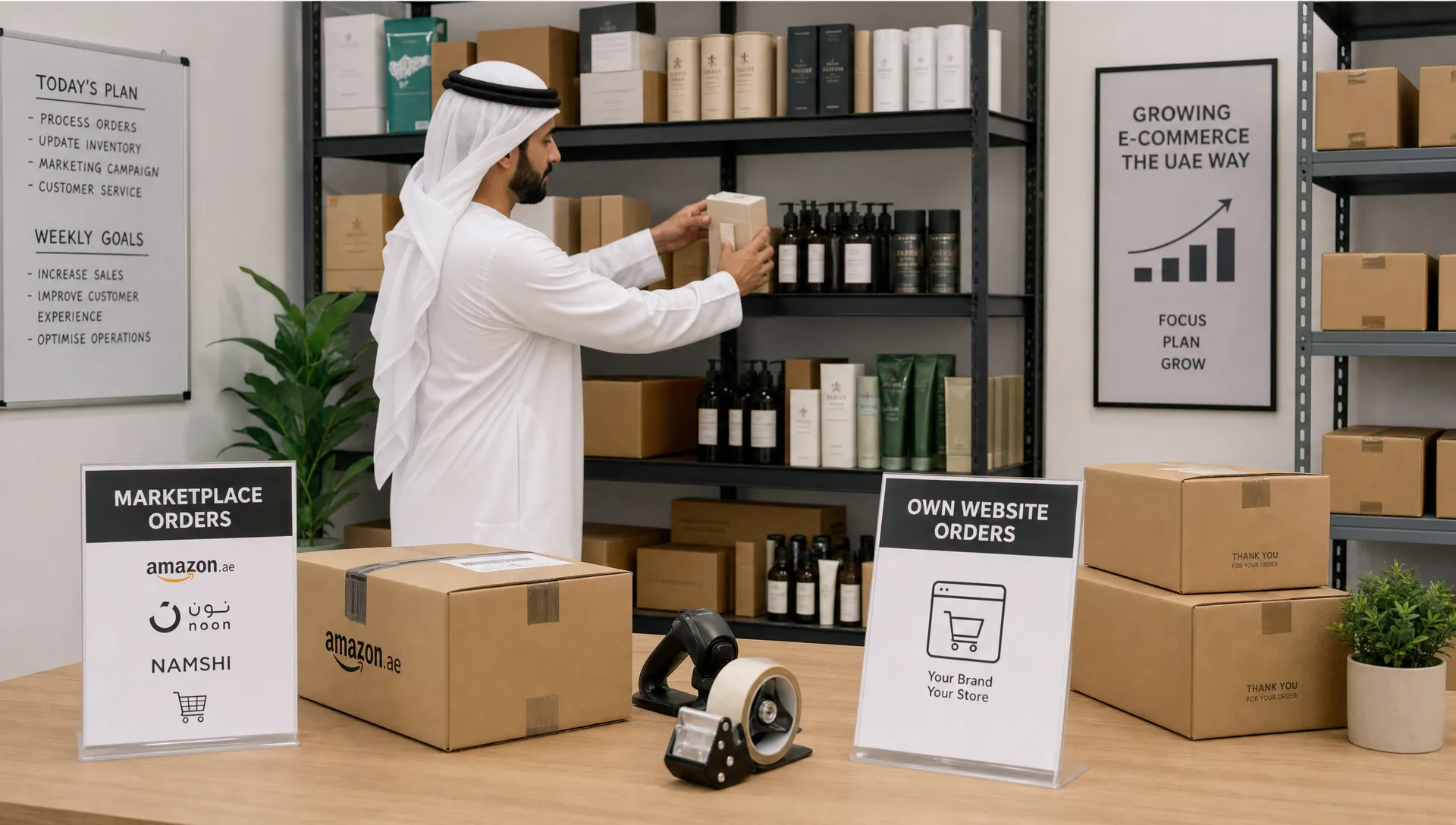
The Best Strategy Is Often Hybrid
For many businesses, the question is not "marketplace or own website?” but "which should lead at this stage of growth?” A hybrid approach lets you use each channel for what it does best.
In the early stage, a marketplace can help validate demand. You can learn which products sell, what customers ask, how pricing performs, and which categories attract attention. This is useful before spending heavily on ads or custom development.
In the growth stage, your own website can become the place where your brand identity deepens. You can publish content, collect leads, explain product differences, highlight your values, and encourage repeat purchases. Meanwhile, the marketplace continues to support discovery and sales volume.
In the mature stage, both channels can work together. Marketplaces can bring new customers into your ecosystem, while your website can support loyalty, education, and higher-margin direct relationships.
A simple hybrid model could look like this:
- Use marketplaces to test and sell proven products: Start with products that customers already search for and understand, then improve listings based on conversion and feedback.
- Use your own website to build brand depth: Create pages that explain your story, product quality, use cases, care instructions, ingredients, sourcing, or craftsmanship.
- Use marketplace performance to guide inventory: If certain products sell consistently, prioritize them in stock planning, bundles, and campaigns.
- Use your website to improve retention: Encourage customers to subscribe, create accounts, read guides, join loyalty programmes, or explore related products.
- Measure each channel separately: Track revenue, margin, repeat purchase rate, average order value, return rate, and customer acquisition cost by channel.
The businesses that win usually do not treat channels as enemies. They treat them as parts of one customer journey.
Which Option Is Better for Your Business?
Choose a marketplace first if you need reach, speed, trust, and product validation. This is usually the better option for newer sellers, seasonal products, broad catalogues, and businesses that want to test demand before building a full direct-to-consumer operation.
Choose your own website first if you already have an audience, strong brand differentiation, a unique customer experience, or a repeat purchase model. This is usually better for businesses that can invest in SEO, content, email marketing, customer service, and conversion optimization.
Choose both if you want balanced growth. Use the marketplace to capture existing demand and your own website to build long-term customer relationships. This is often the most resilient strategy because it reduces dependence on one channel.
Decision Checklist
Before choosing, answer these questions honestly:
- Do customers already search for my product category online?
- Do I have enough brand awareness to bring traffic to my own website?
- Can I afford website development, content, ads, and maintenance?
- Do I need direct customer data to grow repeat purchases?
- Are my margins strong enough for marketplace fees or paid advertising?
- Is my product simple to compare, or does it need detailed storytelling?
- Can I maintain reliable delivery, support, and return processes?
If most of your answers point to needing visibility and trust quickly, start with a marketplace. If most point to brand depth and repeat relationships, invest in your own website. If both are true, build a hybrid plan from the beginning.
Frequently Asked Questions
Is a marketplace better than an own website for small businesses? A marketplace is often better for small businesses that need fast visibility, customer trust, and lower technical complexity. An own website becomes more valuable when the business is ready to invest in brand building, direct traffic, and retention.
Which is more profitable, marketplace or own website? It depends on margins, customer acquisition costs, platform fees, repeat purchase rate, and operational costs. A website may offer more control over margins, but a marketplace may reduce the cost and time needed to reach ready-to-buy customers.
Can I sell on a marketplace and my own website at the same time? Yes. Many businesses use marketplaces for discovery and sales volume while using their own websites for brand storytelling, customer loyalty, educational content, and direct relationships.
What products perform well on marketplaces? Products with clear demand, simple comparison, strong images, competitive pricing, and reliable delivery often perform well. Examples include groceries, stationery, toys, home essentials, beauty products, and furniture.
When should I invest in my own ecommerce website? Invest in your own website when you have validated demand, a clear brand position, enough budget for marketing and maintenance, and a plan to convert first-time buyers into repeat customers.
Final Verdict
A marketplace is better for speed, reach, and trust. Your own website is better for control, branding, and long-term customer ownership. For most growing businesses, the strongest answer is not one or the other. It is a phased strategy that uses marketplaces to accelerate discovery and an owned website to build lasting value.
If you want to understand how a multi-category UAE online marketplace presents products across groceries, furniture, toys, stationery, and lifestyle categories, explore Sandhai’s online shopping experience and study how product discovery, offers, and convenience come together in one platform.

Comments