

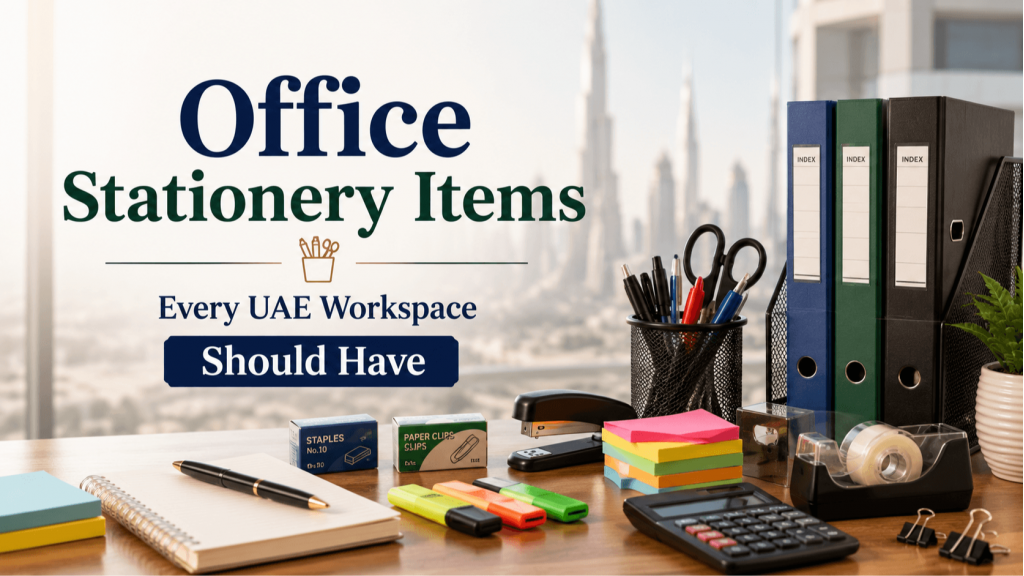
A smooth workday often depends on the smallest tools. A pen that writes clearly during a client meeting, a correction pen beside the printer, a stapler that is not missing when documents need to go out, or a sign holder that keeps reception information visible can save time across the week.
For UAE businesses, home offices, co-working spaces, and hybrid teams, choosing the right office stationery items is not just about filling drawers. It is about building a practical workspace that supports speed, organization, document control, and a professional first impression. Whether you are setting up a small office in Dubai, restocking a team in Sharjah, or organizing a home workspace in Abu Dhabi, the essentials below will help you buy smarter and avoid last-minute supply runs.
Start With How Your Workspace Actually Works
Before buying stationery in bulk, think about the daily rhythm of your workspace. A sales office that prints quotations all day needs different supplies from a design studio that spends more time sketching, labelling samples, and preparing client presentations. A reception desk needs neat display tools and reliable pens, while an accounts team needs filing supplies, correction tools for drafts, and document organization.
A useful way to plan is to group stationery into three levels: daily-use items, shared office items, and occasional-use items. Daily-use items should be within reach at every desk. Shared items can sit in a central cabinet or print area. Occasional-use items, such as premium gift pens or display stands, should be kept neatly for meetings, onboarding, and events.
This approach helps you avoid overbuying trendy supplies while making sure the items people actually need are always available.
Essential Office Stationery Items Checklist
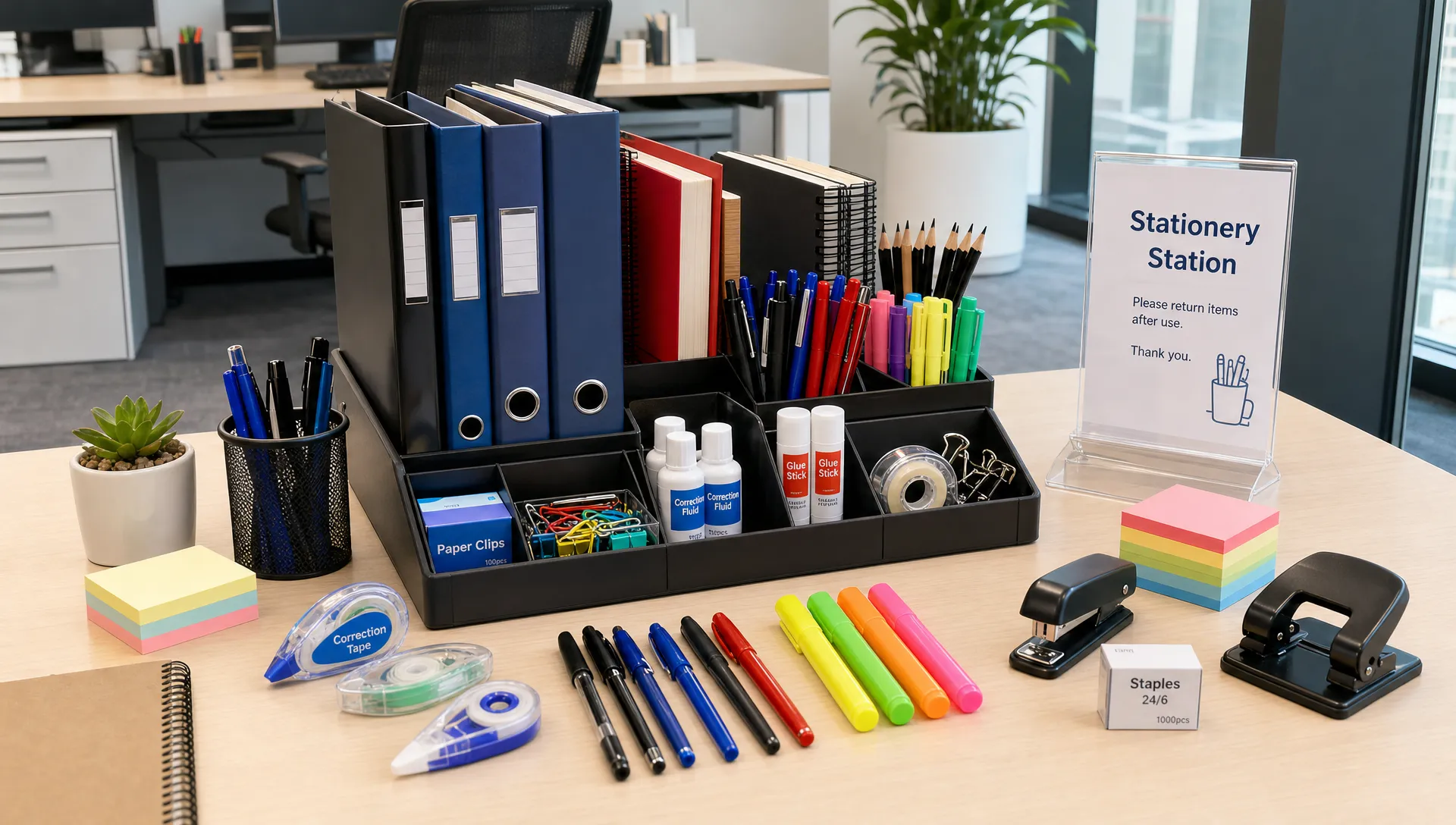
Use this table as a practical starting point when setting up or refreshing a UAE workspace. You can adjust quantities based on team size, visitor traffic, and how much paperwork your office handles.
| Category | Must-have items | Best place to keep them | Why they matter |
|---|---|---|---|
| Writing tools | Roller pens, ball pens, pencils, markers, highlighters | Each desk and meeting room | Supports notes, signatures, labels, and quick edits |
| Paper supplies | A4 paper, notebooks, sticky notes, memo pads, envelopes | Print station and desk drawers | Keeps printing, planning, and communication moving |
| Filing items | Folders, binders, dividers, labels, file trays | Filing cabinet or admin area | Reduces document loss and improves retrieval |
| Desk tools | Stapler, staples, paper clips, binder clips, tape, scissors, ruler | Shared stationery cabinet | Handles everyday document preparation |
| Correction tools | Correction pens, erasers, sharpeners | Print area and admin desks | Helps clean up drafts and internal paperwork |
| Meeting supplies | Whiteboard markers, notepads, sign holders, name cards | Conference rooms and reception | Makes meetings and visitor communication clearer |
| Organization items | Pen cups, desk trays, storage boxes, cable labels | Every workstation | Reduces clutter and improves focus |
A checklist like this is especially useful when several people order supplies. It keeps purchasing consistent and helps you spot gaps before they affect daily work.
Writing Tools: The Foundation of Every Desk
Pens are still one of the most important office stationery items, even in digital-first workplaces. People use them to sign delivery notes, mark invoices, take meeting notes, label folders, and write reminders during calls. The key is to keep a mix of reliable everyday pens and a few premium writing tools for client-facing situations.
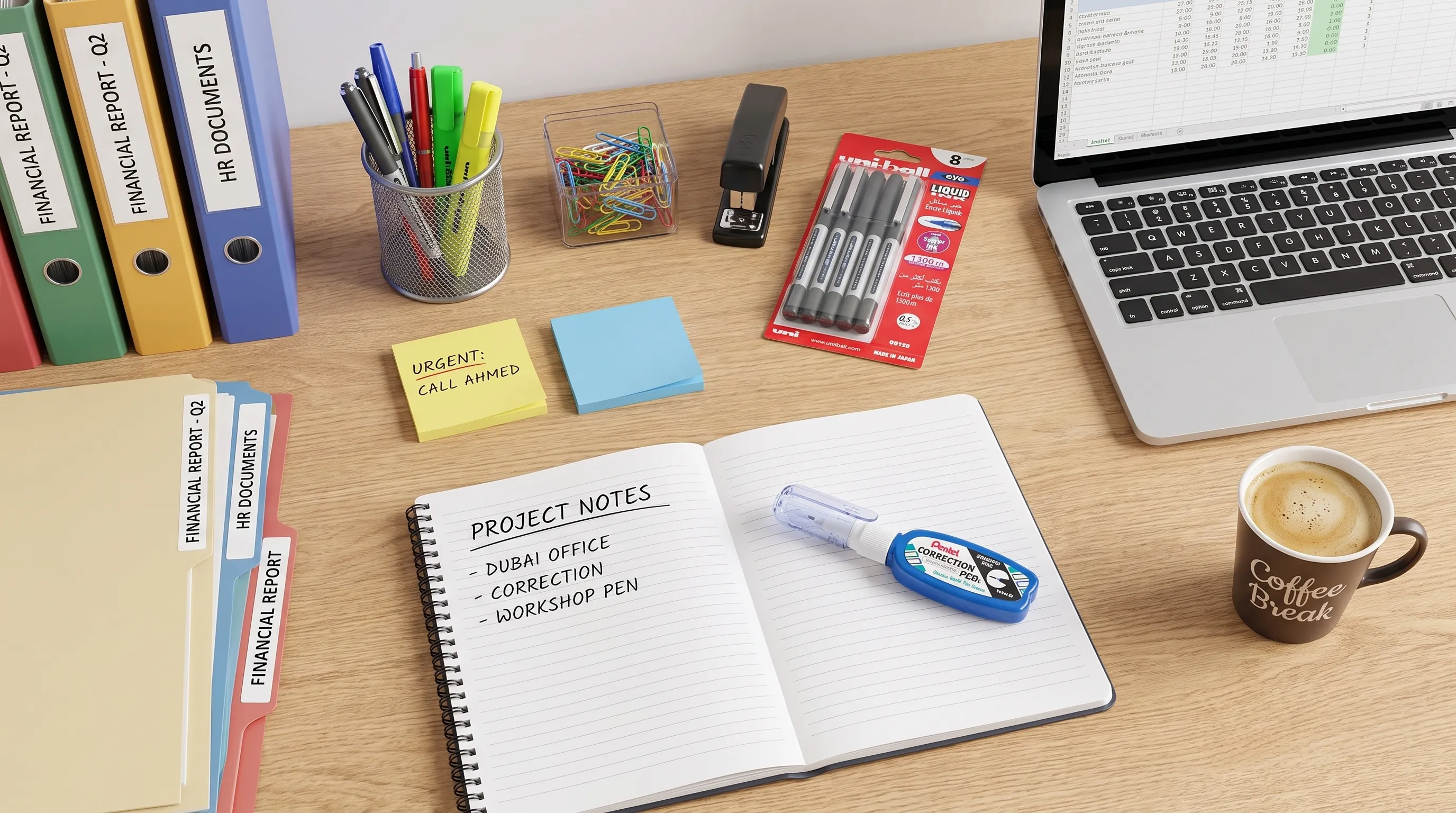
For shared desks, meeting rooms, or reception counters, black pens are usually the safest choice because they look professional on most business documents. A pack such as the Uni-ball EYE roller pen 8pcs Black can be practical for offices that want multiple writing tools available across departments without constantly moving pens from room to room.
Pencils also have a place, especially for layout planning, stock counts, warehouse notes, or temporary markings. Highlighters are useful for reviewing printed contracts, study material, training manuals, and accounts paperwork. Permanent markers should be stored near packing areas, storage rooms, or inventory shelves, not scattered randomly across desks.
A good writing kit for each desk should include at least one black pen, one blue pen, one pencil, one highlighter, and a small eraser. Meeting rooms should have extra pens and whiteboard markers so discussions do not pause because someone forgot to bring supplies.
Paper, Filing, and Document Control
Even if your office uses cloud storage, paper has not disappeared. UAE businesses still handle printed invoices, delivery documents, HR forms, signed agreements, meeting notes, and shipping paperwork. When paper is part of your workflow, filing stationery becomes essential.
Start with A4 paper, envelopes, file folders, binders, sticky notes, and labels. Then add file trays for incoming, outgoing, and pending documents. This small structure prevents papers from piling up in random stacks and makes it easier for another team member to find something when the usual person is away.
Correction tools are also useful, but they should be used carefully. For example, a Whitener Pentel Correction pen is handy for correcting internal drafts, handwritten notes, labels, or non-final paperwork. However, official contracts, legal forms, and tax documents should usually be reprinted or corrected according to the required procedure rather than casually overwritten.
For document-heavy teams, consider assigning a dedicated admin zone near the printer. Keep paper, envelopes, correction tools, staplers, clips, labels, and file trays in one place. This reduces desk clutter and makes restocking easier.
Desk Tools That Prevent Small Delays
Small desk tools are easy to overlook until someone needs them urgently. A missing stapler or scissors can slow down a task that should take 30 seconds. These items are low-cost compared with the time wasted searching for them, so every workspace should have a sensible supply.
The most useful desk tools include staplers, staples, binder clips, paper clips, transparent tape, masking tape, scissors, rulers, glue sticks, rubber bands, and sharpeners. Not every employee needs every item at their desk, but every department should know where to find them.
A simple rule works well: keep personal basics at desks and shared tools in visible places. For example, each employee can keep pens, sticky notes, and a notebook, while heavier-use items such as tape dispensers, large scissors, staplers, and hole punchers can stay in the print area.
Ergonomics also matters. The Occupational Safety and Health Administration recommends arranging workstations so frequently used items are easy to reach. In practice, this means pens, notepads, and daily files should be nearby, while rarely used supplies can go into drawers or cabinets.
Meeting Room and Reception Stationery
Meeting rooms need more than chairs and a screen. If people regularly brainstorm, train staff, or meet clients, they need stationery that supports clear communication. Keep whiteboard markers, a board eraser, notepads, pens, sticky notes, name cards, and a small document tray in the room.
Reception areas need a slightly different set of supplies. Visitors should be able to see key information quickly, such as check-in instructions, Wi-Fi details if appropriate, room names, or promotional notices. A clear tabletop display such as an acrylic sign holder can help keep printed messages neat at front desks, counters, event tables, or consultation areas.
If your office hosts partners, vendors, or VIP clients, consider keeping a few polished presentation items on hand. A business gift option such as the Click Matte Gift Set can be suitable for client appreciation, employee recognition, or formal welcome packs when the occasion calls for something more refined than everyday stationery.
The goal is not to make every meeting room feel overloaded. The goal is to make it ready. A tidy tray with the right basics is usually enough.
Storage and Organization: Where Productivity Gets Protected
Stationery only helps if people can find it. Without a system, office supplies disappear into drawers, duplicate purchases happen, and team members start storing private stockpiles at their desks. Over time, this creates clutter and unnecessary spending.
Use a central stationery cabinet for shared supplies. Label shelves clearly by category, such as pens, paper, clips, folders, labels, and meeting supplies. Keep fast-moving items at eye level and occasional-use items higher or lower. This makes it easier for staff to take what they need and easier for one person to check stock at the end of the week.
A clean desk setup also supports focus. If you are refreshing the wider workspace, not just the stationery, pairing supplies with practical furniture makes a difference. For example, browsing wooden office desks can be useful when you want workstations with enough surface area for writing, filing, and computer use without crowding.
For small offices, one labelled drawer unit may be enough. For larger teams, assign one person or department to manage stationery requests. The system does not need to be complicated, but it should be consistent.
How to Buy Office Stationery Smarter in the UAE
Online shoppers often compare prices, delivery options, product variety, and payment convenience before buying supplies. For stationery, it is also important to think about repeat purchases. If your team uses the same pens, paper, folders, and desk tools every month, buying randomly can lead to mismatched quality and stock gaps.
A better approach is to create a standard office stationery list and review it monthly. Track which items run out quickly and which sit unused. Over time, you will know what to buy in bulk and what to buy only when needed.
Here is a simple buying plan that works for many UAE workspaces:
- Weekly check: Review paper, pens, sticky notes, and printer-area supplies.
- Monthly restock: Reorder common items such as pens, folders, paper clips, staples, labels, and notebooks.
- Quarterly review: Remove damaged items, check storage areas, update meeting room supplies, and review whether the team needs new categories.
- Before events: Prepare name cards, sign holders, notepads, visitor pens, envelopes, and gift items if required.
If you are shopping across multiple office categories, a marketplace like Sandhai.ae can help you combine stationery with other workplace essentials, from home and office items to daily-use products, depending on what your team needs.
Sample Stationery Setup by Workspace Type
Different workspaces need different priorities. A home office may not need a full filing cabinet, while a busy reception desk cannot function well with only one pen and a notepad. Use the table below to adjust your list.
| Workspace type | Priority stationery | Practical tip |
|---|---|---|
| Home office | Pens, notebook, sticky notes, folders, stapler, correction pen | Keep one compact tray instead of spreading supplies across the room |
| Small business office | Pens, A4 paper, folders, labels, clips, tape, scissors, file trays | Build a shared supply shelf and check it weekly |
| Reception desk | Visitor pens, sign holder, notepad, envelopes, name cards, tape | Keep the counter clear and store extras in a drawer |
| Meeting room | Whiteboard markers, notepads, pens, sticky notes, and board erasers | Check markers before important meetings |
| Accounts or admin team | Folders, binders, labels, correction tools, paper clips, envelopes | Use clear categories for pending, approved, and archived documents |
This kind of setup keeps spending practical. You do not need every item everywhere. You need the right item in the right place.
Common Mistakes to Avoid When Stocking Stationery
One common mistake is buying too many novelty items and not enough basics. Stylish stationery can be enjoyable, but if the office runs out of paper clips, pens, or folders, daily work suffers. Prioritize function first, then add personality where it makes sense.
Another mistake is placing all supplies in one locked cabinet. Security matters, but if every small request requires a key, employees waste time. Keep daily-use items accessible and store higher-value or bulk stock separately.
A third mistake is ignoring quality. Very cheap pens that dry out quickly, weak folders that tear, or tape that does not hold can cost more in frustration than they save in price. For frequently used items, reliable quality usually matters more than the lowest possible cost.
Finally, avoid ordering without reviewing what is already available. A five-minute stock check can prevent duplicate purchases and keep storage areas under control.
Frequently Asked Questions
What are the most important office stationery items for a UAE workspace? The most important items are pens, notebooks, A4 paper, sticky notes, folders, staplers, paper clips, binder clips, correction tools, labels, tape, scissors, and meeting room supplies such as whiteboard markers.
How often should an office restock stationery? Most small offices benefit from a monthly restock and a quick weekly check of high-use items such as paper, pens, clips, and printer-area supplies. Larger teams may need a more formal inventory process.
Should every employee have their own stationery kit? It is useful for each employee to have basic items such as pens, a notebook, sticky notes, and a folder. Shared tools such as staplers, hole punchers, tape dispensers, and scissors can be kept in a central area.
Are correction pens suitable for official documents? Correction pens are useful for drafts, notes, labels, and internal paperwork. For official contracts, tax documents, or legal forms, it is usually better to reprint the document or follow the required correction process.
How can I reduce stationery clutter? Use labelled storage, keep only daily essentials on desks, create a central stationery cabinet, and review supplies monthly. Clear categories make it easier to find items and avoid overbuying.
Build a Workspace That Is Always Ready
The best office stationery items are the ones that quietly support your team every day. Reliable pens, organized files, clean correction tools, clear signs, and accessible desk supplies make work feel smoother and more professional.
If you are updating a workspace or restocking essentials, explore Sandhai for convenient UAE online shopping across stationery, office needs, and everyday products. Start with the items your team uses daily, then build a practical system that keeps every desk, meeting room, and reception area ready for work.

Comments