

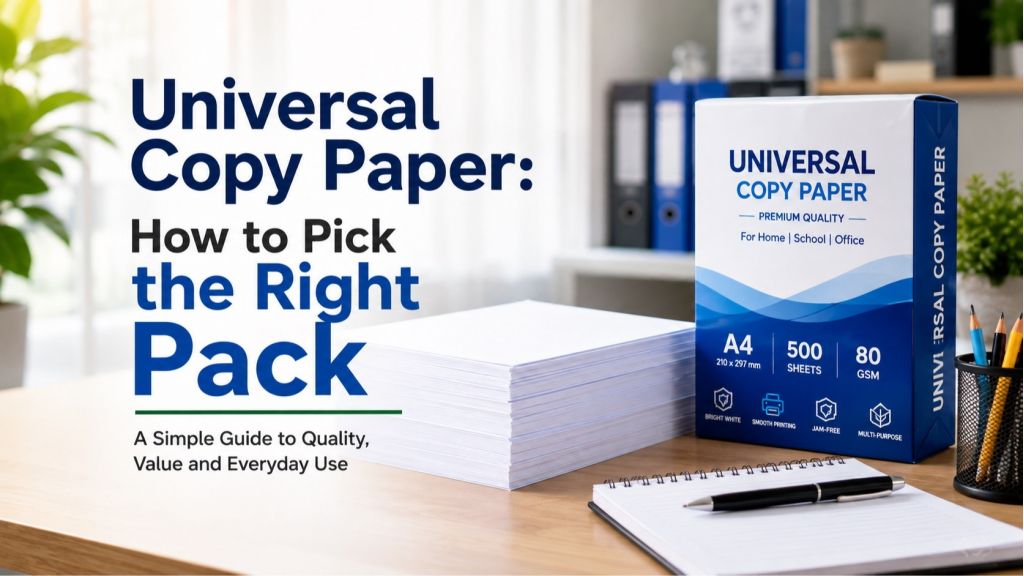
Universal copy paper looks simple until you are standing in front of too many packs, all claiming to be suitable for everyday printing. For most homes, schools and offices in the UAE, the right choice comes down to a few practical details: paper size, GSM, brightness, printer compatibility, pack quantity and storage.
If you shop online for stationery, choosing well matters even more. You cannot feel the sheet before buying, so the product description has to do the work. A smart pick helps prevent paper jams, faded prints, ink show-through and the annoying situation where a new ream does not suit the printer you use every day.
This guide explains how to choose universal copy paper for common use cases, from homework and invoices to office reports and customer-facing documents. If you are comparing office supplies on Sandhai.ae, use the same checklist before adding a pack to your cart.
 What universal copy paper actually means
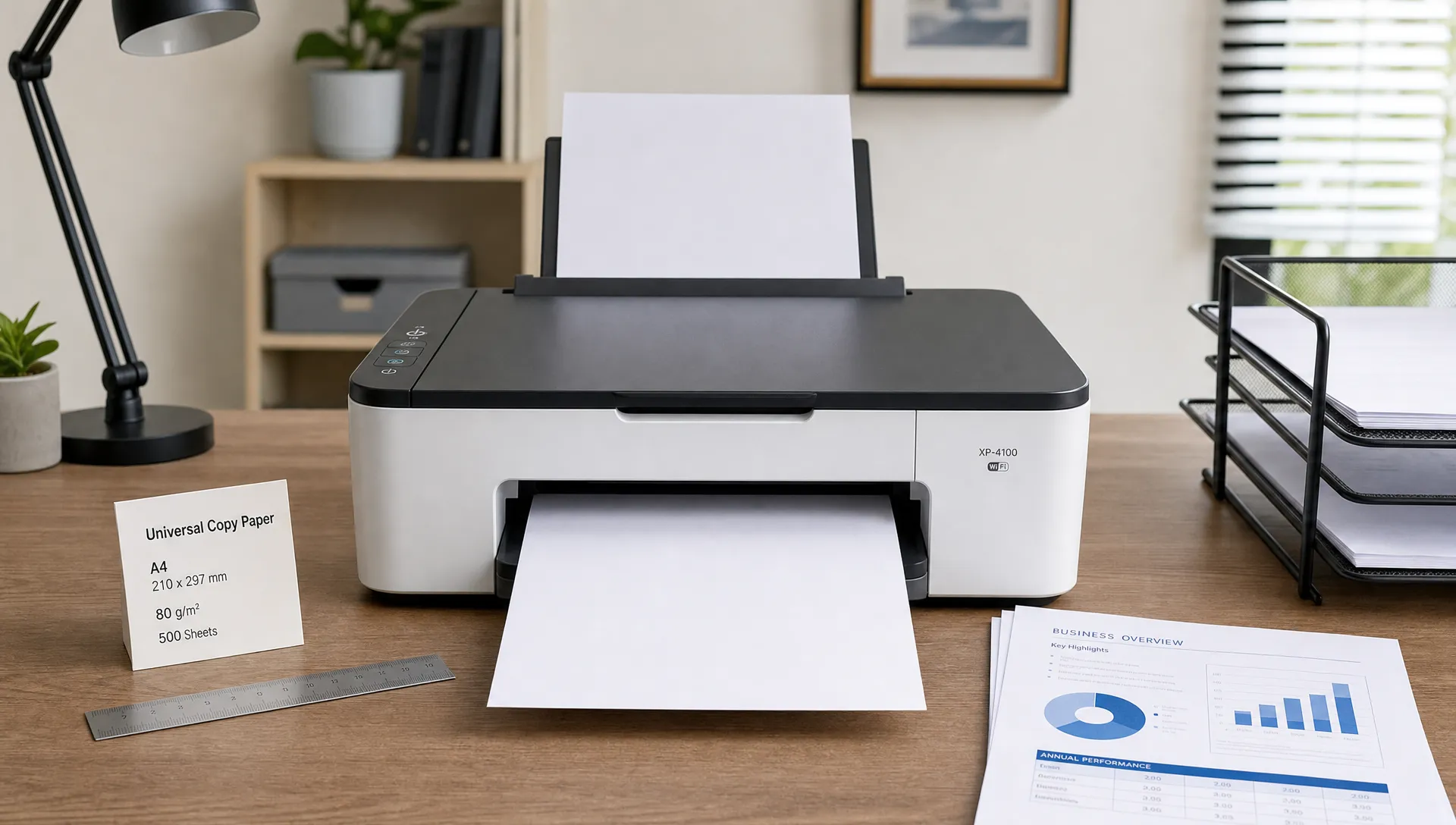
Universal copy paper is multi-purpose paper designed for everyday printing, copying and basic document handling. It is usually intended for common office machines such as laser printers, inkjet printers, photocopiers and fax machines, though you should always confirm compatibility on the pack or product listing.
The word "universal” does not mean every sheet is ideal for every task. A budget pack may be fine for draft notes, internal memos and school worksheets. A smoother, brighter or heavier pack may be better for client proposals, certificates, presentations or double-sided printing.
Think of universal copy paper as the everyday workhorse of your stationery shelf. It should run cleanly through your printer, hold text clearly and feel appropriate for the document’s purpose. Once you understand the specifications, choosing a pack becomes much easier.
Start with paper size, especially A4
For most UAE households, schools and offices, A4 is the default choice. A4 paper measures 210 x 297 mm and is the standard size for letters, forms, assignments, invoices, reports and most printed documents.
Before buying, check the size shown in the product title and description. Some paper products may look similar in photos but serve different needs. A4 copy paper is different from cardstock, photo paper, craft paper, paper bags or specialty sheets.
A3 paper is larger and useful for posters, drawings, charts and design layouts. Letter size is more common in North America, so it may not be the best fit if you regularly print UAE school forms, office templates or documents designed around A4.
If you want the safest everyday option, choose A4 universal copy paper unless your printer tray, document template or project clearly requires another size.
Understand GSM before you buy
GSM stands for grams per square metre. It tells you how heavy and thick the paper is. A higher GSM usually feels sturdier and reduces show-through, but it can cost more and may not be necessary for simple daily printing.
Most everyday copy paper falls around 70 to 80 GSM, with 80 GSM often treated as a balanced office standard. Heavier options such as 90 or 100 GSM can feel more premium and work better for important documents, but they may be excessive for large-volume internal printing.
| GSM range | Best for | What to expect |
|---|---|---|
| 70 to 75 GSM | Drafts, school worksheets, high-volume internal printing | Lighter feel, usually economical for frequent use |
| 80 GSM | General home, school and office printing | Balanced thickness, suitable for most daily documents |
| 90 GSM | Double-sided documents, reports, cleaner presentation | Better opacity and a more substantial feel |
| 100 GSM and above | Certificates, cover pages, premium handouts | More professional finish, not always needed for routine printing |
If you print mostly black-and-white text, 75 or 80 GSM is usually enough. If you print on both sides or want documents to feel more polished, consider 90 GSM or higher, as long as your printer supports it.
Check brightness and whiteness
Brightness affects how sharp text and colours appear on the page. Brighter paper gives stronger contrast, which can make documents easier to read and more professional-looking. This is especially useful for reports, proposals, resumes, school projects and documents with charts or graphics.
For basic internal documents, very high brightness is not essential. For customer-facing documents, cleaner white paper can improve the impression without changing the content at all.
Whiteness and brightness are not always described the same way across brands, so do not compare numbers blindly unless the listing uses the same standard. A practical rule is simple: choose standard white copy paper for daily use, then upgrade to a brighter or premium pack for documents that will be shared outside your home or office.
Match the paper to your printer
Printer compatibility is one of the most important parts of choosing universal copy paper. A good sheet should feed smoothly, resist curling and reduce dust build-up inside the machine. Poor-quality paper can lead to jams, uneven printing and wasted ink or toner.
Laser printers use heat to fuse toner onto paper, so the sheet must tolerate that process. Inkjet printers spray liquid ink, so paper absorbency matters more. Many universal copy paper packs are made for both, but always check the listing before buying.
If you print frequently at home or in an office, paper is only one half of the setup. The toner or cartridge also affects print quality and running costs. For example, offices using compatible laser printers can also compare UPC laser toner cartridge replacement options in the UAE alongside paper, so supplies are planned together rather than replaced in a rush.
For double-sided printing, look for good opacity. Opacity means the print on one side is less visible from the other side. This matters for reports, contracts, handouts and study notes where readability on both sides is important.
Choose the right pack quantity
Copy paper is usually sold in reams or cartons. A ream commonly contains 500 sheets, though you should still confirm the sheet count in the product details. A carton usually contains multiple reams and is better suited to offices, tuition centres, shops or families that print often.
Buying too little can be inconvenient, especially during school term, tax documentation, office reporting periods or event preparation. Buying too much can also be a problem if you do not store paper properly, because humidity can cause curling or feeding issues.
Use your printing pattern to decide:
- Choose a small pack or single ream if you print occasionally at home.
- Choose multiple reams if you have school-going children, a home office or regular document needs.
- Choose a carton if your office, shop or training centre prints daily.
- Choose heavier paper in smaller quantities for presentations, certificates or documents that need a better feel.
If you are unsure, buy a moderate quantity first and test it with your printer. Once you know the paper feeds well and looks good, you can order larger quantities with more confidence.
Pick paper by use case
The best universal copy paper is not always the most expensive pack. It is the pack that fits your actual printing habits. A small home printer, a busy office copier and a school project folder do not need the exact same sheet.
| Use case | Recommended choice | Why it works |
|---|---|---|
| Everyday home printing | A4, 75 to 80 GSM | Practical for forms, notes and occasional documents |
| School assignments | A4, 80 GSM | Good balance of readability and value |
| Office documents | A4, 80 GSM or 90 GSM | Reliable for reports, invoices and internal printing |
| Double-sided printing | A4, 90 GSM if available | Better opacity reduces show-through |
| Presentations or handouts | Brighter 90 GSM or higher | Cleaner look and more professional feel |
| Drafts and bulk copies | 70 to 75 GSM | Suitable when appearance is less important |
This approach prevents overspending. There is no need to use premium paper for draft notes, but it is worth upgrading when the document represents your business, brand or personal profile.
Think about storage in UAE homes and offices
Paper storage matters in the UAE because indoor cooling and outdoor humidity can affect how sheets behave. Paper that absorbs moisture may curl, stick together or jam in the printer. Paper stored too close to heat or direct sunlight can also lose its smooth handling quality.
Keep unopened reams in their packaging until needed. Store them flat in a cupboard, drawer or stationery cabinet. Avoid placing paper near windows, kitchen areas, bathrooms or air-conditioning vents where temperature and humidity can fluctuate.
Once a ream is opened, reseal the wrapper as much as possible or place the paper in a dry storage box. If your printer starts jamming after paper has been left open for weeks, try using a fresh ream before assuming the printer is faulty.
For offices, it helps to keep paper close to the printer but not directly on the floor. If your team stores stationery in A4 folders or separates documents for delivery, products such as A4 size paper bags can be useful for organizing printed material, though they are not a substitute for copy paper itself.
Do you need recycled or certified paper?
If sustainability is part of your buying decision, look for recycled content or responsible forestry certifications in the product details. The Forest Stewardship Council explains how FSC certification supports responsible forest management, and many paper buyers use such labels as a quick trust signal.
Recycled paper can work well for many everyday uses, but the feel, colour and printer performance may vary by brand. If your documents are mostly internal, recycled paper can be a sensible choice. If you need bright, crisp output for client proposals or official presentations, compare the specifications carefully before buying.
Do not assume that a brown or off-white sheet is automatically better for the environment. Check the actual certification, recycled percentage or sourcing statement when available.
When universal copy paper is not the right choice
Universal copy paper is flexible, but it is not meant for every paper-based task. Using it for the wrong purpose can lead to poor results, wasted sheets or a less professional finish.
For children’s activities, craft kits may be more suitable than plain printer paper. For example, creative products such as Paper Masks - Power Pack are designed around play and craft use, while copy paper is better for printed worksheets, templates and instructions.
For business promotions, in-store advertising or event displays, standard A4 paper will not have the size, durability or finish needed to stand out. If you are preparing a shop launch, exhibition stand or promotional corner, a dedicated display option such as Roll Up Banner Printing | Portable Standee Banner UAE is a more suitable choice than taping multiple sheets together.
For photographs, choose photo paper. For certificates, use heavier certificate paper or cardstock if your printer supports it. For packaging, use bags, envelopes or wrapping products made for that purpose.
Quick checklist before adding universal copy paper to cart
Before you buy, scan the product details and confirm the basics. This is especially useful when comparing similar-looking packs online.
- Size: A4 for most daily UAE printing needs.
- GSM: 75 to 80 GSM for everyday use, 90 GSM or higher for a premium feel.
- Compatibility: Check whether it suits laser printers, inkjet printers and copiers.
- Brightness: Choose brighter paper for polished documents and presentations.
- Quantity: Buy a ream for occasional use or a carton for frequent printing.
- Storage: Make sure you have a dry, flat place to keep extra paper.
- Purpose: Use copy paper for documents, not banners, photos or packaging.
A good pack should make daily printing feel boring in the best way: no jams, no curling, no faint text and no second-guessing every time you press print.
Frequently Asked Questions
What is universal copy paper used for? Universal copy paper is used for everyday printing, photocopying, school assignments, forms, office documents, invoices and general paperwork. It is usually suitable for common printers and copiers, but you should still check the product listing for compatibility.
Is 80 GSM paper good for printing? Yes, 80 GSM paper is a practical choice for most home, school and office printing. It offers a good balance of thickness, handling and value for daily documents.
Which copy paper is best for double-sided printing? For double-sided printing, choose paper with better opacity. In many cases, 90 GSM paper performs better than lighter sheets because the print from the opposite side is less visible.
Can I use universal copy paper in an inkjet printer? Many universal copy paper packs work with inkjet printers, but not all paper performs equally with ink. Check the product description for inkjet compatibility if you print colour documents, graphics or school projects.
How should I store copy paper in the UAE? Store copy paper flat, dry and away from humidity, direct sunlight and temperature changes. Keep unopened reams sealed until needed, and protect opened paper from moisture to reduce curling and jams.
Shop smarter for everyday stationery
The right universal copy paper pack depends on what you print, how often you print and how polished the final document needs to look. For everyday use, A4 paper in the 75 to 80 GSM range is usually enough. For double-sided documents, presentations or customer-facing paperwork, a heavier or brighter pack can be worth it.
When you compare stationery online, look beyond the first product photo. Check the size, GSM, quantity, printer compatibility and storage needs, then choose the pack that fits your routine. Sandhai brings together everyday shopping categories across groceries, home essentials, stationery and more, making it easier to plan practical purchases in one place.

Comments