

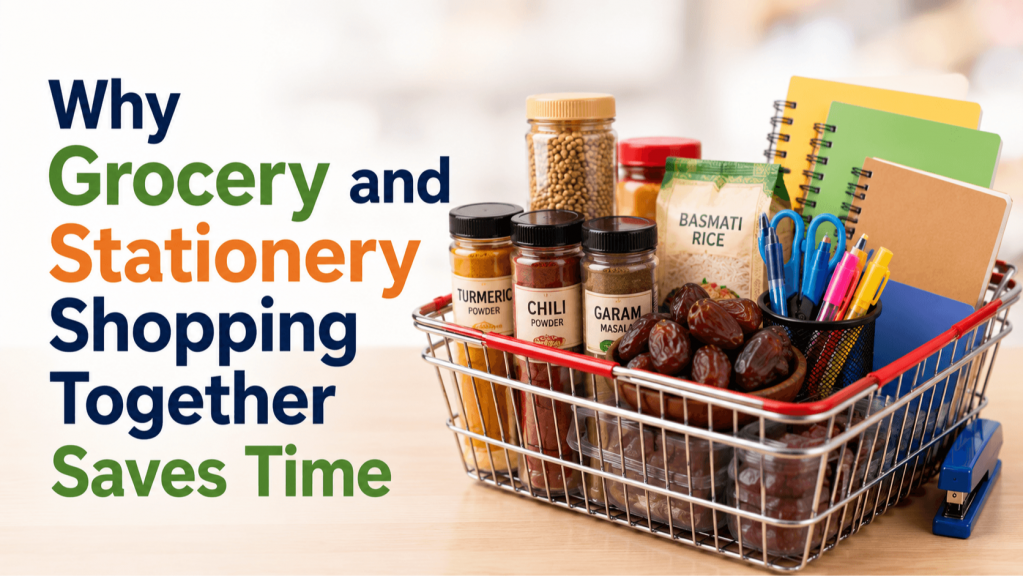
If your week often includes one grocery run, one quick stationery stop, and one last-minute order for school or office supplies, you are not alone. Many UAE households manage food, cleaning products, notebooks, pens, craft items, and personal care items in separate shopping sessions. Each session feels small, but together they take up more time than most people realize.
That is why grocery and stationery shopping together saves time. It turns scattered errands into one more organized routine. Instead of remembering milk today, printer paper tomorrow, and lunchbox snacks the next day, you can plan around the real way a home functions: food, study, work, and daily essentials all moving together.
For online shoppers in Dubai, Sharjah, Abu Dhabi, and across the UAE, using a multi-category marketplace like Sandhai.ae can make this even easier. When groceries, stationery, home essentials, personal care, and traditional Indian products are available in one place, the time savings come from fewer searches, fewer checkouts, and fewer moments of, we forgot to buy that.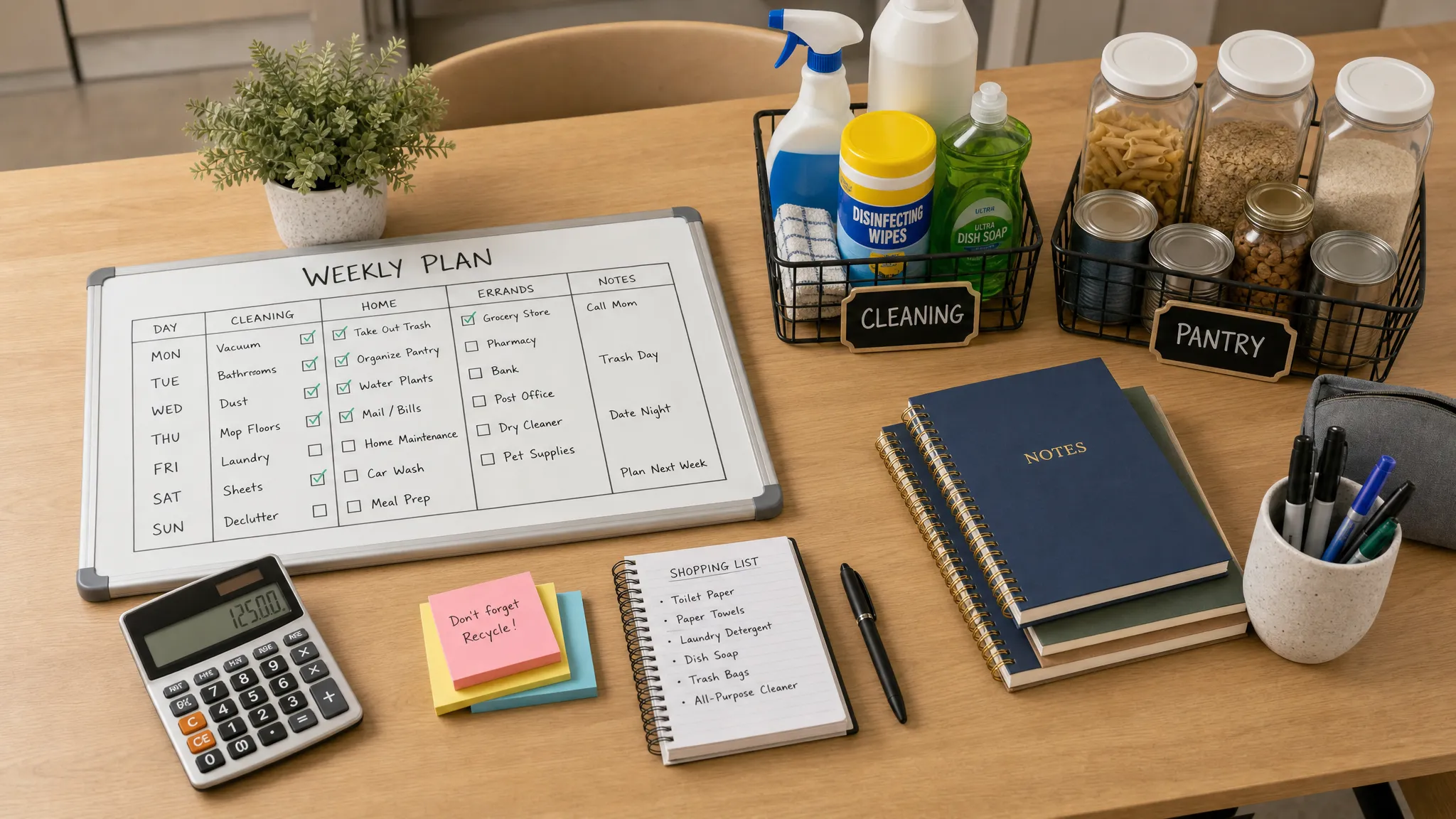
The hidden time cost of separate shopping
Separate shopping trips rarely look inefficient at first. A grocery order may take 20 minutes. A stationery run may take 15 minutes. A quick search for school supplies may take another 10 minutes. But the real cost is not only the time spent buying. It is the time spent switching attention.
You have to remember what is missing, open a different app or visit another store, compare prices again, check delivery or pickup options, and repeat the payment process. If you are shopping for a family, the list can change daily. A child may need chart paper for school, someone may need coffee, and the kitchen may be low on rice, snacks, or cleaning supplies.
When you combine grocery and stationery planning, you reduce that repeated mental load. You are not just buying products faster; you are making fewer decisions across the week.
Why groceries and stationery naturally belong together
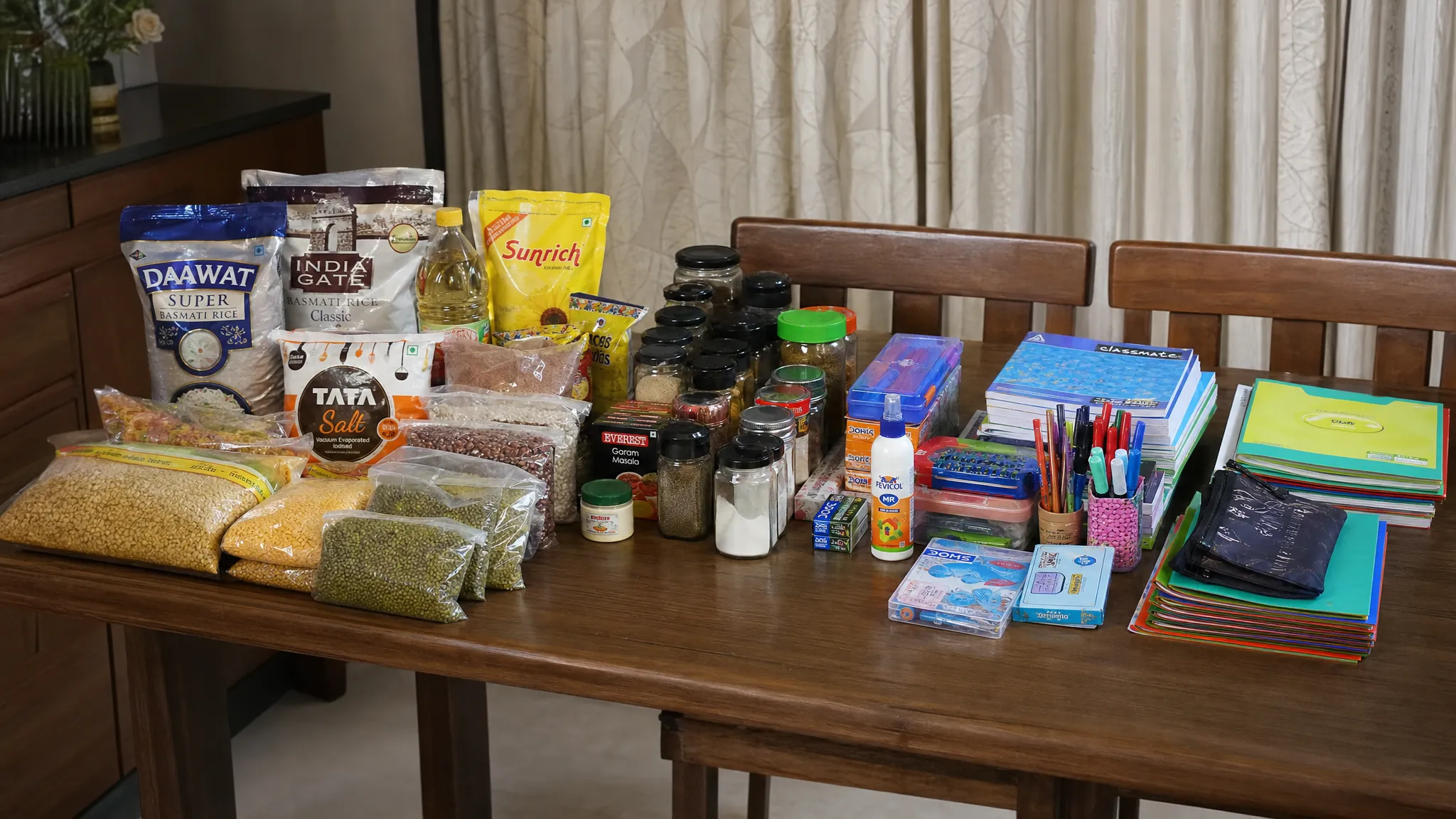
Groceries and stationery may seem like different categories, but in everyday life they are closely connected. Both are routine essentials. Both run out quietly. Both are often needed urgently when you least expect it.
A household may need breakfast ingredients and school notebooks on the same Sunday evening. A small business may need tea, snacks, printer paper, and pens for the same work week. Parents may order lunchbox items while also checking if glue sticks, markers, or exam pads are still available at home.
This is why browsing grocery essentials and stationery items in the same shopping session is practical. It matches how people actually live, rather than forcing every need into a separate errand.
How shopping together saves time at each step
The benefit is not just one big time-saving. It is a chain of smaller efficiencies that add up week after week.
| Shopping step | Separate shopping | Combined shopping |
|---|---|---|
| Planning | Multiple lists for different stores | One household list by routine |
| Searching | Repeated searches across platforms | One browsing session for essentials |
| Checkout | Separate carts and payments | Fewer checkout steps |
| Delivery planning | More deliveries or store visits to track | Easier delivery coordination where available |
| Reordering | Harder to remember what was missed | Easier to repeat common essentials |
| Budgeting | Spending is spread across small orders | Clearer view of weekly household needs |
The biggest improvement often comes from planning. Once groceries and stationery are part of the same checklist, you begin noticing patterns. For example, school supplies may need checking before the weekly grocery order, not after a teacher sends a reminder. Office stationery can be reviewed when you restock pantry items for staff or guests.
A smarter checklist for UAE households
A combined checklist works best when it is organized by use, not by product category. Instead of writing two separate lists, think about the week ahead.
For a family, this might mean checking breakfast items, snacks, lunchbox supplies, notebooks, pens, craft materials, tissues, cleaning products, and personal care items in one sitting. For remote workers, it may include coffee, tea, healthy snacks, printer paper, sticky notes, files, and desk organizers. For students, it can include exam pads, pencils, water bottles, quick meals, and study snacks.
A simple weekly routine can look like this:
- Check the kitchen before adding groceries to cart.
- Check school bags, study desks, and office drawers before adding stationery.
- Add household items that are used daily, such as cleaning and personal care products.
- Review offers before checkout to see if any regular essentials are better bought now.
- Save or repeat common items when your shopping platform allows it.
This method is especially useful in busy UAE households where weekdays move quickly and weekends are often packed with family, errands, and social plans.
The role of one-stop online shopping
The more categories you can handle in one place, the easier this routine becomes. A platform focused only on groceries may still leave you searching elsewhere for notebooks or pens. A stationery-only store will not help when you also need snacks, rice, oil, or cleaning supplies.
Sandhai brings multiple everyday categories into one online shopping experience, including groceries, stationery, home essentials, furniture, personal care, health and wellness, and traditional Indian products. That matters because time savings depend on reducing the number of places you need to check.
For example, while planning a weekly order, you might start with groceries on Sandhai, add school or office supplies from stationery options, then check home essentials before checkout. If you also need skincare, wellness items, or daily care products, you can explore personal care products without starting from zero on another website.
Better timing for school, work, and home needs
Combining grocery and stationery shopping is not only about weekly convenience. It also helps during high-demand seasons.
Back-to-school periods are a clear example. Families need snacks, lunchbox ingredients, water bottles, notebooks, pens, labels, folders, and sometimes art supplies within the same short window. If these are bought separately, parents may spend several evenings filling gaps.
The same applies before exams, long weekends, festive seasons, family gatherings, and Ramadan or Eid preparations. Food and household planning often increase at the same time as school projects, office paperwork, or gift planning. A combined order helps you prepare earlier and avoid the stress of urgent shopping.
For small offices and home businesses, the logic is similar. Tea, coffee, tissues, cleaning products, pens, files, notebooks, and printer supplies all support the same working environment. Ordering them together keeps the workspace ready without frequent interruptions.
Fewer forgotten items, fewer urgent trips
The most frustrating errands are usually not big shopping trips. They are small emergency trips caused by one missing item. A pen for an exam. A notebook for a new subject. Sugar for tea. Snacks for a school event. Glue for a project.
When you shop categories separately, these gaps are easier to miss. You may finish a grocery order and feel productive, then later realize the children still need stationery. Or you may buy school supplies, then discover there is nothing quick for breakfast the next morning.
A combined shopping habit encourages you to ask better questions before checkout:
- What do we need for meals this week?
- What do the children need for school?
- What does the home office need?
- What daily-use items are almost finished?
- Are there any upcoming events, projects, or gatherings?
These questions take only a few minutes, but they can prevent multiple rushed orders later.
It can also support smarter budgeting
Time is the main benefit, but budgeting can improve too. When groceries and stationery are bought separately, spending can feel smaller than it really is because it is spread across multiple purchases. A combined cart gives you a clearer view of routine household demand.
This does not mean buying everything in bulk or adding unnecessary items. In fact, the goal is the opposite. A planned combined order helps you buy what you actually need and avoid panic purchases. You can compare essentials, review quantities, and check special offers and discounts before placing the order.
For online shoppers, this is a practical way to balance convenience and value. You save time, but you also make the purchase more intentional.
Common mistakes to avoid
Combining categories is helpful, but it works best with a little discipline. The first mistake is shopping without checking what you already have. If you add items from memory only, you may overbuy snacks or duplicate stationery that is already sitting in a drawer.
The second mistake is waiting until everything becomes urgent. A weekly or biweekly routine is better than a last-minute scramble. Even a short household check before checkout can make a big difference.
The third mistake is treating offers as a reason to buy items you do not use. Discounts are valuable when they apply to regular essentials. They are less useful when they create clutter, waste, or unnecessary spending.
A simple routine you can start this week
The easiest way to begin is to choose one fixed shopping day. Before you open your cart, walk through the kitchen, school area, office desk, bathroom, and cleaning shelf. Keep the list short, but complete.
Start with food and daily household needs. Then add stationery based on what is missing or likely to run out soon. Finally, check any upcoming events, school notices, office tasks, or family plans. This turns shopping from a reaction into a routine.
If you use Sandhai for online shopping in the UAE, you can bring many of these needs into one shopping journey, with home delivery, secure payment options, and access to a wide range of everyday and traditional products.
Frequently Asked Questions
Does buying groceries and stationery together really save time? Yes. It reduces repeated browsing, separate checkouts, extra store visits, and last-minute reminders. The biggest saving comes from planning household needs in one session instead of reacting to each missing item separately.
Who benefits most from combining grocery and stationery shopping? Families with school-going children, students, remote workers, small offices, and busy households benefit the most. These shoppers often need food, study supplies, work materials, and home essentials during the same week.
How often should I combine these purchases? A weekly or biweekly routine works well for most households. Groceries may need more frequent restocking, while stationery can be checked during the same routine and added only when needed.
Can combined shopping help reduce unnecessary purchases? It can, if you check your home before ordering. A single planned cart makes it easier to see what you are buying and avoid duplicate orders across different stores.
What should I check before placing a combined order? Check the kitchen, school bags, office desk, cleaning shelf, and personal care items. Also review upcoming school projects, exams, office tasks, or family events so you can add essentials before they become urgent.
Make your next order simpler
Grocery and stationery shopping together saves time because it fits real life. Your kitchen, school routine, home office, and household supplies are connected, so your shopping routine should be connected too.
Start your next list with the items you use every day, then add the supplies your family, studies, or work will need for the week ahead. When you are ready, explore Sandhai.ae for groceries, stationery, home essentials, personal care, traditional Indian products, and more, all in one convenient UAE online shopping experience.

Share this via
Or copy link