

Gouache can absolutely be used on canvas, but it is not as simple as opening a tube and painting directly onto a stretched surface. Canvas is more absorbent, textured and flexible than paper, so gouache needs a little preparation if you want smooth color, clean edges and a painting that lasts longer.
For beginners, the safest approach is to use a primed canvas or canvas board, build the painting in thin layers and protect the finished piece carefully. This guide explains what works, what to avoid and how to make gouache on canvas feel less unpredictable.
Short answer: yes, you can use gouache on canvas
Yes, gouache works on canvas, especially for practice pieces, decorative art, craft projects and mixed-media painting. It gives a beautiful matte finish and strong color coverage, which makes it appealing if you like bold illustration-style artwork.
The main catch is that traditional gouache remains water soluble after it dries. If you paint a new wet layer over a dry one, the lower layer can lift or blend again. This is one reason gouache is usually painted on watercolor paper rather than canvas. Tate describes gouache as an opaque watercolor, which is a useful way to think about it: it has the coverage of paint, but it still behaves like a water-based medium.
If you use acrylic gouache instead of traditional gouache, canvas becomes easier. Acrylic gouache dries with a matte finish like gouache, but it is more permanent once dry. Traditional gouache is better for soft blending and reworking, while acrylic gouache is better when you want durable layers on canvas.
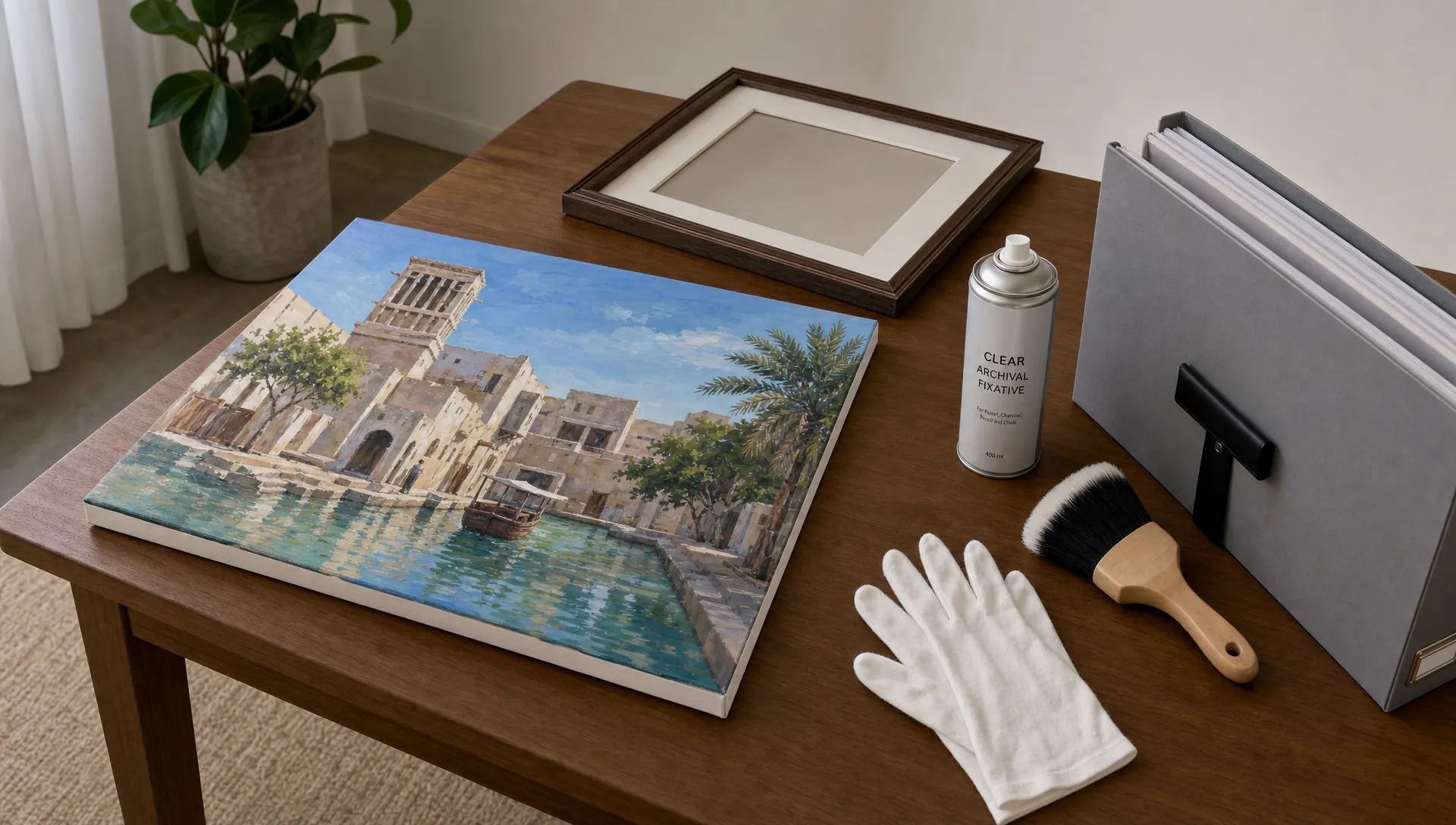 Traditional gouache vs acrylic gouache on canvas
Before buying supplies, check which type of gouache you are using. The label matters because each one reacts differently on canvas.
| Paint type | What it is | How it behaves on canvas | Best for beginners? |
|---|---|---|---|
| Traditional gouache | Opaque water-based paint, usually using gum arabic as a binder | Rewets easily, dries matte, may crack if applied too thickly | Yes, if you prime well and paint in thin layers |
| Acrylic gouache | Acrylic-based paint with a matte gouache-like finish | Dries more water resistant, layers more easily, bonds better to primed canvas | Yes, often easier for canvas projects |
| Watercolor | Transparent water-based paint | Can sink into texture and look patchy unless the surface is prepared | Less ideal for canvas |
| Acrylic paint | Plastic-based water-soluble paint before drying | Bonds strongly, dries water resistant, handles canvas well | Very beginner-friendly |
If your goal is a framed fine-art piece, acrylic gouache or acrylic paint is usually the more durable choice for canvas. If your goal is learning, sketching or creating handmade decor, traditional gouache can still be satisfying.
Why canvas changes the way gouache behaves
Gouache is happiest on a surface that holds water evenly. Watercolor paper does this well because it is designed to absorb moisture without falling apart. Canvas, however, has a woven texture and often a primed surface that repels or grabs paint in different ways.
The biggest issues beginners notice are uneven coverage, streaky brush marks and difficulty creating smooth washes. On raw canvas, gouache can soak in too quickly and look dull. On heavily primed canvas, it may sit on the surface and lift easily when touched by water.
There are four things to watch when painting gouache on canvas:
- Absorbency: Raw or poorly primed canvas drinks up water and pigment, which can make colors look weaker.
- Texture: The weave of the canvas can interrupt fine lines, small details and flat color blocks.
- Flexibility: Stretched canvas moves slightly, so thick gouache layers can crack over time.
- Reactivation: Traditional gouache can lift when you add wet layers, seal it incorrectly or clean the surface with moisture.
None of these problems means canvas is off limits. They simply mean surface preparation matters more than it does with acrylic paint.
The best canvas surface for gouache beginners
If this is your first time trying gouache on canvas, start small. A canvas board or small pre-primed canvas is easier to control than a large stretched canvas. You can test color, water ratio and sealing methods without wasting a full-size surface.
| Surface | Why it works | Beginner tip |
|---|---|---|
| Pre-primed canvas board | Rigid, affordable and less likely to flex | Good for studies, small decor pieces and practice |
| Pre-primed stretched canvas | Ready to use, widely available and familiar | Choose a tight weave if you want cleaner detail |
| Raw canvas with acrylic gesso | Lets you control the priming layer | Apply multiple thin coats before painting |
| Canvas with watercolor ground | Creates a more paper-like surface | Useful for traditional gouache and softer washes |
| Wood panel with canvas texture | Stable and less flexible than stretched canvas | Helpful if you dislike cracking or surface movement |
For online shoppers in the UAE, it is worth buying a few test surfaces before committing to a large canvas. If you are already picking up stationery, craft materials or home essentials, Sandhai.ae is a convenient place to browse everyday shopping options while planning your next creative project.
Supplies you need before painting
You do not need a large studio setup to try gouache on canvas. A simple beginner kit is enough, as long as your surface is prepared properly.
A good starter setup includes gouache, a small primed canvas or canvas board, acrylic gesso, soft synthetic brushes, a pencil, clean water, a palette and a cloth or tissue for controlling moisture. If you plan to display the work, you may also need a compatible spray fixative or a frame with glass.
Brush choice matters more than beginners expect. Gouache does not need stiff bristles unless you want visible texture. Soft synthetic round and flat brushes give smoother results, especially when painting flat backgrounds or small illustration details.
How to prepare canvas for gouache
Preparation is the difference between a frustrating first attempt and a painting that feels controlled. Even if your canvas says pre-primed, adding a smoother ground can help gouache glide better.
- Choose a small surface first: A canvas board around sketchbook size is easier than a large stretched canvas because it stays flatter and costs less to experiment with.
- Add acrylic gesso if needed: Apply one to three thin coats of acrylic gesso, letting each coat dry before the next. Thin coats are better than one heavy coat.
- Sand lightly between coats: If you want a smoother finish, use fine sandpaper once the gesso is fully dry. Wipe away dust before painting.
- Test the surface: Paint a small swatch of gouache in the corner or on a spare canvas. Check whether it streaks, beads up or lifts too easily.
- Sketch gently: Use a light pencil line. Heavy graphite can muddy pale gouache colors.
- Keep water controlled: Gouache needs water, but too much water on canvas can cause patchiness and lifting.
If you prefer a surface that behaves closer to watercolor paper, consider applying watercolor ground over the primed canvas. It gives gouache more grip and improves wash control, although it still needs testing.
How to paint gouache on canvas without streaks
Start with thin, even layers rather than thick paint. Gouache looks opaque, but it performs best when built patiently. If the first layer looks uneven, let it dry fully before adjusting it. Rubbing at a damp patch usually makes the problem worse.
For backgrounds, mix enough paint before you start so you do not have to match the color halfway through. Use broad, gentle strokes and avoid brushing over the same area repeatedly. If you want a flat poster-like finish, work in sections and keep the paint consistency creamy, not watery.
For details, let each layer dry and use less water in the next layer. A damp brush can reactivate the lower paint, so load the brush with slightly thicker gouache when adding highlights, outlines or small decorative marks.
Blending on canvas is possible, but it is less forgiving than blending on paper. Try blending while both colors are still wet, then stop before the surface becomes overworked. If an area becomes muddy, let it dry completely and repaint with a more opaque layer.
Should you seal gouache on canvas?
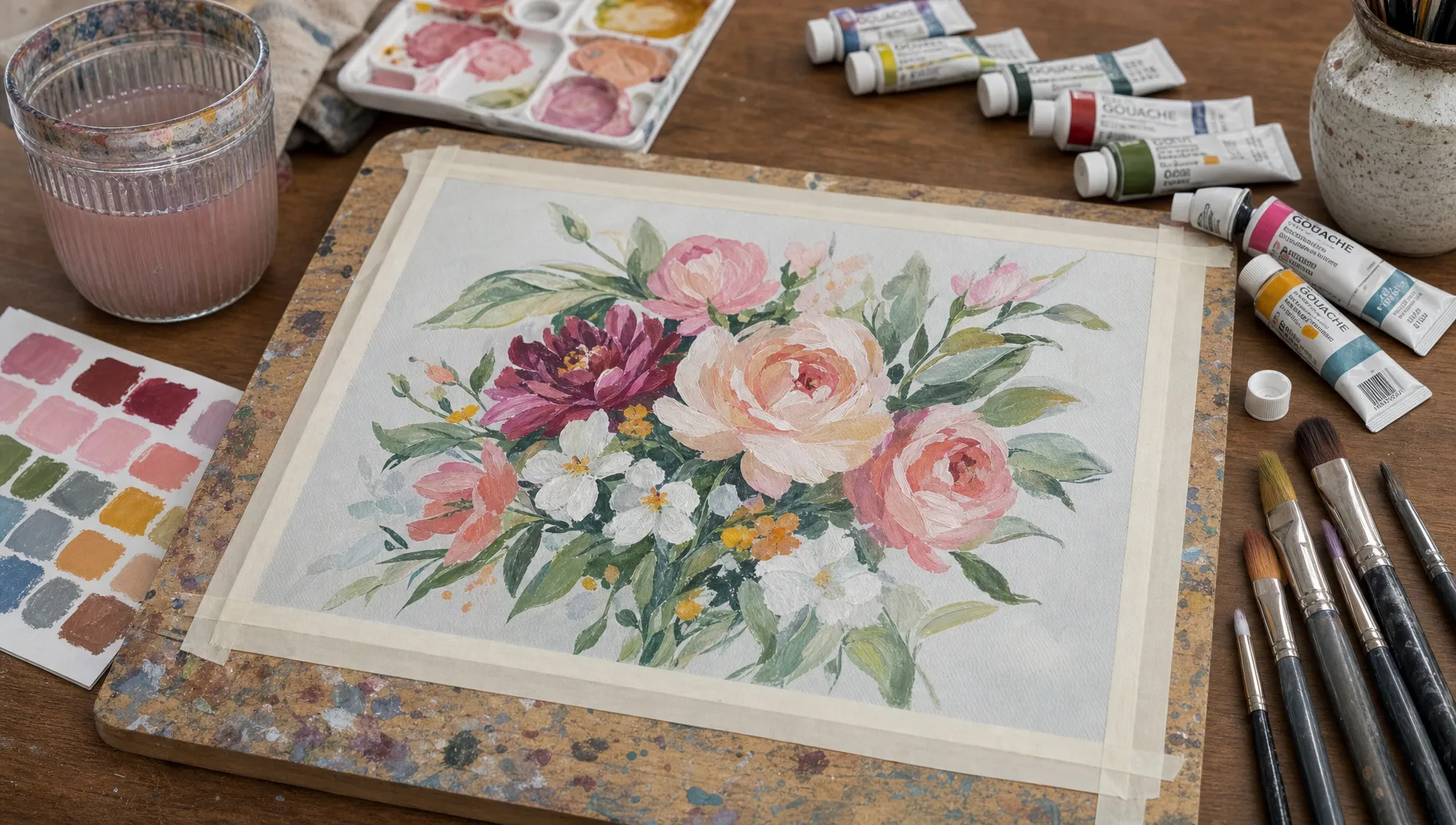
If you are using traditional gouache, sealing needs care. Since the paint can reactivate with water, brushing on a water-based varnish can smear or disturb your work. Many artists prefer to frame traditional gouache behind glass rather than varnish it directly.
If you want to seal it, test on a sample first. Use a compatible spray fixative or archival spray product according to the label directions, applying light coats from a distance. Heavy spraying can darken colors, create spots or make the surface uneven.
Acrylic gouache is easier to protect because it becomes more permanent once dry, but it still has a matte surface that can change appearance under varnish. Test first if you care about the exact finish. A glossy varnish can remove the soft matte look that makes gouache attractive in the first place.
For decorative pieces, the simplest protection is careful handling. Keep the artwork away from moisture, avoid touching the painted surface and display it away from strong direct sunlight.
Common beginner mistakes and how to fix them
Most gouache on canvas problems come from too much water, too much thickness or too little preparation. Use this table when troubleshooting your first attempt.
| Problem | Likely cause | What to do next time |
|---|---|---|
| Paint looks patchy | Too much water or uneven priming | Add gesso, use creamier paint and test first |
| Fine lines look broken | Canvas weave is too rough | Use smoother canvas, sand gesso or use canvas board |
| Lower layers lift | Wet brush reactivated dry gouache | Let layers dry fully and use less water on top |
| Paint cracks | Layers are too thick or canvas flexes | Apply thinner layers and use a rigid board |
| Colors look dull | Raw canvas absorbed pigment | Prime the canvas before painting |
| Surface smears during sealing | Spray or varnish was too wet | Test sealant and use several light coats |
The best habit is to create a mini test strip before starting the real painting. Try one flat color, one blended area, one detail line and one sealant test. Ten minutes of testing can save the whole piece.
Creative finishing ideas for craft projects
Once your gouache painting is fully dry, you can add mixed-media touches for greeting cards, handmade gifts, wall decor or festival crafts. The key is to test every accent on a spare painted patch because traditional gouache can lift when new wet media touches it.
For stamped borders, leaves or small decorative marks, a green tone like Dye Ink Pad Lily Pad can work beautifully in craft layouts when tested on the surface first. If you want soft raised highlights, Liquid Pearls Bisque can add a pearl-like detail to borders, florals or lettering. For warmer metallic accents, Liquid Pearls Bronze suits traditional patterns, festive motifs and earthy color palettes. If your project needs sparkle, Liquid Pearls Dazzle can help small highlights stand out without covering the matte gouache finish.
Keep accents minimal at first. Gouache already has strong color and a distinctive matte surface, so a few well-placed dots, borders or stamped details often look better than heavy decoration.
Gouache on canvas in UAE homes: care tips
In the UAE, many artworks live in air-conditioned interiors, near bright windows or in rooms where dust builds up quickly. Gouache is sensitive to moisture and surface abrasion, so display choices matter.
Keep gouache canvas pieces away from bathrooms, kitchens and outdoor balconies. Avoid direct sunlight, especially during peak daylight hours, because intense light can affect many art materials over time. If the artwork is unsealed, do not wipe it with a damp cloth. Use a clean, dry, soft brush to remove dust gently.
For a piece you want to keep for years, frame it behind glass with a spacer so the glass does not touch the painted surface. This is especially useful for traditional gouache, which is more vulnerable than acrylic paint.
When canvas is not the best choice
Canvas is fun, but it is not always the ideal surface for gouache. If you want delicate washes, tiny botanical details or a portable sketchbook practice, watercolor paper is usually easier. It absorbs water more predictably and gives better control for transparent effects.
Canvas makes more sense when you want a decorative object, a textured finish, a small wall piece or a mixed-media craft project. It also suits bold graphic designs, simple florals, abstract shapes, folk-art motifs and poster-style illustrations.
A practical beginner path is to learn basic gouache control on paper first, then move to primed canvas once you understand water ratio, layering and opacity.
Frequently Asked Questions
Can you use gouache directly on raw canvas? You can, but it is not recommended. Raw canvas absorbs water and pigment unevenly, which can make gouache look dull and patchy. A primed canvas or gessoed surface gives better results.
Do you need gesso for gouache on canvas? Gesso is strongly recommended. It creates a more even surface, reduces absorbency and helps the paint sit better on the canvas. Thin, smooth coats work best for gouache.
Will gouache crack on canvas? It can crack if applied too thickly, especially on stretched canvas that flexes. Use thin layers and consider a rigid canvas board if you want a more stable surface.
Is acrylic gouache better than traditional gouache on canvas? Acrylic gouache is usually easier on canvas because it dries more permanently and layers without reactivating as much. Traditional gouache is still usable, but it needs gentler handling and protection.
Can you varnish gouache on canvas? Traditional gouache should not be brushed with regular water-based varnish because it may smear. If sealing is needed, test a compatible spray product first or frame the work behind glass.
What is the best canvas for a beginner using gouache? A small pre-primed canvas board is the best place to start. It is affordable, rigid and easier to control than a large stretched canvas.
Final takeaway
Gouache on canvas is beginner-friendly when you treat it as its own technique rather than expecting it to behave like acrylic. Prime the surface, keep layers thin, control your water and protect the final piece from moisture.
If you are experimenting with handmade art, craft accents or home decor projects, start small and test first. With the right surface and a patient approach, gouache can create rich, matte canvas artwork that feels personal, decorative and enjoyable to make.

Comments