

Buying canvas wall art involves more than finding an image you like. A print, an original painting and a blank stretched canvas can look similar in a small product photograph, yet they serve very different purposes. Size, surface finish and frame construction also affect how the piece looks once it reaches your wall.
This guide explains what to compare before ordering, how to measure around furniture and which delivery questions matter for UAE homes. Start by checking exactly what the listing includes, then work through dimensions, materials and installation.
 Know whether you are buying a print, painting or blank canvas
A canvas print reproduces a photograph, illustration or painting on fabric. An original painting has paint applied to the surface by an artist. A blank canvas is an art supply intended for creating the work yourself or commissioning someone to paint it.
When comparing canvas wall art, treat these as separate purchases rather than interchangeable versions of the same product.
| Product type | What you receive | What to check |
|---|---|---|
| Canvas print | An image printed onto canvas | Image sharpness, ink information, edge treatment and mounting |
| Original painting | A painted artwork, sometimes with visible texture | Medium, artist details, condition and whether framing is included |
| Hand-embellished print | A reproduction with some paint or texture added | Which parts are printed and which are applied by hand |
| Blank stretched canvas | An unpainted surface attached to a supporting frame | Dimensions, priming, fabric and compatibility with your chosen medium |
| Rolled canvas | Canvas supplied without a supporting frame | Whether it is printed or blank, plus stretching and framing costs |
For a painting project, Premium Quality 380GSM Canvas for Artistic Creations belongs on your art-materials shortlist, not your finished-art shortlist. Confirm its supplied format, surface preparation and suitability for your paint before ordering.
Check the listing wording as carefully as the photograph. A room mock-up does not establish that a product includes artwork, an outer frame or hanging hardware.
How to size canvas wall art for your room
Measure the usable wall and nearby furniture
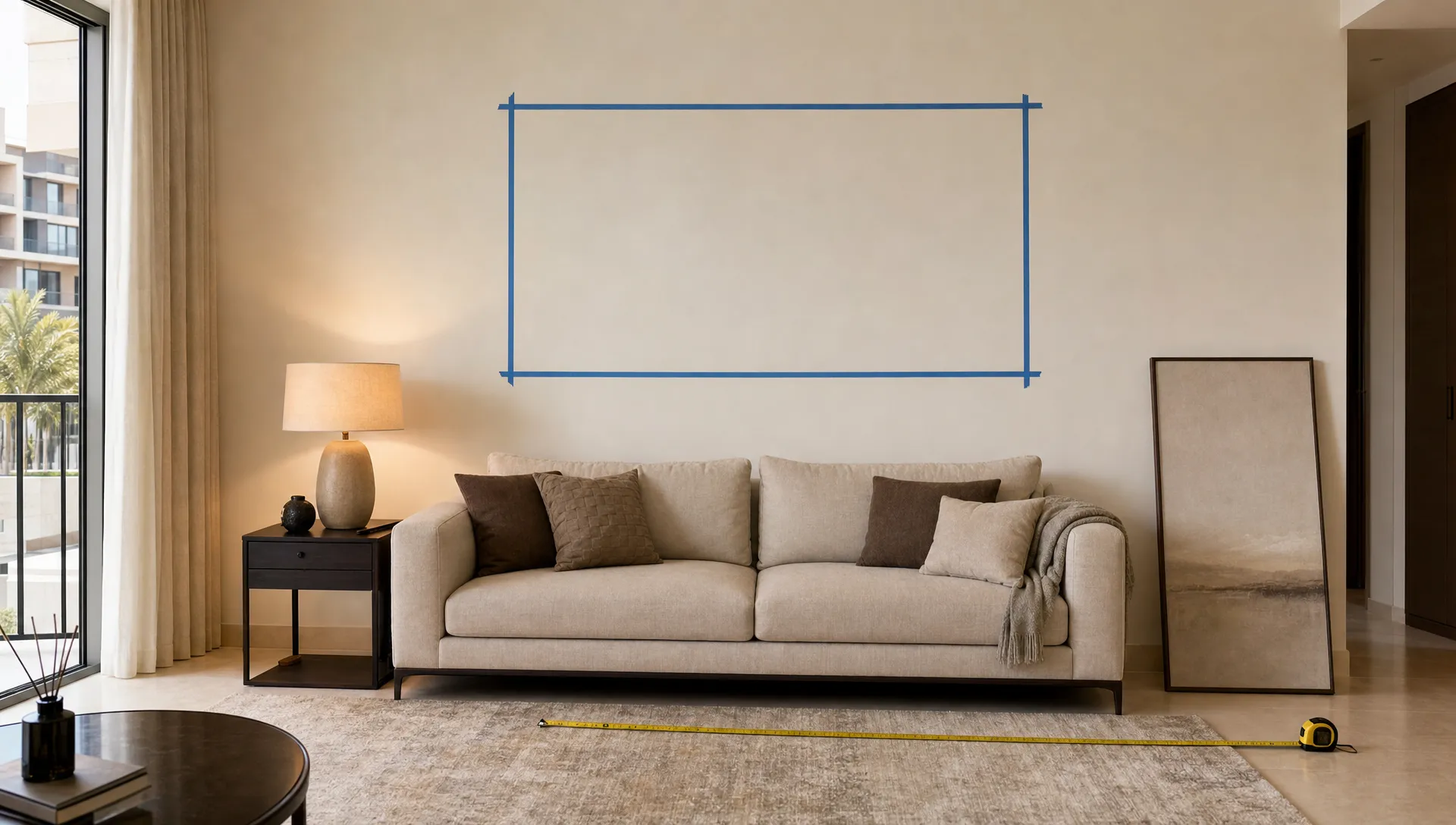
Measure the clear wall area, excluding switches, door openings, shelves and other obstructions. Then measure the furniture beneath the proposed artwork. Above a sofa or sideboard, the furniture width usually gives a more useful starting point than the full wall width.
As a flexible design guideline, try an artwork or grouping around two-thirds to three-quarters of the furniture's width. For a 240 cm sofa, that suggests approximately 160 to 180 cm overall. This is a starting point, not a requirement, especially in compact rooms.
For a multi-panel arrangement, include the gaps. Three panels measuring 50 cm wide with two 5 cm gaps occupy 160 cm in total. Check whether the seller's dimensions describe each panel or the complete arrangement.
Test height, shape and clearance
Mark the proposed outer dimensions with paper or removable tape suitable for your wall finish. View the outline from the doorway and your usual seating position. This makes an oversized or undersized choice easier to spot than a product-page room mock-up.
With square canvas wall art, height deserves as much attention as width. The Funbo Stretched 3D canvas, 380 gms, 120 × 120 cm illustrates that footprint for a painting or commission: allow for the full square, then check whether any added outer frame increases its dimensions.
Above a sofa, a gap of roughly 15 to 25 cm can be a useful initial placement test. Adjust for head clearance, furniture height and the composition. On an otherwise empty wall, a centre around 145 to 155 cm from the floor is another starting point. Do not force both guidelines when the room suggests a better position.
Compare canvas material, printing and frame construction
Understand fabric and GSM
Cotton, polyester and blended canvases are common. Cotton often has a more noticeable natural weave, while polyester can provide a more uniform surface. Neither description alone proves better quality; the coating, printing process and construction also matter.
GSM means grams per square metre. A 380 GSM specification describes weight per unit area, not frame strength or guaranteed image quality. Ask what the figure refers to if the listing is unclear, since fabric and prepared-surface specifications are not always presented consistently.
The quality of canvas wall art depends on the complete product, so look beyond a single material specification. Close-up photographs should help you assess the weave, surface and corners, although they cannot replace clear written details.
Assess the image and supporting frame
For prints, inspect close-ups for pixelation, muddy shadows and lost detail. Large reproductions need an image file suitable for the intended print size. A small online preview can conceal weaknesses that become obvious on a large wall.
Ask whether pigment or dye inks are used and whether the seller provides information about light resistance. The term "giclée” generally describes fine-art inkjet printing, but the label alone does not establish longevity. Ink, canvas coating and display conditions work together.
For stretched pieces, check that the supporting frame is square, the fabric is evenly tensioned and the corners are tidy. Large formats may benefit from internal bracing, depending on their construction. Request a photograph of the back if this is not shown, along with the artwork's weight and hanging arrangements.
Choose a finish and edge treatment deliberately
Surface finish and framing are separate decisions. Matte, satin and gloss describe how a surface reflects light. Gallery wrap describes canvas extending around the supporting frame, while a floating frame adds an outer frame with a visible gap around the artwork.
| Option | Visual effect | Buying consideration |
|---|---|---|
| Matte surface | Restrained reflections and a softer appearance | Ask how the surface should be dusted or cleaned |
| Satin surface | Some sheen without a strongly glossy appearance | Request photographs under ordinary room lighting |
| Gloss surface | More pronounced reflections and potentially richer-looking colours | Check placement near windows and lamps |
| Gallery wrap | A finished-looking edge without an outer frame | Confirm whether the sides are printed, mirrored or plain |
| Floating frame | A defined border separated from the canvas by a gap | Check the final external dimensions and frame material |
For canvas wall art facing a bright window, a matte surface may reduce distracting reflections, but it does not make direct sunlight safe. A glossy finish can work elsewhere if you like its appearance and have considered the lighting.
For paintings, ask whether a protective finish has been applied and whether it is appropriate to the medium. Not every painting should be varnished. Do not add household sealants or a DIY coating to a purchased artwork without suitable guidance.
Match the artwork to the room without matching everything
Start with the mood and viewing distance. A large abstract composition can hold attention across a living room, while a quieter landscape or restrained colour palette may suit a bedroom. Detailed imagery benefits from a position where people can comfortably see it up close.
Choose canvas wall art that repeats one or two existing room colours rather than every shade. A small accent from a rug or cushion can create a connection without making the room feel overly coordinated. Contrasting art can work equally well when the surrounding furniture and accessories are relatively calm.
The furniture below the piece gives it context. Above a Sunburst Side Board, check how the artwork's composition relates to the furniture's visual detail. Above a wooden office desk, account for monitor height and shelves before settling on the canvas dimensions.
A single piece usually creates a simpler focal point. Multiple panels introduce spacing and alignment decisions, so plan their complete footprint before buying. In smaller apartments, one well-proportioned work can look more intentional than several pieces squeezed into the available space.
Protect the artwork from UAE sunlight, humidity and dust
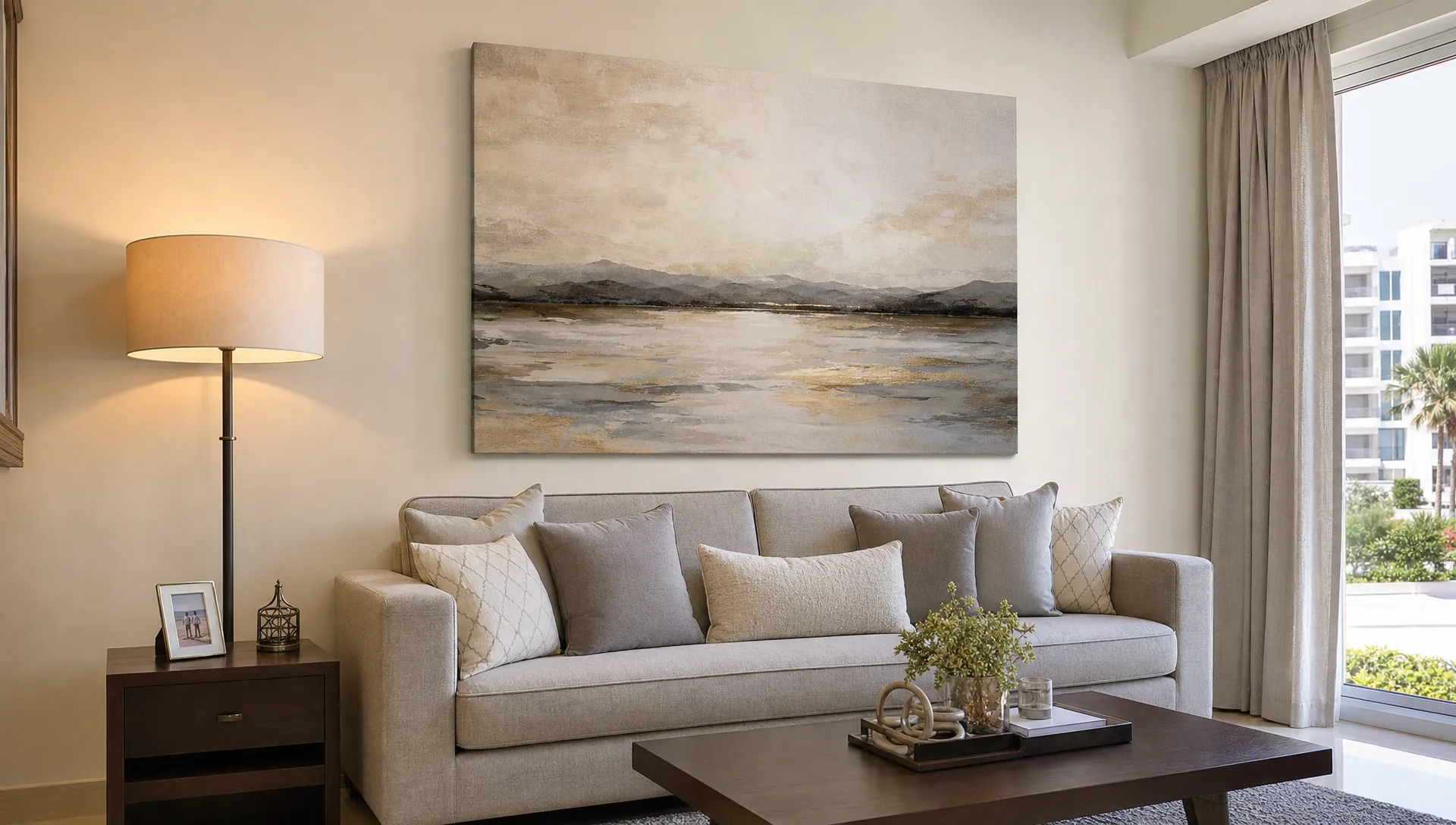
Strong daylight deserves attention in UAE homes, particularly beside large windows. Keep artwork out of direct sun where possible. A protective coating does not make a print or painting immune to fading, and a piece that receives direct afternoon light may need a different position.
Avoid locations beside cooking steam, in damp bathrooms or directly under an air-conditioning vent. Changes in moisture and temperature can affect canvas tension and supporting materials. If a wall has condensation, water staining or mould, address the cause before hanging anything over it.
Regular care for canvas wall art should begin with the seller's or artist's instructions. For an intact, unframed print, gentle dry dusting may be appropriate if permitted. Avoid cleaning sprays, wet cloths and scrubbing. Original paintings, textured surfaces and flaking paint need more caution; a conservator is the safer choice for damage or uncertain cleaning needs.
For installation, match the fixing to the wall type and the artwork's weight. Concrete, masonry and plasterboard require different approaches. Do not assume adhesive hooks are suitable for a large canvas. In rented accommodation, check permission before drilling and consider an installer for heavy or awkward pieces.
Check delivery, hanging and returns before paying
A suitable image at an attractive price can still be a poor purchase if stretching, framing or installation costs are missing from your comparison. Compare the total amount needed to get the piece safely onto your wall.
Before ordering canvas wall art online, confirm these details for the specific listing rather than assuming every seller offers the same service:
- Delivery coverage: Ask whether your exact UAE address is served and whether oversized items have separate charges or access requirements.
- Supply format: Confirm whether the artwork arrives rolled, stretched, framed or ready to hang.
- Hanging service: Establish whether installation is included, available separately or not offered.
- Returns and damage: Check the reporting deadline, required evidence, collection arrangements and conditions for personalised orders.
For a large piece, compare the packaged dimensions with your lift, stairwell and doorways. Access can matter even when the artwork itself fits the wall.
On arrival, photograph visible packaging damage before unpacking and retain the packaging until you have inspected the item. Check the corners, frame, surface and supplied hardware, then report problems promptly through the seller's stated process. An unboxing video may help document a problem, but follow the actual evidence requirements rather than assuming it is mandatory.
Frequently asked questions
What type of wall art works best in a living room? Choose a piece that suits the room's scale, lighting and atmosphere. A large landscape, abstract print or original painting can all work. Proportion and placement usually matter more than following a particular theme.
Can I order custom-sized or personalised canvas wall art in the UAE? Some sellers offer custom sizes or photo printing, but availability varies. Confirm the dimensions, image-resolution requirements, proofing process and return conditions before paying. A blank canvas listing does not imply a custom printing service.
Does stretched canvas mean ready to hang? No. "Stretched” means the fabric is attached to a supporting frame. Check whether hanging hardware is fitted, whether wall fixings are supplied and whether installation is included.
Do canvas prints need glass? Many are displayed without glazing to preserve the visible canvas texture and avoid reflections. Specialist framing may be appropriate for particular works or environments, so ask the seller or a framer if protection is a concern.
Is heavier canvas always better? No. GSM is only one specification. Surface preparation, printing, frame construction and the intended painting medium can be more relevant to whether the product suits your needs.
Make your shortlist with measurements in hand
Before choosing, record your target outer dimensions, preferred finish and installation requirements. Separate finished artwork from blank artist supplies, then compare complete costs rather than the displayed price alone.
Explore Sandhai's online marketplace with that checklist beside you, and confirm any missing product or delivery details before placing your order.

Comments