


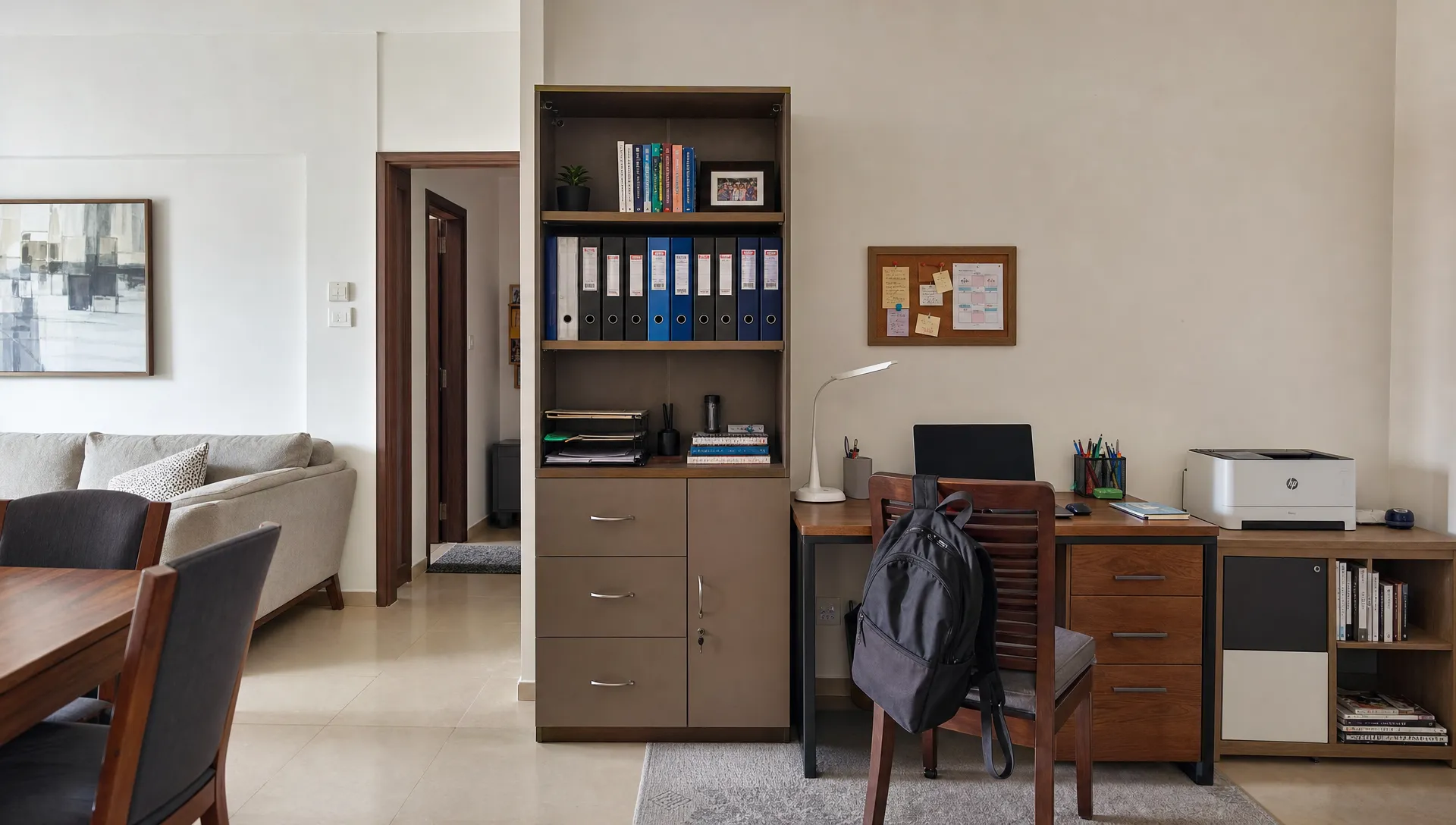
A filing cabinet with shelves can give a home office something a desk alone cannot: a defined place for paperwork, reference books and everyday supplies. Instead of spreading documents across drawers, dining tables and spare corners, you can bring related items together in one storage unit. For UAE households where a workspace shares a bedroom or living area, that can make work easier to manage without letting office clutter take over the room.
The biggest improvement comes from choosing storage that suits what you actually keep, then arranging it around your daily routine.
 Why combine filing and shelving?
Traditional filing drawers work well for folders, but home offices rarely contain paperwork alone. You may also need space for notebooks, stationery boxes, cables and manuals. Shelves accommodate these different shapes, while a dedicated filing compartment keeps documents separated and easier to retrieve.
The benefit is combining different storage needs without mixing everything together. Active paperwork can have its own location, reference materials can remain visible and occasional-use supplies can sit out of the way.
A filing cabinet with shelves is particularly useful when your belongings would otherwise require several small storage units. However, the layout matters more than the label: some cabinets have genuine hanging-file drawers, while others provide ordinary drawers and open shelving. Check the internal arrangement before deciding whether a unit will meet your needs.
How better storage improves your working day
It gives you usable desk space
A desk becomes harder to use when folders compete with your keyboard, notebook and mouse. Moving paperwork into nearby storage leaves more room for the task in front of you and makes cleaning the surface simpler.
Position frequently used supplies where you can retrieve them without repeatedly stretching across the desk. Keep enough space for your chair to move and for cabinet doors or drawers to open fully.
If you are also considering a wooden office desk, plan the desk and storage together. A cabinet that fits the room but blocks the seating area will create a different kind of clutter.
It makes documents easier to find
Shelving does not automatically create an organised office. The improvement comes from giving each category a consistent home. Separate household records from work documents, then use straightforward labels such as "Current projects”, "Utilities” or "Warranties”.
A filing cabinet with shelves supports this system by keeping folders and related reference materials close together. You can store a project file in its filing compartment and the relevant manual on a nearby shelf, rather than searching two rooms for the same task.
Avoid labels that only make sense today. A folder called "To sort later” tends to become a second inbox, not a useful archive.
It helps a shared room look less like an office
Open shelves make frequently used items accessible, but they also leave everything on display. Closed compartments can conceal miscellaneous supplies and reduce visible clutter when the working day ends.
For a living-room workspace, a combination of open and closed storage often works better than either extreme. Keep a few regularly used books on display and put loose cables, spare stationery and personal records behind doors or inside drawers.
Matching the cabinet’s finish to nearby furniture can help the workspace feel part of the room. Still, appearance should come after practical checks such as folder fit, stability and opening clearance.
How to choose a filing cabinet with shelves
Measure the storage space and the access space
Start with the available floor area, then measure what happens when the furniture is in use. A cabinet’s external dimensions do not tell you how far its doors swing or how much room an extended drawer needs.
Check the route into your home too, including doorways, lifts and tight hallway corners. Confirm whether the unit arrives assembled or requires assembly rather than assuming either option.
Before ordering, check:
- The cabinet’s width, depth and height against your available space.
- Door and drawer clearance with your desk chair in its usual position.
- Internal shelf dimensions against your largest folders or storage boxes.
- Whether shelves are adjustable and whether their load limits are stated.
- Delivery, assembly and return conditions on the current product listing.
Match each compartment to what you store
An A4 sheet measures 210 × 297 mm, but a ring binder or document wallet is larger. Measure the actual items you use, especially bulky lever-arch files, rather than choosing shelves based on paper size alone.
Use the following layout as a planning example, not a specification that every cabinet will offer:
| Storage area | Suitable contents | What to check |
|---|---|---|
| Filing drawer | Hanging folders and grouped paperwork | Compatible file size and rail arrangement |
| Open shelf | Books, binders and frequently used notebooks | Internal height, depth and load limit |
| Closed compartment | Spare supplies and labelled boxes | Usable dimensions and door access |
| Small drawer | Pens, labels and other loose stationery | Dividers or space for an organiser |
The right filing cabinet with shelves should accommodate your existing documents without forcing you to change every folder or stack binders sideways.
A wooden chest of drawers is worth comparing if concealed general storage matters more than hanging files. Ordinary drawers and filing drawers are not interchangeable, so check the construction rather than relying on the furniture’s name.
Check construction, stability and safety
Choose materials according to how the unit will be used, not appearance alone. Metal, solid wood and engineered wood each come in different grades, finishes and construction quality. Look for clear product specifications, stable joints and hardware suited to repeated opening.
For tall furniture, follow the manufacturer’s anchoring instructions. Keep heavier items low, respect shelf load limits and avoid opening several loaded drawers at once. A lockable compartment can provide useful access control, but a lock does not establish fire or water resistance.
Do not place a printer on a shelf or cabinet top unless that surface is designed to support it. Check the equipment’s clearance and ventilation requirements too, particularly if you intend to operate it inside a compartment.
Set up storage around your daily routine
Separate active work from archived records
Start by sorting what you own before putting anything into the new unit. Remove duplicate printouts, empty packaging and supplies you no longer use. Keep documents that require action separate from records you retain for reference.
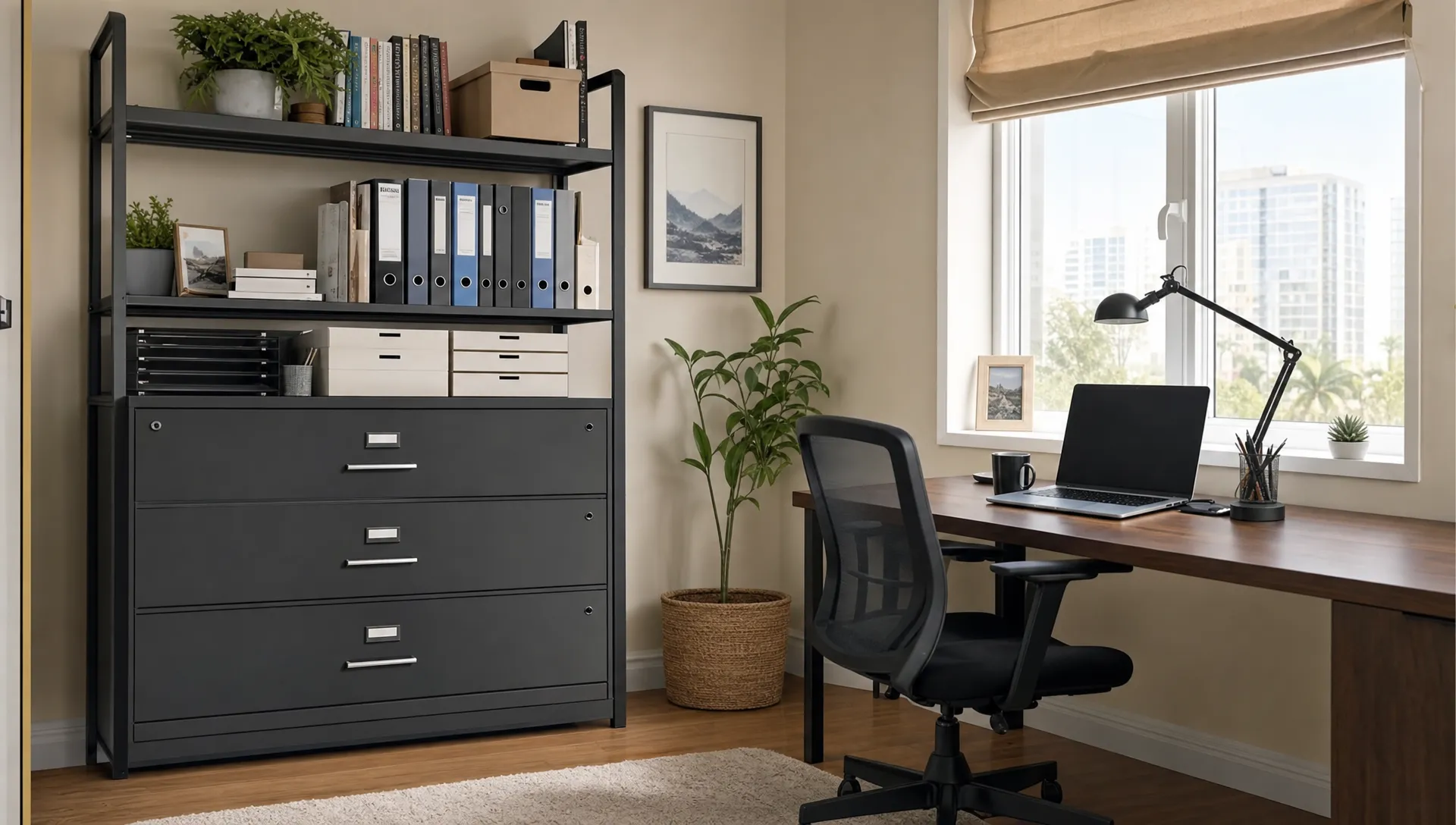
Arrange your filing cabinet with shelves so that frequently used items occupy the easiest-to-reach spaces. Occasional-use materials can go elsewhere, with heavier items towards the bottom where the cabinet design allows.
A simple system might use one folder for current tasks, labelled folders for completed records and a small tray for incoming paperwork. The important distinction is between something that needs action and something that only needs storage.
Leave some spare capacity. Filling every compartment immediately makes it harder to put things away when new paperwork arrives.
Keep overflow storage selective
If your cabinet fills up, check whether the problem is genuinely a lack of space or a collection that needs sorting. Adding furniture without reviewing its contents can simply spread the same clutter further.
For books or decorative items that do not belong with confidential paperwork, a wooden corner shelf may provide separate storage. Measure its footprint and make sure it does not restrict access to the main cabinet.
Avoid letting the cabinet top become another miscellaneous pile. Give it a defined purpose, such as holding one incoming-document tray, or leave it clear. A short weekly reset is easier when every item already has a destination.
Protect private paperwork and reduce unnecessary storage
Shared home offices need a clear distinction between accessible supplies and private records. Keep identity documents, financial paperwork and confidential work material in suitable secure storage. If several people use the room, agree on which compartments are shared.
A filing cabinet with shelves can organise retained documents, but it should not become permanent storage for every piece of paper you receive. Review what you need to keep according to relevant legal, employer or personal requirements. There is no single retention period that suits every document.
For sensitive papers you are permitted to discard, secure disposal matters. You can compare a Fellowes 79CI shredder as part of your office setup, checking its current specifications and availability before buying.
Digital copies may also reduce retrieval time, but they need sensible file names, access controls and backups. Do not discard an original simply because you have scanned it; first check whether the original must be retained.
Frequently asked questions
Is shelving better than filing drawers for a home office? Neither replaces the other completely. Shelves suit books, boxes and binders, while filing drawers can organise compatible hanging folders. Choose the combination that matches your paperwork and supplies.
Can a filing cabinet with shelves work in a small room? Yes, provided its footprint and opening clearances fit the space. A taller unit can use vertical space, but it still needs safe placement, appropriate anchoring and convenient access.
Do I need adjustable shelves? Adjustable shelves are useful when you store items of different heights or expect your needs to change. Fixed shelves can also work if their internal dimensions already suit your folders and boxes.
Should I choose a lockable cabinet? A lockable compartment is helpful when you need to restrict casual access to documents. For valuables or records requiring protection from fire or water, look for storage with explicitly stated protection ratings.
Build a home office that is easier to maintain
Start with your documents, measure your room and choose storage that gives each item a practical home. The best arrangement is one you can keep organised during a busy week, not just on the day it arrives.
When planning your workspace, explore home-office furniture and everyday essentials on Sandhai. Check individual product dimensions, current availability and delivery information before ordering, then select the pieces that suit your space and storage needs.

Comments