

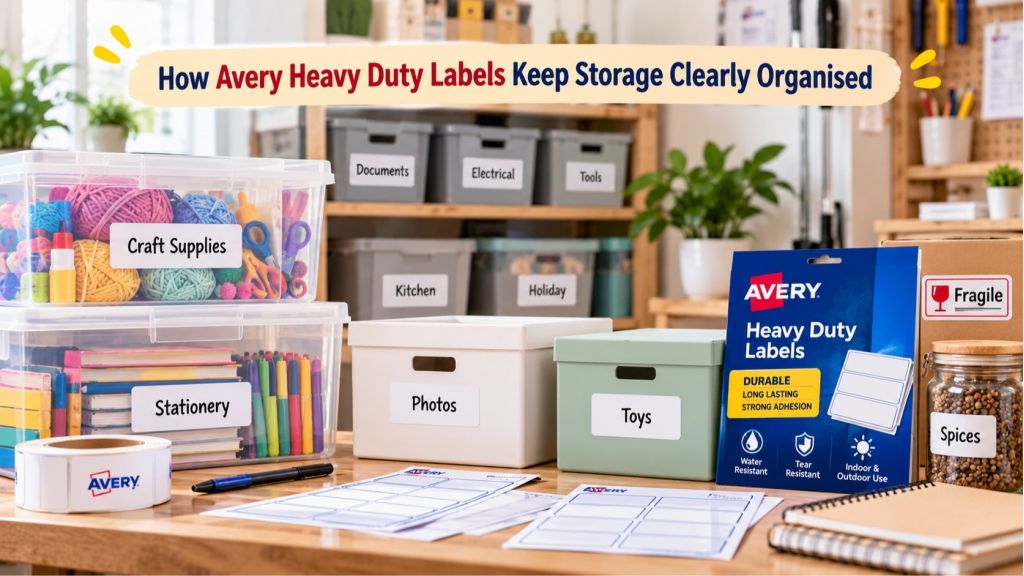
A storage box can be neatly packed and still be difficult to use if nobody knows what is inside. Avery heavy duty labels can help keep contents clearly identified on frequently handled containers, provided you choose a version suited to the surface and storage conditions. For UAE households, home offices and small stockrooms, that means checking more than label size. The material, adhesive, printing method and wording all affect whether your storage stays easy to navigate.
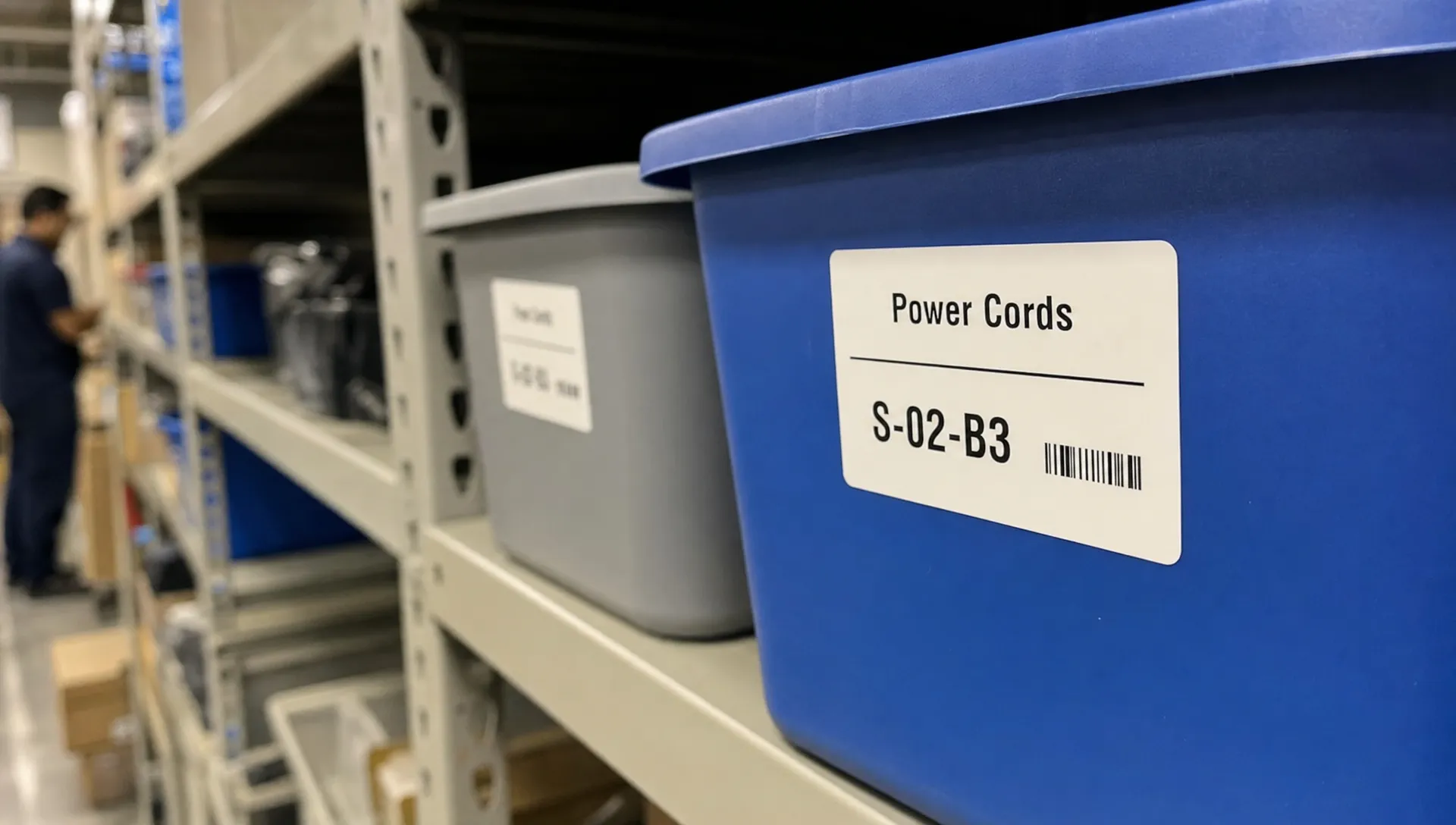 How Avery heavy duty labels help organise everyday storage
Storage labels do two jobs: they identify what belongs in a container and help you return it to the right place. When a label becomes scuffed, lifts at the corners or loses its lettering, both jobs become harder.
Compared with a basic paper sticker, a suitably specified heavy-duty label can be a better choice for boxes that are moved regularly or exposed to occasional moisture. However, heavy duty does not automatically mean waterproof, heat-resistant or suitable for every plastic. Those properties depend on the exact product.
Start with the problem you need to solve. A cupboard of rarely used documents needs clear categories. A utility shelf may need labels that tolerate handling and wiping. A stockroom needs consistent names and location codes so different people can find the same item.
Durability supports that system, but it cannot fix vague wording. A label reading "Miscellaneous” remains unhelpful even when it stays firmly attached.
Choose the right label for the container and location
Before buying Avery heavy duty labels, check the product specification against the container you intend to label. Smooth plastic, coated metal and cardboard present different surfaces, while textured or curved containers can make adhesion more difficult.
Use these checks to narrow your choice:
| What to check | Why it matters | What to look for |
|---|---|---|
| Label material | Paper and synthetic materials behave differently when handled or exposed to moisture | A stated material and resistance properties suitable for your storage area |
| Adhesive type | Strong attachment and easy removal are different requirements | Permanent or removable adhesive, plus any surface restrictions |
| Printer compatibility | A label sheet designed for one printing method may not suit another | The correct inkjet or laser designation for your printer |
| Label dimensions | Text must fit without becoming too small | Enough space for the category and any location code |
| Storage conditions | Temperature, moisture and sunlight can affect performance | Published limits that match the intended location |
Consider UAE heat and moisture separately
A label that works well inside an air-conditioned cupboard may not perform the same way in a hot garage, outdoor cabinet or vehicle. Do not assume that a general durability claim covers those conditions.
Likewise, a container near a sink has different requirements from a dry document box. Check whether the particular label offers water resistance, rather than treating all heavy-duty products as interchangeable. For pantry storage, apply labels to the outside of containers and do not assume they are approved for direct food contact.
If boxes are frequently repurposed, removable labels or label holders may be more practical than permanent adhesive.
Create a label you can read without opening the box
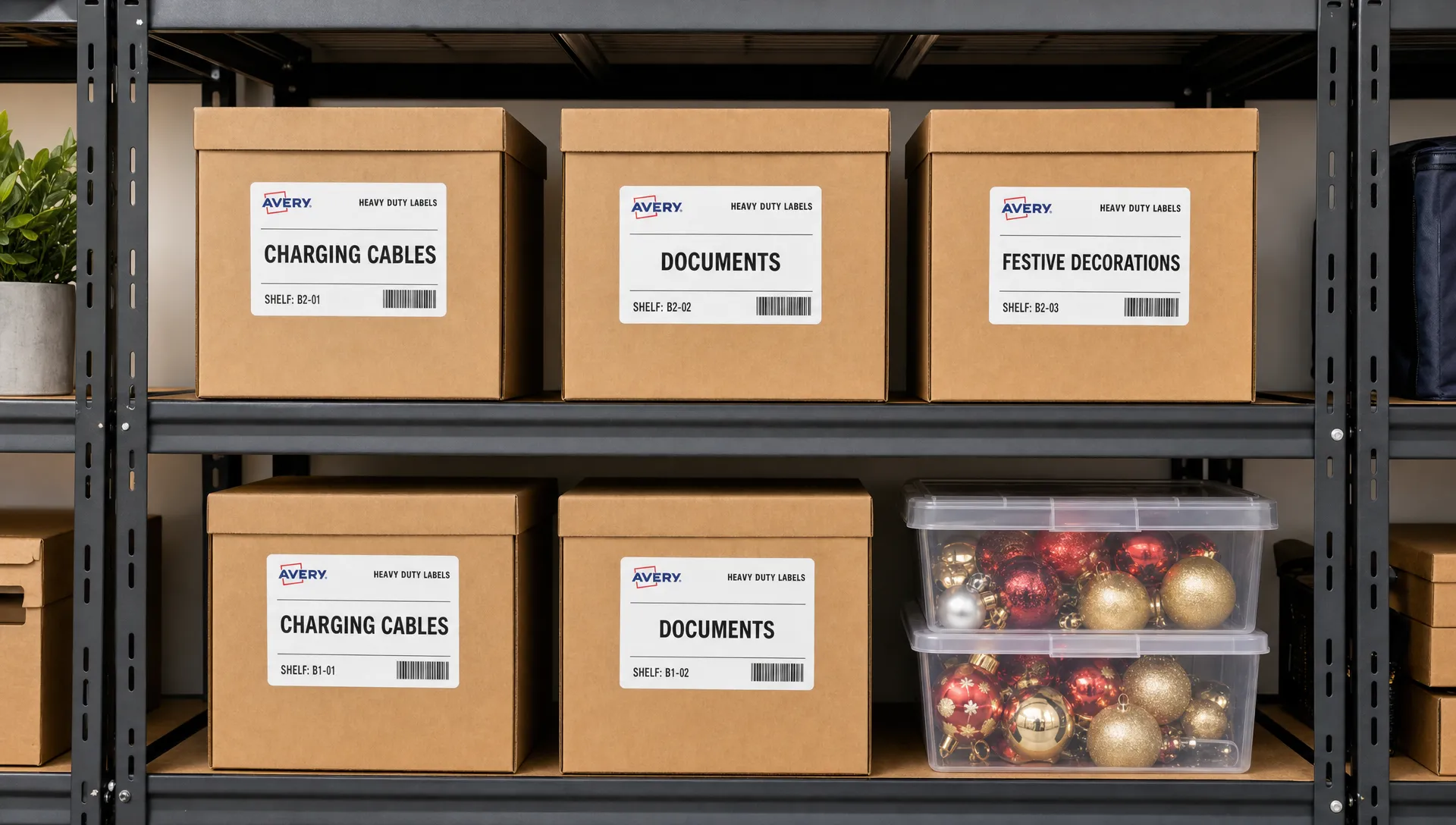
The most useful layout has a clear category first, followed by only the details needed to locate or return an item. Avery heavy duty labels work best as part of a consistent naming system, not as space for a complete contents list.
For example, "Charging cables” is easier to scan than "Electronics, accessories and other items”. If several boxes contain similar supplies, add a short location code such as "Office, shelf B2”. Use the same code on your inventory sheet.
A practical layout might include:
- Main category: Documents, craft supplies, spare cables or festive decorations.
- Useful detail: A date range, item type or household member’s name.
- Location code: A shelf or cupboard reference when several storage areas are involved.
- Review date: Only when the contents need periodic checking.
Keep the main category larger than the supporting information. Use strong contrast and leave enough blank space around the text. Decorative fonts can look attractive close up but become difficult to read across a shelf.
Print a test before using a full sheet
Use Avery’s official label templates to look for the matching product code, or follow the regional template instructions supplied with your pack. A similar-looking template can still have different margins or spacing.
Print a trial on ordinary paper first and compare it with the label sheet. Check alignment, text size and whether your printer settings introduce unwanted scaling.
For a paper inventory notebook, UHU’s 21g paper glue stick can attach a printed location key to a page. Keep paper craft adhesive separate from the container-labelling task; it is not a replacement for a label’s own adhesive.
Apply labels to a clean, suitable surface
Even a well-chosen label can fail when applied over dust, grease or condensation. Before attaching Avery heavy duty labels, follow the instructions on the pack and prepare the surface using a cleaning method appropriate for the container.
Let the surface dry fully. Choose a smooth, flat area where the entire label can make contact. Avoid moulded ridges, hinges and tight curves unless the product specifically supports that application.
For stacked boxes, label the side that remains visible when stored. If you use a second label, put it on another useful viewing side rather than only on the lid, which may be hidden beneath the next box.
Repair damage before labelling
Labels should identify containers, not hold damaged packaging together. If an outer cardboard carton needs a minor patch, Polar Bear blue duct tape is a separate repair option to consider. Replace any container that is no longer safe or suitable for its contents, and avoid placing the identification label over loose tape or torn material.
Apply the label without repeatedly lifting and repositioning it unless repositioning is supported. Press it down as directed, paying attention to the edges. If the manufacturer specifies a waiting period before handling or exposure, follow it.
For unfamiliar plastics or valuable finishes, test suitability on an inconspicuous area first.
Keep the storage system accurate after labelling
A durable label can stay readable while the information on it becomes outdated. When you move contents between boxes, update the identification at the same time. Otherwise, searching becomes slower even though everything appears organised.
Once Avery heavy duty labels are in place, a short inventory check helps keep the physical storage and its written record aligned. Confirm that the category still matches the contents, the location code is correct and the label remains readable.
Separate permanent information from changing notes
Keep stable information, such as "Printer supplies” or "Festive decorations”, on the container. Put changing details, such as quantities or items to reorder, on a separate checklist. This reduces the need to replace labels every time something is used.
For shared storage, an A4 brochure holder stand can provide a place for a printed storage guide near the area people use. A simple guide showing category names and shelf references is easier to maintain than a detailed list on every box.
If you prefer a changeable paper guide on a compatible metal noticeboard, check whether Magnetoplan Magnetic Takkis suit your intended setup. The aim is to keep temporary reminders separate from permanent container identification.
Use colour as a supporting cue
Colour coding can help distinguish areas such as household documents, office supplies and hobby materials. Always include written categories as well, so the system does not depend on someone remembering what each colour means.
Keep the colour scheme small and consistent. Adding a different colour for every minor category can make storage harder to interpret rather than easier.
When are heavy-duty labels worth choosing?
Avery heavy duty labels are worth considering when ordinary labels are being damaged by routine handling or when the specified material offers resistance your storage area needs. The strongest option is not automatically the most practical one.
For dry, rarely moved archive boxes, a standard label may be sufficient. For containers with frequently changing contents, easy removal may matter more than a strong permanent bond. For reusable boxes, a label holder may avoid adhesive residue altogether.
Judge value by suitability and usable quantity, not only the pack price. An oversized label that wastes space or a sheet incompatible with your printer is poor value even if the upfront cost is lower.
Start with one storage category, test the chosen label under normal use and then extend the system once the format and attachment work well.
Frequently asked questions
Are Avery heavy duty labels waterproof? Not all versions should be assumed waterproof. Check the exact product’s stated water resistance and intended use. Also confirm any printing requirements, since the finished label’s readability matters as much as its material.
Can they be used on plastic storage boxes? They may be suitable, depending on the label adhesive and the plastic surface. Smooth, clean areas generally offer better contact than textured or sharply curved areas. Follow the product instructions and test first when compatibility is uncertain.
Can I print them with any home printer? No. Check whether the pack is intended for inkjet, laser or another printing method. Use the correct template and follow the printer’s guidance for label sheets.
Should I label the lid or the side of a box? Label whichever surface remains visible in storage. For stacked boxes, the front or side is usually more useful than the lid. A second label can help when containers are viewed from different directions.
Set up a storage system that stays useful
Choose the label around the container, keep the wording short and test the result before labelling every box. Browse Sandhai for stationery and home essentials, checking individual listings for current availability and specifications. A consistent format and an accurate inventory will do more for everyday organisation than adding extra detail to every label.

Comments