

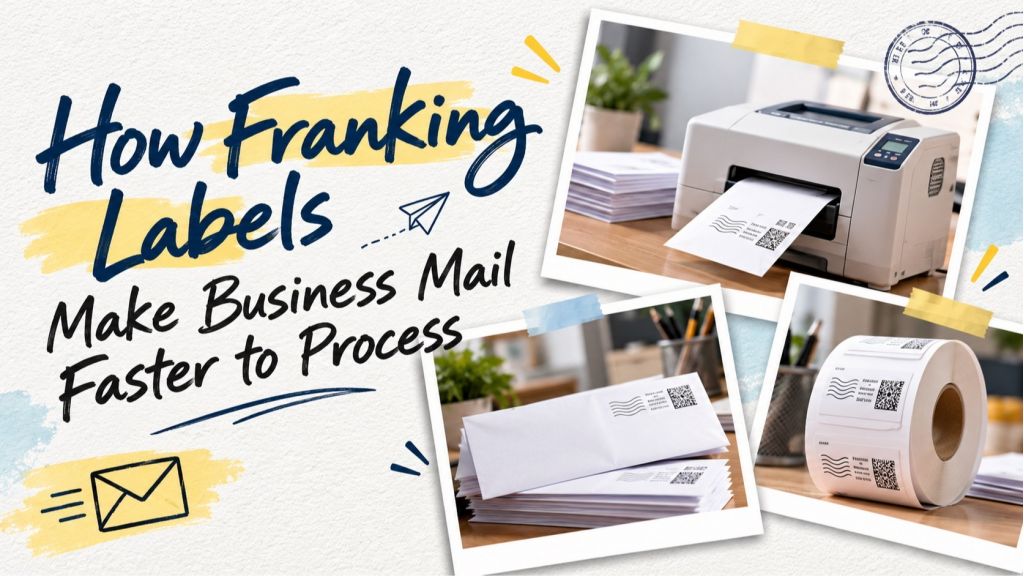
Preparing business mail can take longer than expected when staff are weighing envelopes, finding stamps and dealing with awkward packages. Franking labels help streamline that work by letting a compatible postage machine print a postage mark onto an adhesive label, which can then be attached to the mailpiece. They are especially useful when an envelope or package cannot pass neatly through the machine.
The main benefit is faster, more consistent preparation, not a guaranteed faster delivery service. For UAE businesses, the starting point is checking which postage arrangements their postal operator supports and what equipment, labels and acceptance rules apply.
 What a franking label actually does
A franking label carries the postage impression generated by an authorised franking machine or postage system. Depending on the system, that impression can include a postage value, date, machine identification and machine-readable information.
The blank label itself has no postage value. Buying adhesive stock does not pay for delivery, and printing a company logo or address on it does not turn it into valid postage.
Franking labels provide an alternative to printing the postage impression directly onto an envelope. That distinction matters for padded envelopes, thicker mailpieces and other items that the equipment cannot feed safely.
| Label type | Main purpose | What to check |
|---|---|---|
| Franking label | Carries an authorised postage impression | Machine compatibility and postal acceptance requirements |
| Address label | Identifies the recipient and destination | Address accuracy, legibility and placement |
| Courier shipping label | Carries information required by a courier service | The selected carrier’s format and booking requirements |
Some shipping systems combine addressing and postage information on one label. Always follow the requirements of the particular service rather than assuming these formats are interchangeable.
Where the processing time savings come from
Preparing similar items together
Sorting outgoing mail by format, destination and service reduces repeated changes at the postage station. Staff can work through a group of similar envelopes before switching to heavier or differently sized items.
This does not mean every envelope in a batch should receive identical postage. Each item still needs the correct weight, dimensions and service selection. The efficiency comes from organising the work, not skipping checks.
Handling awkward envelopes and packages
A padded envelope may be too thick or uneven to feed through a postage machine. A rigid document envelope might also fall outside the equipment’s permitted feeding specifications.
Franking labels let staff print onto compatible stock and apply the postage impression separately, where the equipment and postal service permit it. That avoids trying to force unsuitable items through a feeder or rebuilding the package solely to accommodate direct printing.
Check the machine manual before feeding any mailpiece. A jam can erase the time saved by processing the rest of the batch quickly.
Reducing avoidable rework
A readable postage impression is easier to check than one printed across a crease, seam or uneven surface. Suitable label stock provides a consistent printing surface, although it cannot compensate for low ink, incorrect settings or poorly maintained equipment.
There are two separate benefits: less handling during preparation and fewer problems to investigate before dispatch. Neither should be presented as a promise that the postal operator will deliver the item sooner.
A practical workflow for outgoing business mail
Check the service before printing
Start with the recipient’s complete address, destination country where applicable and the required delivery service. Then check the packed item’s weight and dimensions using suitable measuring equipment.
For UAE dispatches, consult Emirates Post’s current services and guidance or your chosen operator to confirm the available business-mail arrangement. Do not assume that equipment or franking rules used in another country apply locally.
Franking labels only save time when the information behind the postage impression is correct. Printing quickly with the wrong weight or service creates another task to resolve before the mail can leave.
Print a controlled batch
Check the machine’s date, postage settings and any required account balance before starting. Load only the label format specified for that model, whether it uses individual strips, sheets or a roll.
Begin with a small batch and inspect the first impression. Look for complete printing, clear characters and any required machine-readable elements. If the print is faint or incomplete, stop and follow the manufacturer’s maintenance instructions.
Keep printed labels associated with the correct mailpieces. A simple tray arrangement can prevent a label intended for a heavier item being attached to a lighter one, or a domestic-service impression being used for an international item.
Apply labels and complete a final check
Attach each label in the position required by the postal operator. Use a clean, dry and reasonably flat surface, avoiding seams, closures and areas where the label could lift during handling.
Franking labels should remain fully visible, without address stickers, decorative materials or tape obscuring the impression. Do not assume that covering a label with clear tape is permitted or improves readability.
Before dispatch, check the address, postage impression, selected service and package closure. Keep defective impressions out of the outgoing batch and follow the provider’s procedure for corrections or refunds. Never reuse a postage impression or make copies of a printed label.
Choosing franking labels that match your equipment
The best purchase is the stock that matches the machine’s specifications and the postal operator’s requirements, not simply the cheapest adhesive label available.
Product descriptions can look similar even when the stock differs in size, feed format or printing surface. Before placing an order, compare the supplier’s information with the equipment manual.
| Buying consideration | Why it matters |
|---|---|
| Supported machine model | Helps avoid stock that will not feed or print correctly |
| Label dimensions and usable print area | Keeps the complete postage impression within the label |
| Sheet, strip or roll format | Must match the equipment’s loading method |
| Printing surface | Needs to suit the machine’s printing technology |
| Adhesive and storage instructions | Affect attachment and handling under the stated conditions |
Generic office labels are not automatically suitable for postage equipment. Likewise, a label advertised for one franking machine should not be assumed compatible with every model from that manufacturer.
When comparing franking labels, consider the cost of unusable prints as well as the pack price. A lower purchase price offers little value if stock repeatedly misfeeds or produces impressions that cannot be accepted.
Store unused labels according to the supplier’s instructions. In UAE offices, keeping stock away from direct sunlight, damp areas and excessive heat is a sensible precaution, but the product’s stated storage conditions should guide you.
Set up a clean packing and postage area
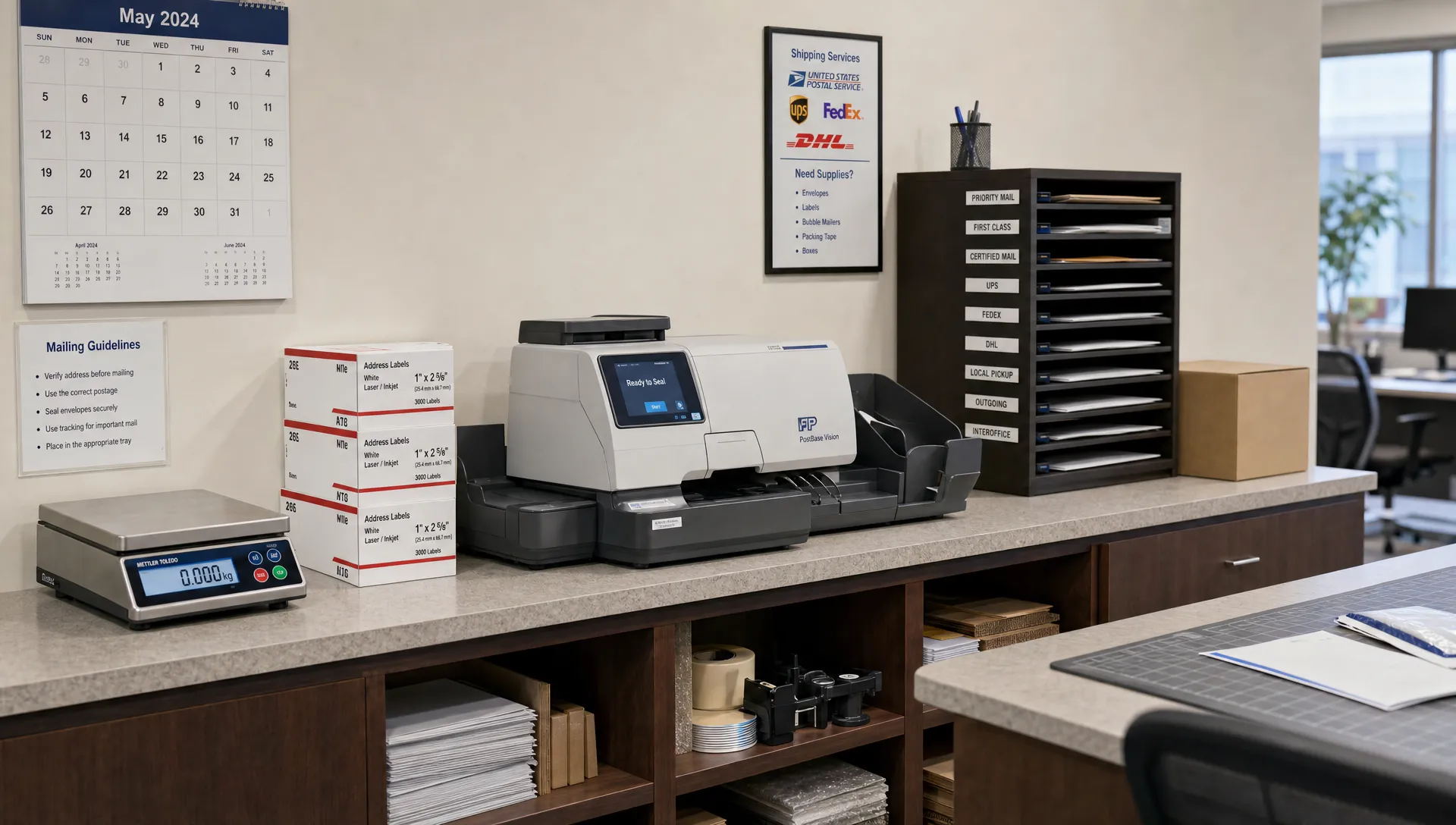
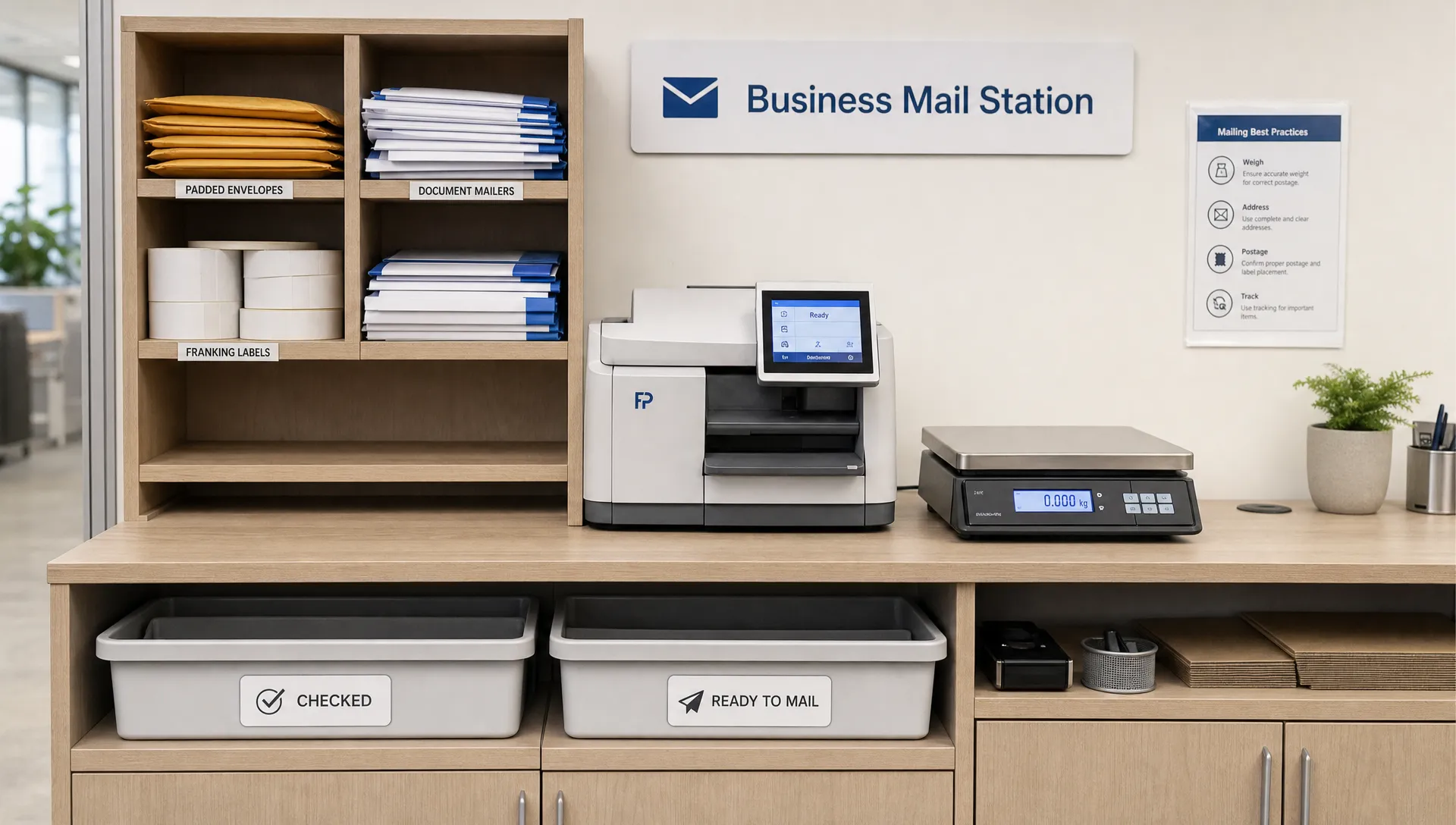
A dedicated work surface helps keep weighing, printing and attachment in a predictable sequence. If you are furnishing a small office, check the dimensions and layout of a wooden office desk against the space your equipment and mail trays need. Keep access to the feeder clear.
For businesses sending handmade cards or branded inserts, separate decorative work from postage preparation. Materials such as a decorative dye ink pad or dimensional pearlescent paint belong in the craft workflow, not the postage-printing process. Allow decorated inserts to dry before packing, and keep embellishments away from the postage area.
Franking labels work best as part of an orderly routine: checked items enter one tray, correctly labelled items move to another and anything requiring correction stays separate. This reduces the chance of dispatching an unfinished mailpiece.
Measure whether the change saves time
Compare the same kind of mail before and after changing the workflow. Record preparation time, the number of items completed and how many needed reprinting or another correction.
For example, if a revised process saves 15 seconds per item across 80 mailpieces, that is 20 minutes saved in preparation. This is an illustration, not a published performance claim or a guarantee for your office.
Include consumables, equipment charges and maintenance when assessing value. Postage discounts, where available, depend on the operator and agreement, not on the adhesive label alone.
The most useful measure is the time needed to produce a correctly prepared, accepted mailpiece. A faster printing step is not an improvement if staff then spend longer fixing errors.
Frequently asked questions
Do franking labels make delivery faster? Not by themselves. They can make business mail faster to prepare, but delivery speed depends on the chosen postal service, destination and operator’s handling arrangements.
Can I use ordinary address labels in a franking machine? Only if the equipment manufacturer and postal operator permit that specific stock. Similar dimensions do not establish compatibility, and unsuitable materials may cause feeding or print-quality problems.
Are these labels suitable for parcels? They may be used on eligible packages where the postage system and operator allow it. Confirm the service, placement requirements and whether a separate shipping or customs label is needed.
Can a UAE business use any franking machine bought online? Do not assume so. Confirm local authorisation, account requirements and service compatibility with the postal operator before purchasing equipment or consumables.
Plan your supplies around the mailing process
Start with the operator’s requirements, then choose compatible equipment and consumables. Organise the workspace so that checking, printing and dispatch happen in a clear sequence.
For general stationery and workspace purchases, explore Sandhai’s online marketplace. Check each listing’s specifications and availability separately, and obtain any required approval for postage equipment or label stock before buying.

Comments