

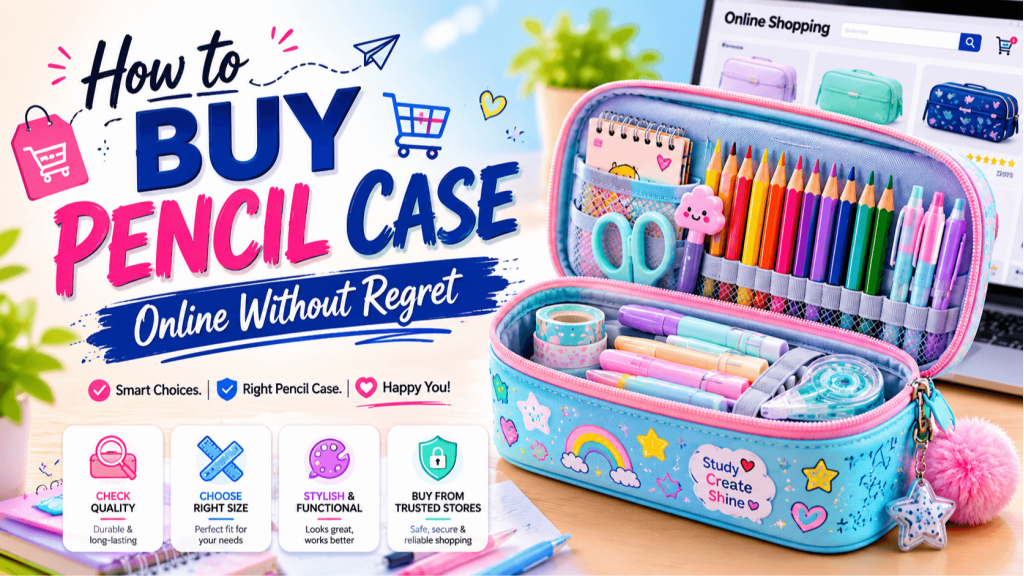
Buying a pencil case sounds simple until the order arrives and the zip feels weak, the size is wrong, or the compartments do not fit what you actually carry. If you want to buy pencil case online without regret, the goal is not to choose the cutest design first. The goal is to match the pencil case to the user, the items it needs to hold, and the daily routine it must survive.
For UAE shoppers, online stationery shopping is especially convenient because you can compare styles, add other school or office supplies, and get everything delivered without visiting multiple stores. But a few smart checks before checkout can save you from clutter, wasted money, and the hassle of returns.
Start with the purpose, not the design
The biggest mistake shoppers make is buying based on colour or character design alone. A pencil case for a primary school child is not the same as one for an art student, office worker, teacher, or university student. Before browsing, decide what the pencil case needs to do every day.
A child may need something lightweight, easy to open, and simple to clean. A teenager may want a stylish pouch that fits pens, highlighters, correction tape, and small accessories. An artist may need a larger case with elastic holders to protect pencils and markers. Someone using it at work may prefer a clean, compact design that slips into a laptop bag.
If you are shopping for a full stationery refresh, start by browsing stationery essentials and then narrow down the pencil case based on what will actually go inside it.
| User type | Best pencil case style | What to prioritise |
|---|---|---|
| Young school child | Box or soft pouch | Easy opening, washable material, simple storage |
| Teen or college student | Multi-compartment pouch | Capacity, design, strong zip, portability |
| Artist or design student | Roll-up or organiser case | Pencil protection, elastic slots, larger size |
| Office user | Slim pouch | Professional look, compact size, durable fabric |
| Gift buyer | Stylish case with room to grow | Neutral design, useful capacity, good finish |
When you know the purpose first, you avoid paying for features you do not need or choosing a pretty case that fails after a few weeks of real use.
Measure what needs to fit inside
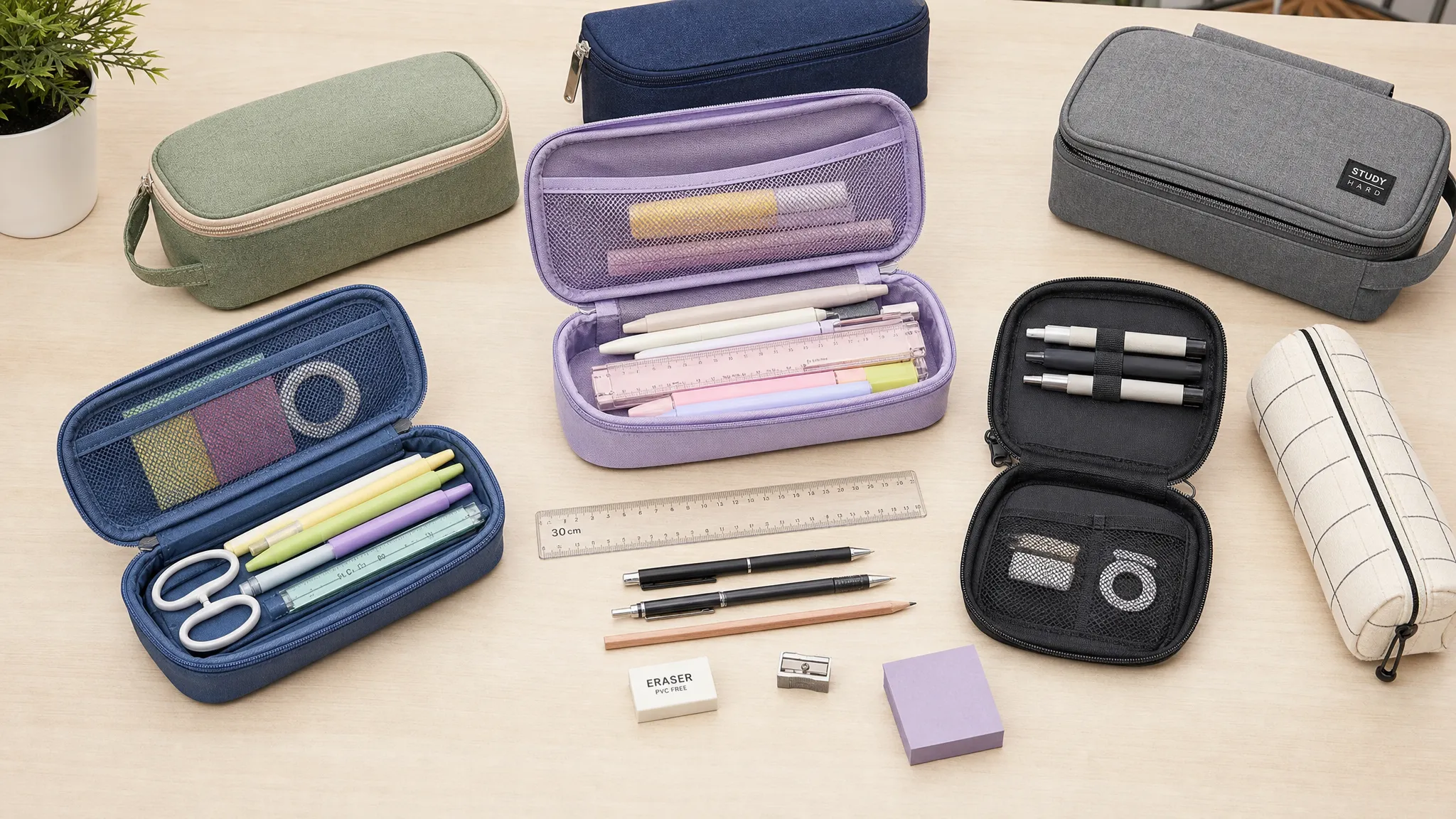
Online product photos can make a pencil case look bigger than it is. A compact pouch may look spacious in a close-up photo, while a large organiser may seem normal until you realise it takes up half the school bag. Size is one of the most important checks before ordering.
Think about the everyday contents. A basic school pencil case may need pencils, pens, eraser, sharpener, ruler, glue stick, and maybe coloured pencils. A college case may carry pens, highlighters, sticky notes, USB drives, and calculator accessories. An art case may need longer pencils, brush pens, markers, and blending tools.
Before adding to cart, look for product dimensions in the listing. If dimensions are not clear, compare the case with familiar objects in the photos, but do not rely on photos alone. If you already own a pencil case that feels too small, measure it and choose a larger option.
A useful rule is to leave extra room for 20 to 30 percent more items than the user currently carries. School and work supplies tend to increase over time, and an overstuffed pencil case puts stress on the zip, seams, and corners.
Choose the right material for UAE daily use
A pencil case lives a rough life. It gets thrown into bags, placed on desks, opened many times a day, and sometimes exposed to heat, dust, food crumbs, ink leaks, or water bottle spills. In the UAE, where bags may sit in cars, buses, and warm classrooms, material matters.
Fabric pouches are popular because they are lightweight and flexible. Hard cases protect items better but may take more space. Plastic cases are easy to wipe, but low-quality plastic can crack. Leather-look or premium finishes can look good for office use, but they need better care.
| Material | Strengths | Watch out for |
|---|---|---|
| Canvas or fabric | Lightweight, flexible, casual | Can stain if not treated or cleaned quickly |
| Polyester or nylon | Durable, often water-resistant | Check zip and stitching quality |
| Hard plastic | Easy to wipe, protects contents | May crack if dropped or packed tightly |
| Silicone | Soft, easy to clean, child-friendly feel | May attract dust depending on finish |
| Leather-look material | Stylish for office or gifting | Can peel if quality is low or exposed to heat |
For younger children, easy cleaning should be a priority. For students carrying many pens and highlighters, strong stitching and a reliable zip matter more than fancy details. For office use, choose a material that looks neat and does not attract lint easily.
Look closely at compartments and closure quality
A pencil case with one open compartment is simple and quick to use. That may be perfect for younger children or minimal users. But if the user carries many small items, a single pouch can turn into a messy pocket where erasers, leads, sharpeners, and USB drives disappear.
Compartments help organise items, but too many can also make the case bulky. The right balance depends on the user. For most students, two or three sections are enough. For art supplies, elastic loops or separate sleeves can protect pencil tips and keep colours easy to find.
The closure is just as important. A weak zip is one of the fastest ways a pencil case becomes annoying. When shopping online, zoom into product images where possible. Look for visible stitching around the zip, neat seams, and a puller that looks easy to grip. If there are reviews available, scan for comments about zips, torn seams, or durability after daily use.
If you are comparing options on Sandhai, use the product photos, specifications, and pricing together rather than judging from the first image. You can start with pencil case options and shortlist only the ones that match your capacity and durability needs.
Do not ignore the inside of the case
Many shoppers focus on the outside design, but the inside determines whether the pencil case will stay useful. A beautiful exterior is not enough if the lining tears, stains easily, or makes items difficult to remove.
For children, a lighter inner lining can make it easier to find small items. For artists, elastic loops should be firm but not too tight. For students, inner pockets are helpful for erasers, sticky notes, correction tape, and sharpeners. If the case is for markers or ink pens, consider whether the lining looks wipeable or at least not too delicate.
Also think about access. A case that opens wide is easier for children and artists. A slim pouch with a narrow opening may be fine for a few pens, but frustrating if the user has to dig around during class or meetings.
Compare value, not just price
A cheap pencil case is not always bad, and an expensive one is not automatically better. The best choice is the one that gives good value for the way it will be used. If the case is for occasional use, a simple pouch may be enough. If it will be used every school day, paying a little more for stronger material and better stitching can be worth it.
When comparing prices, ask what you are getting for the money. Is the case larger? Does it have reinforced corners? Does it include multiple compartments? Is the material easier to clean? Does it look like it can last a full school term or longer?
It also helps to shop in batches. If you are buying for back-to-school, you can compare pencil cases alongside school supplies so the size and style match the notebooks, pens, art items, and accessories you plan to order.
Read product details like a careful online shopper
Good online shopping is a skill. Product titles, images, descriptions, and customer feedback all reveal clues. Do not rush from the first attractive photo to checkout. Take a minute to inspect the listing like you would inspect a product in a physical shop.
Check whether the listing clearly shows the front, inside, back, and closure. Look for size information, material details, colour options, and care instructions. If the case has a print or character design, check whether the design appears stitched, embossed, printed, or attached as a decorative piece.
If you like using browser tools, wishlists, or comparison apps to organise online purchases, resources such as digital tool review sites can help you choose practical tools before installing anything new. This is especially useful when you regularly compare products, save links, or plan purchases across multiple categories.
A careful shopper also checks delivery options, payment methods, and return or exchange information before ordering. On a marketplace like Sandhai, the convenience comes from combining product variety with home delivery, secure payment options, and offers that can make everyday shopping easier.
Think about age, safety, and school rules
If the pencil case is for a child, age suitability matters. Avoid designs with small detachable decorations for very young children. Make sure the opening mechanism is simple enough for the child to use independently. A child should not struggle with a tight zip every time they need a pencil.
Some schools also prefer simple stationery without distracting lights, sounds, or oversized accessories. If you are buying for school, choose a design that is fun but practical. Neutral shapes and durable materials usually work better than novelty designs that are exciting for a week and inconvenient for the rest of the term.
For older students, style matters more, but it should still support the daily routine. A trendy case that cannot fit a ruler, highlighters, or calculator accessories may end up unused.
Match the pencil case with the full school or work setup
A pencil case should work with the bag, desk, and daily schedule. A hard box may protect items well but feel bulky in a small school bag. A soft pouch may fit easily but provide less protection for delicate art pencils. A large organiser may be ideal at home but too big for daily commuting.
If you are preparing for a new school term, it helps to shop by routine rather than by product alone. Think about the school bag, lunch box, notebooks, art supplies, and small accessories together. For families shopping online, adding useful toys and kids items or everyday home essentials in the same shopping session can save time and reduce last-minute store visits.
This is where online marketplaces are convenient. You can compare categories, check offers, and build a practical cart instead of making separate trips for every small item.
Common mistakes to avoid before checkout
Even experienced online shoppers can make quick decisions they regret. Pencil cases are small purchases, so it is easy to rush, but small mistakes can still be frustrating.
Avoid these common errors:
- Buying only for design without checking size or compartments.
- Assuming the case is large because the product photo is zoomed in.
- Ignoring material, especially for children or heavy daily use.
- Choosing too many compartments when a simple pouch would be easier.
- Forgetting to check whether long pencils, rulers, or markers will fit.
- Overlooking zip quality, stitching, and inside lining.
- Ordering at the last minute without checking delivery and payment options.
A regret-free purchase usually comes down to one question: will this pencil case still be convenient after two weeks of daily use? If the answer is yes, it is probably a good choice.
A simple pre-checkout checklist
Before you place the order, pause for one final review. This takes less than a minute and can prevent most online shopping disappointment.
- The case fits the user’s age and daily routine.
- The dimensions match the items that need to go inside.
- The material suits the expected use, cleaning needs, and climate.
- The zip or closure looks strong and easy to use.
- The compartments are useful, not excessive.
- The design will remain practical after the excitement of a new item fades.
- The seller offers suitable delivery and payment options for your location in the UAE.
Once these points are clear, you can buy with much more confidence.
Frequently Asked Questions
What is the best pencil case size to buy online? The best size depends on what the user carries daily. For basic school use, choose a case that fits pens, pencils, eraser, sharpener, and a small ruler. For art or college use, look for a larger organiser with extra room.
Is a hard pencil case better than a soft pouch? A hard pencil case offers better protection, while a soft pouch is lighter and easier to fit into bags. Choose hard cases for younger children or delicate items, and soft pouches for flexible everyday use.
How can I judge quality from online photos? Zoom in on the zip, seams, corners, lining, and stitching. Read the description for material and size details. If reviews are available, look for comments about durability and daily use.
Should I buy a pencil case with many compartments? Not always. Compartments are helpful for organising small items, but too many can make the case bulky. Most students do well with two or three sections, while artists may need elastic loops or dedicated slots.
Can I buy pencil cases with other school items online in the UAE? Yes. Shopping online lets you compare pencil cases with notebooks, pens, bags, and other essentials in one place, which is useful for back-to-school preparation and everyday stationery restocking.
Shop smarter for stationery in the UAE
A good pencil case should make daily study, work, or creative routines easier. It should fit the right items, survive regular use, and feel convenient every time it is opened. When you shop with a clear checklist, you avoid disappointment and choose based on real value, not just a nice photo.
Explore stationery, school supplies, and everyday essentials at Sandhai.ae, where online shopping in the UAE is designed to bring variety, value, and convenience together in one trusted marketplace.

Share this via
Or copy link