

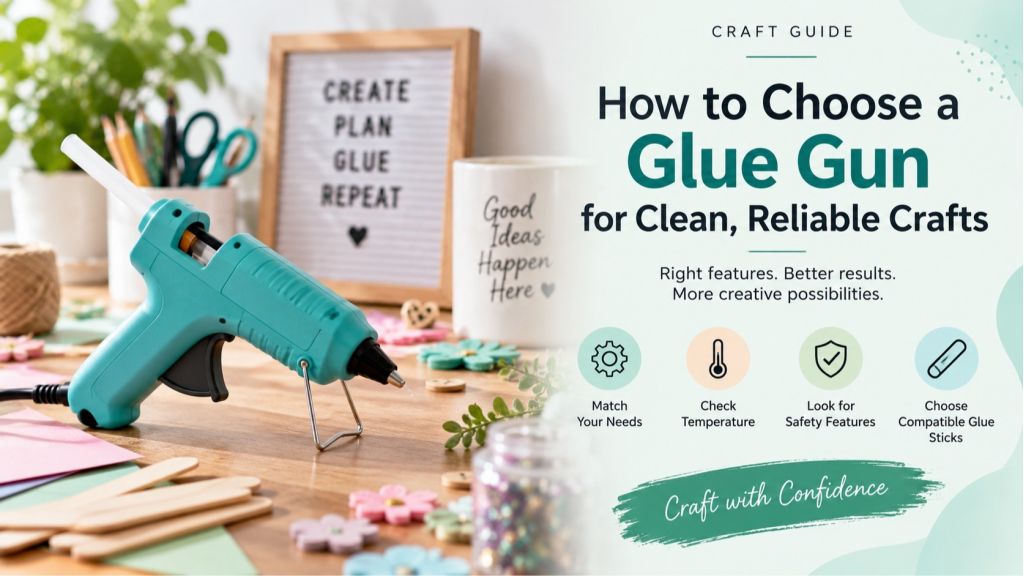
A good glue gun should make crafting easier, not leave you with glue strings, burned fingers, lumpy joins, or decorations that fall off after a day. Whether you are making school projects, wedding favors, home décor, festive garlands, or quick household repairs, the right tool affects how clean the final finish looks and how reliably the bond holds.
Most glue guns look similar at first glance, but they differ in temperature, size, nozzle design, trigger control, power source, and glue stick compatibility. Choosing without checking those details is the main reason people end up with messy beads of glue, weak adhesion, or a tool that feels awkward after ten minutes of work.
This guide breaks down what to look for before buying, how to match glue guns to common craft materials, and when another adhesive may give a neater result.
 What a glue gun is best for
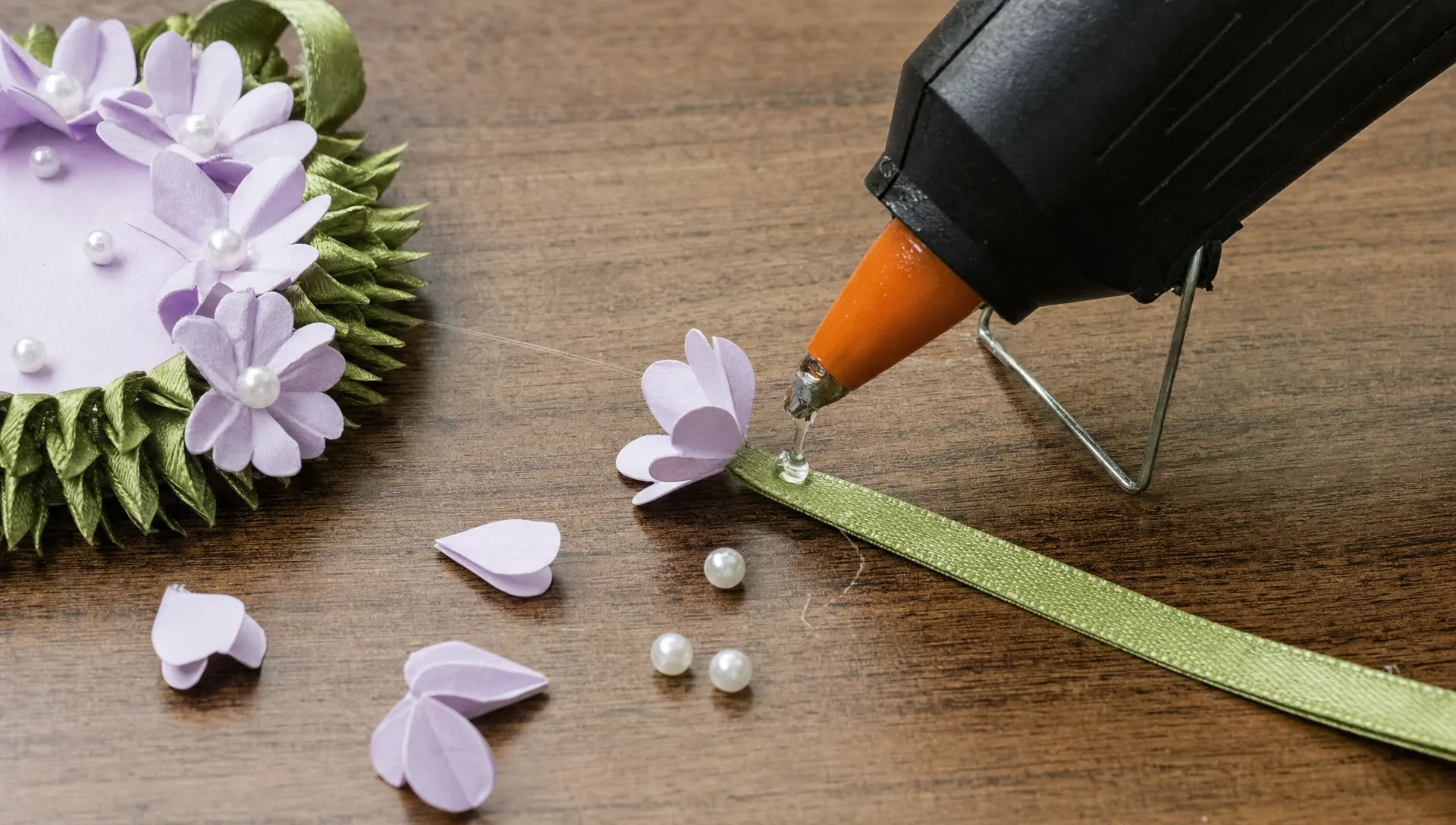
A glue gun melts solid adhesive sticks and lets you apply hot glue in a controlled bead. As the glue cools, it hardens and grips the surfaces together. The big advantage is speed. You can join many craft materials in seconds, which makes glue guns useful for projects where drying time would slow you down.
Hot glue is especially practical for attaching embellishments, building cardboard models, securing artificial flowers, decorating wreaths, mounting lightweight wood pieces and assembling craft foam. It is also useful for small household fixes where the item is not exposed to high heat, water or heavy stress.
It is not the best choice for every project. Hot glue can be bulky on thin paper, may seep through delicate fabric and can soften if exposed to heat, such as in a car parked under strong sun. It also may not provide the strength needed for structural repairs. A clean result starts with knowing when to use a glue gun and when to choose a different adhesive.
Start with temperature: low, high or dual temperature
Temperature is the first feature to check because it affects safety, bond strength and material compatibility. Low-temperature glue guns are easier to manage on delicate surfaces, while high-temperature models create stronger bonds on tougher materials.
| Glue gun type | Best for | Main benefit | Watch out for |
|---|---|---|---|
| Low-temperature | Foam, thin fabric, paper, lightweight decorations, and kids' craft setups with adult supervision | Less heat damage and a gentler flow | Weaker bond on dense materials |
| High-temperature | Wood, cardboard, thick fabric, artificial flowers, some plastics and mixed media crafts | Stronger grip and faster bonding | More risk of burns, warping, and glue seepage |
| Dual-temperature | Crafters who work with many materials | Flexibility in one tool | Requires checking the setting before every project |
If you only make light paper crafts, school displays, or foam decorations, low temperature may be enough. If you often craft with wood, jute, thick cardboard, or layered décor pieces, high temperature is more practical. For most home crafters who switch between materials, a dual-temperature glue gun is usually the safest long-term choice.
Pick the right size for your crafting style
Glue guns are commonly sold as mini or full-size tools. Mini models are easy to store and useful for occasional crafts, but they hold smaller glue sticks and may need refilling more often. Full-size glue guns usually offer better flow control for larger projects and can feel steadier when applying long lines of glue.
For small embellishments, greeting cards, dollhouse pieces, or quick repairs, a mini glue gun is often convenient. For wreaths, backdrops, home décor, classroom projects, or festival crafts where you apply a lot of glue, a full-size model saves time.
Also check the weight and grip. A glue gun that is too bulky for your hand can make your bead of glue uneven. If you plan to craft for longer sessions, comfort matters as much as power.
Check glue stick compatibility before buying
Not all glue sticks fit all glue guns. The package should state the glue stick diameter and compatible temperature range. Buying the wrong size can cause feeding problems, glue leaks or poor melting.
Clear all-purpose glue sticks are suitable for many crafts, but specialized sticks exist for fabric, wood, glitter effects or colored decoration. If your priority is a tidy finish, choose glue sticks that match the job rather than using one type for everything.
Look for these details on the glue stick pack:
- Diameter that matches your glue gun exactly
- Recommended temperature, such as low, high, or dual temperature
- Material suitability, such as paper, wood, plastic, fabric, or foam
- Dry finish, such as clear, colored, glitter, or opaque
- Set time, especially if you need time to reposition pieces
A common mistake is judging glue sticks only by price. Cheap sticks that string heavily or dry cloudy can spoil a neat project. If you sell handmade products or prepare decorative items for events, cleaner-flowing glue sticks are worth the extra care in selection.
Nozzle design makes a big difference
The nozzle controls how the melted glue lands on your project. For clean crafts, this is one of the most important details. A narrow nozzle helps with small decorations and precise placement. A wider nozzle works better when covering bigger areas quickly, but it is less forgiving on delicate work.
Some glue guns have an anti-drip nozzle, which helps reduce glue blobs while the tool rests between applications. This is helpful if you work on detailed crafts, especially when switching between small parts. A heat-resistant nozzle cover can also reduce accidental contact with the hottest metal area.
If you often make paper flowers, jewelry displays, miniature décor or greeting cards, prioritize a fine nozzle and smooth trigger over raw wattage. Precision is what keeps the project clean.
Trigger control and stand stability matter
A reliable trigger should feed glue smoothly without needing too much pressure. If the trigger feels stiff, you may squeeze too hard and release too much glue at once. That causes lumps, strings and visible glue ridges.
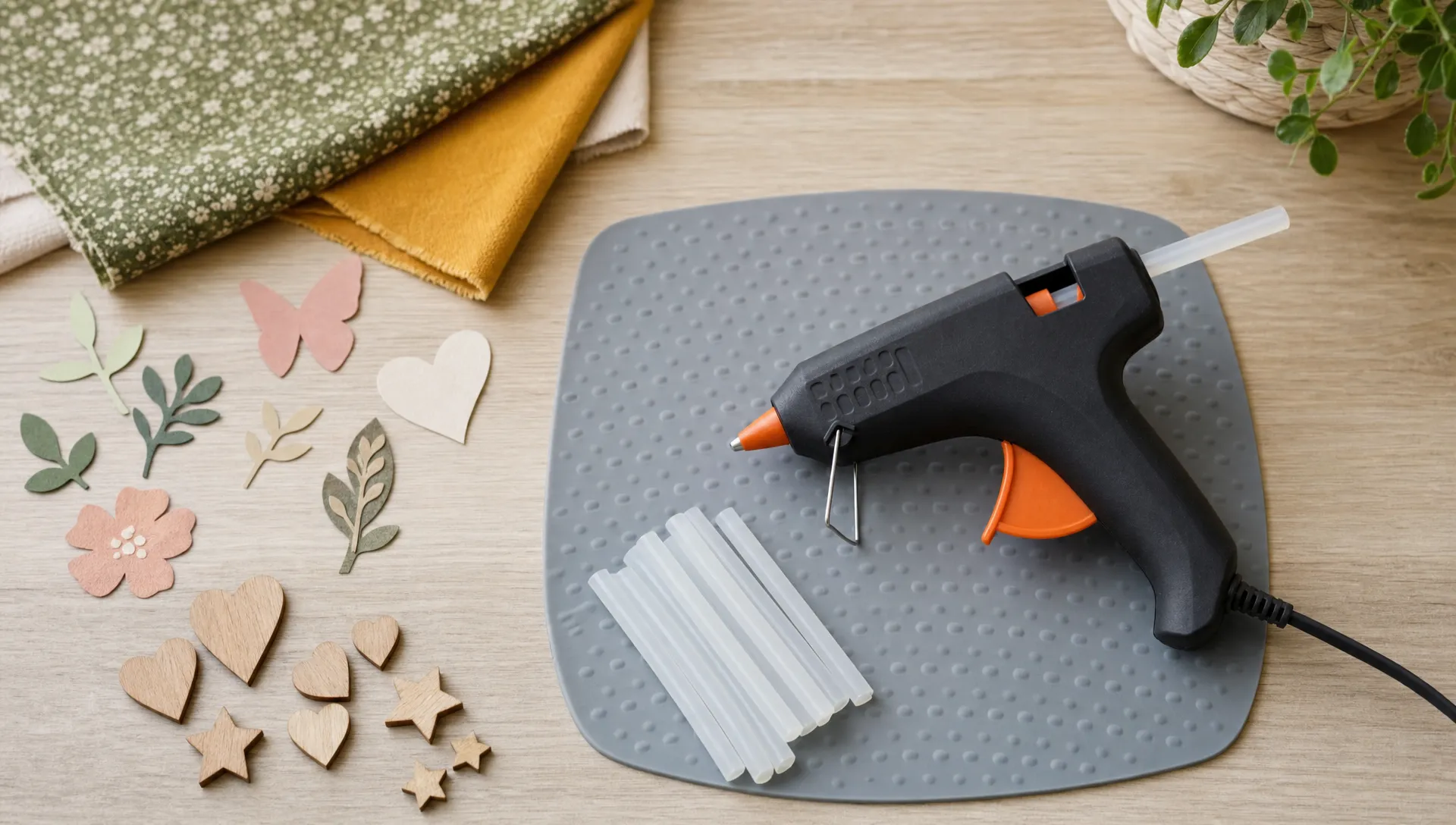
The stand is just as important. A glue gun should rest securely while hot, ideally with the nozzle angled down safely over a heat-resistant mat or scrap surface. A weak stand can tip over, leaving melted glue on the table or creating a burn risk.
Cord length also affects control. If the cord is too short, you may pull the glue gun awkwardly across the workspace. Cordless glue guns can be convenient, but check the heating time, working time and charging requirements before choosing one. For long crafting sessions, a corded model is often more predictable.
Match the glue gun to the material
A clean bond depends on both the tool and the surface. Smooth plastic, dusty cardboard, oily wood and loose-weave fabric all behave differently. Before starting the final piece, test a small hidden area to see how the glue spreads, grips and dries.
| Material | Recommended approach | Clean-finish tip |
|---|---|---|
| Paper and card | Use low temperature or very small dots | Avoid heavy beads that create bumps |
| Craft foam | Use low temperature where possible | Test first, as high heat can deform foam |
| Fabric | Use small amounts and press gently | Choose fabric glue instead if flexibility matters |
| Wood and jute | Use high temperature for better grip | Keep surfaces dry and dust-free |
| Plastic decorations | Test adhesion first | Lightly roughen hidden contact points if suitable |
| Artificial flowers | Use controlled dots or short lines | Hold pieces until the glue sets enough to support them |
For fabric projects that need flexibility, washing or a softer feel, hot glue is not always ideal. A dedicated option like Fevicryl Fabric Glue 80ml can be a better fit for hems, appliqué-style decoration and fabric-to-fabric bonding where you do not want hard glue spots.
For paper crafts where heat feels unnecessary, a simple glue stick can produce a smoother result. If you are making school charts, labels or scrapbook pages, Funbo Glue Stick 40g is the kind of no-heat option that helps avoid burns and glue strings.
For larger classroom, office or craft-room projects that need liquid adhesive, a PVA product such as Giotto White Pva Glue 1Kg may be more practical than hot glue, especially when you need spreadable coverage rather than raised glue beads.
Do not confuse a glue gun with a heat tool
Glue guns and craft heat tools both use heat, but they do different jobs. A glue gun melts adhesive. A heat tool directs hot air for embossing powders, drying inks, shrinking plastic or heat-setting mixed media work.
If your project involves stamping, embossing or drying craft layers, a tool like the Ranger Heat It Craft Tool is more relevant than a glue gun. If your project involves attaching objects together, choose a glue gun or adhesive. Mixing up the two can lead to poor results or damaged materials.
Safety features to look for
Hot glue can burn skin quickly, so safety should be part of the buying decision. This matters even more in family homes, classrooms and group craft sessions. A glue gun does not need to be complicated, but it should feel stable and predictable.
Look for a model with a secure stand, insulated grip, clear power indicator and a nozzle design that reduces dripping. If you are buying in the UAE, also confirm that the voltage and plug type match your home setup. Many homes use 220-240V power and Type G sockets, but you should always check the product specifications before purchase.
Good habits matter too. Work on a heat-resistant surface, keep spare paper under the nozzle, unplug the tool after use and let it cool fully before storing. Never pull a half-melted glue stick backward through the gun unless the manufacturer says it is safe, as this can damage the feeding mechanism.
How to keep glue lines clean
Even the best glue gun can look messy if the technique is rushed. Clean results come from controlling temperature, amount and timing. Let the glue gun heat fully before use, because half-melted glue often comes out unevenly. Apply less than you think you need, then add more if the bond requires it.
For visible areas, apply glue to the hidden side of the object rather than the main surface. Press parts together firmly but gently. If strings appear, wait until they cool, then remove them with your fingers or tweezers. Do not wipe hot strings across the project, as that usually spreads glue into shiny marks.
When working with layered décor, dry-fit the pieces first. Arrange everything before plugging in the glue gun, then glue in sections. This prevents rushed placement and reduces the chance of crooked decorations.
A simple buying checklist
Before adding a glue gun to your cart, compare the features against the crafts you actually make. A high-powered model is not automatically better if you mostly decorate cards. A mini model is not always cheaper in practice if you constantly need more glue sticks.
Use this quick checklist while shopping:
- Choose low temperature for delicate materials and high temperature for stronger craft bonds
- Pick dual temperature if you regularly switch between paper, fabric, wood and décor pieces
- Confirm glue stick size before buying refills
- Choose a fine nozzle for detail work and a larger nozzle for bigger surfaces
- Check stand stability, trigger smoothness, cord length and safety indicators
- Buy the right adhesive alternative when hot glue is not suitable
Thinking through these details will help you avoid the two biggest frustrations with glue guns, messy application and unreliable hold.
Frequently Asked Questions
What type of glue gun is best for beginners? A dual-temperature glue gun is often the most flexible choice for beginners because it can handle delicate crafts at a lower setting and stronger materials at a higher setting. If you only work with paper or foam, a low-temperature model may be enough.
Are mini glue guns good for crafts? Mini glue guns are good for small crafts, quick repairs and detailed decorations. For large projects, a full-size glue gun is usually more comfortable because it holds larger glue sticks and can apply glue more steadily.
Why does my glue gun leave strings? Glue strings usually happen when the glue is too hot, the stick quality is poor or you pull the nozzle away too quickly. Use a smaller amount of glue, pause before lifting the nozzle and remove cooled strings after the bond sets.
Can I use a glue gun on fabric? You can use hot glue on some fabric decorations, but it may create hard spots and may not hold up well to washing. For fabric-to-fabric bonding, fabric glue is often cleaner and more flexible.
Is hot glue safe for kids' crafts? Hot glue should only be used by children with close adult supervision because the nozzle and melted glue can burn skin. For younger children, glue sticks, PVA glue or washable craft adhesives are safer choices.
Shop smarter for your next craft project
The best glue gun is not simply the hottest or most powerful one. It is the one that matches your materials, gives you steady control and helps you finish crafts without visible mess. For many makers, that means pairing a glue gun with a few no-heat adhesives so each project gets the right bond.
When you are ready to build your craft kit, explore craft supplies, home essentials and everyday shopping options at Sandhai.ae. Choose the right tool, test before you glue and your handmade projects will look cleaner from the first press to the final detail.

Comments