

Tamil festivals like Pongal and Diwali carry a deeply rooted tradition of gifting children something special, a toy that sparks imagination and stays with them long after the celebration ends. A doll house has become a popular festival gift in many families, and for good reason. It builds creativity, encourages storytelling, and grows with your child through multiple stages of play. For families already browsing Sandhai for Pongal sweets, festival décor, and everyday essentials, finding a quality children's gift in the same place makes the whole experience simpler. This guide walks you through everything you need to pick the right doll house for your child's age, your space, and your budget.
Why a Doll House Makes Such a Meaningful Festival Gift
Tamil festivals traditionally center children in the celebration: new clothes, sweets, and a special gift that marks the occasion as distinct from an ordinary day. Many child-development experts favor tactile, imaginative toys because they invite active participation rather than passive watching, a meaningful distinction when you want a gift that earns its place in a child's daily life. A durable, open-ended toy is also more likely to be used over time than a single-feature, battery-powered alternative.
There is also a natural cultural parallel worth noting. Many Tamil families already keep Kolu dolls during Navarathri, displaying them on stepped wooden stands as a nine-night devotional tradition. A doll house is not a religious item, but for a child who has grown up watching a beautiful Kolu display each year, a miniature house with its own small world feels immediately familiar and meaningful. The leap from admiring the family's Kolu to playing with her own little home is a small one.
Beyond the cultural fit, the developmental case for doll house play is straightforward. Open-ended play builds early language, fine motor skills, and social-emotional understanding through imaginative storytelling, child development researchers have documented these benefits for decades. This is not just a pretty gift. It is one your child will actually use, repeatedly, across multiple years. That kind of play value is rare and worth paying attention to when you want the gift to carry real weight.
Matching the Right Doll House to Your Child's Age
Toddlers (Ages 1 to 2): Keep It Simple and Sturdy
For toddlers, safety and engagement come before detail. The Fisher-Price Little People Play House is the clearest pick in this age group. Designed for children as young as one year old, it features songs, sounds, and phrases, and uses chunky pieces sized for small hands to reduce choking risk. Room count and elaborate furniture are irrelevant at this stage. What matters is that the house is interactive, built from non-toxic materials, and sturdy enough to survive enthusiastic handling, look for ASTM F963 and CPSIA compliance on the packaging to confirm those standards are met.
Preschoolers (Ages 3 to 5): The Sweet Spot for Doll House Play
This is where doll house play really opens up, and where the best variety exists. The Melissa and Doug Fold and Go Dollhouse is a consistent top pick: it arrives with 11 pieces of dollhouse furniture, folds flat for storage, and is sized perfectly for small hands. The Hape All Seasons Wooden Dollhouse is another strong choice if you want something more durable with a seasonal, reversible design. Preschoolers do not need a mansion. They need something manageable enough to let them set up their own stories without getting overwhelmed, and both of these models deliver exactly that.
Older Children (Ages 6 and Up): Go Bigger and More Detailed
Older children stay engaged longer when the house offers enough complexity to invent new scenarios. The Kids Zone delivers this well: four levels, eight rooms, a working elevator, and 34 included pieces give children room to grow into the space over years. The Barbie Dreamhouse is the right call if your child gravitates toward fashion dolls and wants pools, lights, and dramatic play features. Children in this age group often want to personalize their doll house with accessories or paint, which opens the door to fun customization projects that extend engagement well beyond the initial unboxing.
Wood, Plastic, and MDF: Which Material Actually Holds Up
Why Wooden Doll Houses Earn Their Reputation
Solid wood lasts longer, looks better over time, and typically uses non-toxic finishes that parents do not need to worry about. Hape is a well-documented FSC-certified brand, and both Hape and Melissa and Doug are widely recommended for child-safe wooden toys, confirm specific certifications on the product page before purchasing. Well-made wooden doll houses tend to be viewed as heirloom items by many families because they last long enough to move between siblings and show up in family photographs for years.
Where Plastic and MDF Fit In
Plastic wins on moisture resistance and lighter weight, which matters when portability is a priority. Many fold-flat designs are plastic or plastic-reinforced, though some fold-flat wooden models, like the Melissa and Doug Fold and Go, offer portability with different durability trade-offs. MDF sits in the middle: cost-effective, smooth, and paint-friendly, but it swells with water and is heavier than it looks. The practical rule is straightforward: choose plastic for a portable play companion, wood for a centerpiece doll house that lasts, and MDF only if you plan to keep it in a dry space and handle it gently.
Price Ranges and What Each Tier Actually Gets You
Budget Tier ($50 to $100): The Smart Starter Pick
The Melissa and Doug Fold and Go Dollhouse sits right in this range and arrives fully furnished, which eliminates the "buy accessories separately" problem that catches many parents off guard. The KidKraft Chelsea Doll Cottage is another strong sub-$100 option with wood and wood-composite construction and a straightforward layout. A well-chosen budget doll house is not a compromise during festival season. Chosen carefully, it delivers years of genuine play value without stretching the gift budget.
Mid-Range ($100 to $250): The Best Value for Most Families
Many parents find the $100 to $250 range offers the best balance of quality and value, and it is easy to see why. KidKraft models in this band consistently hit the sweet spot of wood construction, room count, included dollhouse furniture, and long-term durability. The Our Generation Sweet Home Dollhouse is a strong pick for families with 18-inch dolls, landing comfortably around $130 to $200. At this price point, you are not making trade-offs between materials and features, you tend to get both.
Heirloom Tier ($250 and Up): When the Gift Is Meant to Last Decades
Brands like Real Good Toys operate at the craftsman level, producing detailed kits built for longevity and display value. Collector-quality miniature doll houses can run well past $500, and museum-quality custom builds reach into the thousands. For most children, pieces at this tier function as display items rather than active play objects. This tier makes sense as a once-in-a-generation gift rather than an annual festival tradition. That said, if you are shopping for a truly extraordinary Diwali present, knowing the category exists is useful even if you never shop it.
Size, Space, and Setup Before You Buy
How Scale Affects Where the Doll House Can Actually Live
Doll houses are built around three main scales. The 1:12 scale is the most common collector and traditional toy size, a two-story house typically runs about 36 inches wide by 18 inches deep and needs a dedicated table or floor area. The 1:24 scale (half-scale) fits a standard bookcase shelf, making it ideal for smaller apartments. The 1:6 scale is the Barbie and fashion-doll size, and it needs real floor space; these houses are much larger than they look in product photos. Knowing the scale before you buy prevents the unpleasant surprise of a doll house that does not fit the space you had in mind.
Measuring Your Space the Right Way
Before committing to any purchase, measure the footprint where the house will sit: width, depth, and height clearance. Depth is usually the limiting factor, not width, and it is the dimension most parents forget to check. Add clearance for roof overhang and for hands reaching into rooms from the open back. Also check interior room dimensions against the dollhouse furniture you plan to use, since a room that looks spacious in photos can be too shallow for a standard 1:12 bed frame.
The KidKraft Majestic Mansion, for example, has about 14.25 inches of ceiling height on its first three floors, which comfortably fits 12-inch dolls and standard furniture pieces. Details like that are easy to miss when browsing online and worth confirming in the product specs before you buy.
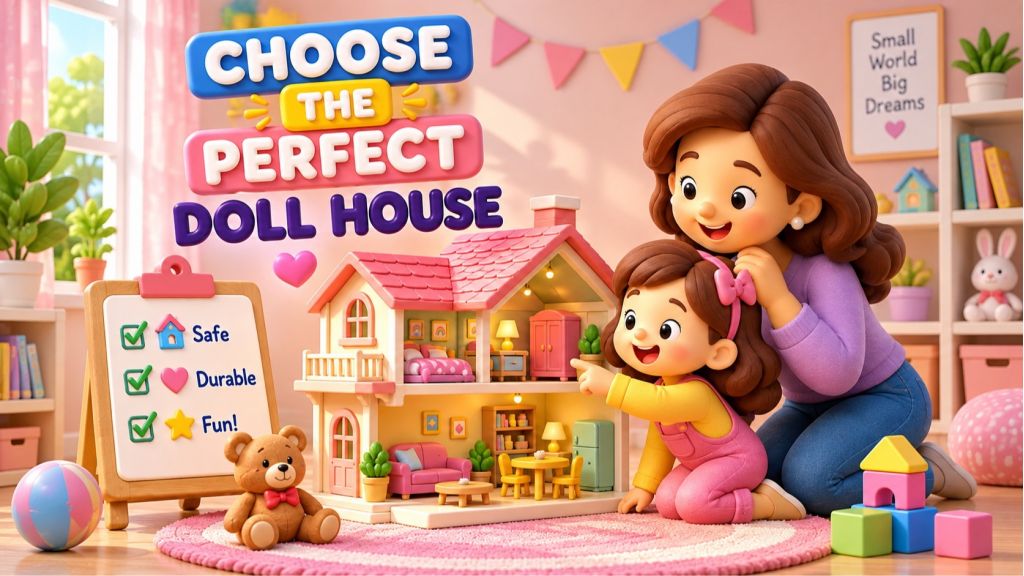
Doll House Buying Checklist
Run through these five points before finalizing any purchase:
- Age appropriateness: Confirm the listed age range matches your child. Toddler models differ significantly from those built for school-age children.
- Safety certifications: Look for ASTM F963 and CPSIA compliance for lead and phthalate testing. Confirm non-toxic finish claims on the product page.
- Material and durability: Match the material to how much handling the doll house will get. Wood for longevity, plastic for portability, MDF only in dry, stable environments.
- Space fit: Measure width, depth, and height clearance before ordering. Depth is almost always the dimension that surprises people.
- Assembly reviews: Read customer feedback specifically about assembly. The difference between a well-documented kit and a frustrating one shows up clearly in reviews.
Where Expat Families Find the Best Festival Gifts and Children's Toys Together
Tamil and South Indian expat families know the frustration of festival season shopping: one platform for sweets and decorations, another for children's gifts, another for traditional items. Sandhai.ae was built specifically to solve this for the UAE's expat community, bringing festival essentials and everyday products, including children's toys, under one roof with UAE-wide delivery across Dubai, Sharjah, and Abu Dhabi. For Pongal or Diwali shopping, that convenience is worth more than a small price difference when you are juggling festival preparations alongside everything else.
Regardless of where you shop, a few checks protect your purchase. Confirm non-toxic material certifications and clear age grading on the packaging. Read assembly reviews before buying any large doll house kit, because the difference between a well-documented kit and a frustrating one shows up clearly in customer feedback. Prefer sellers who offer easy returns and clear payment options, those policies remove real risk from first-time purchases of larger gift items, especially when timing matters for a festival celebration.
The Decision Is Simpler Than It Looks
Match age first. Choose material based on how long you want the doll house to last and how much handling it will get. Set your budget tier before you start browsing so you are not comparing items that belong in different categories. Then measure your space, depth especially, before committing to a size.
A doll house chosen this way is not just a festival gift. It is a piece of the home your child will come back to season after season. Tamil families who shop thoughtfully for Pongal or Diwali know that the best presents combine meaning with real play value, and a good doll house delivers both. The picks and tiers in this guide give you a clear starting point. Buy from a source you trust, confirm the safety certifications, and enjoy watching your child build their own little world one small piece at a time.

Comments