

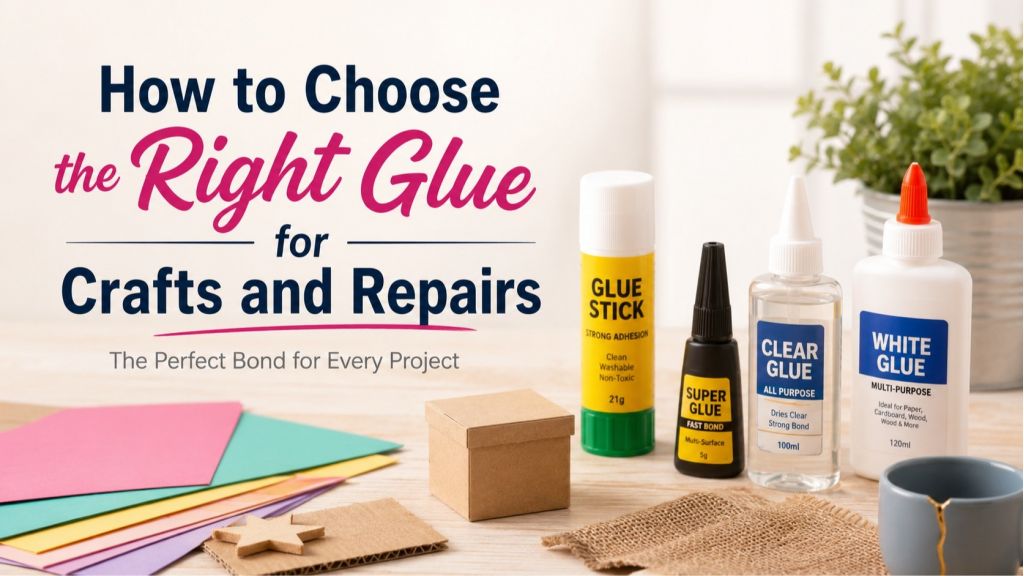
Choosing the right glue sounds simple until you are standing in front of options like glue stick, white glue, liquid glue, super glue, hot melt glue and fabric glue. Each one can be perfect in the right situation, and frustrating in the wrong one.
For online shoppers in the UAE, the decision also has a practical side. You may be fixing a broken home item, helping your child with a school project, preparing festival decorations or stocking up for craft activities. The best choice depends on the materials you are joining, how strong the bond needs to be, how fast you need it to dry and whether the finished item will face heat, washing, movement or humidity.
This guide breaks down the most common glue types, where they work best and what to check before adding one to your cart.
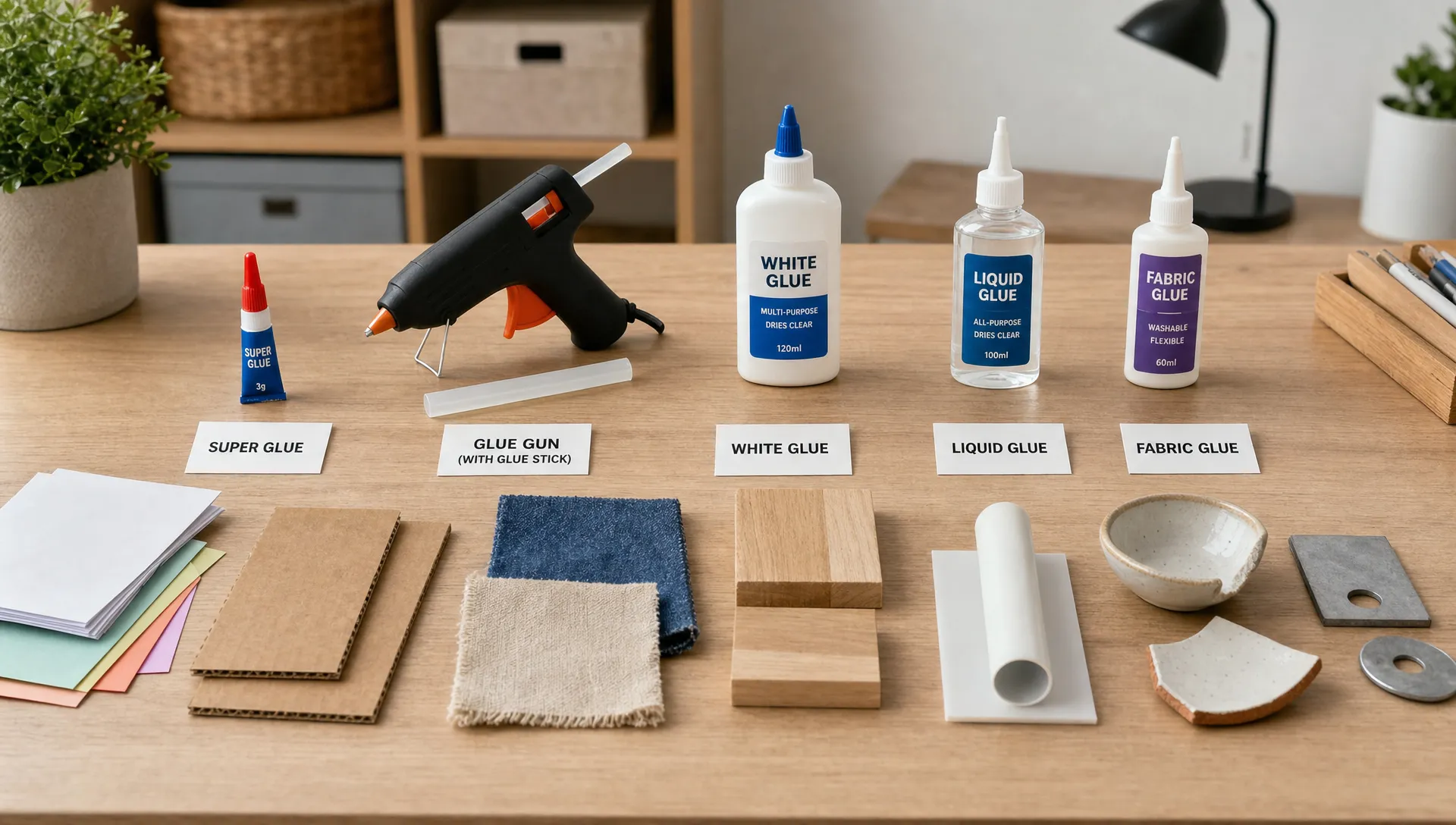
Start with the job, not the glue
Before choosing any adhesive, look at the project in front of you. A neat paper collage needs a very different product from a ceramic repair or a fabric hem. The strongest glue is not always the best glue, especially for children’s crafts, delicate materials or temporary decorations.
Ask these five questions first:
- What materials are being joined, such as paper, fabric, wood, plastic, metal, glass or ceramic?
- Does the bond need to be flexible, rigid, washable or heat resistant?
- Will the item be handled often, carried, washed or kept outdoors?
- Do you need a clean finish with no visible residue?
- Is the glue being used by adults, children or both?
If you are shopping for stationery, school projects or household repair supplies, it helps to compare product pages carefully on Sandhai, especially for size, usage instructions, delivery options and current availability.
Quick glue selection chart
Use this table as a starting point when matching glue to a common craft or repair job.
| Glue type | Best for | Avoid using it for | Why it works |
|---|---|---|---|
| Glue stick | Paper, card, labels, scrapbooks, light school crafts | Heavy items, glossy plastic, fabric repairs | Clean, quick and low mess |
| White glue | Paper, cardboard, wood, foam board, kids’ crafts | Waterproof repairs, metal, smooth plastic | Dries neatly and works well on porous surfaces |
| Liquid glue | General crafts, detail work, porous surfaces | Repairs needing instant hold | Easy to spread and good for controlled application |
| Super glue | Small repairs on ceramic, plastic, metal, rubber and jewellery parts | Fabric, foam, large gaps, children’s unsupervised use | Creates a fast, strong bond in small areas |
| Hot melt glue | Decorations, artificial flowers, lightweight wood, cardboard, DIY décor | Heat exposed items, thin fabric, delicate plastic | Sets fast and fills small gaps |
| Fabric glue | Hems, patches, trims, costumes, fabric embellishments | Structural repairs, heavy upholstery unless labelled for it | Stays flexible and can suit washable fabric projects |
Glue stick: best for paper and low mess crafts
A glue stick is the easiest choice for paper based work. It is ideal for school assignments, scrapbooking, card making, labels, gift tags and lightweight paper decorations. Because it is solid rather than runny, it is less likely to wrinkle paper or leak through thin sheets.
Choose a glue stick when the project needs to be neat, fast and child friendly. It is especially useful when children are making posters or collages because the application is controlled and cleanup is simple.
The tradeoff is strength. A glue stick is not designed for heavy embellishments, textured cardboard, fabric, plastic or anything that will be pulled apart repeatedly. It is also not the best choice if the item must last for years, face moisture or hold weight.
White glue and liquid glue: dependable for everyday crafts
White glue is one of the most versatile craft adhesives for homes, classrooms and hobby tables. It is commonly used on paper, cardboard, wood, foam board and other porous materials. Many white glue products dry clear or nearly clear, making them useful for crafts where the finish matters.
Liquid glue is a broader term that can include white craft glue and other runny adhesives. Its advantage is coverage. You can spread it over a surface, apply dots to small areas or use a brush for more even control. This makes it suitable for craft models, cardboard structures, paper flowers and decorative projects.
For everyday craft use, products like Elmer’s White Glue 118 ml are the kind of option shoppers often consider for smaller tasks, while a larger bottle such as Elmer’s White Glue 225 ml can make sense if you regularly handle schoolwork, craft activities or group projects.
White glue is not the right choice for everything. It usually needs drying time, and the bond is strongest when at least one surface is absorbent. It is not ideal for smooth plastic, metal, glass or repairs that must resist water unless the label clearly says it is suitable for those uses.
Super glue: powerful, fast and best used with care
Super glue, also called cyanoacrylate adhesive, is made for small, precise repairs. It bonds quickly and can work well on materials such as ceramic, some plastics, metal, rubber and small jewellery parts. If a decorative item breaks cleanly into two pieces, super glue can be a practical option.
The key is surface contact. Super glue performs best when the parts fit tightly together. It is not good at filling big gaps, and it may become brittle on items that bend or flex. Use only a small amount, because extra glue can spill, bloom into a cloudy residue or bond fingers accidentally.
Safety matters. Super glue can bond skin very quickly, so it should be used by adults or under close adult supervision. Keep it away from eyes, lips and children’s reach. The MedlinePlus guide to super glue poisoning explains why accidental exposure should be taken seriously and when medical help may be needed.
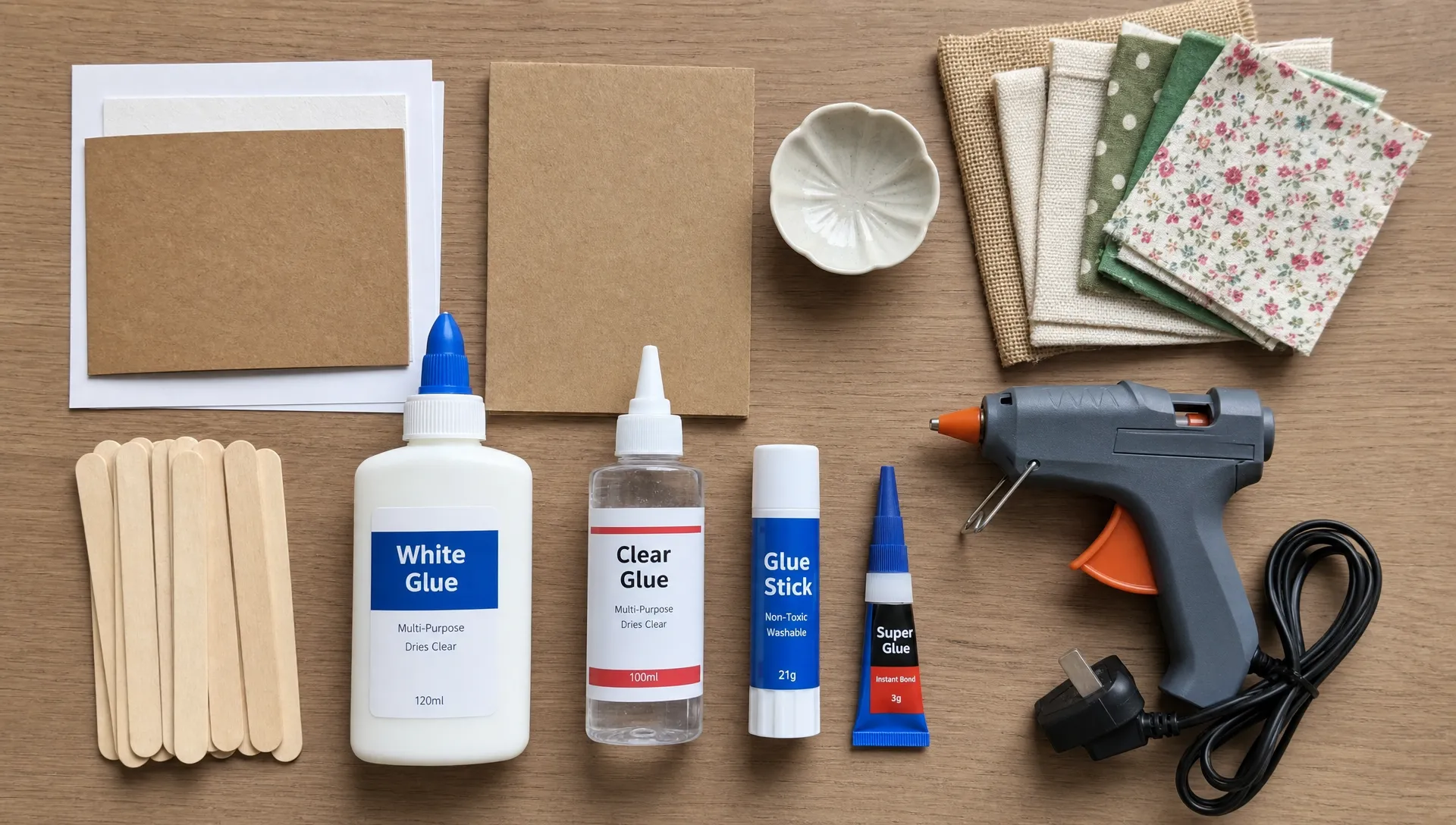
Hot melt glue and glue gun: fast bonding for décor and DIY projects
Hot melt glue is used with a glue gun. The gun heats solid glue sticks until they melt, then the glue cools and sets quickly. This makes it popular for DIY décor, artificial flowers, cardboard models, foam crafts, wreaths, gift wrapping, lightweight wood projects and quick temporary fixes.
The biggest benefit is speed. Hot melt glue grabs fast, fills small gaps and can hold bulky craft pieces better than ordinary white glue. It is useful when you need to build up layers or attach decorations that would slide around while slower adhesives dry.
However, hot melt glue is not always permanent. Heat can soften it, which is important in the UAE if items are stored in a hot balcony, garage or car. It can also damage delicate plastics, thin fabric or heat sensitive materials. The tip of a glue gun and the melted adhesive can burn skin, so it is not suitable for young children without careful supervision.
When buying a glue gun, check the glue stick size it accepts, whether it is standard or mini, and whether it is high temperature, low temperature or dual temperature. Low temperature models are often better for delicate craft materials, while high temperature versions may hold better on wood and thicker materials.
Fabric glue: for flexible, wearable and washable projects
Fabric glue is designed for textiles. Unlike rigid adhesives, it is usually made to remain flexible after drying. That matters for hems, patches, costumes, decorative trims, felt crafts, fabric flowers, school costumes and simple no sew projects.
The most important detail is washability. Some fabric glue is meant for temporary positioning, while other formulas can withstand washing after curing. Always read the label for drying time, curing time and washing instructions. A project may feel dry after a short time but still need many hours before it is ready to wear or wash.
Fabric glue is not automatically a replacement for stitching in every situation. Heavy seams, upholstery stress points and items that will be stretched repeatedly may still need sewing or a stronger textile adhesive specified for that purpose. For light craft and clothing decoration, though, fabric glue can save time and keep the finish clean.
Specialty craft adhesives and decorative alternatives
Not every craft adhesive is for structural bonding. Some products are used mainly for decoration, sealing or presentation. For example, wax sticks are often used for invitations, envelopes, gift packaging and handmade stationery. If your project is about presentation rather than repair, a gold sealing wax stick can create a traditional craft finish without replacing the need for actual glue.
Slime projects are another special category. They often use washable glue as part of a recipe or kit, but the goal is sensory play rather than bonding two surfaces. If you are planning an activity for children, ready made options like the Elmer’s Slime Kit Starter or a larger activity set such as the Elmer’s Slime Kit Party may be easier than buying separate ingredients. Always follow the instructions provided with the kit.
For craft products used by children, look for clear safety labelling. The Art and Creative Materials Institute explains common AP and CL seals used on art materials, which can help shoppers understand safety information when comparing products.
Match the glue to the material
A good adhesive choice starts with the surface. Paper, wood and cardboard are porous, so water based glues can soak in and grip well. Plastic, glass and metal are smooth, so they often need a different adhesive or a surface preparation step.
| Material | Good glue choices | Shopping tip |
|---|---|---|
| Paper and card | Glue stick, white glue, liquid glue | Use glue stick for thin paper and liquid glue for stronger card projects |
| Cardboard and foam board | White glue, hot melt glue | White glue gives a neater finish, hot melt glue gives faster hold |
| Wood crafts | White glue, hot melt glue, wood glue | Choose based on whether the item is decorative or load bearing |
| Fabric | Fabric glue | Check whether it is washable and flexible after drying |
| Ceramic and glass repairs | Super glue or epoxy type adhesives | Use only on clean breaks and follow curing instructions |
| Plastic | Super glue or plastic specific adhesive | Check the label because not all plastics bond well |
| Metal | Super glue or epoxy type adhesives | Clean the surface and avoid glue meant only for porous materials |
If you are not sure, test the glue on a hidden area first. This is especially important for fabric, painted surfaces, delicate paper and plastic, where staining, wrinkling or melting can happen.
Drying time, curing time and strength are not the same
Many shoppers judge glue by how fast it dries, but drying is only part of the story. Drying time is when the glue feels touch dry. Curing time is when it reaches its full strength. A project may look finished after 20 minutes but still need several hours or a full day before it can be handled heavily.
This difference matters for repairs. If you glue a ceramic handle, toy part or decorative hook and use it too soon, the bond may fail even if the surface feels dry. For crafts, rushing can cause paper layers to shift, fabric trims to peel or decorations to fall off.
A simple rule is to give the glue more time than you think it needs, especially for thick applications, humid rooms or surfaces that do not absorb moisture quickly. Always follow the label before washing, hanging, carrying or gifting the finished item.
Common glue mistakes to avoid
Using too much glue is one of the most common problems. More adhesive does not always mean a stronger bond. In many cases, a thin, even layer works better and dries cleaner. Too much white glue can wrinkle paper, too much super glue can create a messy residue and too much hot melt glue can leave bulky lumps.
Another mistake is choosing only by brand or strength claims. A very strong adhesive can still be wrong if it dries rigid on fabric, melts foam or cannot grip smooth plastic. Match the product to the surface, then compare size, applicator style and safety instructions.
Also consider storage. Glue lasts longer when caps are closed tightly and bottles are kept away from direct heat. In UAE homes, avoid storing adhesives in cars, sunny balconies or hot utility areas. Heat can thicken, dry out or weaken some products before you even use them.
Buying checklist for online shoppers
When shopping online, you cannot open the cap or feel the texture, so the product details become important. Before ordering, check the following information on the product page:
- Product type, such as glue stick, white glue, liquid glue, super glue, hot melt glue or fabric glue
- Quantity or bottle size, especially if buying for school, office or group activities
- Suitable materials listed by the manufacturer
- Drying time, curing time and washability if mentioned
- Safety information, age guidance and usage instructions
- Current availability, delivery options and return information
This helps you avoid buying a small tube for a large project or a slow drying glue for a same day decoration task.
Frequently Asked Questions
What is the best glue for children’s crafts? A glue stick is often best for simple paper crafts because it is clean and easy to control. White glue or washable liquid glue can work better for cardboard, foam board and bigger craft projects, but children should still be supervised.
Is white glue the same as liquid glue? White glue is a common type of liquid glue, usually used for paper, cardboard, wood and crafts. The term liquid glue can also include other runny adhesives, so always check the label for the intended materials.
When should I use super glue instead of hot melt glue? Use super glue for small, close fitting repairs on hard materials like ceramic, metal or some plastics. Use hot melt glue with a glue gun for fast craft assembly, décor and lightweight materials where a thicker bead of glue is helpful.
Can fabric glue survive washing? Some fabric glue can survive washing after it fully cures, but not all formulas are washable. Check the product label for curing time, washing instructions and whether it is suitable for clothing.
Why does my glue not stick to plastic? Many plastics have smooth, low energy surfaces that are difficult for ordinary craft glue to grip. Choose a glue labelled for plastic, clean the surface first and test on a small hidden area when possible.
Ready to stock your craft and repair drawer?
The right glue saves time, reduces mess and gives your project a better finish. Keep a small set of essentials at home, such as a glue stick for paper, white glue for crafts, super glue for small repairs, hot melt glue for décor and fabric glue for textile projects.
Browse craft, stationery and home essentials on Sandhai to compare options, check current availability and shop for the supplies you need for school projects, DIY décor, festival preparations and everyday repairs across the UAE.

Comments