

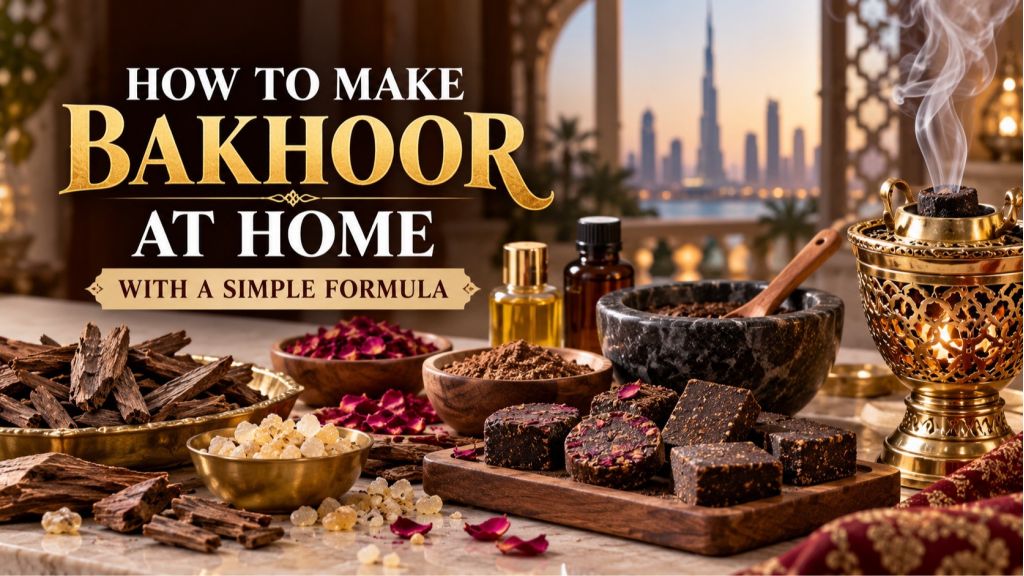
Making bakhoor at home is less complicated when you stop guessing and use a measured bakhoor making formula. Instead of mixing random oils into wood chips and hoping for a pleasant result, you can build the scent in layers: a burnable base, a fixative, perfume oil, a light binder and a little time for curing.
For many UAE homes, bakhoor is part of the atmosphere of a clean living room, a welcoming majlis or a festive evening with guests. If you want a ready-made scent to compare against your homemade batch, a premium Arabic incense such as Bukhoor Dhukhoon Kayan can help you understand the depth, sweetness and slow diffusion you are trying to create.
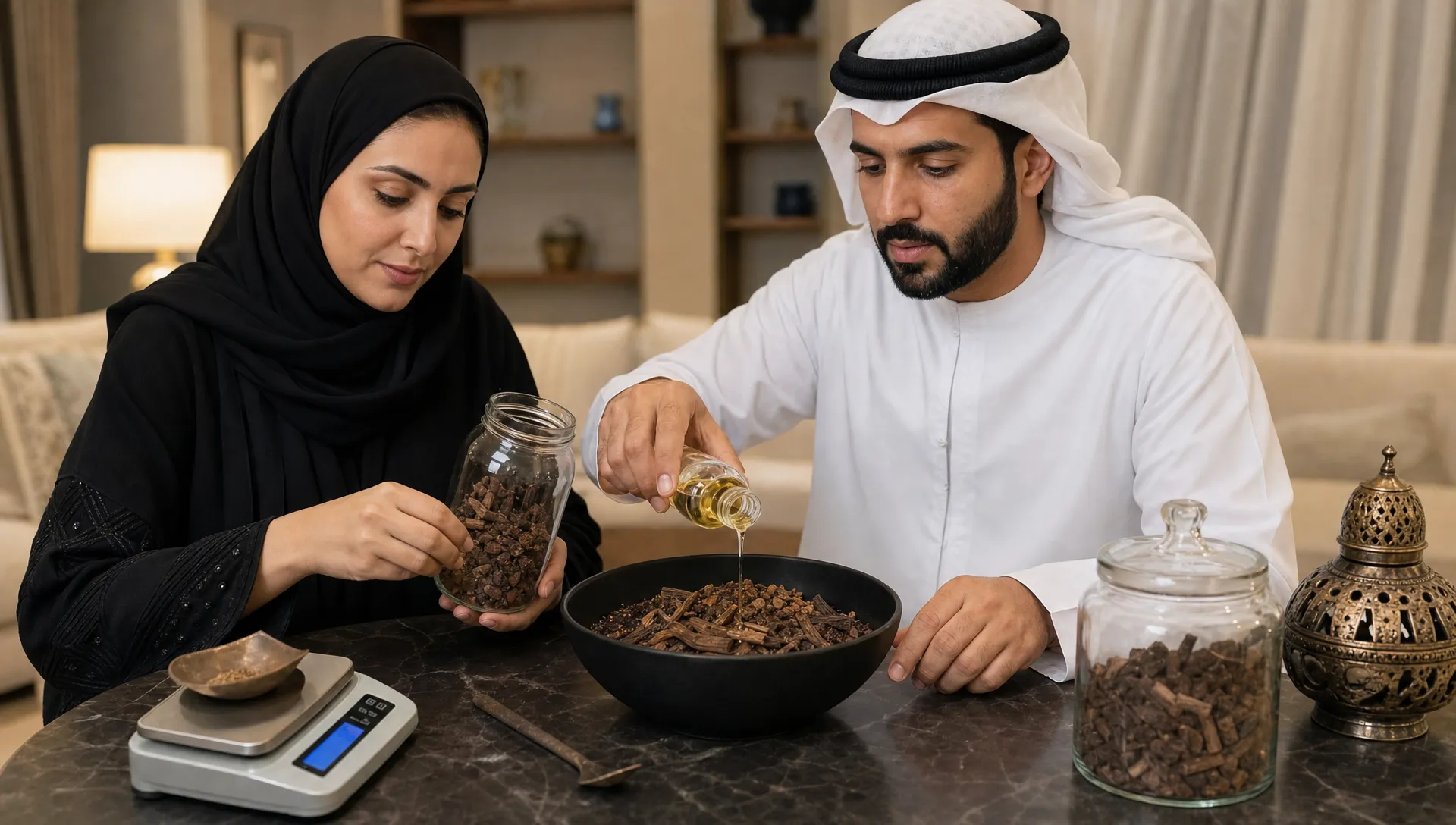 The bakhoor making formula for a 100 g batch
A simple formula is easier to repeat than a spoon-by-spoon recipe because ingredients vary in strength. Oud chips, sandalwood powder, benzoin and attar oils all absorb differently, so percentages give you more control.
| Ingredient group | Percentage | For 100 g | Role in the blend | Easy options |
|---|---|---|---|---|
| Wood base | 50% | 50 g | Carries the scent and burns slowly | Oud chips, agarwood chips, sandalwood powder or neutral incense wood |
| Resin or fixative | 15% | 15 g | Helps the scent last longer | Frankincense, benzoin, myrrh or labdanum resin |
| Perfume oil or attar | 25% | 25 g | Creates the main aroma | Oud oil, rose attar, amber oil, musk oil or blended incense oil |
| Binder | 5% | 5 g | Helps ingredients cling together | Honey, date syrup, glycerin or gum arabic solution |
| Accent powder | 5% | 5 g | Adds character and warmth | Fine sandalwood, dried rose, a tiny pinch of clove or cardamom |
This bakhoor making formula is flexible, but keep the structure close for your first batch. Too much oil can make the bakhoor wet and smoky, while too much resin can make it sharp on charcoal. Once you know how your burner performs, you can adjust the oil or resin by a few grams.
Choose ingredients that are safe to heat
Start with the right wood base
The base should be clean, dry and suitable for incense use. Coarse chips give a traditional look and burn slowly, while finer powder absorbs oil quickly and gives a more even mixture. If you use precious oud or agarwood, use it sparingly until you are confident with the recipe because strong woods can dominate the entire blend.
Avoid treated craft wood, painted chips, sawdust from furniture workshops and anything with glue or varnish. Bakhoor is heated directly, so the quality of the base affects both the scent and the smoke.
Use resins and fixatives with purpose
Frankincense gives a bright, temple-like freshness. Benzoin brings a soft vanilla warmth. Myrrh adds depth and a slightly bitter richness. The bakhoor-making formula works best when the fixative supports the perfume oil instead of competing with it.
If you are buying fragrance oils, choose suppliers that clearly state they are suitable for incense or heated fragrance use. The International Fragrance Association publishes standards that restrict or prohibit certain fragrance ingredients, so transparent labelling is a good sign when shopping for oils.
Do not confuse food powders with fragrance powders
Food flavour powders can smell pleasant in the kitchen, but they are not made to be heated on charcoal or an electric incense burner. Products such as vanilla flavouring powder and coffee flavour powder belong in drinks, desserts and food preparation, not in homemade incense.
The same rule applies to room sprays and alcohol-based perfumes. They may smell beautiful on fabric or skin, but they can burn harshly and unpredictably. Use attar, incense oil or fragrance oil intended for this type of application.
Step-by-step method for making bakhoor
Prepare the dry blend
Wear gloves and work in a well-ventilated area. Crush any large resin pieces into small granules, then mix the wood base, resin, and accent powder in a glass or ceramic bowl. The texture should look even, with no heavy clumps of resin sitting in one corner.
When you follow the bakhoor-making formula for the first time, weigh everything with a kitchen scale rather than measuring by spoon. Oils and resins vary in density, and a scale helps you repeat the blend if it turns out well.
Add the oil slowly
Warm the perfume oil gently by placing the closed bottle in a bowl of warm water for a few minutes. Do not heat oil directly on a flame. Add the oil to the dry blend in small amounts, mixing after each addition so the wood absorbs it evenly.
Next, add the binder. Honey and date syrup create a warmer, slightly sweet smoke, but they should be used lightly. Glycerin gives a cleaner, less caramel-like effect. The finished mixture should be moist and glossy, not runny.
Pack the mixture for curing
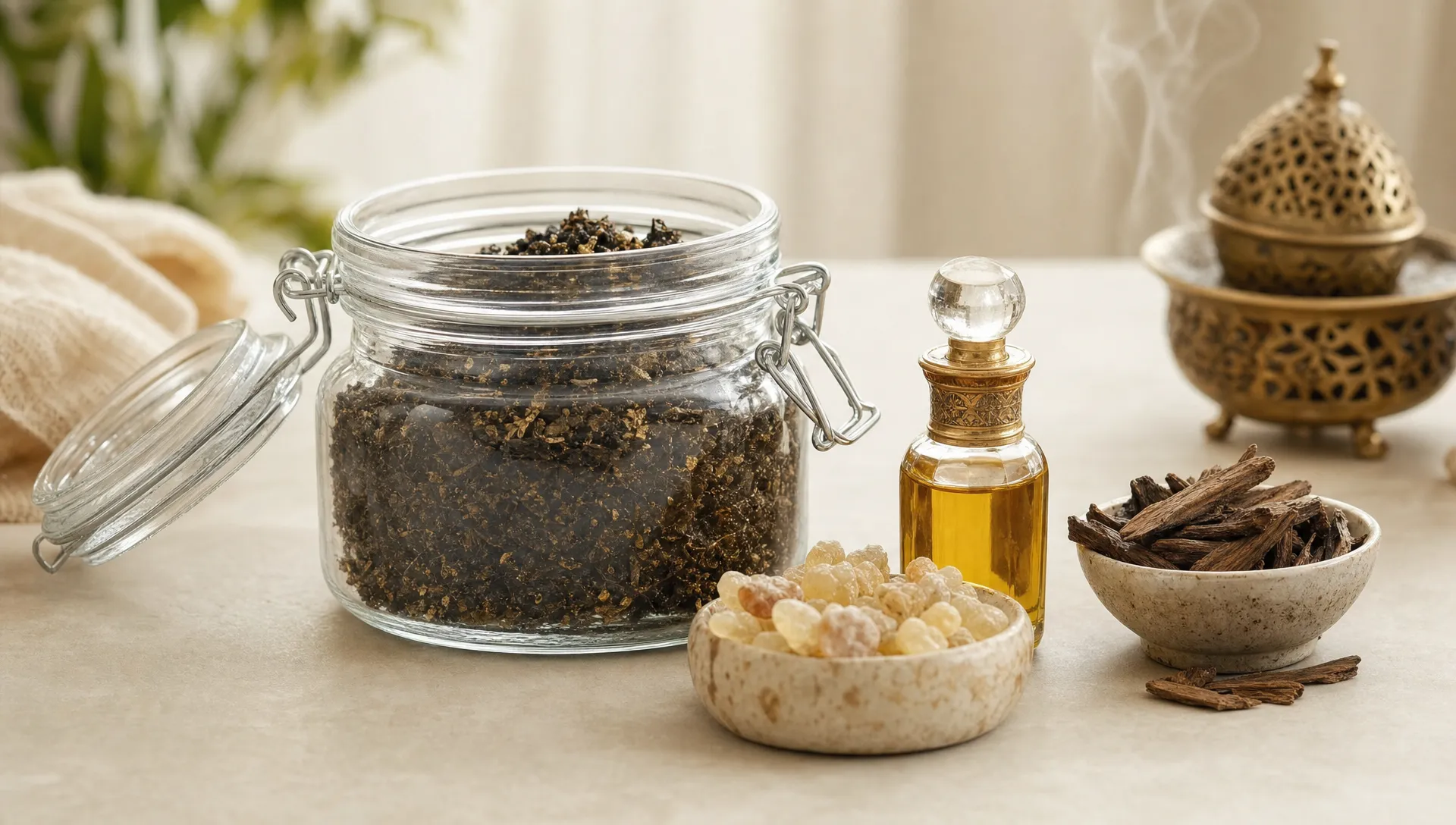
Transfer the mixture into a clean glass jar and press it down lightly. Close the lid and keep it in a cool, dark place. Open the jar every two or three days during the first week, stir the mixture and check the texture. If it looks wet, leave it uncovered for an hour before closing it again.
Cure, test, and adjust the aroma
The bakhoor-making formula needs curing because oil has to move into the wood and resin. You can test it after 48 hours, but one to three weeks usually gives a smoother scent. Some traditional makers cure bakhoor for longer, especially when using deep oud or amber profiles.
To test, place a tiny pinch on an electric burner at low heat or on charcoal covered with a thin mica plate. If the scent opens gently and lasts several minutes, the balance is good. If it burns fast, smells sour, or produces heavy smoke, adjust before making a larger batch.
| Problem | Likely cause | Simple fix |
|---|---|---|
| Harsh smoke | Too much resin, binder or direct charcoal heat | Use a smaller pinch, lower the heat or add more dry wood base |
| Weak scent | Too little perfume oil or short curing time | Cure longer or add oil in 1 g to 2 g increments |
| Sticky mixture | Too much binder or oil | Spread it on a tray for a few hours, then mix in dry base |
| Scent disappears quickly | Not enough fixative | Add a little benzoin, frankincense or myrrh |
| Burnt sugar smell | Too much honey or date syrup | Reduce binder in the next batch |
Customise the scent for UAE homes
You can adjust the bakhoor making formula once you understand the base version. For a classic Arabic profile, combine oud, amber, rose, and a touch of musk. For a fresher daytime scent, use more frankincense with a lighter floral oil. For a warm festive blend, try sandalwood, rose, saffron-style fragrance oil and a very small amount of clove.
Keep strong ingredients controlled. Clove, cinnamon and cardamom can become spicy and smoky when heated, so they should be accent notes rather than the main scent. If you are preparing bakhoor for guests, test it in the same room where you plan to use it because fragrance feels stronger in smaller apartments than in open villas.
Homemade bakhoor also makes a thoughtful gift for Eid, Diwali, housewarmings or family visits. Use a clean airtight jar, label the scent notes and mention the curing date. For a simple handmade finish, a tag sealed with a black sealing wax stick can make the jar feel more personal.
Safety notes before burning homemade bakhoor
If the bakhoor making formula smells good in the jar but harsh when heated, stop and adjust the batch instead of forcing it to burn. Incense should be enjoyable, not irritating. Use only a small pinch at first, ventilate the room and avoid burning bakhoor near curtains, paper, bedding or flammable décor.
The U.S. Environmental Protection Agency notes that indoor particles can come from combustion sources, including smoke, so good airflow matters when burning incense at home. People with asthma, smoke sensitivity, allergies, pregnancy concerns or small children at home should be extra cautious and keep sessions short.
Never leave charcoal unattended. If using an electric burner, place it on a heat-safe surface and follow the manufacturer's instructions. Keep oils, resins, and finished bakhoor away from children and pets.
Frequently Asked Questions
How long should homemade bakhoor cure? This bakhoor making formula can be tested after 48 hours, but one to three weeks is better for a smoother scent. Longer curing helps the oil settle into the wood and reduces sharpness.
Can I use normal perfume to make bakhoor? No. Alcohol-based perfume is not suitable for heating on charcoal or incense burners. Use attar, incense oil or fragrance oil that is intended for heated scent applications.
Why is my bakhoor too smoky? The mixture may contain too much binder, too much resin or too much oil. It may also be burning at too high a temperature. Add more dry wood base and test on lower heat.
Can I make bakhoor without oud? Yes. Oud gives a traditional luxury note, but you can start with sandalwood powder, neutral incense wood or another clean incense base. The scent will be different, but the method still works.
Is homemade bakhoor cheaper than buying ready-made bakhoor? It can be cheaper if you already have quality oils and resins, but premium ingredients can be expensive. The main benefit is control over the scent strength, sweetness and curing style.
Bring the fragrance tradition home
A measured recipe helps you enjoy homemade bakhoor with fewer failed batches and better control over the final scent. When you need everyday home essentials, traditional products, gift items or ready-made fragrances, you can explore the UAE online shopping marketplace at Sandhai.ae and keep your home prepared for daily routines and special occasions.

Comments