

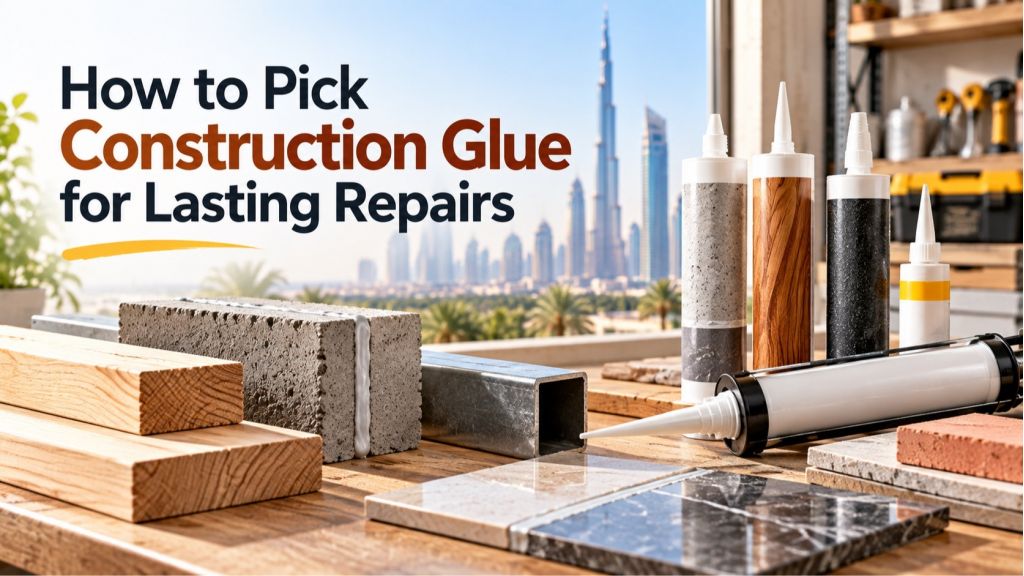
Construction glue can turn a loose skirting board, cracked tile edge or wobbly wall panel into a solid repair, but only if you choose the right formula for the job. The strongest tube on the shelf is not always the best one. A lasting bond depends on the surfaces, the weight the joint must hold, indoor or outdoor exposure, cure time and how well you prepare the area before applying it.
For online shoppers in the UAE, the choice can feel confusing because many adhesives use similar words such as heavy duty, instant grab, waterproof or multipurpose. This guide breaks those labels down into practical buying decisions so you can pick an adhesive that suits your repair, not just the boldest claim on the pack.
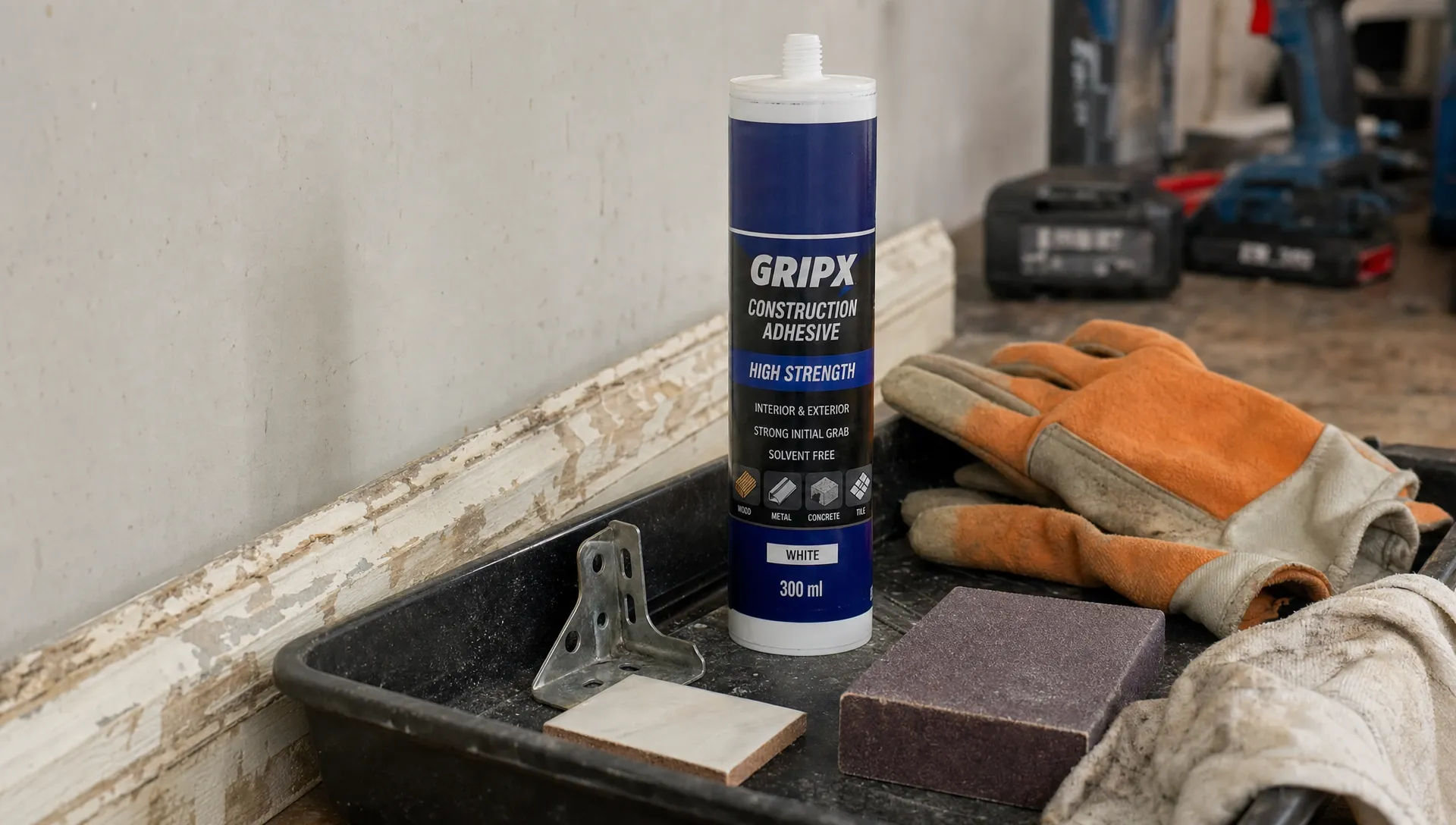 Start with the repair, not the strongest label
Before comparing brands or prices, define the repair in plain terms. Are you bonding wood trim to a wall, fixing a loose tile, attaching a metal bracket or filling a gap behind a panel? Each task places a different type of stress on the bond.
A wall panel needs good initial grab so it does not slide while curing. A loose tile edge may need moisture resistance. A metal to concrete repair may require a formula that bonds non-porous surfaces and stays flexible after curing. A simple decorative moulding indoors may not need the same adhesive as an outdoor repair exposed to heat, dust and cleaning water.
Also ask whether the adhesive is the main support or only part of the repair. For shelves, railings, ceiling fixtures or any safety-critical installation, do not rely on adhesive alone unless the manufacturer states that use clearly. Mechanical fasteners, proper anchors or professional installation may still be required.
How to match construction glue to the surface
The first real filter is material compatibility. Construction glue is a broad category, and formulas behave differently on porous, smooth, flexible or damp surfaces. If the label does not mention your material, do not assume it will work.
| Surface or material | What to look for | Common buying note |
|---|---|---|
| Wood, MDF and skirting | Strong grab, sandable or paintable finish | Check whether it works on painted surfaces |
| Concrete, brick and stone | Gap filling strength, moisture tolerance | Surface dust must be removed first |
| Ceramic tile | Water resistance, non-sag formula | Smooth backs may need extra prep |
| Metal | Compatibility with non-porous surfaces | Some products need roughening before use |
| Plastic or PVC | Plastic-safe adhesive | Avoid solvents that can melt sensitive plastics |
| Foam or insulation board | Foam-safe formula | Solvent adhesives can damage foam |
A good construction glue choice is usually listed for both surfaces you are joining. For example, bonding wood to concrete is different from bonding wood to wood. When two materials expand at different rates, such as metal and masonry, a slightly flexible cured bond can be more reliable than a brittle one.
If you are unsure, test a small hidden area first. This is especially useful on painted, laminated or plastic surfaces, where the glue may stick to the coating rather than the actual base material.
How UAE heat, humidity and dust affect repairs
Repairs in Dubai, Sharjah, Abu Dhabi and other parts of the UAE often face conditions that standard indoor labels do not fully explain. High summer heat, air-conditioned interiors, humidity near coastal areas and fine dust can all affect adhesion.
Heat can soften some adhesives during service or reduce working time during application. If you are repairing something outdoors, inside a garage or near a sunny window, check the product’s service temperature range. Humidity can help some polyurethane adhesives cure, but it can slow or weaken other formulas if the surface is wet rather than slightly damp.
Dust is another common reason repairs fail. Even a high quality construction glue cannot bond properly to powdery concrete, sandy grout or a greasy kitchen surface. Wipe, scrape, vacuum or lightly sand the area according to the surface type, then let it dry before applying adhesive.
For indoor repairs, ventilation matters too. Some adhesives contain solvents or release strong odours while curing. The US Environmental Protection Agency explains that volatile organic compounds can affect indoor air quality, so it is sensible to follow label ventilation instructions and keep children or pets away from freshly applied adhesive until it has cured.
Construction glue by repair type: quick buying guide
Use the repair type to narrow the choice further. This does not replace the product label, but it helps you avoid buying an adhesive that is strong in the wrong way.
| Repair type | Better adhesive traits | Avoid |
|---|---|---|
| Loose skirting, trims and mouldings | Instant grab, paintable, gap filling | Thin craft glue for wall bonding |
| Wall panels or decorative boards | High initial tack, non-sag, compatible with wall finish | Fast curing products if you need alignment time |
| Outdoor small repairs | Weather resistance, UV and heat tolerance | Interior-only adhesives |
| Tile edge or stone trim | Moisture resistance, strong hold on mineral surfaces | Flexible craft or school glue |
| Metal bracket to masonry | Non-porous surface compatibility, high strength | Adhesives not rated for metal |
| Small household item repair | Material-specific adhesive | Oversized construction formulas for delicate parts |
The right choice also depends on whether you need repositioning time. Some grab adhesives hold fast almost immediately, which is useful on vertical surfaces. Others give you more open time so you can align panels, trims or edging before the bond begins to set.
Read the label before you buy
The label is where marketing turns into practical information. With construction glue, focus on five details: compatible materials, open time, clamp or support time, full cure time and indoor or outdoor rating. A product that feels dry after one hour may still need 24 to 48 hours before it reaches full strength.
Open time is the window for placing and adjusting the parts. Clamp time is how long the pieces need pressure or support. Cure time is when the adhesive reaches its intended performance. If you remove tape, clamps or temporary supports too early, the joint may shift and create a weak spot.
Also look for terms such as waterproof, water resistant, paintable, sandable, low odour and solvent free. These terms are not interchangeable. Waterproof may matter in bathrooms or balconies. Paintable may matter for skirting boards. Low odour may matter in apartments where ventilation is limited.
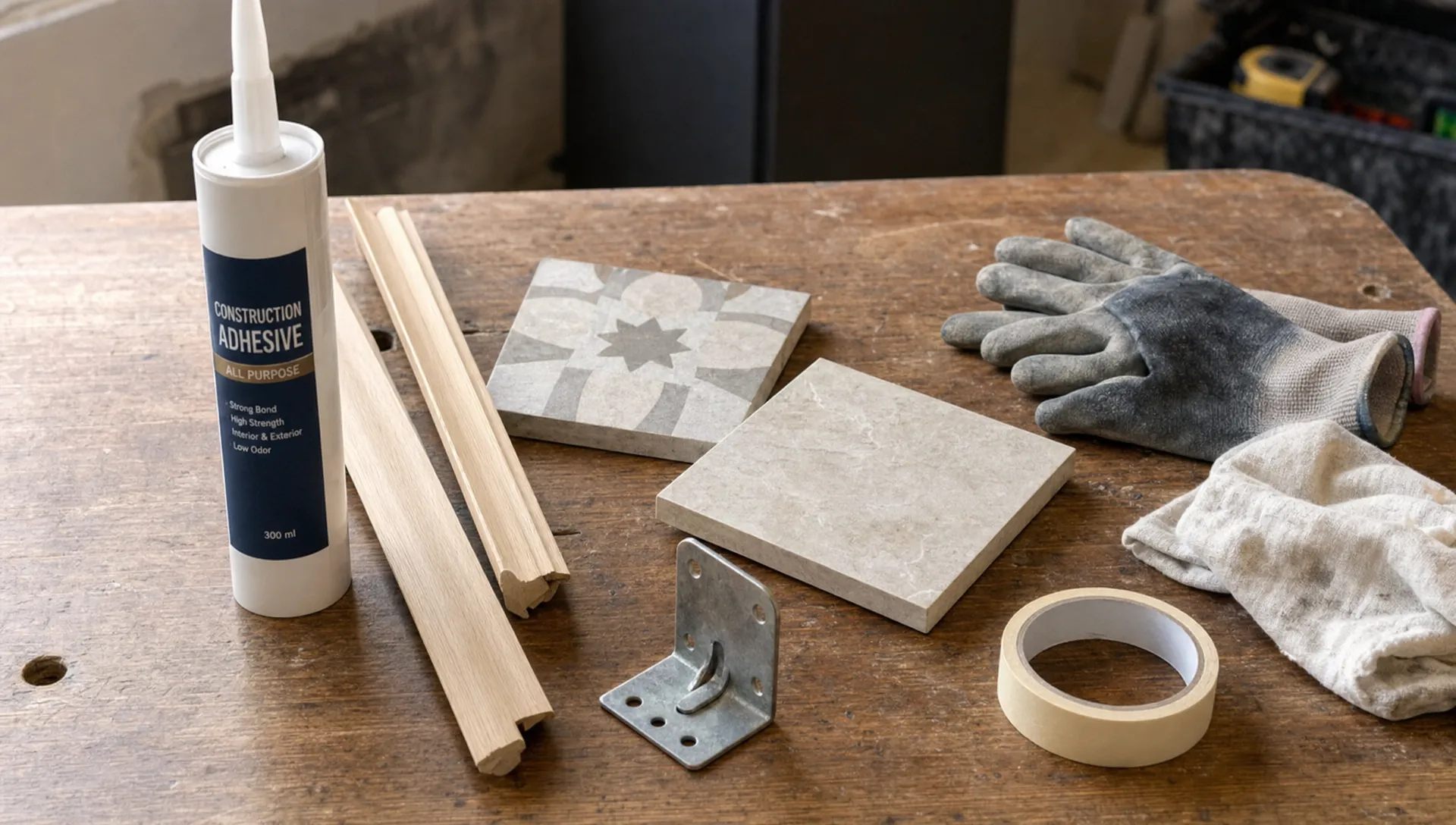
Surface prep: the step that decides the result
Good preparation often matters more than buying the most expensive adhesive. Start by removing loose paint, old glue, dust, oil and moisture. A clean surface gives the adhesive something solid to grip.
Before applying construction glue, dry fit the pieces. Check that the trim sits flat, the panel lines up and the gap is not too wide for the adhesive. Many construction adhesives can fill small gaps, but they are not meant to replace missing material in large voids.
Apply the adhesive in the pattern recommended on the pack. Lines, dots or zigzags are not just cosmetic choices, they affect spread, air exposure and bond coverage. Press the pieces firmly together and support them with clamps, tape or temporary bracing if needed. For vertical repairs, support is especially important because gravity can pull the joint out of alignment while it cures.
Avoid cleaning uncured adhesive with random solvents unless the label allows it. Some solvents can stain stone, damage plastic or strip paint. Keep a cloth ready and clean excess early using the recommended method.
When a specialist adhesive is the smarter choice
Not every sticky job needs a heavy construction adhesive. In fact, using the wrong strong adhesive can make a small repair messy, stiff or impossible to adjust later.
For school, office or lightweight paper tasks, a simple option such as the Funbo Glue Stick 40g is more practical than a cartridge adhesive. For porous craft, display or classroom projects, Giotto White PVA Glue 1Kg is a better fit than a heavy duty building formula.
Textile repairs need a flexible bond, which is why a product such as Fevicryl Fabric Glue 80ml makes more sense for fabric than a rigid construction product. Shoes also need a repair adhesive that can handle flexing, so Italo Shoe-Fix 17ml is better suited to soles and heels.
For temporary holding, sealing, bundling or emergency patching, Polar Bear Blue Duct Tape may help while you prepare a proper repair. Tape should not be treated as a permanent substitute for structural bonding, but it can be useful for quick support or short-term fixes.
Common mistakes that shorten adhesive life
Buying construction glue is only half the job. The repair can still fail if the adhesive is applied to a weak surface, exposed too soon or used outside its rated purpose.
One common mistake is bonding to paint that is already peeling. The adhesive may stick well to the paint, but the paint separates from the wall. Another is applying too much adhesive. A thick layer can slow curing, create squeeze-out and leave parts floating instead of seated firmly.
Shoppers also underestimate cure time. If the label says full cure takes 24 hours, do not load the repair after two hours just because it feels firm. For panels, trims and fixtures, keep supports in place for the recommended period. For outdoor repairs, avoid application during dusty wind, direct extreme heat or rain unless the label says the product can handle those conditions.
Storage matters too. Seal the nozzle tightly after use, keep the tube away from heat and check expiry dates. Old adhesive can thicken, separate or cure poorly even when it looks usable.
A simple checklist before checkout
Before placing your order, run through a quick checklist. It helps you avoid overbuying and reduces the chance of choosing an adhesive that does not match the repair.
- Confirm both materials are listed on the label.
- Check indoor, outdoor, heat and moisture suitability.
- Compare open time with the alignment time you need.
- Plan clamps, tape or supports before you start.
- Make sure you have cleaning cloths, gloves and surface prep tools ready.
If two products look similar, choose the one with clearer material compatibility and curing instructions. A precise label is often more useful than a louder strength claim.
Frequently Asked Questions
Can construction glue replace screws or nails? Sometimes it can support decorative trims, panels or lightweight fixtures, but it should not replace mechanical fasteners for safety-critical or load-bearing work unless the manufacturer specifically allows that use.
How long does construction adhesive take to cure? Many products grab within minutes or hours, but full cure often takes much longer. Always follow the cure time on the label before loading, sanding, painting or exposing the repair to water.
Can I use it on damp concrete? Some adhesives tolerate slightly damp mineral surfaces, but wet, dusty or powdery concrete usually causes weak bonding. Check the product label and clean the surface thoroughly before use.
What is the best adhesive for outdoor repairs in the UAE? Look for outdoor-rated adhesive with heat, moisture and weather resistance. For sun-exposed or high temperature areas, confirm the service temperature range before buying.
Why did my repair fail even though I used a strong glue? The usual causes are dirty surfaces, loose paint, early loading, wrong material compatibility, too much adhesive or not enough support during curing.
Shop repair supplies with more confidence
Choosing the right adhesive is easier when you think in terms of surface, setting time and real use conditions. Browse repair essentials, tapes and specialist glues on Sandhai to compare practical options for home, office and everyday fixes across the UAE. A few minutes of checking the label before checkout can save hours of rework later.

Comments