

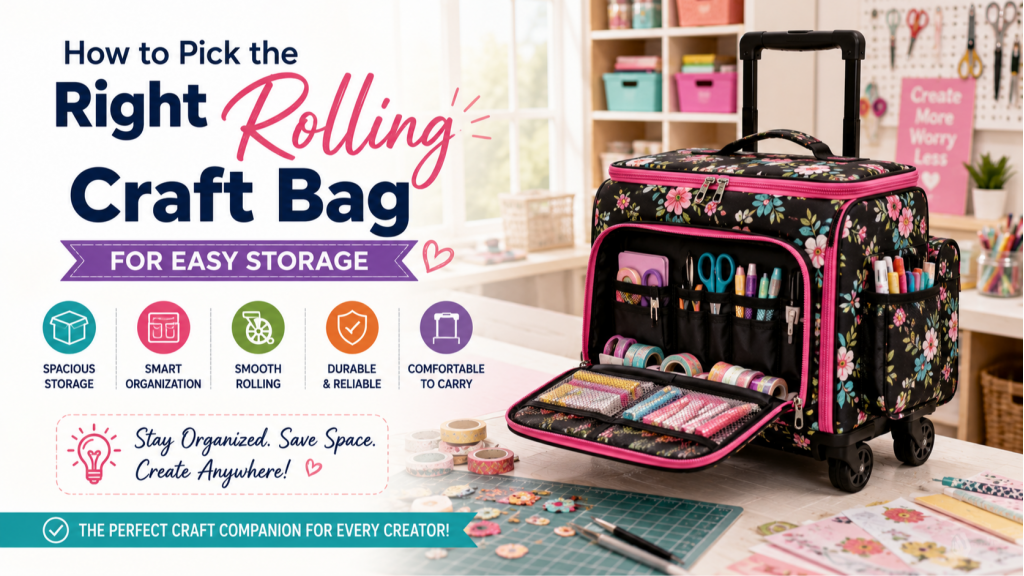
A rolling craft bag can turn a messy pile of paints, papers, tools, threads, stickers, and school project supplies into one portable, easy-to-store system. Instead of carrying several pouches from room to room, you can keep your essentials organized, roll them to the dining table, pack them away after use, and protect delicate materials from bending or spilling.
But the right choice depends on more than just color or size. A bag that works beautifully for sewing may be frustrating for scrapbooking. A compact trolley-style bag may be perfect for kids' craft kits, while a larger wheeled organizer may suit home crafters who need to store paper, cutting mats, glue guns, yarn, or festival decoration supplies.
Here is how to pick the right rolling craft bag for easy storage, especially if you shop online in the UAE and want a practical option that fits your home, your hobbies, and your routine.
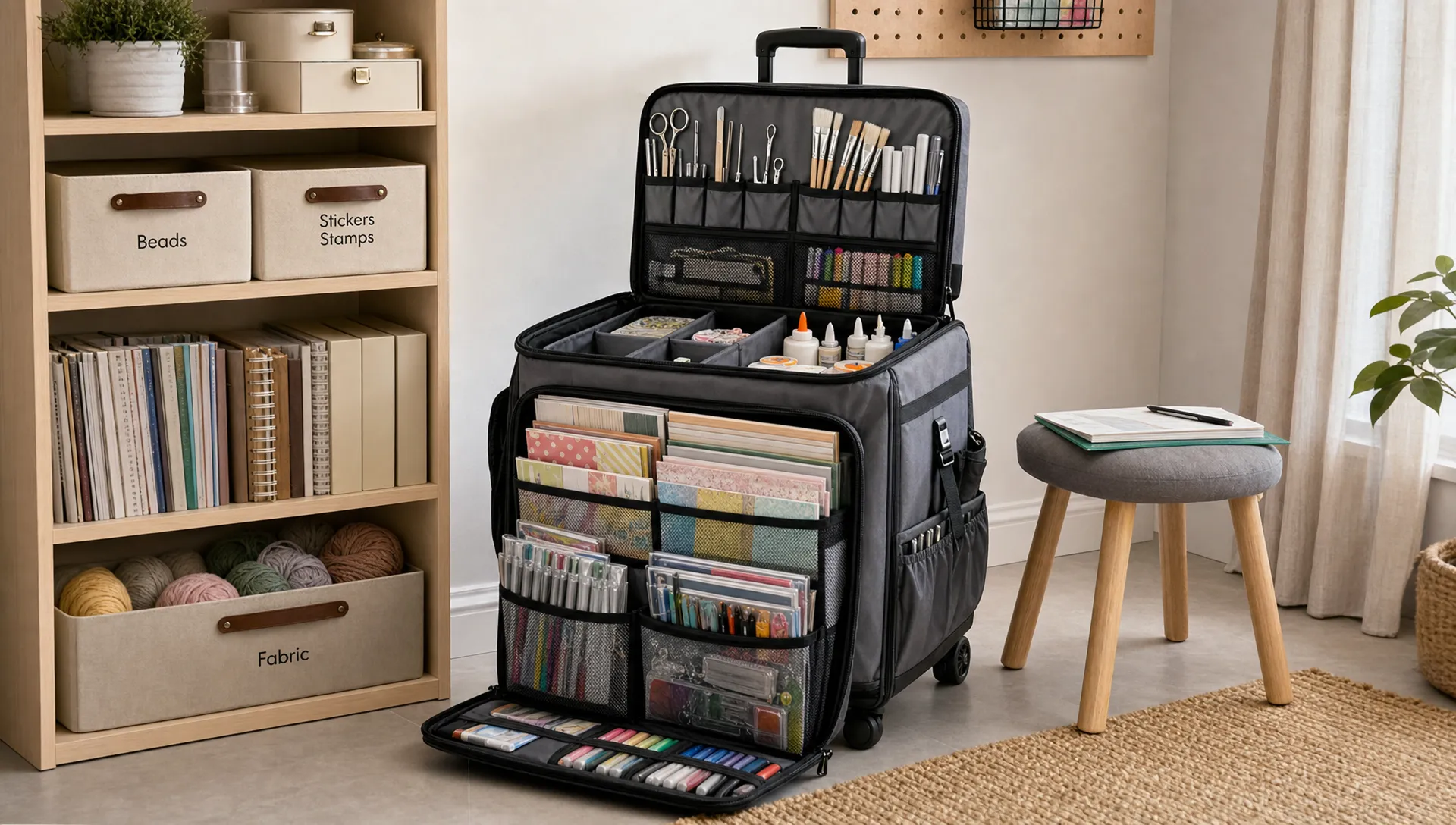
Start with what you actually need to store
Before comparing designs, empty your current craft drawer, box, or shelf and group your supplies by shape. This step prevents you from buying a beautiful bag that cannot fit your largest or most awkward items.
Most craft supplies fall into four storage groups:
- Flat items such as paper pads, cutting mats, stickers, card sheets, felt sheets, and stencils.
- Small loose items such as beads, clips, buttons, needles, sequins, paintbrushes, erasers, and tape rolls.
- Tall or tube-shaped items such as glue bottles, markers, yarn skeins, rulers, and rolled vinyl.
- Fragile or spillable items such as paints, ink pads, craft knives, glass jars, and delicate embellishments.
If your craft collection includes many small tools, use internal pouches inside the rolling bag. For example, a compact organizer such as the Nohoo Pencil Bag - Blue can help keep pens, brushes, scissors, or crochet hooks separate from bigger items. For kids' art corners, a character pouch like the Toy Story pencil case can make it easier for children to identify their own supplies.
Match the bag style to your craft routine
A rolling craft bag should support how you create, not force you into a storage system that looks neat but slows you down. Think about when and where you use your materials. Do you craft at home only, attend workshops, move supplies between rooms, or pack items for school projects and family activities?
| Craft routine | Best bag features to prioritize | Why it matters |
|---|---|---|
| Sewing or embroidery | Deep compartments, thread storage, strong zippers | Keeps fabric, hoops, needles, and thread together |
| Paper crafts or scrapbooking | Wide flat sections, reinforced sides, document-style pockets | Prevents paper from bending or corners from crushing |
| Painting or mixed media | Wipe-clean lining, upright bottle storage, stable base | Reduces mess from paint, glue, and liquids |
| Kids' crafts | Lightweight body, simple pockets, easy zipper pulls | Helps children pack and unpack independently |
| Classes or workshops | Smooth wheels, telescopic handle, compact footprint | Makes travel easier without carrying heavy supplies |
If you are creating a portable craft kit for a child, it may help to compare with school trolley formats. A bag such as the Cars Trolley Bag 16Inch shows the kind of wheelable size that can work for books, stationery, and light project items, while a smaller option like the Cars Trolley Bag 14Inch gives a useful reference point for compact storage.
Choose the right size, not just the biggest size
It is tempting to buy the largest rolling craft bag available, but bigger is not always better. A large bag can become too heavy, difficult to store, or awkward to open in smaller UAE apartments. The goal is to choose a size that fits your supplies and your storage space.
Measure three things before buying:
- Your largest flat item, such as a cutting mat, drawing pad, or scrapbook paper pack.
- The height of your tallest bottle, ruler, tool, or yarn storage container.
- The space where the bag will live, such as under a desk, inside a wardrobe, near a craft table, or in a utility corner.
A good rolling craft bag should be roomy enough that supplies do not need to be forced inside. At the same time, it should still roll easily when full. If you plan to use it in elevators, corridors, car boots, or shared family spaces, look for a compact rectangular shape rather than a bulky round or soft-sided bag that collapses.
Look closely at compartments and access
The easiest craft bag to store is usually the easiest one to unpack. Compartments make a huge difference because they stop everything from sliding into one messy pile.
For daily craft use, look for a mix of pocket types. Clear pockets help you identify items quickly. Zippered sections protect sharp tools and small materials. Elastic loops keep pens, brushes, and crochet hooks upright. Removable dividers give you flexibility when your hobby changes or your project grows.
If your craft supplies include lots of loose paper pieces, tags, labels, or gift-making materials, pre-sorting them before placing them in the rolling bag can save time. A simple set such as the 12-Piece Paper Bag Set can be useful for separating project batches, party craft materials, or small handmade gift components before they go into the main storage bag.
Check the wheels, handle, and base quality
The main advantage of a rolling craft bag is that you can move supplies without lifting a heavy load. That benefit disappears if the wheels jam, the handle feels weak, or the base tips over when the bag is full.
When shopping online, inspect product photos and descriptions carefully. Look for wheels that appear wide and stable, a base that can stand upright, and a handle that extends comfortably. If the bag is meant for frequent movement, spinner-style wheels or strong inline wheels are usually easier than tiny plastic wheels.
| Feature | What to look for | What to avoid |
|---|---|---|
| Wheels | Smooth rolling, sturdy placement, good ground clearance | Very small wheels that may catch on floor gaps |
| Handle | Telescopic, comfortable grip, secure locking levels | Thin handles that wobble when extended |
| Base | Reinforced bottom, upright stability | Soft bases that sag when loaded |
| Zippers | Large pulls, smooth movement, strong seams | Tiny zippers on overloaded compartments |
| Fabric | Durable, wipeable, easy to clean | Thin fabric that stains or tears easily |
For UAE homes, wipe-clean materials are especially practical because craft bags may sit near balconies, tiled floors, school bags, or household storage areas. If you use glue, paint, glitter, or ink, prioritize surfaces that can be cleaned with a damp cloth.
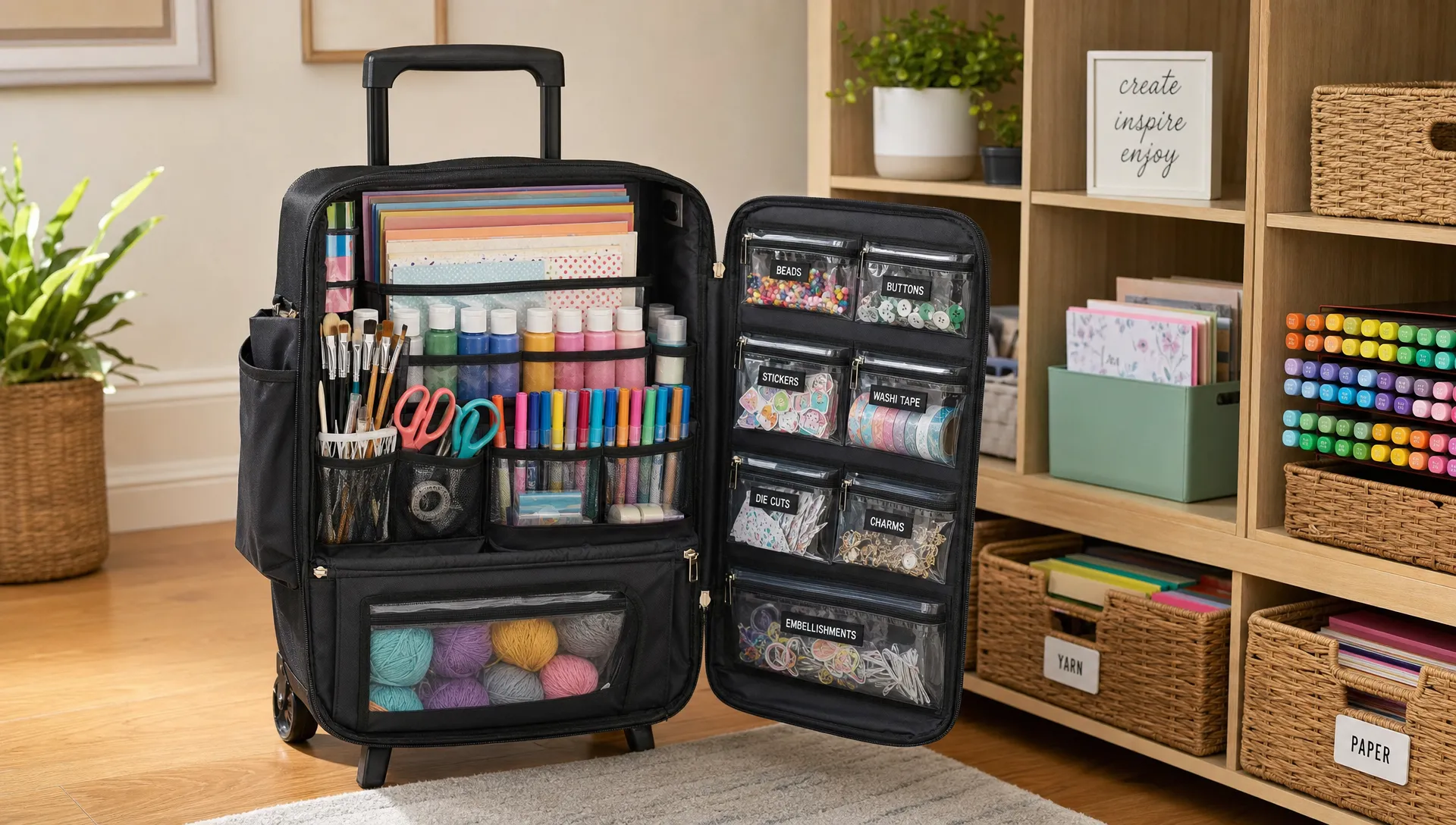
Think about home storage before you buy
A rolling craft bag is not only for travel. For many people, its biggest value is keeping supplies together at home. That means the bag should fit naturally into your living space when it is not in use.
Ask yourself where the bag will be stored after each project. If it will go under a table, check the full height including wheels and handle. If it will sit inside a wardrobe, check depth and width. If it will stay in a craft corner, choose a style that can stand upright without spilling.
For larger craft collections, one rolling bag may not be enough. Use the rolling craft bag for active projects and keep backup materials in a fixed storage unit. A piece such as the Recycle Drawer chest is a better fit for stationary home organization, especially for overflow paper, fabric, décor items, or seasonal supplies that do not need to travel around the house.
Pack it so your most-used items are easiest to reach
A well-chosen bag can still become messy if everything is packed randomly. Once your rolling craft bag arrives, organize it by frequency of use. Daily tools should be visible and reachable. Occasional items can go deeper in the bag.
A practical packing order looks like this:
- Top or front pockets: scissors, measuring tape, pencils, markers, glue stick, ruler, and current project notes.
- Middle compartments: paints, yarn, thread, stickers, paper packs, washi tape, and small boxes.
- Bottom section: heavier items such as tools, large bottles, cutting mats, and backup supplies.
- Side pockets: water bottle, apron, wipes, mini trash bags, or items you need during workshops.
Place heavy items near the wheels and base. This improves balance and helps the bag stand upright. Keep liquids in sealed pouches or upright sections. Store sharp tools in cases, not loose pockets.
Do not overlook cleaning and maintenance
Crafting can be messy, so your rolling craft bag should be easy to maintain. Check whether the lining is wipeable, whether crumbs and glitter can be shaken out, and whether external fabric can handle regular use.
Simple habits will extend the life of your bag. Empty scraps after each project. Wipe paint or glue before it dries. Keep liquids sealed in small pouches. Avoid overloading the handle with extra hanging bags, because that can strain the trolley mechanism.
If your bag has removable inserts, take them out occasionally and reorganize them. Craft supplies tend to grow over time, especially after school projects, festival decorations, birthday activities, or DIY gifting sessions.
Common mistakes to avoid
The wrong rolling craft bag usually fails for one of three reasons: it is too small, too flexible, or too complicated. A bag that cannot hold your largest supplies will quickly become frustrating. A bag with no structure may sag and crush paper. A bag with too many tiny pockets may make it hard to find what you need.
Avoid buying based only on appearance. A pretty design matters, but storage performance matters more. Check dimensions, pocket layout, wheel quality, and material before placing your order.
Also avoid mixing every craft category in one bag unless you truly use them together. If you sew, paint, scrapbook, and make festival décor, consider keeping one rolling craft bag for active projects and separate home storage for the rest. This keeps the bag light and useful rather than turning it into a rolling cupboard.
Quick buying checklist
Before you choose a rolling craft bag, confirm these points:
- It fits your largest flat and tall items.
- It has enough compartments for small tools and delicate materials.
- The wheels and handle look strong enough for the loaded weight.
- The fabric or lining is easy to clean.
- The bag fits your storage space at home.
- It can stand upright without tipping.
- It suits your main craft type, not just occasional hobbies.
This checklist is especially helpful when shopping online, where you cannot test the bag in person. Compare images, dimensions, and product details carefully, then choose the option that matches your actual routine.
Frequently Asked Questions
What is a rolling craft bag used for? A rolling craft bag is used to store and move craft supplies such as paper, fabric, paints, yarn, tools, stationery, and project materials. It is useful for home organization, craft classes, school projects, workshops, and anyone who wants portable storage without carrying heavy boxes.
How big should a rolling craft bag be? The right size depends on your largest supplies and your storage space. Measure items such as paper pads, cutting mats, rulers, bottles, and yarn before buying. Choose a bag that fits these items comfortably while still being easy to roll and store.
Can I use a normal trolley bag as a craft bag? Yes, a normal trolley bag can work for basic supplies, especially for kids' crafts or school projects. However, a dedicated rolling craft bag is usually better for organizing small tools, protecting paper, and keeping paints or delicate materials separated.
What should I store in the top pockets? Keep your most-used tools in the top or front pockets, such as scissors, pens, glue sticks, measuring tape, brushes, and current project notes. This helps you start crafting quickly without unpacking the whole bag.
Is a rolling craft bag better than a storage drawer? A rolling craft bag is better for portability and active projects. A storage drawer is better for larger collections that stay at home. Many crafters use both: a rolling bag for current supplies and a drawer unit for backup materials.
Shop smarter for craft storage in the UAE
The right rolling craft bag makes crafting easier, cleaner, and more enjoyable. Focus on size, compartments, wheels, handle strength, and home storage fit before choosing. If you also need pouches, paper bags, trolley-style bags, stationery, or home organization products, explore Sandhai's online shopping marketplace for convenient delivery, trusted product options, and everyday essentials across the UAE.

Comments