


A framed canvas painting is worth paying more for when the artwork, materials, and framing justify the difference. A higher price alone does not prove better quality, though. Two pieces that look similar online may differ in how they were made, how securely they are built, and what arrives at your door.
For UAE shoppers, the useful comparison is the total cost of a piece you can display with confidence. Here is how to separate worthwhile craftsmanship from details that merely sound expensive.
 First, establish what the seller is offering
Before comparing prices, identify whether you are buying an original painting, a reproduction printed on canvas or an embellished print with paint added over it. Each can be a good decorative purchase, but they are not equivalent products.
An original involves an artist creating that individual work. A reproduction makes an existing image available to more buyers. Added texture does not automatically turn a printed reproduction into an entirely hand-painted original.
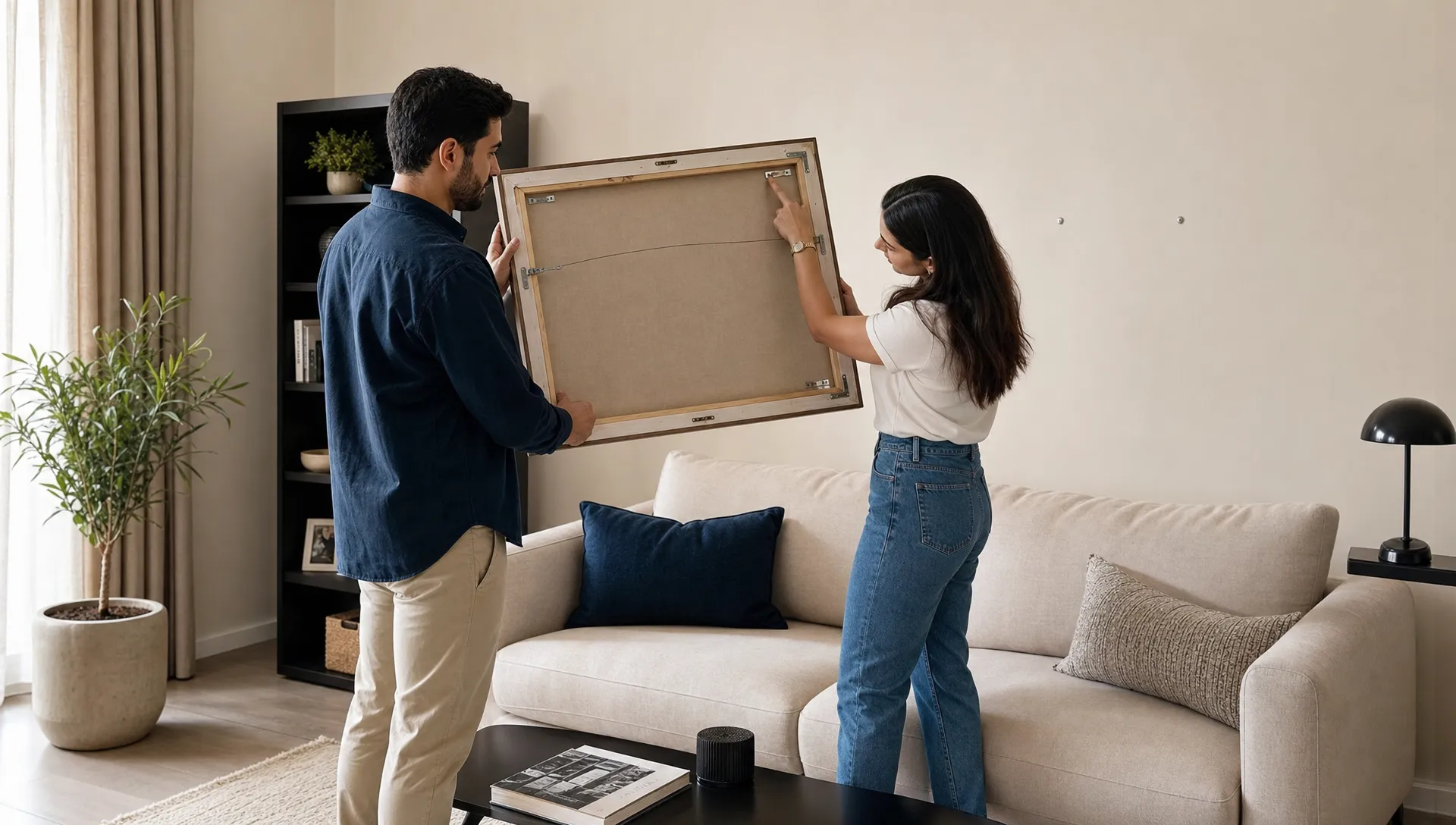
Also distinguish the stretcher frame from the decorative outer frame. The stretcher supports the fabric from behind. The outer frame surrounds the artwork and may not be included when a listing simply says "stretched canvas”.
For example, when considering the Modern Art Lady Canvas Wall Art 70 × 100 cm, check the listing’s description of the artwork format and what is included rather than relying on the room photograph alone.
What makes a framed canvas painting worth paying for?
The strongest reasons to pay more are visible construction quality, clearly described materials and artwork you genuinely want to live with. Premium-sounding labels need supporting details.
A well-prepared canvas and stable support
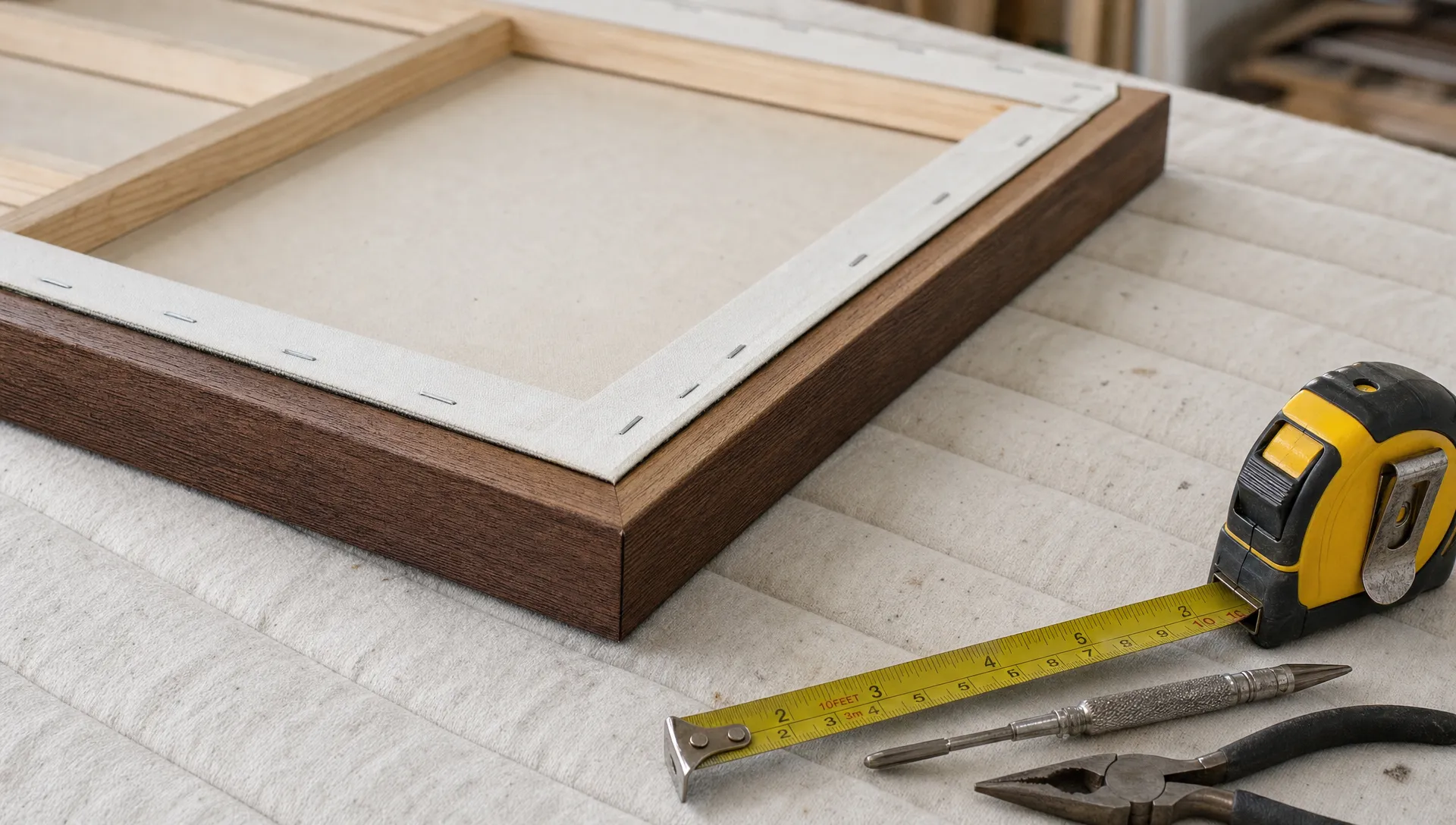
Canvas should sit evenly on its support without obvious sagging, ripples or distorted corners. Viewed from the side, the stretcher should appear straight rather than twisted. Larger formats need sufficient structural support to remain stable.
Cotton and linen are both established painting surfaces. Linen often costs more, but the fibre name alone does not establish the quality of a finished work. Surface preparation, fabric condition and construction matter too.
For reproductions, ask about the printing process and any stated lightfastness information. "High resolution” describes only part of the result; it does not establish resistance to fading.
An outer frame that is properly fitted
Look for neatly joined corners, an even finish and secure attachment between the canvas and outer frame. With a floating frame, the visible gap around the artwork should look deliberate and reasonably consistent.
Solid wood is not automatically superior in every situation. A well-made engineered-wood frame may suit a modest decorative piece, while poorly dried solid timber can cause problems. Pay for an appropriate material and sound construction, not simply the word "wood”.
Compare the complete price, not the headline amount
A framed canvas painting should be compared with alternatives that include the same components. A rolled canvas, a stretched canvas and a finished framed piece can carry very different prices because they require different amounts of work before display.
Use this breakdown when two listings appear difficult to compare:
| Cost component | What can justify a higher price | What to verify |
|---|---|---|
| Artwork | Original creative work, documented authorship or a clearly specified edition | Whether it is original, reproduced or embellished |
| Canvas and support | Suitable fabric, careful preparation and stable construction | Dimensions, depth, tension and support details |
| Decorative frame | Good joinery, appropriate materials and careful fitting | Whether the outer frame is actually included |
| Finishing | Neat edges and an appropriate protective finish where applicable | What finish is used and how it should be maintained |
| Display preparation | Suitable hanging fittings and professional assembly | Which fittings are supplied and what your wall requires |
| Delivery | Protective packaging and handling appropriate to the size | Delivery charges, damage procedures and return conditions |
Compare like with like before deciding which option is cheaper. If one purchase still needs stretching, framing and transport to a workshop, include those costs in your comparison.
There is no universal fair price per square centimetre. Size matters, but artistic authorship, frame construction and finishing can outweigh it.
Choose dimensions that earn their place on the wall
A framed canvas painting offers poor value if its proportions do not work in the room, even when the materials are excellent. Measure the intended wall and nearby furniture before choosing a size.
Mark the proposed outer dimensions with removable tape where appropriate for your wall finish. Then view the outline from the doorway and your normal seating position. This is more reliable than judging scale from a styled product photograph.
Remember that canvas dimensions and finished frame dimensions are not necessarily the same. The outer frame adds width, and a floating gap can increase the total further.
If you are commissioning or creating a large piece, products such as the Custom Size Canvas 120 x 120 cm provide a size reference for a square composition. The Back Stapled Stretched Canvases Custom Size Canvas 140 x 180 cm is a different proposition for a much larger rectangular project.
These canvas listings should not be treated as finished, decoratively framed artworks. Confirm surface preparation, stretcher depth and framing requirements before planning the complete project. For large pieces, also check doorways, lifts and the route to the intended room.
Inspect the details that product photographs can hide
Before paying a premium for a framed canvas painting, ask for images that show more than its best front-facing angle. A photograph of the back can reveal the support, attachment method and hanging arrangement. Corner and side views help you assess the finish.
A practical pre-purchase check covers five points:
- Artwork description: The seller clearly identifies the production method rather than using "painting” as a catch-all label.
- Edges and corners: Frame joints look neat, with no obvious splitting, open gaps or damaged finishes.
- Canvas condition: There are no visible dents, loose areas, abrasions or unintended distortions.
- Assembly: The canvas sits securely within the outer frame without obvious twisting or uneven positioning.
- Purchase protection: Delivery costs, damage-reporting steps and applicable return conditions are clear before checkout.
Texture needs context. Raised brushwork may be intentional, while cracking, flaking or an accidental crease is a condition issue. If a close-up is ambiguous, ask for clarification rather than assuming it is part of the artistic effect.
A signature can help identify the maker, but it is not independent proof of authenticity. If originality contributes substantially to the price, request information about the artist and the work’s provenance.
Consider how the piece will cope in your UAE home
A work that suits its intended location is a better purchase than one that needs conditions you cannot provide. In a UAE home, pay attention to direct sunlight, moisture and abrupt changes in the surrounding environment.
Avoid positioning artwork where strong sun falls on it for long periods. Keep it away from cooking splashes, damp walls and direct air-conditioning airflow. A sheltered indoor wall is generally a more practical choice than a balcony or an area exposed to condensation.
Ask for care instructions appropriate to the actual surface. Do not assume that a printed canvas, an acrylic painting and an oil painting can all be cleaned in the same way. Household cleaners and wet wiping can damage artwork or its finish.
Glass is not automatically required for every canvas work. Where glazing is appropriate, it should be fitted so it does not press against the painted surface. Its absence alone does not mean a frame is incomplete or poor quality.
Finally, check that the hanging method suits both the piece’s weight and your wall construction. The right fixing for masonry may not be suitable for a plasterboard partition.
Is buying canvas and arranging the framing better value?
Creating or commissioning a framed canvas painting can give you more control over its size, colours and final presentation. It is not automatically the cheaper route once you include materials, labour and the outer frame.
For a DIY project, budget for the canvas, paints, suitable tools, any finishing materials and framing. For a commission, agree on the subject, dimensions, production method and what the quoted price includes. Clarify whether changes, delivery and framing are separate charges.
A smaller trial can help before committing to a large surface. A Maxi Canvas in the 20 × 30 cm size gives you a manageable format for testing a composition or colour palette before scaling up.
Back-stapled canvas can leave the sides unobstructed by staples, which may suit some presentation choices. It does not, by itself, establish the quality of the fabric, preparation or support.
Choose the DIY route because you value making something personal. Choose ready-made art when you prefer to see the finished image and assess the complete purchase before committing.
Frequently asked questions
Can you add a decorative frame to an existing stretched canvas? Yes. A framer can usually fit an outer frame around a stretched canvas, subject to its dimensions, depth and condition. A rolled canvas generally needs stretching or another suitable mounting approach first. Get a quote for the complete job rather than the frame moulding alone.
Which wood is best for a canvas frame? There is no single best wood for every application. Stretcher bars need stable, properly dried timber and an appropriate profile. Decorative frames can use woods such as pine, oak or ash, but construction, weight and finish matter alongside the species.
Does a higher price mean better art? No. A higher price may reflect authorship, size, materials, specialist framing or branding. Ask which of those factors you are paying for. Personal enjoyment and visual suitability are valid reasons to buy, but they are different from documented collectible value.
What is the 70/30 rule in painting? It is a loose composition guideline in which one element dominates roughly 70% of the work and a contrasting element occupies the rest. Artists may apply it to colour, value or visual balance. It is not a quality standard or a formula for pricing artwork.
Buy the details you can verify
The best-value framed canvas painting is one whose artwork, construction, dimensions and complete cost match your needs. Pay more when the difference is identifiable and useful to you, not because a listing uses words such as "luxury” or "premium”.
When exploring art and home décor on Sandhai, start with the format and size you need, then check what each listing includes. A few specific questions before checkout can prevent the expense of buying a piece that still needs unexpected work.

Comments