

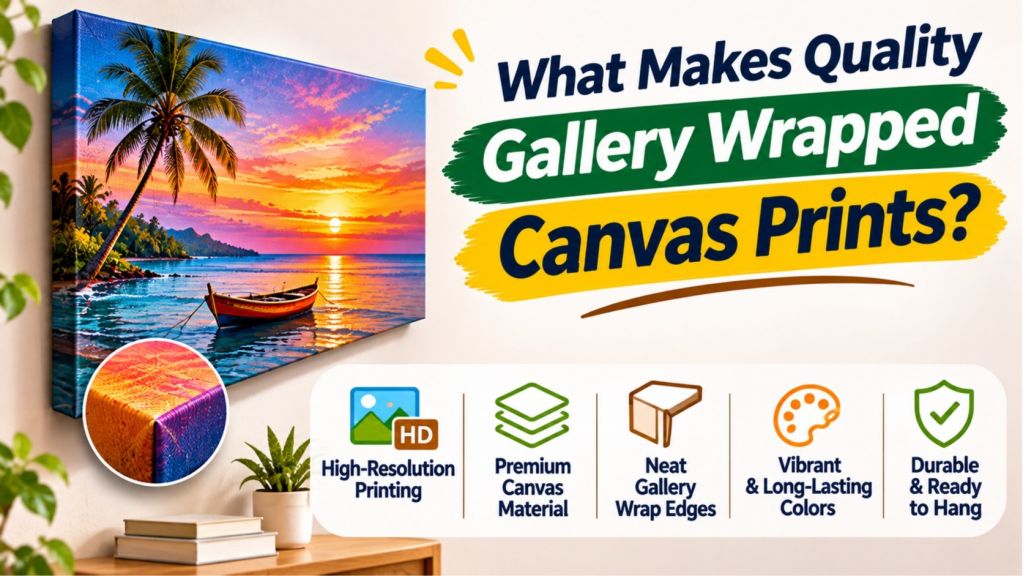
Quality gallery-wrapped canvas prints need more than a sharp picture. The canvas should sit evenly on a sturdy frame, the corners should look tidy and the image should remain convincing when viewed close up. For UAE shoppers comparing online listings, the challenge is separating useful specifications from vague descriptions such as "premium” or "gallery quality”. This guide explains what to inspect, which questions to ask and how to avoid ordering a print that looks better in a product photograph than on your wall.
 What does gallery wrapping actually mean?
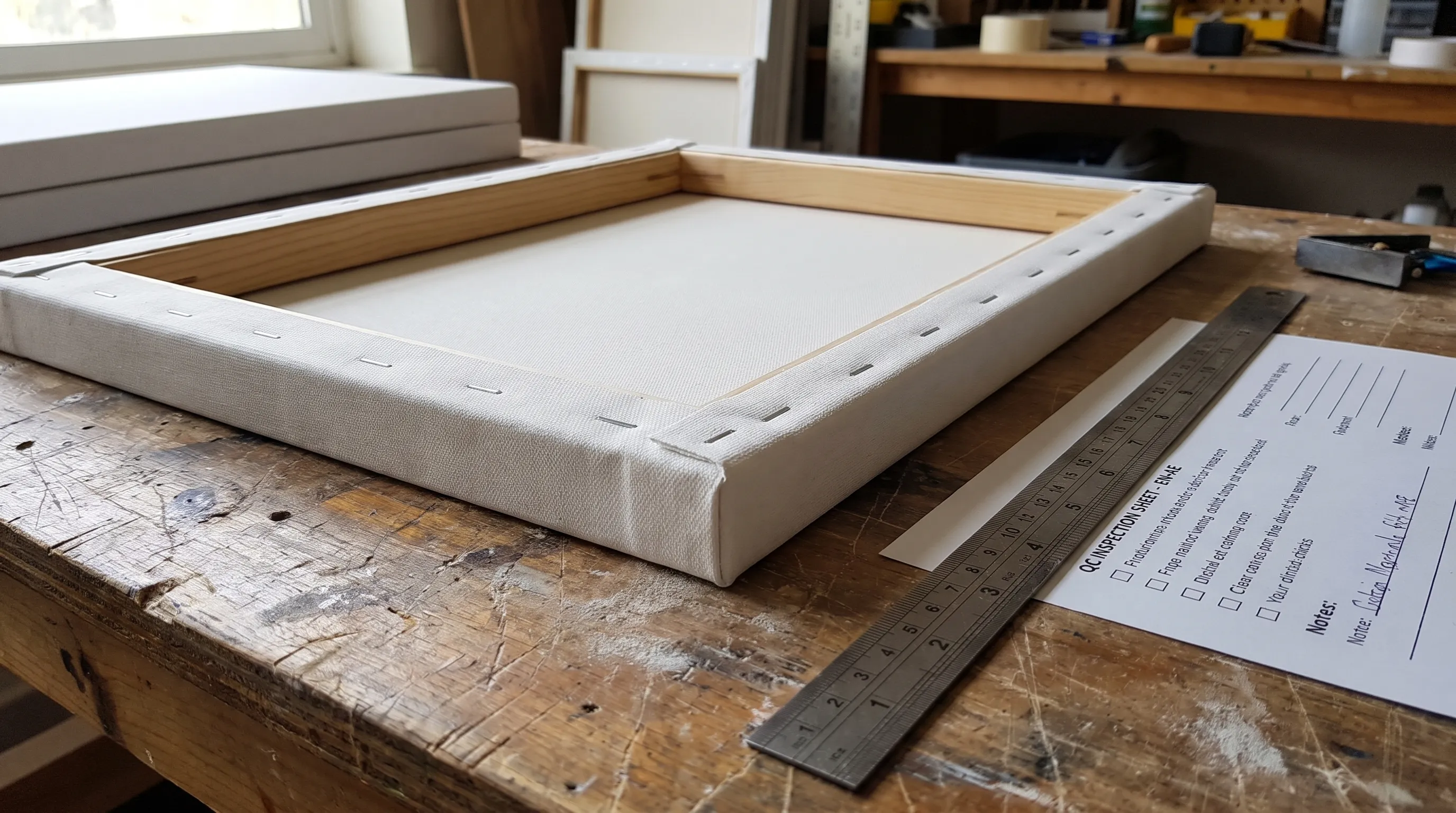
A gallery wrap is a finishing method in which canvas stretches around the sides of a wooden support frame and is secured at the back. This leaves the visible edges free of staples, allowing the piece to be displayed without an outer decorative frame.
The image may continue around the sides, but that is not essential to the construction. Mirrored edges and solid-colour sides are also common options.
Canvas describes the material; gallery wrap describes how it is stretched and finished. A rolled canvas print, a blank stretched canvas and a finished gallery-wrapped photograph are different products. Likewise, back stapling alone does not establish print quality or tell you whether an image is included. Check exactly what the listing supplies before comparing prices.
What sets quality gallery wrapped canvas prints apart?
The strongest buying decisions come from checking the fabric, support frame and printed surface separately. An impressive specification in one area cannot compensate for poor workmanship elsewhere.
Canvas weight, weave and surface preparation
Canvas weight is usually expressed in GSM, meaning grams per square metre. It describes the material’s weight, not its image sharpness, colour accuracy or expected lifespan.
Look for information about fibre composition, weave and the coating intended for printing. Cotton, polyester and blends can all produce good results when the material suits the printing process. A pronounced weave gives an artwork-like texture, but it can also make tiny lettering and fine facial details less distinct.
Sandhai’s Premium Quality 380GSM Canvas for Artistic Creations is relevant when comparing canvas materials for an art project. If you intend to print on it, confirm its coating and compatibility with your printer or print provider. The weight alone does not establish suitability for inkjet printing.
A square frame and even tension
A well-built stretcher frame should stay square, support the canvas evenly and sit flat against the wall. Larger formats may need additional bracing, depending on their dimensions and construction.
Well-made gallery wrapped canvas prints should have smooth front surfaces without loose ripples, distorted corners or visibly twisted frames. Ask for rear and side photographs, not just a front-facing room mock-up.
For a large-format project, a listing such as Back Stapled Stretched Canvases Custom Size Canvas 140 x 180 cm makes frame construction especially relevant. Confirm whether the purchase is a blank support or a finished printed piece, along with its depth, bracing and hanging requirements.
Frame depth affects appearance rather than proving quality. A shallow profile looks understated, while a deeper profile creates a more noticeable projection from the wall.
Printing, colour and protective finishes
Inspect sample images for natural skin tones, smooth gradients and detail in both shadows and highlights. Excessive sharpening can create bright outlines around objects, while blocked shadows make dark areas look flat.
Ask which printing process and inks are used. If the seller describes the print as archival or fade-resistant, request the basis for that claim. Permanence depends on the complete combination of ink, canvas, coating and display conditions, not a single marketing term.
A protective finish may help resist light handling or surface marks, but it does not automatically make a print waterproof or suitable for outdoor use. Confirm the recommended cleaning method and whether the finish changes the surface sheen.
Choose the right treatment for the wrapped edges
The edge treatment on gallery wrapped canvas prints affects both their appearance and how much of the original image remains visible on the front. This matters particularly for portraits, text and tightly cropped photographs.
| Edge treatment | How it works | When it suits the image | What to check |
|---|---|---|---|
| Image wrap | The outer image area continues around the sides | Landscapes, abstract artwork and compositions with generous margins | Faces, signatures or buildings may disappear around an edge |
| Mirrored edge | The image boundary is reflected to create the side artwork | Photographs where the full composition should remain on the front | Repeated objects or reflected lettering may look distracting |
| Solid-colour edge | A chosen colour covers the sides | Typography, graphic artwork and tightly framed portraits | The colour should complement the image and room |
Request a preview that distinguishes the front face from the wrapped sides. A flat thumbnail may conceal how much of the photograph will turn around the frame.
Also inspect the corners. Folds should look neat rather than bulky, and the image should not appear stretched or uneven along the edge.
Prepare a photo that will hold up at the chosen size
Even excellent gallery wrapped canvas prints cannot recover genuine detail that is missing from the original file. Start with the original photograph or artwork export rather than a screenshot, social-media download or heavily compressed messaging-app copy.
Check pixel dimensions, not just the resolution label
Pixels per inch, or PPI, connects the image’s pixel dimensions to its physical print size. As a practical starting point, approximately 150 to 300 PPI at the final front-face size can suit many canvas applications. The right requirement depends on viewing distance, texture and the printer’s workflow.
For example, a 60 × 90 cm front face at 150 PPI needs roughly 3,543 × 5,315 pixels, before any extra image area required for wrapping. Simply changing a file’s resolution label to 300 PPI does not add captured detail. Adobe’s explanation of image size and resolution clarifies how pixel dimensions and resampling interact.
Approve the crop and colour workflow
Match the image’s aspect ratio to the intended canvas shape. A square photograph will need cropping or added space to fit a rectangular canvas.
Keep faces, text and other essential details comfortably inside the front-face boundary. Ask the printer how much additional material is required for the frame depth and rear attachment, rather than guessing the allowance yourself.
Follow the provider’s colour-profile instructions. A bright phone screen is not a reliable print proof, so consider a physical sample for an expensive piece where precise colour matters.
Match the size and depth to your room
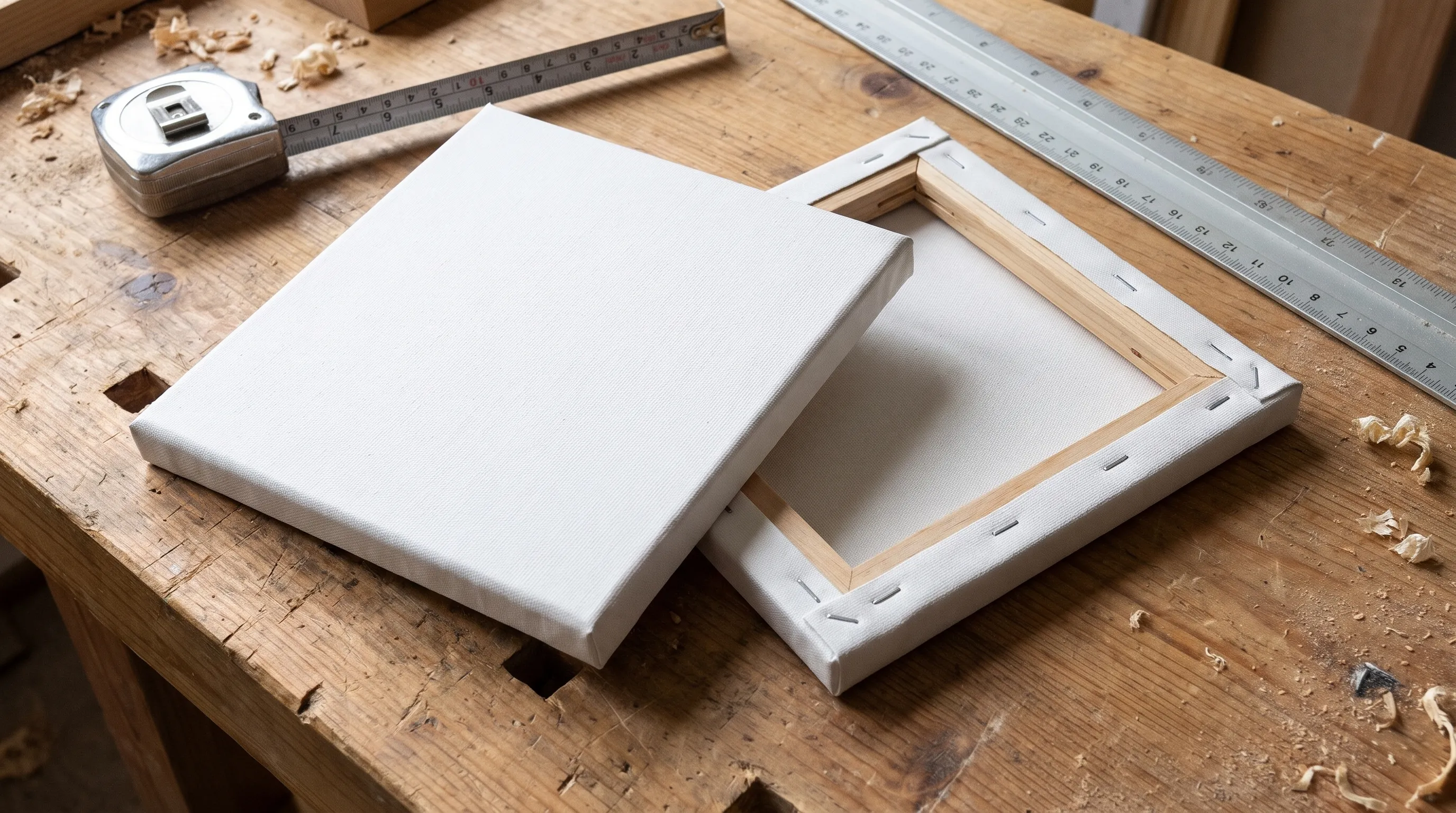
Measure the available wall space before choosing a size. Mark the proposed outline with removable tape, then view it from the doorway and your usual seating position. This helps reveal whether a print feels too small, crowds nearby objects or sits awkwardly above furniture.
When positioning artwork above a substantial piece such as a Sunburst Side Board, compare the artwork’s width with the furniture below it rather than considering the wall in isolation. In a workspace, check how the print relates to wooden office desks, shelving and any task lighting.
For gallery wrapped canvas prints, depth also affects the side view. A deeper frame makes the edge treatment more visible, especially beside a doorway or along a corridor.
Consider the light falling across the surface. Strong side lighting can exaggerate texture and uneven stretching. Avoid direct sunlight and locations exposed to persistent dampness or condensation. In UAE homes, a sheltered indoor wall is a safer choice than a balcony or a position immediately beside a steamy bathroom.
Check UAE delivery, hanging and return details
A good product can still be a disappointing purchase if its shipping or installation requirements are unclear. Before ordering gallery wrapped canvas prints, check the terms for your exact address and the specific item, especially for oversized or made-to-order pieces.
Delivery and packaging
Confirm whether the quoted delivery window includes production time. Ask about delivery charges to your emirate and whether remote-area or oversized-item fees apply. Do not assume that an estimate for central Dubai also applies to every location in Abu Dhabi or the Northern Emirates.
For large work, measure doorways, lifts and stair turns. Ask how the corners and printed face are protected in transit and what evidence the seller needs if damage occurs.
Hanging hardware and returns
"Stretched” does not necessarily mean "ready to hang”. Confirm whether hanging fittings are attached, what the finished piece weighs and whether suitable wall fixings are included. Fixings must suit the wall construction and load.
Read the item-specific return policy before paying. Personalised prints may have different change-of-mind conditions from standard products. Check how transit damage, incorrect dimensions and printing defects are handled, including reporting deadlines and return-shipping responsibilities.
Inspect the canvas when it arrives
Photograph any visible packaging damage before opening, then inspect the print in good, indirect light. Compare the front-face crop, edge treatment and dimensions with your order confirmation.
Look across the surface from an angle to spot ripples, dents or abrasion. Check that the corners are tidy, the rear staples are secure and the frame does not rock noticeably against a flat surface.
A slight difference between a luminous screen and a physical print is normal. Missing image areas, a visibly distorted frame or an edge finish different from the approved order are separate issues worth documenting promptly. Keep the packaging until you have completed the inspection and checked the seller’s instructions.
Frequently asked questions
Are gallery wrapped canvas prints ready to hang? Some are, but the term describes the wrapping method rather than the supplied hardware. Check whether fittings are attached and whether you need separate wall fixings suitable for the piece’s weight.
Does gallery-wrapped canvas need an outer frame? No. Its finished sides allow it to be displayed without one. A compatible floating frame is an optional decorative choice, not a requirement for a properly finished wrap.
Is thicker canvas always better? No. GSM is only one specification. Fibre composition, print coating, weave, ink compatibility and stretching quality all affect the finished result. A heavier canvas cannot compensate for a low-resolution image or an unstable support frame.
Can an existing canvas print be gallery wrapped? Sometimes, provided there is enough spare material around the image for the sides and rear attachment. A print trimmed close to the artwork may need a different finishing approach. A professional framer can assess the available margins and material condition.
Buy on specifications, not labels
Before purchasing, establish whether you are buying canvas material, a blank stretched support or finished wall art. Then compare the construction, image preparation, edge finish and delivery terms that apply to that exact item. When browsing canvas and art supplies on Sandhai, use the product details to build your shortlist and clarify any missing specifications before ordering.

Comments