

An organic diaper bag should make everyday outings easier, but the word "organic” does not tell you everything about its materials, comfort or practicality. A bag might use certified cotton on the outside while having a synthetic lining, coated pockets and plastic accessories. Those components are not automatically a problem, but you should know what you are buying.
For UAE shoppers, the decision also involves hot-weather comfort, cleaning after spills and delivery to your emirate. Before comparing colours or counting pockets, check the evidence behind the material claims, then assess how the bag will work when fully packed. The checks below help you separate useful features from vague marketing without assuming that natural fabric is always the most practical option.
 1. Verify exactly what "organic” describes
"Organic”, "recycled” and "sustainable” describe different things. Organic refers to how agricultural materials such as cotton are produced under a particular standard. Recycled describes the source of a material. Sustainability is broader and can involve manufacturing, durability, repairability and disposal.
A recycled polyester bag is therefore not an organic cotton bag. Equally, cotton being natural does not establish that it was organically grown.
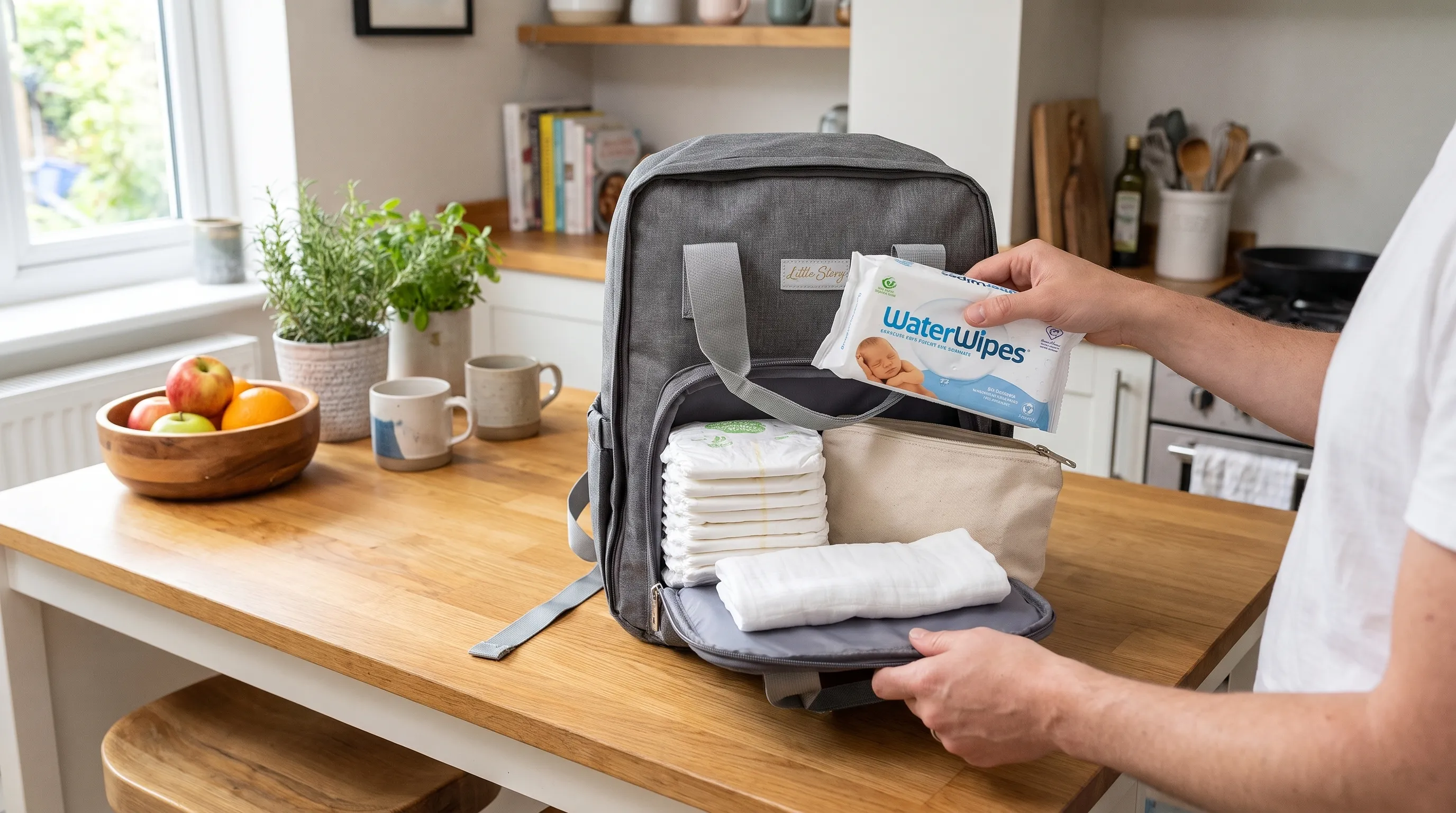
Before buying an organic diaper bag, ask which components contain organic fibres and what evidence supports that claim. The outer fabric, lining, straps and changing mat may all have different compositions.
Know what the main certifications cover
| Standard | What it helps establish | What you still need to check |
|---|---|---|
| [Global Organic Textile Standard (GOTS)](https://global-standard.org/) | Organic fibre requirements alongside processing, environmental and social criteria within its scope | Whether the certification covers the finished bag and which label category applies |
| [Organic Content Standard (OCS)](https://textileexchange.org/organic-content-standard/) | Verification and chain of custody of organically grown material | The organic content percentage and which materials or products the claim covers |
| [OEKO-TEX STANDARD 100](https://www.oeko-tex.com/en/our-standards/oeko-tex-standard-100) | Testing of certified textile articles for specified harmful substances | The certificate’s scope and validity; this standard does not establish organic farming |
Look for a verifiable certificate or licence number rather than relying on a logo in a product image. A certificate for a fabric supplier does not, by itself, prove that every finished bag sold by a retailer is certified.
2. Read the full material breakdown
The most useful description separates the shell, lining, padding, straps and accessories. "Made with organic cotton” leaves several questions unanswered, including how much cotton is present and where it is used.
For an organic diaper bag, the lining can matter as much as the outer fabric because it is where leaking bottles, damp clothes and used changing accessories are likely to cause problems.
Different constructions have different trade-offs:
| Material or construction | Potential benefit | Buying check |
|---|---|---|
| Uncoated cotton canvas | A substantial woven fabric that may suit everyday use | Check weight, stain removal instructions and drying requirements |
| Lightweight cotton fabric | Can reduce the bag’s empty weight | Inspect reinforcement at handles, straps and the base |
| Coated cotton exterior | May offer better resistance to splashes | Ask what the coating is and how it should be cleaned |
| Synthetic lining with a cotton shell | May make the interior easier to wipe clean | Confirm the lining composition and whether seams can trap liquid |
Water-resistant does not mean waterproof. A fabric may resist a light splash while water still enters through zips or seams. Ask about the finished bag’s performance, not just the fabric treatment.
If you want to avoid a particular chemical treatment, request a specific declaration or relevant test evidence. Broad phrases such as "chemical-free” are not a useful substitute.
3. Match capacity to a real outing
Pocket count is a poor shortcut for usable space. Several narrow compartments may be less useful than one accessible main section with a few well-positioned pockets.
Choose an organic diaper bag around what you actually carry, rather than the longest feature list. Start with a typical outing and allow extra space only where you need it.
Your packing check might include:
- Nappies, wipes and a changing mat, with enough room to reach them quickly.
- Spare baby clothes and a separate pouch for damp or soiled items.
- Feeding supplies suited to your baby’s routine.
- Your phone, keys and wallet in an accessible compartment away from likely spills.
Ask for internal dimensions if the listing gives only external measurements. Thick padding, narrow openings and heavily divided interiors can reduce usable capacity.
Check whether your usual bottles fit upright and whether you can retrieve wipes without emptying the main compartment. A wide opening and a stable base can be more valuable than several additional pockets.
Also distinguish an insulated pocket from a safe feeding-storage system. Insulation alone does not guarantee that milk or prepared feeds remain at a safe temperature. Follow the relevant storage guidance for what you carry.
4. Check cleaning instructions before checkout
A wipe-clean claim may apply only to the lining, while the outside requires spot cleaning. Likewise, a removable changing mat may be washable even when the bag itself is not.
An organic diaper bag is only practical if its care requirements fit your routine. Ask whether you can wash the whole bag, which parts detach and whether coatings or stiffeners restrict cleaning.
Pay particular attention to the bottom corners and pocket seams. These areas can collect crumbs, cream residue and leaked liquids, especially when the lining cannot be pulled out for cleaning.
Account for UAE heat and humidity
A thick canvas shell, padded back panel and layered lining may take longer to dry than expected. In humid conditions, allow the bag to dry fully before closing it or putting it away.
Back-panel comfort matters too. A densely padded backpack can feel warm against your back during an outdoor walk, even if its outer fabric is cotton. Fabric composition alone does not establish how breathable the complete bag will feel.
Check care-label instructions before exposing the bag to strong sunlight or using a tumble dryer. Neither is automatically suitable for coatings, dyes or padded components. Remove feeding supplies and damp items promptly rather than leaving a packed bag in a hot parked car.
5. Test comfort with the bag loaded
An empty bag can feel comfortable while the same design pulls awkwardly once packed. When comparing an organic diaper bag, look at its empty weight alongside strap construction and the position of heavy items.
Backpack straps should adjust for each caregiver. A shoulder strap needs enough adjustment to keep the bag from hanging inconveniently low, while carry handles should feel secure when lifting a full load.
Inspect close-up photographs for reinforced stitching around strap attachments, handles and the base. These are useful construction details, although photographs cannot prove long-term durability.
Check the whole outing and your storage space
Consider what else you will carry. If a beach visit also involves outdoor seating such as the Princess - Moon Chair, keeping both hands available may become a stronger reason to choose a backpack format.
At home, check where the packed bag will live. If you intend to store it inside a cabinet such as the Sunburst Side Board, measure the actual shelf opening and depth rather than relying on the furniture’s external dimensions.
For pram use, follow the pram manufacturer’s instructions and load limits. Do not assume that included stroller clips make hanging a heavy bag from the handle safe; added weight can affect stability.
6. Examine extras without assuming they add value
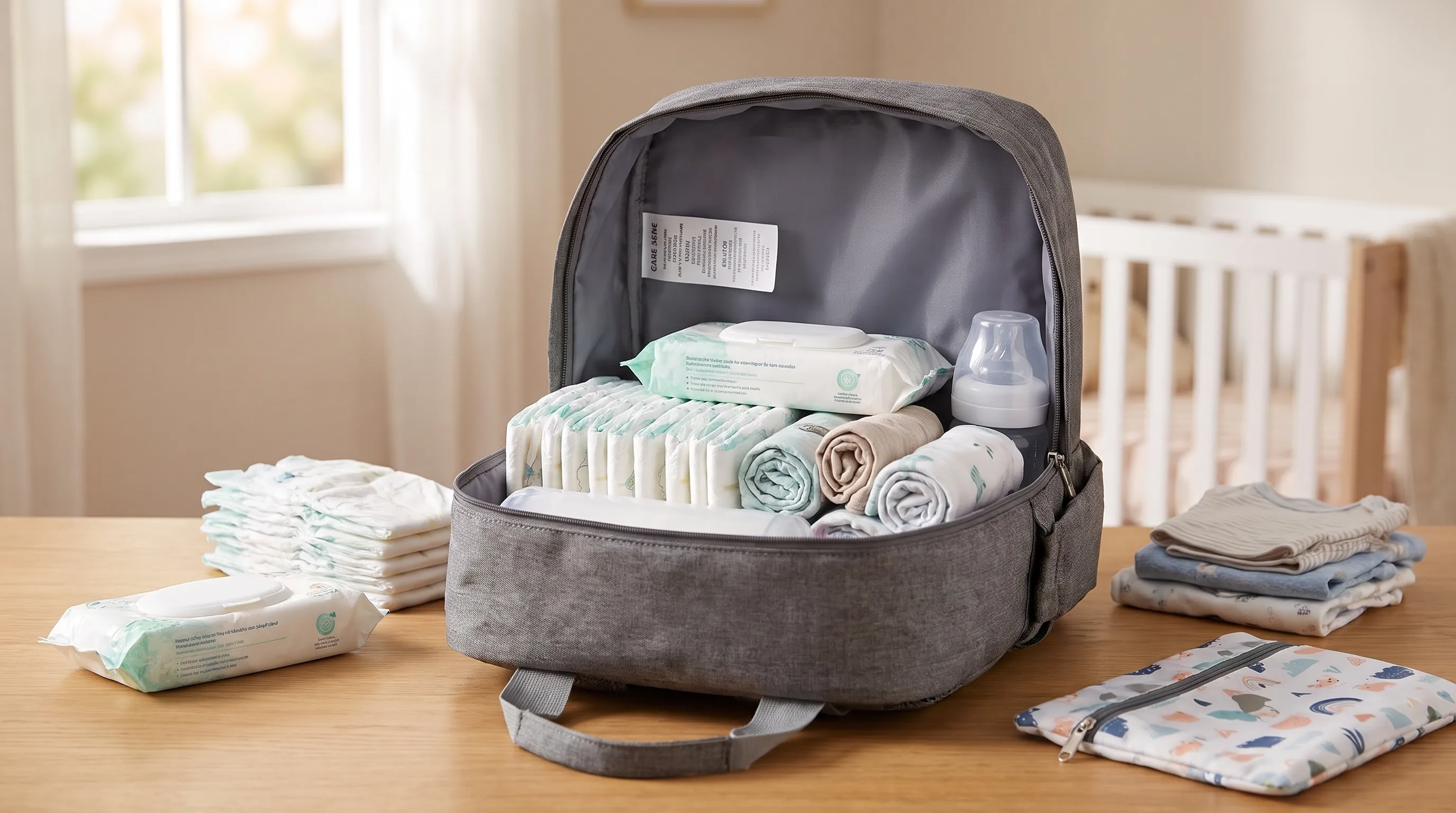
Included changing mats, detachable pouches and extra straps can be useful. They can also add weight, occupy space or create more parts to clean. Check what is included with the exact version you are ordering, rather than assuming every accessory shown in lifestyle photographs comes in the package.
An organic diaper bag with fewer, well-chosen accessories may serve you better than a larger bundle with unclear specifications. Compare the packed size and care requirements of the complete set.
Treat portable-bed claims as a separate safety question
The Little Story - Diaper bag wt portable bassinet bed - Black is a relevant example of a listing whose name includes an additional bed feature. That name alone does not establish organic material content or verify suitability for infant sleep.
Ask the seller for the intended use, instructions, restrictions and evidence of compliance with applicable infant sleep-product requirements. Do not treat a changing surface or an unverified bag insert as a sleep space.
The US National Institutes of Health’s safe sleep environment guidance recommends a firm, flat and level sleep surface in an appropriate infant sleep product, without soft objects or loose bedding. A convenient travel feature should not replace a verified safe sleep arrangement.
7. Use an organic diaper bag checklist for UAE orders
Once the materials and design look suitable, check the transaction details. A good product description is not a substitute for current stock information, a clear delivery estimate or workable return conditions.
Confirm availability for the exact colour and model. Check delivery to your emirate and the complete checkout total, including any delivery charge or other applicable costs. Avoid planning around an estimated arrival date until the retailer confirms it.
Read return conditions before removing tags or using the bag. Establish whether you can inspect it at home, what condition it must remain in and who pays return shipping. Personalised items or products sold under particular conditions may have different restrictions, so check the actual listing and policy.
Keep a copy of the material description and any written answers about certification. If a delivered item differs from the description, those records help you explain the issue clearly.
Finally, assess value through likely use. A bag that fits your routine and remains usable for later outings may be better value than a cheaper option that is uncomfortable, difficult to clean or too small.
Frequently asked questions
Does an organic diaper bag have to be made entirely from cotton? No. It may combine organic cotton with synthetic lining, padding or hardware. What matters is whether the seller clearly identifies the materials and accurately explains the scope of any organic certification.
Is organic fabric automatically waterproof? No. Organic certification does not establish water resistance. Check the coating, lining, zip construction and finished-product claims separately.
Is a backpack better than a shoulder bag? A backpack can distribute the load across both shoulders and leave your hands free. A shoulder bag may provide quicker access while worn. Compare both using your usual packing load and preferred carrying position.
Can I machine-wash the whole bag? Only if the care label permits it. Coatings, padding, stiffeners and attached hardware may require a different cleaning method, even when the main fabric is cotton.
Compare the evidence before choosing
When browsing Sandhai’s online marketplace, use the same checks for every candidate: verified materials, manageable cleaning, comfortable carrying and clear delivery and return terms. If a listing leaves an important question unanswered, ask before ordering. An appealing label should support your decision, not replace the details you need.

Comments