

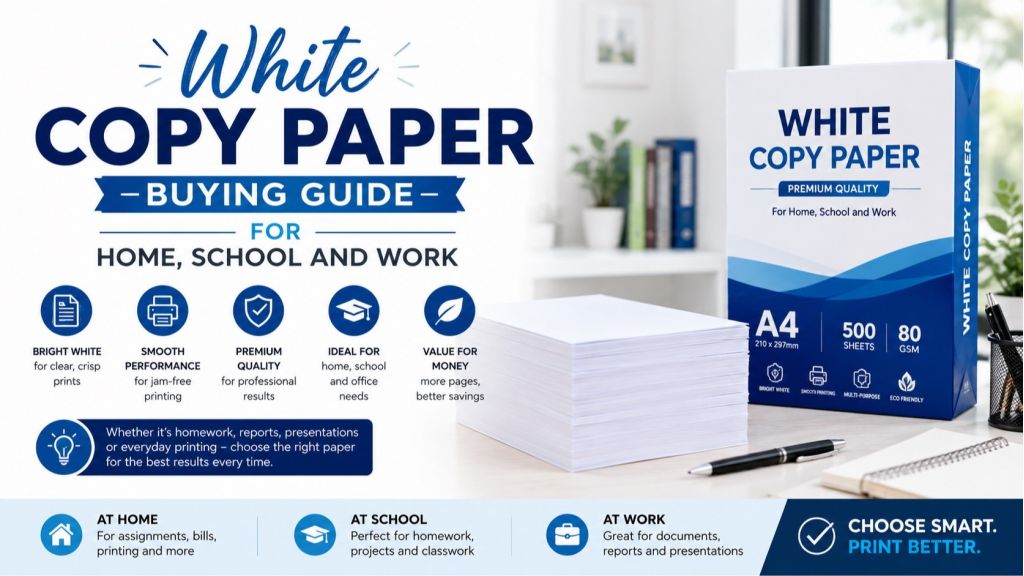
Buying white copy paper looks simple until you compare reams online and see different sizes, GSM ratings, brightness levels, sheet counts and paper claims. For most homes, schools and offices in the UAE, the best choice is not the most expensive paper. It is the paper that runs smoothly through your printer, feels right for the task and stays usable in storage.
This guide breaks down what to check before you buy, so you can choose paper confidently for homework, worksheets, invoices, reports, forms, craft activities and everyday printing.
What is white copy paper used for?
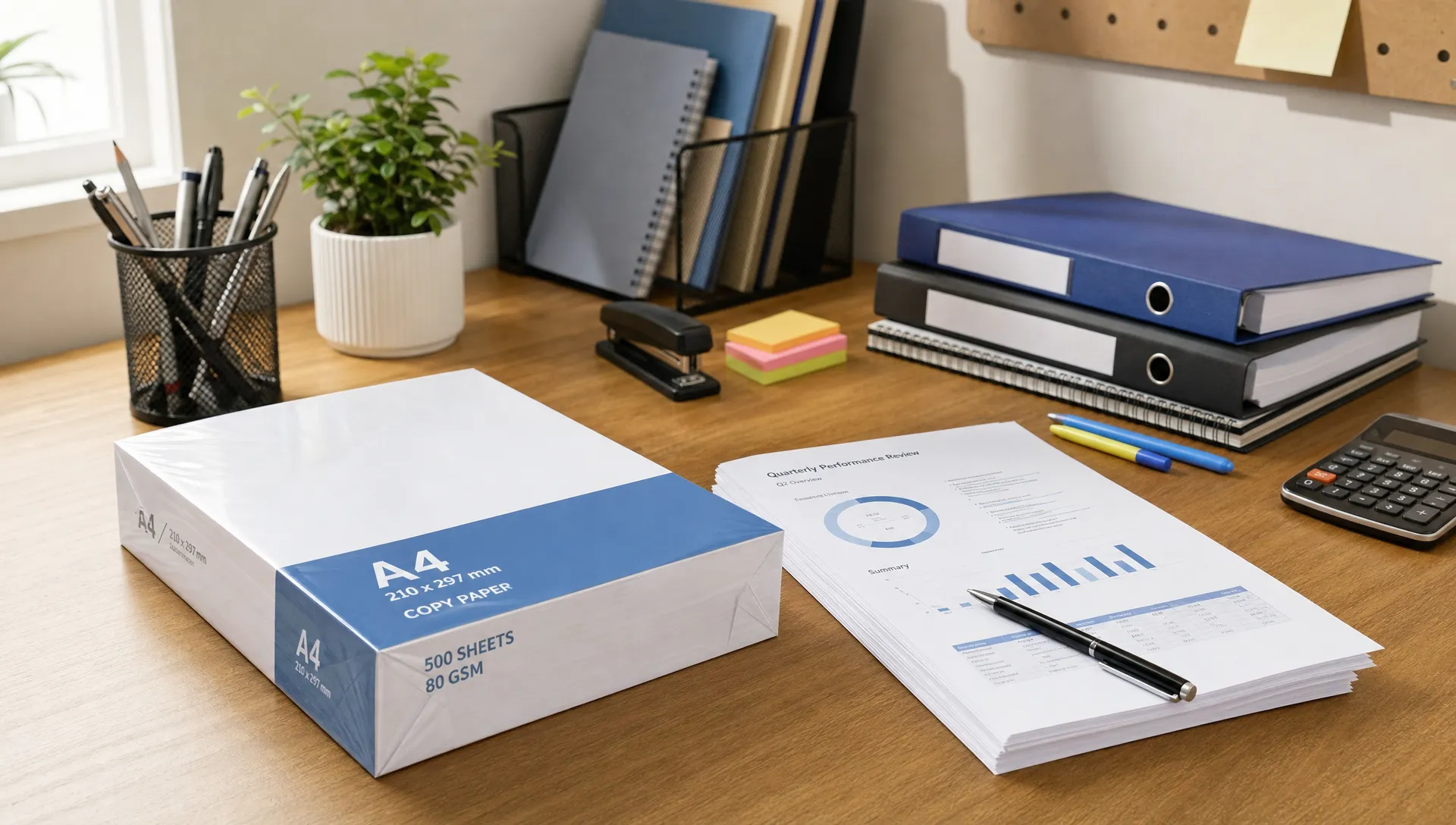
White copy paper is the standard multipurpose paper used in printers, photocopiers and for handwritten work. It is usually sold in reams, with common packs containing 500 sheets. Most everyday copy paper is A4 size, which fits the majority of home printers, school printers and office machines in the UAE.
A4 paper measures 210 mm x 297 mm under the international ISO 216 paper size system. That is why A4 is the default for school assignments, office documents, application forms and most printed handouts across the region.
White copy paper is commonly used for:
- Home printing, such as recipes, forms, travel documents and personal paperwork
- School use, including worksheets, notes, project drafts and revision sheets
- Office use, such as invoices, reports, meeting agendas and internal documents
- Crafts, labels, templates and light DIY projects
- Photocopying and everyday document filing
If you are stocking a study area or office drawer, it also helps to buy related supplies at the same time. For example, paper projects often need a simple adhesive like a school and office glue stick, especially for assignments, scrapbooks and classroom activities.
Start with paper size: A4 is usually the safest choice
For UAE shoppers, A4 white copy paper is the most practical default. It works for most school submissions, home printers, government forms, office filing systems and business documents. Unless you know you need another size, choose A4.
A3 paper is larger and useful for posters, diagrams, plans and classroom displays, but it requires a compatible printer or copier. Letter size paper is common in North America, but it is not the standard choice for most UAE schools and offices.
| Paper size | Dimensions | Best for | Buyer note |
|---|---|---|---|
| A4 | 210 mm x 297 mm | Everyday printing, school work, office documents | Best all-round option for most users |
| A3 | 297 mm x 420 mm | Posters, charts, drawings, presentations | Needs an A3-compatible printer |
| Letter | 216 mm x 279 mm | Some imported templates or US-style documents | Less common for local school and office use |
If you are buying for mixed use at home, school and work, A4 white copy paper gives you the widest compatibility.
Understand GSM before you choose
GSM means grams per square metre. It tells you the weight and thickness of the paper. For white copy paper, GSM affects how the sheet feels, how much ink shows through and how well it performs in different printers.
The most common everyday copy paper weights are 70 GSM, 75 GSM and 80 GSM. Heavier options, such as 90 GSM or 100 GSM, are usually used for better presentation, double-sided printing or documents that need a more premium feel.
| GSM | Feel and performance | Best for |
|---|---|---|
| 70 GSM | Light, economical, suitable for basic use | High-volume drafts, internal copies, simple home printing |
| 75 GSM | Balanced weight and cost | School worksheets, everyday office printing, general use |
| 80 GSM | Standard premium everyday feel | Reports, forms, invoices, double-sided documents |
| 90 to 100 GSM | Thicker and smoother | Presentations, certificates, client-facing documents |
For most shoppers, 75 GSM or 80 GSM is the sweet spot. It feels substantial enough for regular use but is not unnecessarily costly for everyday printing.
If you print double-sided documents often, choose 80 GSM or higher when your budget allows. It usually reduces show-through, which is the faint visibility of text from the other side of the page.
Check printer compatibility
Not all white copy paper behaves the same in every machine. A good ream should feed cleanly, avoid jams and accept ink or toner without smudging. Before buying in bulk, check your printer manual or the paper tray label for supported paper weights and sizes.
Laser printers use heat and toner, so paper should be smooth enough to accept toner evenly. Inkjet printers spray liquid ink, so paper needs enough absorbency to keep text sharp without spreading. Most multipurpose white copy paper works in both, but very cheap or poorly stored paper can cause curl, jams or uneven printing.
For home use, a basic multipurpose A4 paper is usually enough. For work, especially if you print customer invoices, proposals or official letters, it is worth choosing a reliable 80 GSM option. For school printing, 75 GSM or 80 GSM works well for homework, handouts and project pages.
Brightness and whiteness: what matters in real life?
Brightness affects how crisp black text and colour graphics appear on the page. A brighter white sheet makes documents look cleaner and can improve contrast, especially for reports, charts and presentations.
For basic drafts, brightness is less important. For business documents, school projects and forms that need to look neat, brighter paper makes a visible difference. If the ream packaging lists brightness, compare it along with GSM rather than choosing based on price alone.
Whiteness is slightly different from brightness. It refers to the tone of the paper, from warm white to cooler blue-white. For daily use, you do not need to overthink this. Choose a clean white paper that suits the type of document you print most.
Smoothness, opacity and dust levels
Smoothness influences how the paper travels through a printer and how sharp the output appears. Smoother paper tends to produce cleaner text and better image detail, especially on laser printers.
Opacity tells you how much light passes through the sheet. Higher opacity is better for double-sided printing because it reduces show-through. This is one reason 80 GSM paper is often preferred in offices.
Paper dust is another practical detail. Low-quality paper may shed more dust inside printers and copiers, which can contribute to feeding problems over time. If your printer jams often, the cause may not be only the machine. Paper quality, storage and humidity can all play a part.
Buying white copy paper for home
Home users usually need paper for mixed tasks: printing documents, kids' worksheets, travel confirmations, recipes, return labels and occasional forms. You may not print every day, so storage matters as much as quality.
A good home choice is A4, 75 GSM or 80 GSM multipurpose white copy paper. If your household prints only simple black-and-white documents, 75 GSM is often enough. If you print school projects, forms for appointments or documents that need to look tidy, 80 GSM is a better all-round pick.
Buy one or two reams at a time if you do not print often. Paper can absorb moisture in humid conditions, and the UAE climate can be tough on opened packs if they are stored near kitchens, windows or air-conditioning vents.
Home craft needs may also influence your order. If you print templates for cutting, pasting or kids' activities, pair your paper with practical items like Elmer's White Glue 118 ml or other school supplies so you are not missing basics when a project is due.
Buying white copy paper for school
For school use, copy paper needs to be affordable, reliable and suitable for frequent printing. Parents often use it for homework, practice sheets, project drafts, charts and revision notes. Teachers and tutors may need larger quantities for worksheets and class activities.
A4 white copy paper at 75 GSM or 80 GSM is the best general recommendation for school needs. Choose 80 GSM if the paper will be used for project submissions, printed charts or double-sided notes. Choose 75 GSM if you need to print many practice pages and want to manage cost.
For art and presentation activities, copy paper may not always be enough. It is fine for drafts, templates and simple colouring sheets, but heavier craft paper or card may be better for final displays. If students are making masks, displays or decorated pages, ready-to-use items such as paper masks for creative projects can save time.
Parents can also think beyond paper alone. A useful school stationery restock may include paper, glue, pencils, files and labels. For larger craft or classroom projects, a bigger adhesive format such as Giotto White PVA Glue 1Kg may be more practical than small tubes.
Buying white copy paper for work
In offices, white copy paper has to perform consistently. A few fils saved per ream can be lost quickly if paper jams, print quality drops or important documents look poor. For most workplaces, 80 GSM A4 paper is the safest standard.
Use 80 GSM paper for reports, invoices, letters, HR documents, meeting notes and client-facing paperwork. If your office prints very high volumes of internal drafts, you might keep 70 GSM or 75 GSM paper for internal use and reserve 80 GSM for formal documents.
Businesses should also think about storage and ordering frequency. Buying in bulk can reduce the chance of running out during busy periods, but only if you have a clean, dry storage area. Keep unopened reams in their packaging until needed, and store them flat to prevent curling.
For customer-facing uses, presentation matters. If you print invoices, proposals or branded documents, test how your logo and text appear on the paper before ordering large quantities. A bright, smooth 80 GSM paper often gives a more professional finish than the cheapest available option.
How much paper should you buy?
The right quantity depends on how often you print and how much storage space you have. A home may only need one ream for several months, while a small office may use several reams every week.
A practical approach is to estimate your monthly use first. If you print 10 pages a day for school and home tasks, that is around 300 pages a month. One 500-sheet ream may last about six weeks. If an office prints 100 pages per day, it may use around six reams a month.
| User type | Typical buying quantity | Practical advice |
|---|---|---|
| Occasional home printer | 1 ream | Buy as needed and store carefully |
| Family with schoolchildren | 2 to 5 reams | Keep extra during exam season or project periods |
| Tutor or small home office | 5 reams | Choose reliable 75 GSM or 80 GSM paper |
| Small office | 5 to 20 reams | Standardise paper type to reduce printer issues |
| High-volume workplace | Carton quantities | Test first before bulk ordering |
If you are buying online, compare the price per ream and price per sheet where possible. A larger pack may look more expensive upfront but cost less over time.
Storage tips for the UAE climate
Paper absorbs and releases moisture from the air. In humid weather, opened reams can become wavy or curled. In very dry air-conditioned rooms, paper may develop static, which can cause sheets to stick together in some printers.
Store white copy paper in a cool, dry place away from direct sunlight. Keep it flat, not standing on its edge for long periods. Once opened, fold the wrapper back over the remaining sheets or place them in a sealed drawer or storage box.
Avoid storing paper near windows, balconies, kitchens, bathrooms or water dispensers. If your printer tray holds a lot of paper but you do not print often, do not leave a full stack sitting in the tray for weeks. Load what you need and keep the rest protected.
Eco-friendly and responsible buying considerations
If sustainability matters to you, look for paper with credible responsible sourcing or recycled content claims. Certifications such as FSC or PEFC indicate that the fibre comes from forests managed under recognised standards. Recycled paper can also be a good option, especially for internal drafts and general office printing.
There is one trade-off to consider. Some recycled papers may have a slightly different shade or texture compared with bright virgin-fibre paper. That may be perfectly fine for internal use, school drafts and home printing, but you may prefer brighter paper for client-facing work.
A balanced approach is to keep one everyday paper for high-volume printing and one better-quality option for important documents. This reduces waste without compromising presentation when it matters.
Common mistakes to avoid when buying white copy paper online
Many shoppers choose the lowest price first, then discover the paper is too thin, not suitable for their printer or poor for double-sided printing. Price matters, but it should not be the only filter.
Avoid these common mistakes:
- Buying the wrong size, especially Letter instead of A4
- Choosing very light paper for double-sided documents
- Ordering bulk quantities before testing printer compatibility
- Ignoring storage space and humidity conditions
- Using premium paper for rough drafts where basic paper would be enough
- Using basic copy paper for certificates, formal invitations or heavy craft work
It is also worth checking whether you need supporting items for packaging, presentation or school activities. For example, A4-sized sheets can be organised or carried with items like A4 blue paper bags, depending on the type of project or event.
Quick recommendations by use case
If you want a simple answer, use the table below as a quick buying shortcut.
| Need | Recommended paper | Why it works |
|---|---|---|
| Everyday home printing | A4, 75 GSM or 80 GSM | Good balance of cost and quality |
| School worksheets | A4, 75 GSM | Economical for frequent practice pages |
| School projects | A4, 80 GSM | Neater look and better handling |
| Office invoices and reports | A4, 80 GSM | Professional feel and reliable printing |
| Double-sided printing | A4, 80 GSM or higher | Better opacity and less show-through |
| Drafts and internal notes | A4, 70 GSM or 75 GSM | Lower cost for non-final documents |
| Presentations | A4, 90 GSM or 100 GSM | More premium finish |
For most online shoppers, A4 80 GSM white copy paper is the safest all-purpose option. If you are buying mainly for rough drafts or worksheets, 75 GSM can be more economical.
Frequently Asked Questions
What is the best GSM for white copy paper? For general home, school and office use, 75 GSM or 80 GSM is usually best. Choose 80 GSM for a sturdier feel, better double-sided printing and more professional documents.
Is A4 the right size for copy paper in the UAE? Yes, A4 is the most common and practical size for everyday printing, school assignments, office documents and forms in the UAE.
Can I use the same white copy paper for inkjet and laser printers? Most multipurpose white copy paper works in both inkjet and laser printers, but you should still check your printer's supported paper sizes and weights before buying in bulk.
Why does copy paper jam in my printer? Jams can happen because of poor paper quality, curled sheets, humidity, overfilled trays or paper that is too thick or too thin for the printer. Store paper flat and dry, and fan the stack lightly before loading.
Is 70 GSM paper good enough for school? It can be fine for drafts and practice sheets, but 75 GSM or 80 GSM is better for homework submissions, project pages and documents that need to be handled often.
Shop smarter for everyday paper and stationery
The right white copy paper keeps printing simple, whether you are preparing school worksheets, home documents or office reports. Start with A4, choose the GSM based on your main use and store your reams properly so every sheet stays flat and printer-ready.
You can explore everyday essentials, stationery, groceries, home items and more through Sandhai's online shopping marketplace in the UAE. When you plan your order, add the paper-related supplies you regularly use, from glue sticks to craft materials, so your home, classroom or office stays ready for the next task.

Comments