

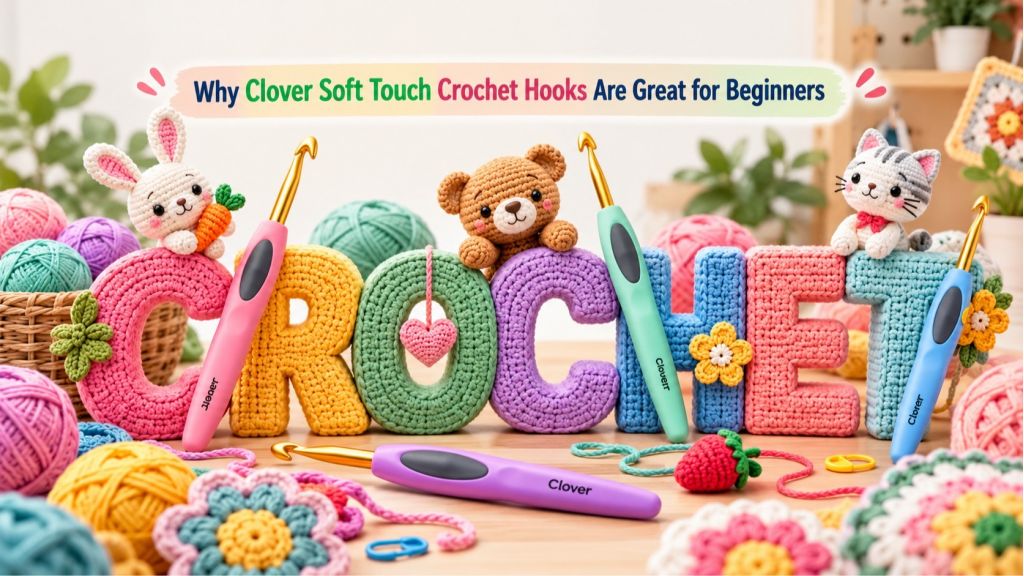
Learning to crochet involves several new movements at once: holding the yarn, catching a loop and keeping each stitch roughly the same size. A comfortable hook can make those movements easier to practise, although it cannot replace good technique. For someone choosing their first tool, Clover Soft Touch crochet hooks are worth considering because their lightweight construction and cushioned grip can help make the hook easier to hold and control.
The right choice still depends on your hands, your yarn and the projects you want to make. Here is what beginners should know before buying.
 What makes a crochet hook beginner-friendly?
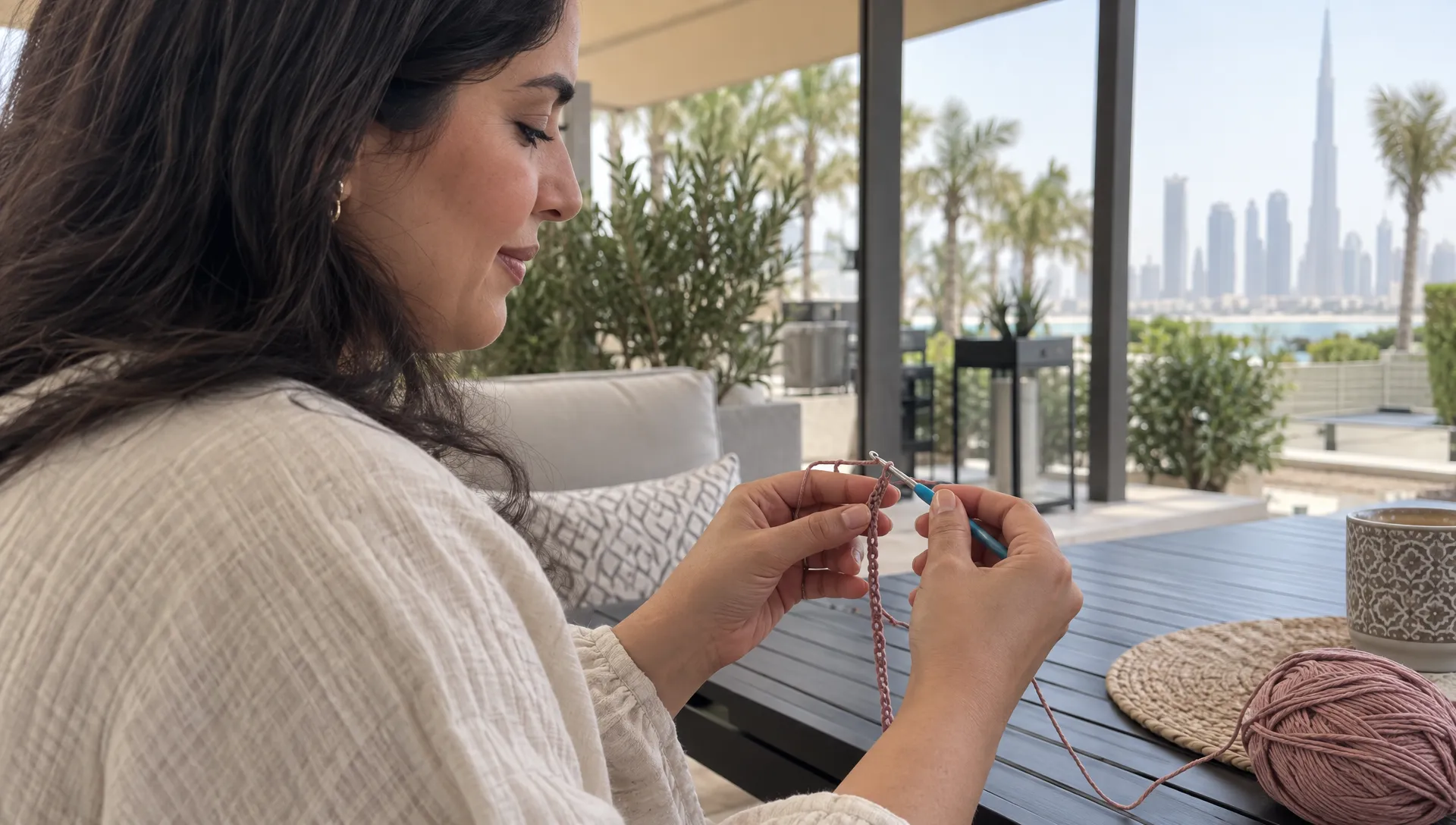
A useful beginner hook should feel secure without needing a tight grip. Its head should catch the yarn cleanly, while its shaft should allow loops to slide without excessive resistance.
Comfort matters because new crocheters often squeeze harder than necessary. When every movement feels unfamiliar, it is easy to grip the hook tightly and pull the working yarn too firmly. That combination creates stiff stitches that become difficult to work into.
A beginner-friendly hook reduces unnecessary effort, but it does not automatically correct tension. You still need a suitable yarn, a matching hook size and time to develop relaxed movements.
Why clover soft touch crochet hooks work well for beginners
A cushioned area gives your fingers a comfortable resting place
The Soft Touch design combines a lightweight handle with a cushioned grip area. Its relatively broad, flattened handle offers a defined place for your fingers to rest, rather than leaving you holding only a narrow metal shaft.
That can be helpful while you are learning where to position your thumb and index finger. A more secure hold may make it easier to loosen your grip without feeling that the hook will slip.
However, comfort is personal. Some people prefer a rounded handle, while others like a flatter profile. Try holding the hook in your usual crocheting position before deciding whether its shape suits you.
An aluminium working end helps loops move smoothly
The standard aluminium versions have a smooth working surface that lets yarn move along the shaft. With compatible yarn and relaxed tension, clover soft touch crochet hooks can make drawing loops through stitches feel more controlled.
This is useful during early practice, when you are still learning how far to rotate the hook and how much yarn to pull through. Less resistance gives you one fewer problem to manage.
A smooth hook cannot prevent every split strand, though. Yarn construction, the angle of insertion and the way you turn the hook all influence whether you catch the whole strand cleanly.
A lightweight tool avoids unnecessary bulk
A heavier tool is not automatically worse, but a lightweight hook is a sensible starting point for many beginners. You can concentrate on the movement without managing a bulky handle.
Do not interpret a cushioned grip as a promise of pain-free crochet. Take breaks, relax your shoulders and avoid pushing through discomfort. Persistent pain, tingling or numbness is a reason to stop and seek appropriate medical advice, not simply buy another hook.
Choose the yarn and hook size together
Even a comfortable hook becomes frustrating when paired with unsuitable yarn. A very small hook with thick yarn produces tight loops, while an oversized hook can create loose fabric that makes your stitches harder to assess.
For a first practice piece, choose a smooth, light-coloured yarn with clearly visible strands. Look for a yarn label that recommends a manageable hook size, such as 4 mm or 5 mm, rather than assuming that any yarn will suit your chosen tool.
When choosing clover soft touch crochet hooks, check the size in millimetres and match it to the yarn label or pattern, rather than relying only on a letter size. Letter conventions can vary between brands and markets.
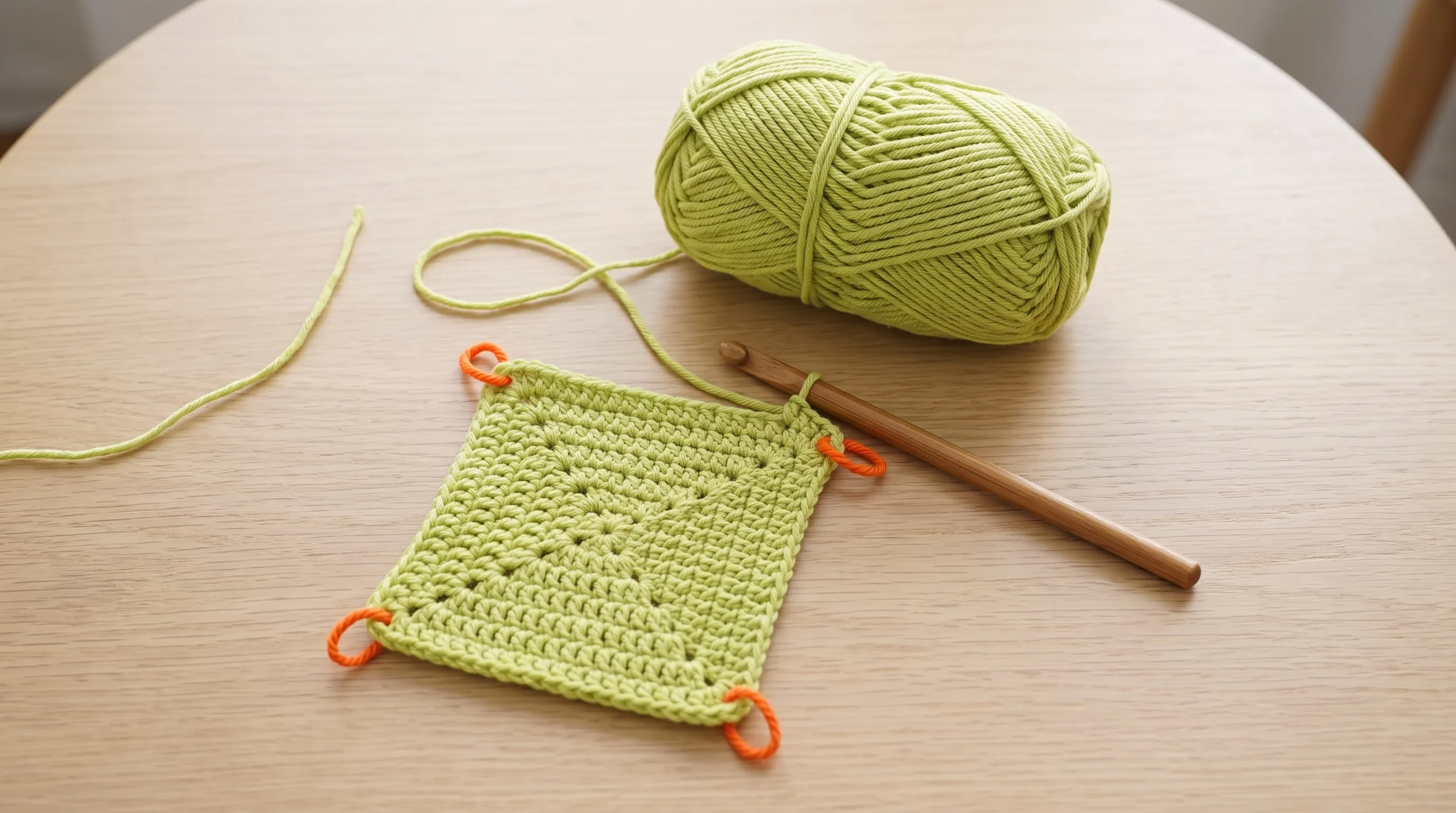
The Knitting Yarn Crochet 25g Light Green is a yarn option to assess for a small practice project. Before choosing it, check its fibre information, thickness and recommended hook size. The 25g quantity describes the amount in the ball, not the yarn's thickness or how large a project it will make.
Avoid fluffy, heavily textured or very dark yarn for your first attempt. Those choices can make individual stitches harder to see, even when your hook feels comfortable.
A simple first practice session
Start with a small rectangle rather than a shaped toy or fitted garment. A flat practice piece lets you focus on consistent movements without also managing shaping, joining or fit.
Practise chains without pulling them tight
Make a short foundation chain, then inspect the loops. They should be loose enough for the hook to enter without force, but not so loose that their size varies dramatically.
Let each loop settle around the shaft before tightening it gently. Tightening around the narrower throat can produce smaller loops that are difficult to work into later.
A relaxed foundation chain gives clover soft touch crochet hooks room to move through the stitches, so concentrate on easing your grip before changing tools.
Work a few rows of one basic stitch
Choose a beginner pattern that uses one stitch consistently. Check whether it uses US or UK terminology: US single crochet is called double crochet in UK terminology.
Keep the first piece small enough that you can finish several rows without rushing. Count the stitches after each row and compare the edges. If the rectangle gradually becomes narrower, you may be missing the final stitch. If it gets wider, you may be adding an extra stitch or working into a turning chain unintentionally.
Use a stitch marker in the first and last stitch while you learn to recognise them. A contrasting scrap of yarn can also serve as a simple marker.
Make counting visible when learning together
For an adult teaching a child to crochet, counting completed rows can become a separate, supervised activity. The 15-Rod Wooden Abacus for Kids can serve as a visual counting aid, with a bead moved after each completed row.
It does not replace markers attached to the fabric, but it offers a way to track progress away from the stitches. For individual practice, a notebook tally works just as well. Follow the toy's age guidance and supervise children around crochet tools.
What a better hook will not fix
It is tempting to blame the tool whenever crochet feels difficult. Before replacing it, identify where the difficulty occurs.
| What you notice | What to check first |
|---|---|
| The hook struggles to enter stitches | Whether your tension is too tight or the hook is too small for the yarn |
| Yarn repeatedly splits | Your insertion angle, hook rotation and the yarn's strand construction |
| The edges slope inward or outward | Whether you are skipping or adding stitches at row ends |
| Your hand feels strained | Grip pressure, wrist position and whether you need a break |
Although clover soft touch crochet hooks can improve the feel of holding the tool, they cannot correct missed stitches, unsuitable yarn or a constantly clenched hand.
Try changing one thing at a time. Loosen your grip for a row, slow down your insertion into each stitch or use a more clearly defined yarn. Changing several variables together makes it harder to understand what helped.
Gauge also becomes important when you move beyond practice pieces. If a pattern specifies a gauge, make a swatch and measure it before starting a project where size matters. A comfortable hook is useful, but the finished fabric still needs to match the pattern's requirements.
Should you buy one hook or a complete set?
For a first project, one suitable hook is often enough. Buying several sizes makes more sense once you know that you enjoy crochet and have identified the yarns or patterns you want to use.
A single Soft Touch hook lets you assess the handle before committing to more tools. Compare how it feels during actual stitching, not just when holding it for a few seconds.
If you would rather compare a multi-size option, the 12PCS Alumina Crochet with PVC Handle is a separate product to consider. Check its listed sizes and handle details rather than assuming it has the same construction or feel as the Clover range.
For beginners considering clover soft touch crochet hooks, the most useful comparison is comfort and suitability for the first project, not simply the number of hooks included.
Also distinguish crochet tools from knitting equipment. A 22-needle knitting machine is designed for knitting, not for making the hand-crochet stitches shown in a crochet tutorial. It is not a substitute for a crochet hook.
Frequently asked questions
Are Soft Touch hooks suitable for a complete beginner? Yes, provided the hook size matches the yarn and project. The cushioned grip and lightweight construction can make holding the tool more comfortable, but beginners still need to practise stitch placement and tension.
Are Clover Soft Touch and Clover Amour the same range? No. They are separate Clover hook ranges with different handle designs. If you are comparing them, assess the grip shape and size of the specific models rather than treating the names as interchangeable.
Can I use either a pencil grip or a knife grip? You can try both. With a pencil grip, you hold the hook roughly as you would a pencil; with a knife grip, your hand sits over the handle. Choose the position that allows relaxed fingers and a comfortable wrist, rather than forcing one technique.
Are clover soft touch crochet hooks worth buying before I know whether I enjoy crochet? One appropriately sized hook can be a reasonable starting purchase if its handle feels comfortable to you. There is no need to buy a complete range before finishing a few practice pieces.
Will an ergonomic hook prevent hand pain? No hook can guarantee that. Comfortable equipment may reduce unnecessary gripping effort, but posture, session length and individual health also matter. Stop if crocheting causes pain or unusual sensations.
Build a small starter kit, not a large collection
Start with one correctly sized hook, suitable yarn and a simple way to mark your stitches. Finish a small practice rectangle before adding more tools.
When browsing craft supplies on Sandhai, compare the product descriptions with your pattern's requirements. Matching the tool to the yarn is a more useful first step than buying the largest kit.

Comments