

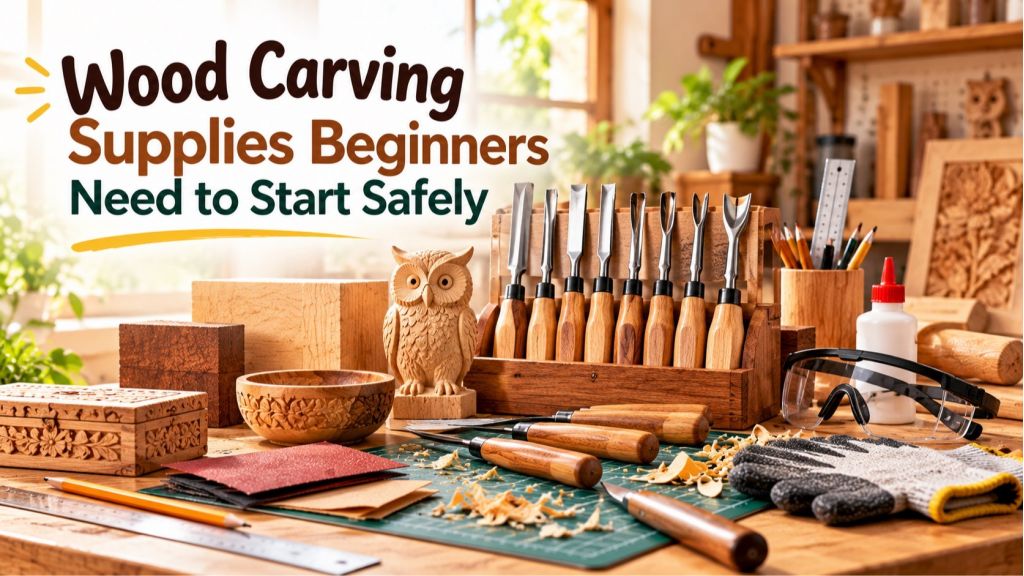
If you are choosing wood carving supplies for the first time, safety should guide every purchase. A beginner does not need a large set of tools, expensive timber or a workshop full of machines. You need a few sharp, controllable hand tools, wood that cuts cleanly, basic protection for your hands and lungs and a steady place to work.
Wood carving is rewarding because it starts small. A simple spoon, nameplate, relief pattern or decorative block can teach you more than a crowded tool kit ever will. For online shoppers in the UAE, the goal is to buy carefully, check product details and avoid tools that look impressive but are hard to handle safely.
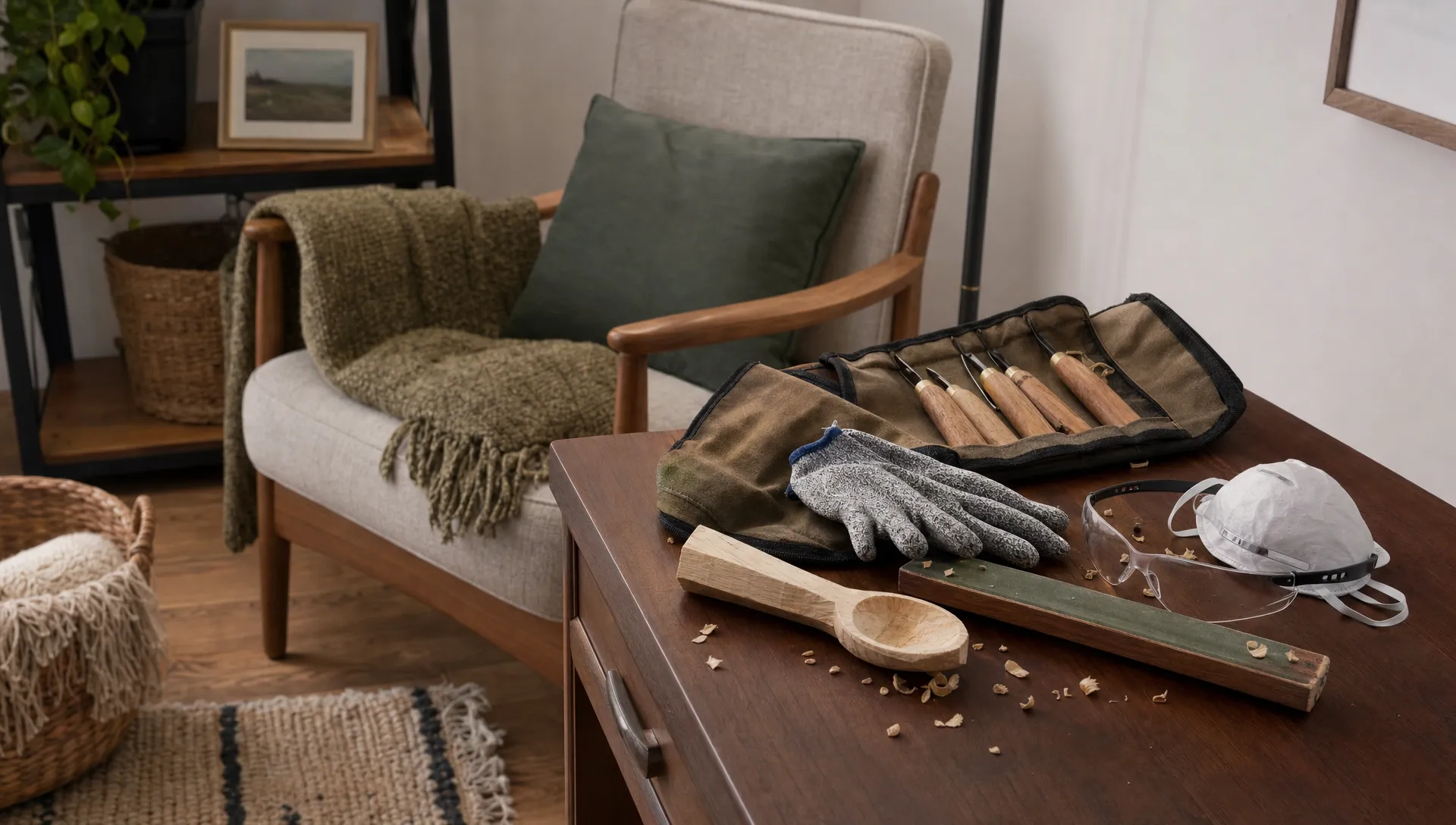 Why safety comes before your first wood carving supplies
Sharp tools are safer than dull ones because they require less force. When beginners struggle, they often push harder, lose control and slip. This is why the first safety rule is not to buy the biggest knife, it is to buy a manageable tool and learn how to maintain the edge.
The OSHA woodworking guidance on wood dust also highlights a risk many beginners underestimate: fine dust can irritate the eyes, nose and lungs. Even if you carve by hand, sanding creates dust, so ventilation and a mask matter.
Set up a carving space before you start. Choose a well-lit table, keep children and pets away from the cutting area and store blades immediately after use. In UAE homes where air conditioning is common, avoid sanding in closed rooms without airflow. A balcony, utility area or easy-to-clean corner with a fan and dust control is a better choice.
Essential wood carving supplies for a safe starter kit
Your first wood carving supplies should help you control the cut, not overwhelm you with options. Many large sets include tools you will not use for months, so a compact kit is usually the smarter buy.
| Item | Why beginners need it | Buying tip |
|---|---|---|
| Carving knife | Handles basic shaping, whittling and small cuts | Choose a comfortable handle and a short, firm blade |
| Detail knife | Helps with lines, corners and small features | Avoid very thin blades until your control improves |
| Small gouge | Scoops curves, hollows and shallow channels | Start with one medium gouge rather than a full set |
| V-tool | Creates grooves, outlines and decorative cuts | Useful for lettering and relief patterns |
| Cut-resistant glove | Protects the hand holding the wood | Check fit so it does not slip while carving |
| Thumb guard | Protects the thumb used for controlled pull cuts | Leather or cut-resistant fabric both work |
| Clamp or bench hook | Holds wood steady without relying on grip strength | Choose this early if you plan relief carving |
| Sharpening strop | Maintains blade edge between sharpening sessions | Use with polishing compound for best results |
| Dust mask and eye protection | Reduces exposure to dust and flying chips | Essential when sanding or using harder woods |
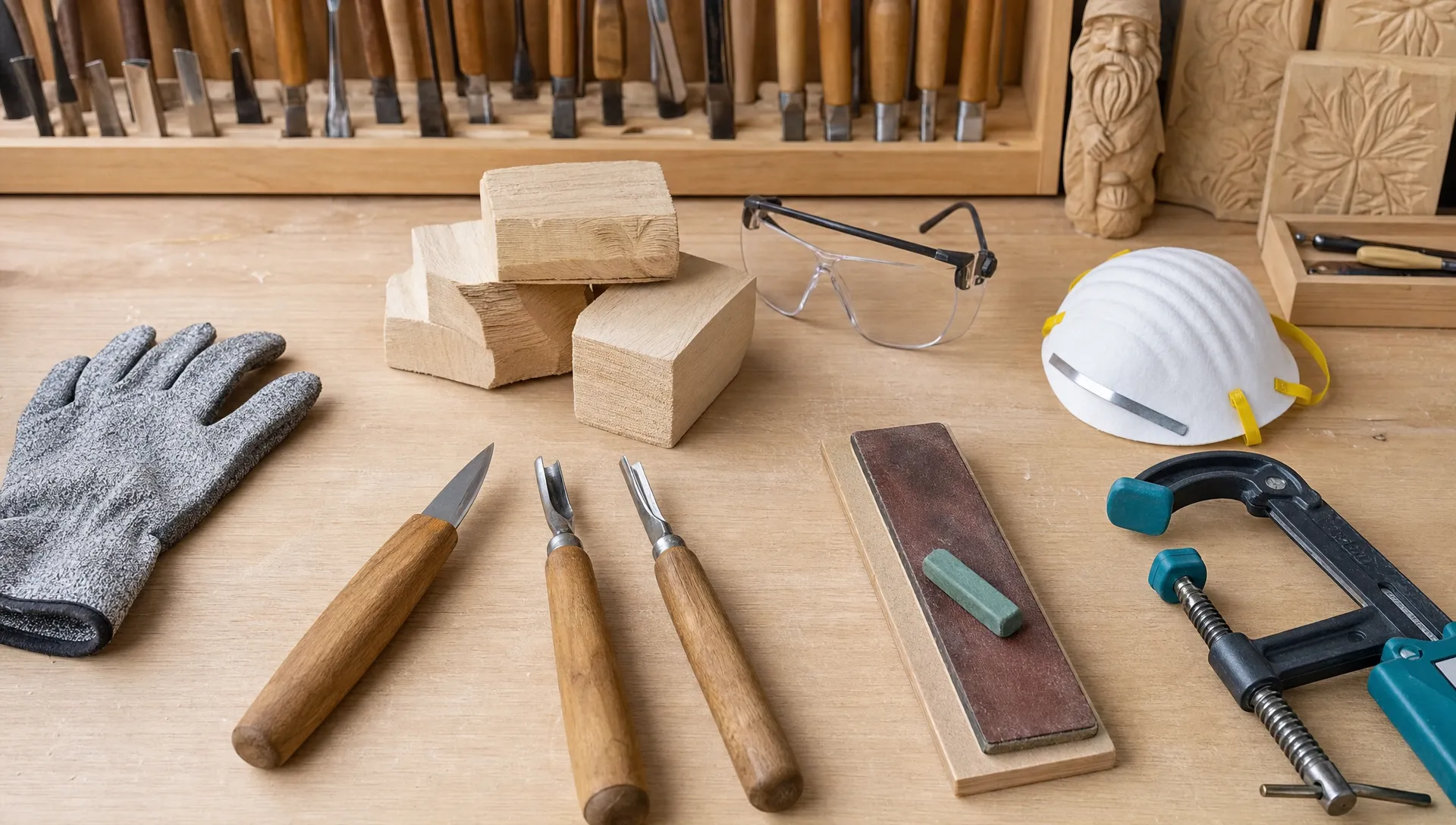
A beginner can start with a carving knife, one gouge, one V-tool, a glove, a strop and soft wood. Add more only when a project clearly requires it.
Cutting tools: knife, gouge and V-tool
A carving knife is the basic tool for whittling, shaping and controlled cuts. Look for a handle that fills your palm without forcing your wrist into an awkward angle. If the handle feels too slim, your hand may tire quickly, especially during longer sessions.
Gouges are curved tools used to remove wood in scoops. A shallow gouge is useful for soft curves, while a deeper gouge removes more material. For beginners, a medium curve is more versatile than a deep specialist gouge.
A V-tool is shaped like a sharp V and is used for outlines, grooves and decorative lines. It is easy to dig too deeply with a V-tool, so use light pressure and make repeated passes.
Holding tools: clamps, bench hooks and non-slip mats
Holding the wood safely is as important as choosing the blade. If you grip a small piece of wood tightly in your hand, the tool has nowhere safe to go if it slips. A clamp, bench hook or non-slip mat keeps the project stable and gives your hands more distance from the cutting path.
For apartment carving, a small clamp-on work surface is practical because it can be stored after use. If you are carving at a dining table, protect the surface with a cutting mat or scrap board.
Choose beginner friendly wood before buying more tools
Good wood carving supplies include the right wood, not just the right blades. The easiest woods for beginners are soft, consistent and free from knots. Basswood, also sold as limewood in some markets, is widely recommended because it cuts smoothly and holds detail well. Jelutong is another soft option used by carvers, though availability varies.
Avoid treated construction timber, unknown scrap wood, painted boards and wood with strong chemical smells. Treated wood can contain preservatives that are unsafe to inhale as dust. Plywood is also frustrating for beginners because the glue layers and alternating grain can chip unpredictably.
If you are shopping online, check the dimensions carefully. A small photo can make a thin block look larger than it is. Beginners should start with blocks thick enough to hold comfortably, but not so large that shaping becomes tiring.
Best first projects for safer practice
Choose projects that teach control without requiring deep cuts. A smooth butter knife, simple pendant, small fish, leaf relief or rounded nameplate is better than a complex figurine for your first session.
Finished wooden products can also train your eye. For example, the smooth arms and simple curves of a handmade Wooden Easy Chair are useful to observe when you are learning how edges, curves and grain direction affect the feel of a piece.
Safety gear you should not skip
The safest wood carving supplies are the ones that reduce common beginner mistakes. A glove does not make carving risk-free, but it can protect the hand holding the wood from minor slips. Wear the glove on your holding hand, not usually on the tool hand, because the tool hand needs a secure grip and good feedback.
Eye protection matters when chopping, gouging or sanding. Small chips can lift unexpectedly, especially when cutting across grain. A dust mask is essential during sanding and helpful when carving dusty woods. If you are sensitive to dust, use a properly fitted respirator rather than a loose paper mask.
Keep a small first aid kit nearby. It should include plasters, antiseptic wipes and gauze. If a cut is deep, bleeding heavily or affects movement, stop carving and seek medical help.
Sharpening and maintenance basics
Wood carving supplies only stay safe when they are maintained. A dull edge crushes wood fibres instead of slicing them, which makes you push harder and lose precision. Stropping is the easiest habit to build because it keeps a sharp blade sharp before it becomes noticeably dull.
Use a leather strop with polishing compound and pull the blade away from the cutting edge. Do not push the edge into the leather, as that can cut the strop and round over the blade. A few light passes during a carving session are better than waiting until the tool feels blunt.
Store tools dry and protected. In humid conditions, metal blades can rust if left exposed. Wipe them after use, keep them in a roll or case and avoid tossing them loose into a drawer where edges can chip.
| Maintenance habit | How often to do it | Why it helps |
|---|---|---|
| Strop the blade | Before and during carving | Keeps cuts smooth and controlled |
| Wipe tools clean | After every session | Reduces rust and resin build-up |
| Check handles | Monthly or after drops | Prevents loose blades and poor control |
| Store in a case | Always | Protects edges and fingers |
Finishing supplies for simple carved projects
Finishing is part of wood carving supplies because it protects the surface and gives the project its final look. Beginners should keep finishes simple. Sand lightly with the grain, remove dust with a clean cloth and test colour on a scrap piece before applying it to the main project.
For decorative craft pieces, colour and raised accents can make a simple carving feel complete. A small carved plaque or gift tag can be enhanced with an inked background using products like Dye Ink Pad Lily Pad, especially if you want a soft green tone around lettering or leaf motifs.
Pearlescent paints can add highlights to carved grooves or borders. Liquid Pearls Bisque works well for subtle light accents, while Liquid Pearls Bronze can suit rustic signs, festive décor and traditional patterns. Apply decorative finishes sparingly at first, since too much paint can hide the clean cuts you worked hard to create.
If your project will be handled often, such as a spoon or key holder, choose a finish suitable for its use. Decorative paints are best for display items unless the product description clearly confirms another use.
Shopping checklist for UAE beginners
Before you order wood carving supplies, think like a practical online shopper. The cheapest kit is not always the safest, and the largest kit is rarely the most useful. Read descriptions closely, compare tool sizes and check whether the set includes safety gear or only blades.
Use this quick checklist before adding items to your cart:
- Start with a small set that includes a carving knife, one or two shaped tools and a strop.
- Check handle shape, blade material and product photos from more than one angle.
- Buy safety gear in the same order so you do not start carving unprotected.
- Choose soft carving blocks before experimenting with hardwood.
- Review delivery, return and payment options, especially when ordering sharp tools or heavier wood.
Sandhai brings together multiple everyday shopping categories in one UAE marketplace, so you can browse Sandhai.ae for craft items, home essentials and decorative products that support small creative projects. Availability can change, so always check the current product page before planning a project around a specific item.
Common beginner mistakes to avoid
One common mistake is carving toward your body or toward the hand holding the wood. Always plan where the blade will go if it slips. If that path points at your palm, leg or body, change your grip or clamp the piece.
Another mistake is sanding too early. Beginners sometimes try to fix rough cuts with sandpaper, but sanding cannot correct poor shape. Focus on controlled knife cuts first, then sand lightly at the end.
Do not buy hardwood too soon. Woods like oak or teak can be beautiful, but they demand sharper tools and better control. Soft wood helps you learn the movement without fighting the material.
Finally, avoid rushing the finish. Paint, ink or polish should be tested on scrap wood because every wood absorbs colour differently. A finish that looks perfect on one block may appear darker or patchy on another.
Frequently Asked Questions
What are the most important wood carving supplies for a beginner? Start with a carving knife, one small gouge, one V-tool, soft carving wood, a cut-resistant glove, eye protection, a dust mask and a sharpening strop. This is enough for simple practice projects without buying an oversized kit.
Is wood carving safe for beginners? Wood carving can be safe when you use sharp tools correctly, secure the wood, wear protection and avoid cutting toward your body. Beginners should start slowly and practise basic cuts before trying detailed projects.
Which wood is easiest for beginners to carve? Basswood, also called limewood, is one of the easiest beginner woods because it is soft, even-grained and good for detail. Avoid treated timber, unknown scrap wood and knotty boards.
Do I need power tools to start wood carving? No. Hand tools are better for most beginners because they are quieter, easier to control and safer to learn with. Power tools can be added later if you understand dust control and tool handling.
How should I store carving tools at home? Clean and dry the tools after each session, then keep them in a tool roll, case or divided box. Do not leave sharp tools loose in a drawer.
Start small and shop with safety in mind
The best first kit is simple, sharp and safe. Buy the tools you need for one beginner project, learn how each one behaves and add new items only when your skills grow. When shopping online in the UAE, focus on clear product details, reliable delivery, safe storage and finishes that match the project you are making.
For craft accents, decorative finishes and everyday home project needs, Sandhai can help you discover useful items in one place while you build your carving setup step by step.

Comments